 Bellingham Exterior
 Why Edgemoor Decks Wear Differently Than Decks Inland
Edgemoor sits close enough to Bellingham Bay that salt-laden air reaches wood, metal, and concrete surfaces year-round, even on homes that aren't waterfront. Combine that with the mature tree canopy that gives many Edgemoor lots their shade and privacy, and you get a deck environment that's tougher on materials than a deck sitting in an open, sunny yard elsewhere in Whatcom County. Salt air accelerates corrosion on fasteners and hardware. Shade from established trees keeps decking boards damp longer after rain, which is exactly the condition moss, algae, and wood rot need to take hold.
Then there's the rain itself. Bellingham's wet season isn't just steady drizzle — it includes driving rain that gets pushed sideways by wind off the water, which finds its way into joints, ledger connections, and any gap where flashing has failed or was never installed correctly. Add a long moss season that can stretch from fall through spring, and a deck that isn't inspected and maintained on a regular schedule will show problems faster here than in drier parts of the state.
None of this means an Edgemoor deck is doomed to fail early. It means the repair work has to account for these conditions specifically, not follow a generic checklist written for a different climate.
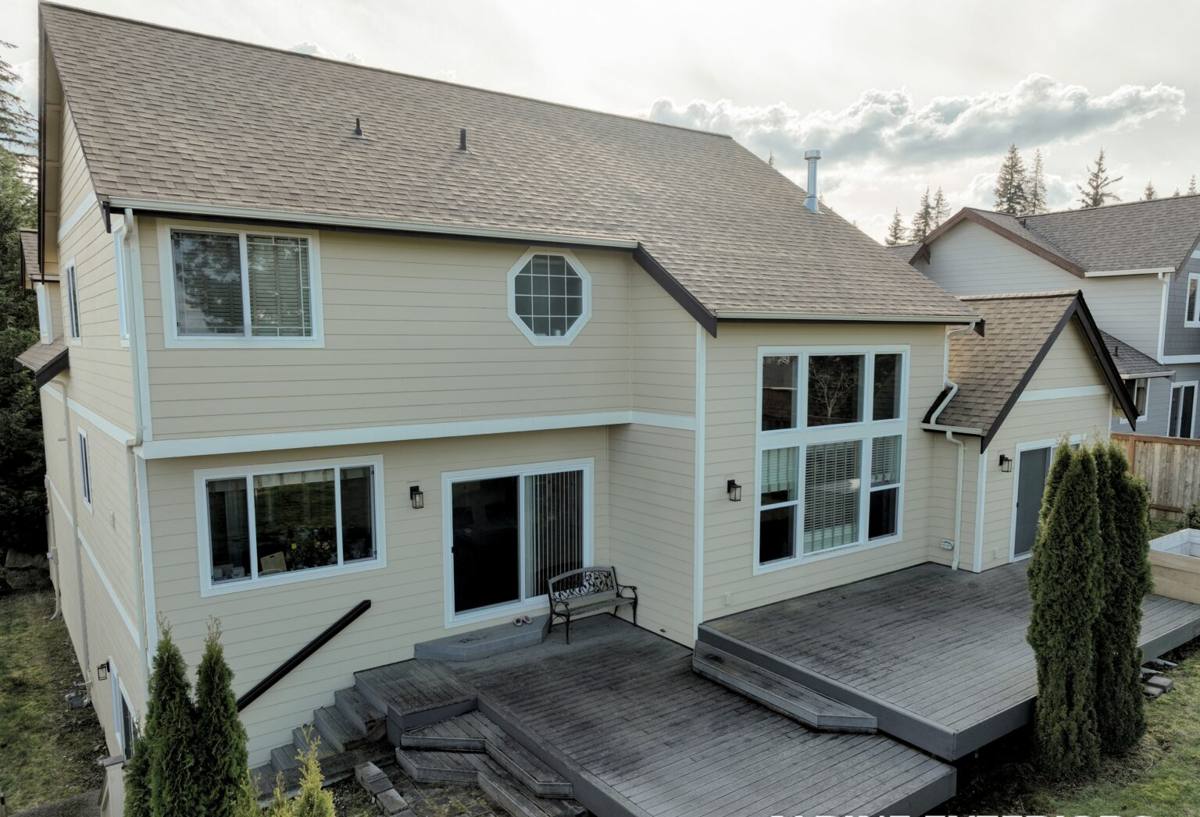
Signs Your Deck Needs Repair — Not Just Replacement
Most decks don't fail all at once. They give warning signs first, and catching those signs early is what keeps a repair job a repair job instead of a full teardown. Walk your deck and look for the following:
- Soft, spongy, or spring-feeling spots underfoot, especially near the house or stair landings
- Green or black film on boards that doesn't scrub off easily, particularly in shaded areas
- Rust streaks running down from screws, nails, or joist hangers
- Gaps opening up where the deck meets the house (the ledger board connection)
- Railings or posts that wiggle more than they should when you push on them
- Boards that have cupped, crowned, or split along the grain
- Stair stringers that flex or creak under normal walking weight
- Visible daylight or water staining underneath the deck where framing members meet
Any one of these on its own is often a straightforward repair. Several of them together, especially involving the ledger board or main support posts, usually means it's worth having someone look at the structure as a whole before deciding what to fix.
What a Correct Deck Repair Actually Involves
Structural Framing and the Ledger Board
The ledger board — where the deck attaches to the house — is the single most important connection on the entire structure, and it's also the one most exposed to water intrusion in a climate like Bellingham's. A correct repair checks the flashing behind and above the ledger, confirms the fasteners meet current structural standards, and looks for any rot in the rim joist behind it before doing anything cosmetic to the deck surface. Patching boards over a compromised ledger connection is a mistake we won't make, because it hides the actual problem instead of fixing it.
Decking Boards and Surface Repair
Individual board replacement is common and usually straightforward, but matching new wood to weathered wood, or transitioning cleanly if a homeowner is switching materials on part of the deck, takes some judgment. We also check the joists underneath any board we're replacing — a bad board is sometimes a symptom of a wet joist below it, not just wear on the surface.
Fasteners and Hardware
Salt air is hard on standard fasteners and connectors. Where we find corroded screws, nails, or joist hangers, we replace them with hardware rated for the exposure — this is one of the most overlooked parts of deck repair, and it's often why a deck that "was just repaired" a few years back is already showing rust bleed again.
Railings and Guard Posts
Loose railings are a safety issue, not just a cosmetic one. We check post attachment at the framing level, not just whether the railing itself looks tight, since a post can appear stable while the connection underneath has already started to fail.
Moss, Algae, and Surface Treatment
Cleaning moss off a deck surface without addressing what's causing it to grow there is a short-term fix. We look at drainage, airflow under the deck, and whether nearby shade is trapping moisture, then treat and clean accordingly so the moss doesn't just come right back with the next wet stretch.
Repair or Replace? How We Help You Decide
Not every deck problem calls for a full rebuild, and not every deck is worth repairing indefinitely. The table below outlines how we generally think through that decision — every deck is different, and a proper inspection is the only way to know for sure which side of the line yours falls on.
| Condition Found | Usually Repairable | Usually Points to Replacement |
|---|---|---|
| Framing / joists | Isolated soft spots or surface rot on a few members | Widespread rot across most joists, or undersized framing for current use |
| Ledger board | Flashing failure with sound wood behind it | Rotted rim joist or house framing behind the ledger |
| Decking surface | Scattered damaged or cupped boards | Most of the deck surface failing at once |
| Posts and footings | Loose connections, sound concrete | Undersized, cracked, or heaved footings |
| Age and history | Deck under roughly 15-20 years old with good bones | Older deck with no documented footing or framing upgrades |
When a deck falls into the "repairable" column, fixing it is almost always the more cost-effective choice and extends its life for years. When the structural issues are widespread, patching around them tends to cost more over time than doing the job right once.
Material Choices That Hold Up in an Edgemoor Climate
When we're replacing boards, railings, or framing as part of a repair, the material matters as much as the workmanship. Here's how we approach the common options for a shaded, salt-air, high-rain environment:
- Pressure-treated lumber remains a solid, cost-effective choice for framing and structural repairs when properly flashed and fastened with corrosion-resistant hardware.
- Cedar offers natural rot resistance and a look many Edgemoor homeowners prefer, but it does require more regular sealing and upkeep in a consistently damp environment.
- Composite decking resists moisture and moss buildup better than wood on the surface, though it still needs a sound, dry structure underneath and periodic cleaning to prevent surface algae in shaded spots.
- Fasteners and connectors should always be rated for exterior or coastal exposure — this is a place where cutting corners shows up fastest as rust stains and loosened boards.
We'll walk through the trade-offs with you honestly, including maintenance expectations, rather than steering you toward whatever's easiest for us to install.
Our Deck Repair Process
- Inspection: We walk the full deck, including underneath where accessible, checking framing, ledger, fasteners, and drainage — not just the visible surface.
- Honest assessment: We explain what we found in plain terms, what's urgent versus what can wait, and give you repair and (if relevant) replacement options with real trade-offs.
- Scope and estimate: You get a clear, written scope of work before anything starts — no surprise add-ons mid-project.
- Repair work: We address structural issues first, then surface and cosmetic items, using fasteners and materials suited to this climate.
- Final check: We test railings, stairs, and any repaired sections under real load before calling the job done, and clean up the site fully.
Maintaining Your Deck Between Repairs
A well-repaired deck still needs regular attention in a climate like this one. These habits go a long way toward stretching the time between repair visits:
- Sweep leaves and debris off the surface regularly, especially in shaded corners where moisture collects
- Clean moss and algae off boards and stairs as soon as you notice it, before it gets a foothold
- Keep gutters and downspouts clear so overflow doesn't pour directly onto or under the deck
- Check railings and stair connections for looseness a couple of times a year
- Reseal wood decking on the manufacturer's recommended schedule rather than waiting until it looks worn
- Trim back vegetation that's shading the deck more than necessary or holding moisture against it
Why a Crew That Already Works in Edgemoor Makes a Difference
Deck repair advice that works for a sunny, open lot doesn't automatically apply to a shaded, salt-air-exposed property near the water. A crew that regularly works in Edgemoor and the surrounding Bellingham neighborhoods has already seen how moss season, driving rain, and coastal air interact with different framing setups, decking materials, and hardware choices in this specific area. That local pattern recognition means faster, more accurate diagnosis — we're not guessing at what's causing a soft spot or a rust streak, because we've traced the same issue back to its source on decks with similar exposure before.
It also means we're familiar with Whatcom County permitting requirements for structural deck work, so repairs that need a permit get handled correctly rather than becoming a problem when you go to sell the home.
If your deck is showing any of the signs above, or it's just been a while since anyone took a close look at the framing and connections, we're happy to come out and give you a straightforward, no-pressure assessment. Fill out the form below to schedule a free estimate.