 Bellingham Exterior
 Fairhaven's Climate Is Harder on Siding Than Most People Realize
Fairhaven sits close to Bellingham Bay, and that proximity to open water shapes what siding on a home has to survive. Salt-laden air moves inland off the water, wind-driven rain comes in sideways during winter storms, and the mature tree canopy that gives the neighborhood its character also means long stretches of shade where siding never fully dries out. Individually, none of these are unusual for Whatcom County. Together, on a property near the water, they add up to a harder environment than a typical inland Bellingham lot.
That combination matters because siding failures rarely come from one big event. They come from small amounts of moisture and salt exposure repeating for years in the same spots — behind trim, at butt joints, low on the wall near grade — until the material underneath finally gives out. A siding system that isn't built and installed for that pattern will show it first in Fairhaven, before it shows up on a drier, more open lot across town.
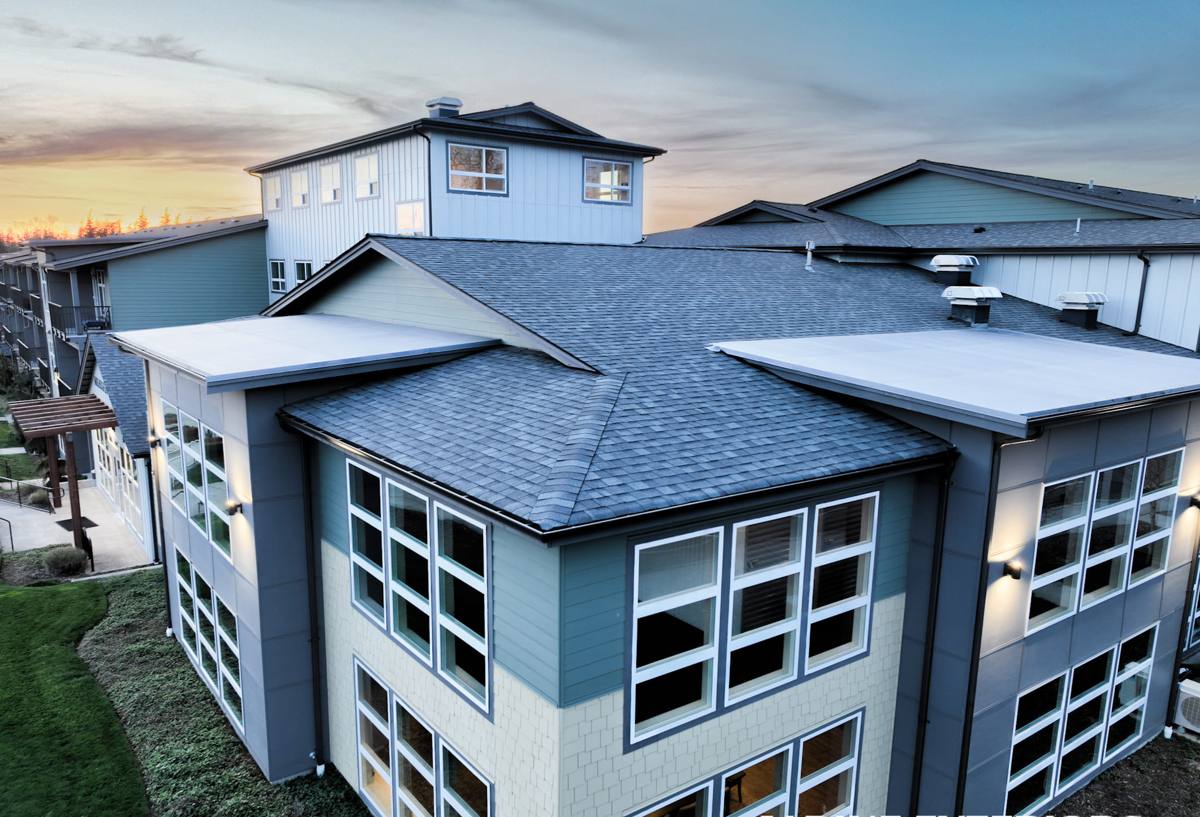
What Salt Air, Driving Rain, and Moss Actually Do to a House
Salt Air and Metal Components
Salt in the air accelerates corrosion on anything metal — fasteners, flashing, and hardware. When those components are hidden behind the siding and start to fail quietly, the first visible sign is often staining, a loose panel, or a soft spot, long after the actual damage began.
Trapped Moisture Behind the Cladding
Wind-driven rain doesn't just wet the surface of a wall — it drives moisture into any gap, seam, or fastener hole it can find. If the siding material or the installation doesn't manage that water and let it drain and dry, moisture gets trapped between the siding and the wall sheathing. That's where rot, mold, and structural damage start, and it's almost always invisible from the outside until the problem is advanced.
Moss, Algae, and Constant Shade
Shaded, damp surfaces in this climate grow moss and algae readily. On siding, that growth holds moisture against the surface even longer, which compounds the problem above. It also affects appearance faster than most homeowners expect — north-facing and tree-shaded walls in Fairhaven can show green or black staining well before a sunnier wall does.
Why We Install Only James Hardie Fiber Cement Siding
This is the reason our crew doesn't offer vinyl, LP SmartSide, primed wood, cedar, or other fiber cement brands as options. James Hardie fiber cement is a cement, sand, and cellulose fiber composite — it's non-combustible, it doesn't feed moss and algae the way wood does, and it holds its shape and finish through repeated wet-dry cycles far better than vinyl or untreated wood siding.
Hardie's ColorPlus factory finish is baked on under controlled conditions rather than field-painted, which matters directly for a job like this: a factory finish resists the fading and peeling that field-applied paint struggles with in a consistently damp, salt-exposed environment. Hardie also engineers specific product lines — its HZ5 formulation — for wetter, colder climate zones like the Pacific Northwest, which is a meaningful difference from a one-size-fits-all siding product. Backed by a strong transferable limited warranty, it's the product we're willing to put our name behind on a Fairhaven home.
What a Correct Installation Involves
Fiber cement siding is only as good as the installation behind it. In a climate like this, the details that don't show once the job is finished are the ones that determine whether the siding performs for decades or causes problems in five years.
Water Management Behind the Siding
A correctly installed water-resistive barrier, properly lapped and sealed at every penetration, is the first line of defense — the siding itself is the second. Where conditions call for it, a rainscreen gap between the barrier and the siding gives any moisture that does get through a path to drain and dry instead of sitting against the wall.
Flashing and Sealant, Used Correctly
Flashing over windows, doors, and horizontal trim needs to shed water outward, not just cover a gap. Caulk and sealant have a role, but they're not a substitute for proper flashing and lap sequencing — sealant that's doing a flashing detail's job is usually the first thing to fail.
Fastening and Clearance
James Hardie specifies fastener type, spacing, and placement for a reason — get it wrong and you create the exact entry points for moisture that the siding system is designed to avoid. Ground clearance and clearance from roof lines, decks, and grade also matter more here than in a drier climate, since anything closer than spec stays wetter longer.
Our Process, Start to Finish
- Assessment. We inspect the existing siding, sheathing, and trim to understand what's driving any current problems — moisture, moss, failed caulking, or aging material — before recommending anything.
- Tear-off and inspection. Once old siding is removed, we check the sheathing and water-resistive barrier underneath. Hidden moisture damage, if there is any, gets addressed before new siding goes on — covering it up would just hide the problem.
- Barrier and drainage plan. We install or repair the water-resistive barrier and set up drainage so the wall can manage the rain and humidity this area sees.
- Installation to manufacturer spec. James Hardie siding, trim, and fasteners go in following Hardie's installation requirements — fastener pattern, clearances, and flashing sequence included.
- Finish and detail work. Trim, corners, and color-matched components are finished out, with sealant used only where it belongs in the system.
- Final walk-through. We go over the finished job with the homeowner and address any questions before calling it done.
Comparing Siding Materials for a Fairhaven Property
Homeowners near the water often ask how fiber cement really compares to the alternatives once salt air, rain, and shade-driven moss are part of the equation. Here's a straightforward comparison based on how each material behaves in this kind of environment.
| Material | Moisture & Salt Air Performance | Moss/Algae Resistance | Typical Maintenance |
|---|---|---|---|
| James Hardie Fiber Cement | Strong — engineered composite, factory finish resists moisture-driven fading and peeling | Doesn't feed organic growth the way wood does; surface growth can be rinsed off | Periodic rinsing; caulk and trim checks over time |
| Vinyl | Can warp, fade, or crack under repeated wet-cold cycling and UV exposure | Growth sits on the surface in shaded, damp spots | Low, but panels are hard to spot-repair once damaged |
| Untreated Wood/Cedar | Absorbs moisture directly; prone to rot without diligent upkeep | Readily feeds moss and algae in shade | Regular painting/staining and moisture monitoring required |
| Engineered Wood | Wood-based core is moisture-sensitive at cut edges and seams if not sealed and maintained | More resistant than raw wood but still organic-based | Edge sealing and finish upkeep needed to prevent swelling |
Maintaining Fiber Cement Siding in a Wet, Shaded Climate
Fiber cement is low-maintenance compared to the alternatives, but "low-maintenance" isn't "no-maintenance" — especially on a property that gets this much moisture and shade. A short annual routine goes a long way:
- Rinse siding annually (a garden hose is usually enough) to remove salt residue, pollen, and early moss or algae growth before it sets in.
- Keep gutters and downspouts clear so water isn't overflowing onto siding below.
- Trim back vegetation and tree limbs that keep sections of the wall shaded and damp longer than necessary.
- Check caulking and sealant at trim, windows, and penetrations every year or two, and have any cracked or missing sealant addressed promptly.
- Watch ground clearance — mulch, soil, or landscaping that's crept up against the bottom of the siding should be pulled back.
- Look for staining, soft spots, or discoloration low on the wall or in shaded areas, since that's where problems tend to show up first.
Why Hiring a Crew That Already Works Fairhaven Matters
Siding installation isn't identical everywhere in Whatcom County. A crew that regularly works in Fairhaven has already seen how homes here behave through a wet winter with salt air and heavy shade — which walls tend to hold moss, where flashing details tend to get tested hardest, and what ground clearance actually looks like on a sloped, tree-lined lot near the water. That's a different starting point than a crew applying a generic installation approach to a property with this specific set of exposures.
Local experience also means fewer surprises during the job itself — knowing what to expect when old siding comes off a house that's been absorbing coastal moisture for years, and being ready to address it rather than treating it as an unplanned change order. For a homeowner, that translates into a smoother project and a siding system that's actually set up to handle the conditions it's going into, not just conditions in general.
Get a Straightforward Estimate
If your Fairhaven home's siding is showing moss, staining, soft spots, or just age, we're happy to take a look and give you an honest read on what it needs. Fill out the form below for a free, no-pressure estimate — we'll walk the property, answer your questions, and lay out what a correct James Hardie installation would involve for your home specifically.