 Bellingham Exterior
 New-Construction Windows for Fairhaven Builds
New-construction window installation is a different job than a replacement. There's no existing frame to work around, no old flashing to inspect and patch — the window goes in as part of the wall assembly itself, tied into the house wrap, the flashing tape, and the siding that will eventually cover the edges. Done right, this is the best chance a home ever gets at a truly weathertight window opening. Done wrong, it's the kind of mistake that doesn't show up as a leak for two or three winters, by which time it's a sheathing and framing repair instead of a five-minute caulk fix.
Fairhaven sits close to the water, which means homes here take a heavier and steadier dose of wind-driven rain and salt-laden air than houses further inland in Whatcom County. If you're building or doing a major addition in this neighborhood, the window installation details matter more than they would in a drier part of the county — and they matter from the first day of framing, not after the siding goes up.
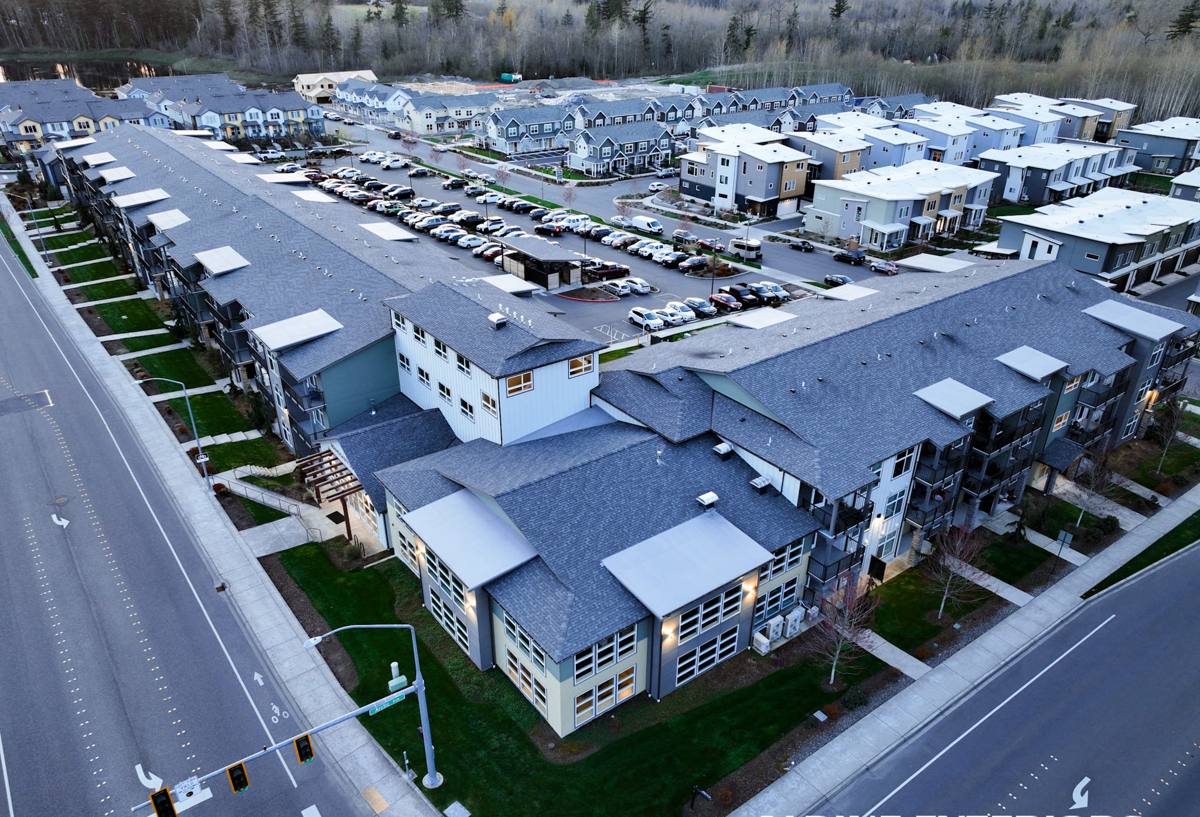
What Fairhaven's Climate Does to a Window Opening
A few things about this location shape how we approach new-construction window work here:
- Salt air accelerates corrosion. Fasteners, flashing metal, and hardware that would last decades a few miles inland can start showing rust or pitting years sooner near the water. Material choice at the rough opening isn't cosmetic — it affects how long the assembly holds up unseen, behind the trim.
- Wind-driven rain finds the weak spot. Straight-down rain is forgiving; rain pushed sideways by wind off the bay is not. It gets tested at every seam, lap, and fastener penetration around a window opening. Flashing sequence and shingle-lap order have to be correct, not approximate.
- A long moss and mildew season keeps surfaces damp. Bellingham's wet months stretch long, and shaded or north-facing walls in a tree-lined neighborhood like Fairhaven can stay damp for days after a storm. Any sill or flashing detail that traps water instead of shedding it becomes a problem faster here than in a drier climate.
- Temperature swings are moderate but constant. Whatcom County doesn't get extreme heat, but the frame and sealants still expand and contract with our marine-layer weather cycles. Sealant flexibility and proper gap allowances matter over the long run, not just on install day.
None of this means Fairhaven needs exotic materials. It means the ordinary steps — done in the right order, with the right materials, and not skipped for speed — carry more weight here than they would somewhere drier and more sheltered.
What a Correct New-Construction Install Actually Involves
Before the Window Goes In
The rough opening gets checked for square, level, and correct size before anything else happens. We confirm the sill pan is in place — a sloped or dedicated pan flashing at the bottom of the opening so any water that does get past the window has somewhere to go besides the framing. This step gets skipped more often than homeowners realize, and it's one of the cheapest insurance policies in the whole build.
Flashing Sequence
Flashing has to be installed in the correct shingle-lap order — sill first, then jambs, then head flashing — so that each layer sheds water onto the layer below it, never trapping water behind a lap installed backward. On a Fairhaven build we pay particular attention to head flashing and to how it integrates with the water-resistive barrier above the window, since that's the detail wind-driven rain tests hardest.
Setting the Window
The window unit itself gets shimmed for square and plumb, fastened per the manufacturer's schedule (not "close enough"), and insulated around the frame without over-packing — too much expanding foam can bow a frame out of square just as easily as too little insulation leaves gaps. We check operation — opening, closing, locking — before we call the rough-in done, because it's far easier to fix a binding sash now than after siding and trim are on.
Integration With the Wall Assembly
The window has to tie into the house wrap and drainage plane correctly, with proper laps and sealed penetrations, so the whole wall works as one water-managed system rather than a window that's watertight sitting inside a wall that isn't. This is where new-construction work pays off compared to a retrofit — we're not guessing what's behind existing siding, we're building the assembly correctly from the start.
Cost Factors for a New-Construction Window Package
Every project is different, but the line items that actually move the price on a Fairhaven job tend to be the same ones:
| Factor | Why It Matters |
|---|---|
| Number and size of openings | More openings and larger units mean more material, more labor hours, and more flashing detail to execute correctly |
| Frame material (vinyl, fiberglass, wood-clad) | Material cost and long-term maintenance differ; near the water, corrosion resistance and finish durability are worth weighing |
| Window style (fixed, casement, double-hung, slider) | Operable styles cost more than fixed units and have more hardware to install correctly |
| Wall assembly complexity | Taller walls, dormers, or unusual framing add scaffolding, access time, and flashing complexity |
| Timing within the build schedule | Coordinating window install with framing, wrap, and siding crews affects efficiency — and gaps in that coordination are where leaks start |
We'll walk through these specifics for your actual plans during an estimate rather than quoting a number without seeing the drawings — new construction pricing depends too much on the details to guess honestly.
Our Process on a Fairhaven Build
- Plan review. We look at the window schedule and elevations before framing is finalized, so opening sizes and flashing details are planned for, not improvised on site.
- Rough opening check. Before any window is set, we verify size, square, and that sill pan flashing is ready to go in.
- Sequenced flashing and window install. Sill, jamb, head flashing, and window set in the correct order, fastened to spec, insulated without overfilling.
- Integration with house wrap. Proper laps and sealed transitions so the window becomes part of a continuous drainage plane, not an isolated component.
- Function and quality check. Every unit operates, locks, and seals correctly before we consider that opening finished.
- Handoff notes for the siding crew. Clear documentation of what's been done at each opening so whoever installs siding and trim isn't guessing at what's underneath.
Why a Crew That Already Works Fairhaven Matters
New-construction window installation isn't a specialty product — it's a specialty of sequencing and attention to a handful of details that are each individually simple but easy to rush past on a busy job site. A crew that regularly works this part of Bellingham has already seen what wind-driven rain off the water does to a poorly flashed head detail, and what a shaded, damp wall does to a sill that wasn't sloped correctly. That's not something you can fully substitute with a manual, even a good one.
We also coordinate directly with framers, GCs, and siding crews on the sequencing — window installation sits in the middle of the build schedule, and a mistake here either gets covered up by the next trade or caught and fixed while it's still cheap to fix. We'd rather it be the second one.
A Simple Pre-Install Checklist
If you're a homeowner or builder tracking this phase of a Fairhaven project, these are the things worth confirming before windows go in:
- Rough openings measured and confirmed against the window order — not assumed from the plans alone
- Sill pan flashing material selected and on site before the crew starts
- House wrap installed and lapped correctly at each opening, ready to integrate with window flashing
- Window units on site, inspected for shipping damage, and matched to the correct opening
- Weather window planned — flashing and sealants need reasonably dry conditions to install correctly, which takes some coordination in a wet-season build
Maintenance After the Build
New-construction installation gives a window its best possible start, but ongoing care still matters in this climate. Keep weep holes and drainage paths clear of debris and moss buildup, especially on shaded elevations. Check exterior caulk lines at trim and siding transitions every year or two, since Whatcom County's wet season will find any gap that opens up over time. And keep an eye on hardware near the coast — a little more frequent lubrication and inspection goes a long way against salt air.
Get an Estimate for Your Fairhaven Project
If you're planning new construction or a major addition in Fairhaven and want windows installed by a crew that treats the flashing and sequencing as seriously as the window itself, we're happy to look at your plans and walk through what your specific project needs. Reach out for a free, no-pressure estimate using the form below.