 Bellingham Exterior
 Fairhaven's Roofs Work Harder Than Most
Fairhaven sits close to the water, and that proximity shapes everything about how a roof ages here. Salt-laden air moves in off Bellingham Bay and settles on shingles, flashing, and fasteners day after day. Add Whatcom County's long stretch of driving rain each fall and winter, plus a moss season that can run eight months or more, and you've got a roof that's under more sustained stress than a similar home fifty miles inland. None of that means Fairhaven roofs fail faster if they're built and maintained right — it means repair work here has to account for conditions a lot of general roofing crews don't think about.
We work on roofs in this neighborhood regularly, and the patterns repeat: fasteners that corrode before the shingles around them wear out, moss that finds a foothold in shaded, north-facing slopes, and flashing details that were fine for a drier climate but weren't built for this much sustained moisture. A repair that doesn't account for these factors might look fine for a season and then fail again in the same spot.
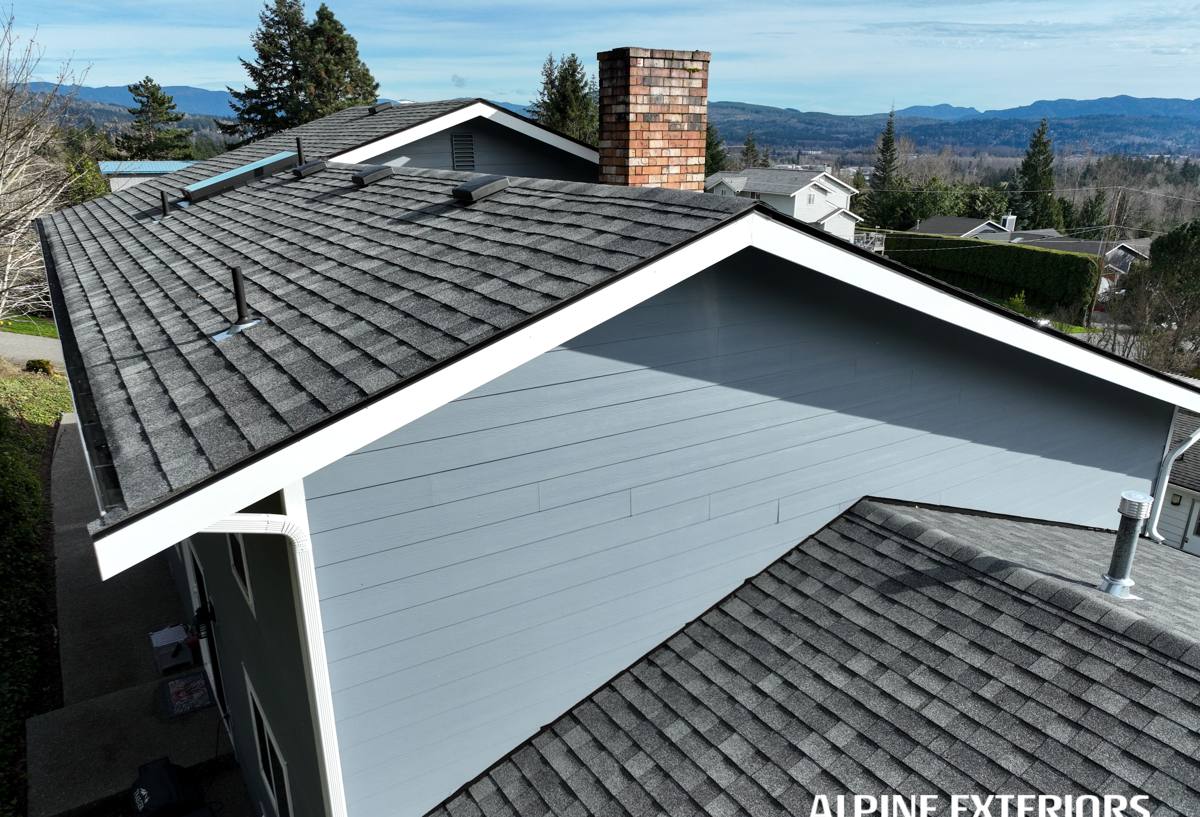
Signs Your Roof Needs Repair, Not Just a Look
Most roof problems don't announce themselves with a dramatic leak. They show up as small signals that are easy to write off until they aren't.
- Granules collecting in gutters or at downspout outlets — a sign shingles are losing their protective coating
- Dark streaking or green-black patches on north-facing or shaded slopes, which usually means algae or moss has already taken hold
- Soft spots, sagging, or a spongy feel when walked on (our crew checks this, not something to test yourself)
- Daylight visible through the attic roof deck, or damp insulation near the eaves
- Flashing that's lifted, rusted, or pulling away around chimneys, skylights, and roof-to-wall transitions
- Ceiling stains that appear after a heavy rain event and then seem to dry out and disappear
That last one trips up a lot of homeowners. A stain that fades doesn't mean the leak healed itself — it usually means water is finding a path along framing before it shows up somewhere visible, which can mean the actual entry point is several feet from where you see the damage.
What a Correct Roof Repair Actually Involves
Diagnosis Before Anything Gets Touched
A repair is only as good as the diagnosis behind it. We start by tracing water back to its actual entry point rather than patching wherever a stain appears indoors. That usually means checking flashing, underlayment condition, and fastener integrity in the area, not just the shingles on top.
Matching Materials, Not Just Covering the Spot
Shingles fade and weather over time, so a patch using brand-new material next to a ten-year-old roof will always look slightly off — that's a cosmetic tradeoff we're upfront about. What matters more is that the repair uses compatible materials: the right underlayment, matching fastener type, and flashing that ties into the existing roof system correctly instead of just sitting on top of it.
Flashing and Underlayment Get the Real Attention
Most roof leaks in this climate trace back to flashing or underlayment failure, not the shingles themselves. Around chimneys, skylights, vents, and wall intersections, we rebuild flashing details properly rather than sealing over old, failing metal with caulk or roofing cement — that kind of patch buys a season, maybe two, before it fails again.
Moss and the Long Wet Season
Moss isn't just a cosmetic issue. Once it establishes on a roof, its root structure lifts shingle edges and holds moisture directly against the roofing material, which accelerates granule loss and can work its way under shingle tabs over time. Fairhaven's mix of tree cover, shade, and near-constant fall-to-spring moisture makes it a prime candidate for moss compared to more open, sun-exposed lots elsewhere in Bellingham.
During a repair, we clear moss growth from the affected area and inspect underneath it for shingle damage that was hidden from view. We don't recommend pressure washing a roof to remove moss — it's an aggressive method that can strip granules and shorten shingle life faster than the moss itself would. Manual removal followed by proper drainage and airflow correction is the more durable approach.
Repair or Replacement: How We Make the Call
Not every roof problem calls for a full replacement, and not every roof is a good candidate for another round of patching. We look at the roof's age, the extent of damage, and how many prior repairs it's had before making a recommendation — and we'll tell you honestly if repair is the better financial move, even though replacement is the larger job.
| Factor | Favors Repair | Favors Replacement |
|---|---|---|
| Roof age | Under 15 years, condition otherwise sound | Nearing or past the shingle's rated lifespan |
| Damage extent | Localized to one section or detail | Spread across multiple slopes or the whole roof |
| Prior repair history | First or second repair in that area | Same spot has needed repair multiple times |
| Underlying decking | Solid, no rot found during inspection | Soft, delaminated, or water-damaged decking |
| Granule loss | Isolated to the damaged section | Widespread across the roof surface |
This is a judgment call, and we'd rather walk you through the reasoning than just hand you a number. If a repair is the honest answer, that's what we'll quote.
Materials We Use — and Why We're Selective
For repair work, we use materials chosen for how they perform under sustained moisture and salt exposure, not just what's cheapest to install. That means corrosion-resistant fasteners and flashing metal suited to a coastal-influenced climate, and underlayment with real moisture resistance rather than the bare minimum. We're selective about lower-cost synthetic and composite products that look fine at installation but have a track record of struggling with long-term moisture exposure or UV breakdown — our standard is to use materials with an established performance history in this specific climate, even if that costs a bit more upfront. That's a maintenance and longevity tradeoff we think is worth explaining rather than a knock on any one brand.
Our Repair Process, Start to Finish
- Initial inspection, including attic access where possible, to trace the actual source of the problem
- A clear explanation of what we found, what's causing it, and what the repair will involve — in plain language, before any work starts
- A written estimate covering materials, scope, and timeline, with no pressure to upgrade to a full replacement unless it's genuinely warranted
- The repair itself: removing damaged material, correcting the underlying cause (flashing, underlayment, ventilation), and installing matched materials
- Cleanup and a final walk-through so you can see what was done and ask questions
Why a Crew That Already Works Fairhaven Matters
Fairhaven is one of Bellingham's older, established waterfront-adjacent neighborhoods, and homes here vary quite a bit in age and roof design compared to newer subdivisions elsewhere in Whatcom County. A crew that regularly works this neighborhood has a feel for how these roofs were originally built, what's typically hiding under a few decades of shingle layers, and which trouble spots — chimney flashing, low-slope transitions, shaded valleys — tend to show up again and again given the local exposure to salt air and moisture.
That familiarity also means fewer surprises during the job. We know what permitting and access considerations tend to come up on older Bellingham homes, and we plan around them instead of discovering them mid-repair. It's the difference between a crew that's repairing your roof for the first time anywhere near this coastline and one that already understands what this specific stretch of Whatcom County does to a roof over time.
Keeping Your Fairhaven Roof in Good Shape Between Repairs
A repair holds up better and lasts longer when it's backed by basic seasonal upkeep. None of this replaces a professional inspection, but it's worth staying on top of between visits.
- Clear gutters and downspouts before the fall rains start, so water isn't backing up under the roof edge
- Trim back tree limbs that shade roof sections and keep them damp longer than the rest of the roof
- Look for granule buildup in gutters after storms as an early warning sign
- Have flashing around chimneys and skylights checked every couple of years, since these details fail before the shingle field usually does
- Address small leaks promptly — a slow drip left over a wet Whatcom County winter causes far more damage than the same leak caught early
If you're noticing any of these signs on a Fairhaven roof, or just want an honest read on its condition, we're happy to take a look. Estimates are free, there's no pressure to do more than what's actually needed, and you'll get a straight answer about repair versus replacement before any work begins.