 Bellingham Exterior
 Fairhaven's Roofs Work Harder Than Most
Fairhaven sits close to Bellingham Bay, tucked under heavy tree cover on the south side of the city, and that combination is tougher on a roof than people expect. The salt-laden air off the water accelerates corrosion on any exposed metal — fasteners, flashing, gutter hardware — while the surrounding fir and cedar canopy keeps roof surfaces shaded and damp for weeks at a stretch. Add in Whatcom County's long, wet fall-through-spring stretch of driving rain, and you've got a roof that's rarely given a chance to fully dry out.
None of that means a roof in Fairhaven is doomed to fail early. It means the materials, the flashing detail, and the ventilation have to be chosen and installed with that specific exposure in mind. A roof spec'd for a dry inland neighborhood and installed here without adjustment will show its age faster — more moss, more granule loss, more soft spots at the edges.
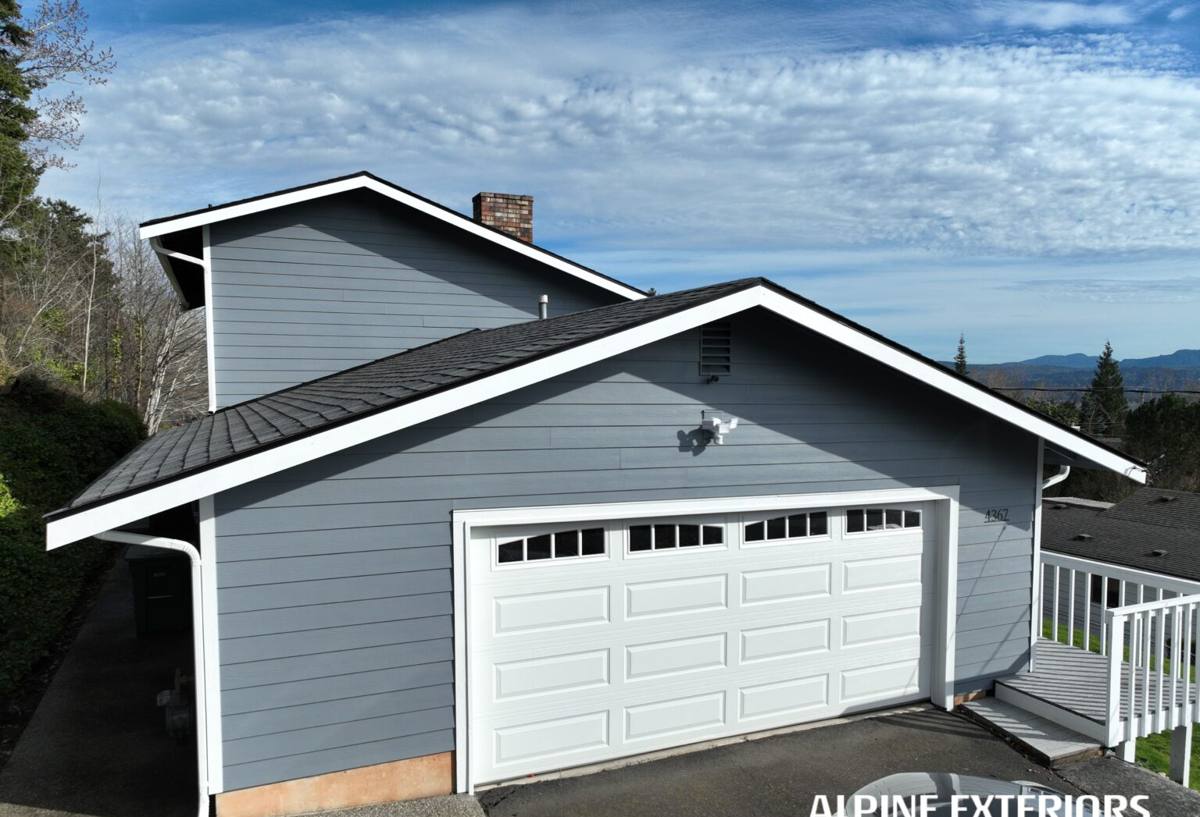
What Salt Air, Rain, and Moss Actually Do to a Roof
Salt Air and Metal Components
Bellingham Bay's marine air carries fine salt particles that settle on every exposed surface, including your roof. Over years, that accelerates rust on cheaper flashing, nail heads, and vent housings — even on roofs that look fine from the ground. Once flashing starts to pit and thin, water finds a way under it long before the shingles themselves are worn out.
Driving Rain and Wind-Driven Water
Storms coming off the water don't just fall straight down — they push rain sideways, up under shingle tabs and around chimneys, skylights, and dormers. A roof that's only "good enough" on flat, calm days can leak for years in this kind of weather if the underlayment and flashing weren't installed to handle wind-driven moisture.
Moss Season
Fairhaven's tree cover means shade, falling needles, and damp organic debris sitting on the roof for much of the year. Moss doesn't just look bad — its root structure lifts shingle edges and holds moisture directly against the roofing material, which is exactly what shortens a roof's lifespan in this part of Whatcom County.
What Fairhaven's Housing Stock Means for a Replacement
Fairhaven has a mix of older homes — many with steeper, more complex rooflines, dormers, and multiple valleys — alongside newer infill construction. Older homes often have roof decking and framing that wasn't built to modern ventilation standards, and some have been re-roofed over old layers in the past without addressing the deck underneath. A proper replacement here means:
- Full tear-off to bare decking, not a layover, so we can actually see and fix what's underneath
- Checking decking for soft spots, especially around valleys, chimneys, and any past leak points
- Confirming attic ventilation is adequate — undersized or blocked ventilation traps moisture and shortens roof life fast in a damp climate
- Matching flashing and fastener materials to the marine exposure, not just using whatever's standard elsewhere
Homes in or near any locally recognized historic area may also have exterior guidelines worth checking before you settle on a roofing material or color — it's a quick call to the city, and it's better to make it before materials are ordered than after.
Signs Your Fairhaven Roof Is Due for Replacement
Not every roof problem means a full replacement — but in this climate, small issues compound quickly. Here's what tells us it's time to talk replacement rather than another round of patching:
- Granules collecting in gutters or at downspout outlets
- Shingles that are cupping, curling, or cracking, especially on south- and west-facing slopes
- Moss or algae streaking that comes back within a season of cleaning
- Soft or spongy spots underfoot on the roof deck
- Daylight visible through the attic roof boards, or damp insulation below the deck
- Flashing around chimneys, skylights, or vents that's rusted, lifted, or separating
- A roof that's 20+ years old, regardless of how it looks from the driveway
If you're seeing two or more of these, it's worth having someone walk the roof rather than guessing from ground level.
What a Correct Roof Replacement Involves
A roof replacement done right isn't just stripping old shingles and nailing down new ones. For a Fairhaven home, the sequence matters:
- Full tear-off down to the decking, with disposal of all old material.
- Deck inspection and repair — replacing any rotted or delaminated plywood or plank decking before anything new goes down.
- Ice-and-water shield at eaves, valleys, and around every penetration, since these are the spots wind-driven rain exploits first.
- Synthetic underlayment across the full roof for a secondary water barrier beneath the shingles.
- Corrosion-resistant flashing and fasteners at chimneys, walls, and vents, sized for long-term exposure to salt air.
- Proper ventilation — intake at the eaves, exhaust at the ridge — balanced to actually move air rather than just checked off as present.
- Shingle or panel installation per manufacturer spec, including nail pattern and exposure, which affects wind rating far more than most homeowners realize.
- Cleanup including magnetic sweep for nails and full debris haul-away.
Choosing a Roofing Material for This Climate
There's no single "best" roofing material — the right choice depends on your roof's pitch, your budget, and how much long-term maintenance you want to take on. Here's how the common options stack up for a home exposed to salt air, rain, and moss:
| Material | Moss/Moisture Resistance | Maintenance | Typical Lifespan |
|---|---|---|---|
| Architectural asphalt shingle | Good, especially with zinc/copper strips | Low — occasional debris clearing | 25–30 years |
| 3-tab asphalt shingle | Fair | Low | 15–20 years |
| Standing seam metal | Excellent — sheds moss and debris well | Very low | 40–50+ years |
| Cedar shake | Poor without diligent upkeep — holds moisture | High — regular treatment needed | 20–25 years with upkeep |
For most Fairhaven homes, a well-installed architectural shingle offers the best balance of cost, appearance, and performance. Metal roofing costs more up front but sheds moss and rain fast enough that it's worth considering on steep, heavily shaded rooflines. We're honest about the trade-offs on each — including why we're careful about wood shake in a climate this wet, since it demands upkeep most homeowners underestimate.
Our Process, Start to Finish
We keep the process straightforward because a roof replacement is disruptive enough without added confusion:
- On-site inspection — we walk the roof and attic, not just look from the ground, and photograph anything of concern.
- Written estimate — a clear breakdown of material, labor, and any deck repair contingencies, so there are no surprise line items later.
- Scheduling around the weather — we plan tear-off days with Whatcom County's rain patterns in mind and stage material to minimize how long your roof deck is exposed.
- The install — typically completed in one to three days for a standard single-family roof, depending on size and complexity.
- Final walk-through — we review the finished roof with you and cover warranty details before we consider the job done.
Why Local Experience in Fairhaven Matters
A crew that's worked this neighborhood knows which slopes hold moss longest, which older homes tend to have deck issues under the surface, and how tree cover changes the ventilation math compared to a more open lot elsewhere in Bellingham. That familiarity shows up in fewer surprises mid-project and a roof that's actually built for the exposure it'll face, not a generic install.
It also matters for the practical side — permitting through the City of Bellingham, understanding any exterior review that applies in historic-district areas, and scheduling around the wet season instead of fighting it. None of that is complicated, but it's the kind of thing that goes smoother with a crew that's done it before in this specific part of Whatcom County.
What Affects the Cost
Every roof is priced on its own specifics, but the main cost drivers for a Fairhaven replacement are consistent:
- Roof size and number of stories (steeper, taller roofs cost more to access and work safely)
- Roof complexity — valleys, dormers, chimneys, and skylights all add labor and flashing material
- Decking condition — hidden rot found during tear-off adds material and labor to replace it
- Material choice — architectural shingle, metal, or another option, as outlined above
- Tear-off scope — one layer versus multiple old layers to remove
We'd rather walk your specific roof and give you real numbers than throw out a broad range that doesn't mean much either way.
If your Fairhaven roof is showing its age or you just want an honest read on where it stands, we're glad to come take a look. The estimate is free, there's no pressure attached, and you'll get a straight answer about what your roof actually needs — use the form below to get started.