 Bellingham Exterior
 Roof Repair Built Around Ferndale's Weather, Not a Generic Checklist
Ferndale sits close enough to the water and far enough into Whatcom County's weather patterns that its roofs age differently than roofs twenty miles inland. Homes here deal with salt-tinged air moving in off the water, long stretches of driving rain that finds every weak seam, and a moss season that can run most of the year in shaded, north-facing sections of a roof. None of that is unique to any one house — it's just what the climate does to every roof in the area, year after year. A repair that doesn't account for it tends to fail again within a season or two.
We work on roofs throughout the Bellingham area, and Ferndale calls make up a steady part of that work. That means we're not guessing at what a roof here has been through — we're seeing the same patterns show up on different streets, different roof ages, and different roofing materials.
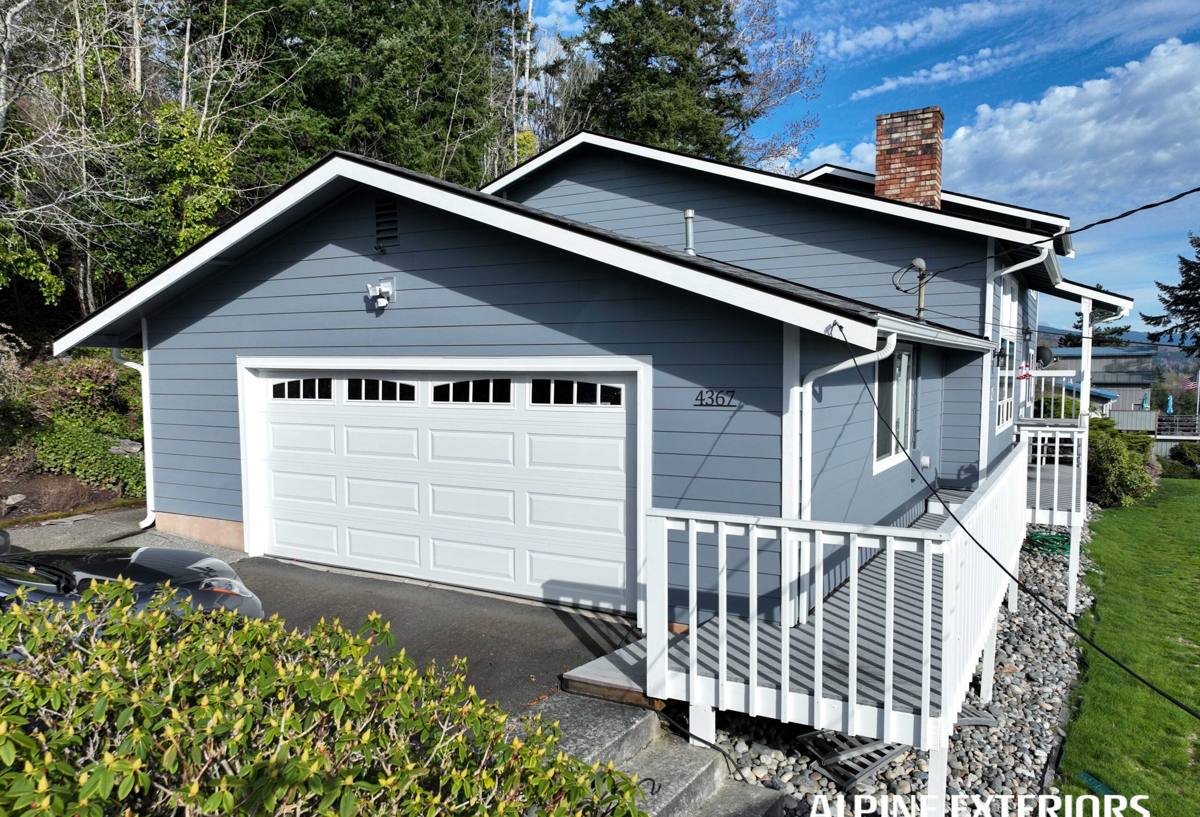
What Ferndale's Climate Actually Does to a Roof
Salt Air and Metal Fatigue
Homes closer to the water pick up airborne salt that settles on flashing, fasteners, and any exposed metal. Over years, that accelerates corrosion on nails, screws, and drip edge — especially on older roofs where the original fasteners weren't rated for a coastal-adjacent environment. A repair that reuses corroded fasteners or patches around them instead of replacing them is a short-term fix.
Driving Rain and Wind-Driven Water
Rain in this part of Washington doesn't just fall straight down — wind pushes it sideways and up under laps, edges, and flashing that would stay dry in a calmer climate. That's why leaks here often show up at transitions: where a roof meets a wall, where a chimney or vent penetrates the deck, or along valleys where two roof planes meet. Straight-down-rain assumptions lead to repairs that hold in a light drizzle and fail in the first real storm.
Moss and Trapped Moisture
Whatcom County's long damp season is close to ideal for moss growth, and Ferndale's tree cover makes shaded roof sections even more hospitable to it. Moss doesn't just look bad — it holds moisture against the roofing material, lifts shingle edges as it grows, and channels water sideways under the surface instead of letting it run off. Left alone, moss turns a small leak into a rot problem in the decking underneath.
The Repairs We See Most Often on Ferndale Roofs
- Flashing failures around chimneys, skylights, and wall-to-roof transitions where wind-driven rain gets pushed underneath aging or improperly lapped metal.
- Moss-related lifting on north-facing slopes and shaded sections, where shingle edges have been pried up and granule loss has accelerated.
- Corroded or backed-out fasteners, particularly on older roofs closer to the water where salt exposure has sped up the process.
- Valley leaks where two roof planes meet and heavy rain volume concentrates faster than the valley material can shed it.
- Gutter and edge damage from debris buildup, which backs water up under the first course of shingles or shake.
- Soft or spongy decking discovered during a repair, usually the result of a slow leak that went unnoticed for a season or more.
What an Honest Repair Actually Involves
A roof repair that's done right starts with finding the actual source of the problem, not just the spot where water is showing up inside the house. Water travels — it can enter at a flashing seam ten feet from where a stain appears on a ceiling. Chasing the visible symptom instead of the entry point is the single biggest reason repairs don't hold.
Diagnosis Before Any Work Starts
We look at the whole roof plane around the problem area, not just the immediate spot — checking flashing, fastener condition, underlayment where it's exposed, and the decking itself for soft spots. On an older roof, we're also checking whether the surrounding material has enough life left to make a targeted repair worthwhile, or whether it's close enough to the end of its service life that a repair would just be a stopgap.
Matching the Repair to the Roof's Age and Material
A patch on a five-year-old roof and a patch on a twenty-year-old roof are two different jobs, even if the visible damage looks similar. Older shingles have already lost flexibility and granule protection, so tying a new section in cleanly takes more care to avoid cracking surrounding material that looks intact but is more brittle than it appears. We match materials as closely as possible and explain up front when an exact match isn't available, since manufacturers change product lines over time.
Rebuilding, Not Just Covering, Damaged Areas
Where we find soft or rotted decking, that gets replaced — not covered over. Roofing material laid over a compromised deck will fail again, usually faster than the original problem took to develop. We'd rather tell you decking needs replacing than hand back a roof that looks fixed and isn't.
Repair or Replace: How to Think About It
Not every roof problem calls for a full replacement, and not every roof problem should be patched indefinitely either. The honest answer depends on a handful of factors more than on the size of the current leak.
| Factor | Repair Usually Makes Sense | Replacement Usually Makes Sense |
|---|---|---|
| Roof age | Roof is under roughly 15 years old with life left in the field material | Roof is near or past its expected service life |
| Extent of damage | Damage is isolated to one section, flashing point, or penetration | Multiple sections show wear, moss damage, or granule loss |
| Decking condition | Decking is solid under the damaged area | Decking is soft, rotted, or damaged in more than one spot |
| History of repairs | This is the first or second repair on the roof | The roof has had repeated repairs in the same general area |
| Material availability | Matching material is still available or a near-match is acceptable | Original material is discontinued and mismatch would be obvious |
We'll walk you through where your roof falls on that list honestly, including when a repair is the right call even though a replacement would be more profitable for us. A roof that only needs a repair doesn't need to be sold a replacement.
How Our Repair Process Works
- Inspection and diagnosis — we get on the roof (or use a lift when pitch or access requires it) and trace the actual source of the leak or damage, not just the symptom.
- Written explanation and estimate — you get a plain description of what we found, what caused it, and what it costs to fix, before any work starts.
- Repair or rebuild — damaged material and any compromised decking gets removed and replaced with correctly matched or manufacturer-appropriate product, with flashing and fastening detailed for this climate specifically.
- Cleanup and site check — debris, old material, and stray fasteners are cleared from the roof, gutters, and ground around the house.
- Follow-up — we tell you what to watch for afterward and what ongoing moss or debris maintenance will keep the repair holding.
Preventing the Next Repair Call
A lot of the repair work we do in Ferndale could have been avoided, or at least caught earlier, with a few basic habits. None of this requires climbing on the roof yourself.
- Have moss growth treated and removed before it lifts shingle or shake edges, especially on shaded, north-facing slopes.
- Keep gutters clear of needles and leaf debris so water doesn't back up under the roof's lower edge.
- Trim back tree limbs that overhang the roof to reduce shade, debris, and physical abrasion on the surface.
- Have flashing around chimneys, skylights, and vents checked every few years rather than waiting for a visible leak.
- Address small leaks quickly — a stain the size of a dinner plate today can mean rotted decking by next winter if it's left alone.
- After major windstorms, do a visual check (from the ground or a photo) for lifted or missing shingles rather than assuming everything held.
Why It Matters That We Already Work in Ferndale
A crew that only sees a neighborhood once doesn't build the same instinct for how its roofs behave. Knowing that Ferndale's tree-shaded lots grow moss faster on certain slopes, that homes closer to the water need extra attention to fastener corrosion, and that wind-driven rain during a Whatcom County storm hits flashing points harder than a straight-down rain would — that comes from doing the work here repeatedly, not from a general roofing checklist.
It also matters for practical reasons: we're not routing a crew across the county to get to your repair, we're familiar with the permitting expectations for the area when a repair crosses into replacement territory, and we can usually get back out for a follow-up check without a long lead time.
Materials We Use and Why
We match repair materials to what's already on the roof wherever possible, and we're upfront about the trade-offs when an exact match isn't practical. Our standard is to use fasteners and flashing rated for the moisture and salt exposure this area sees, even if that costs a bit more than a generic hardware-store equivalent — a repair that corrodes out in a few years costs more in the long run than doing it right the first time. Where a homeowner's existing roofing material has aging or availability issues, we'll explain those trade-offs plainly rather than quietly substituting something that won't perform the same way.
If you're dealing with a leak, moss damage, or a roof that's had one too many patches in the same spot, we're happy to take a look and give you a straight answer about what it actually needs. Estimates are free and there's no pressure to move forward — just an honest read on your roof and what it'll take to fix it right.