 Bellingham Exterior
 Why Sehome's Climate Is Hard on Exterior Walls
Sehome sits close enough to Bellingham Bay that salt-laden air reaches the neighborhood on a regular basis, and it sits inland enough to catch the wind-driven rain events that roll through Whatcom County most of the year. That combination is rougher on siding than either factor alone. Salt air accelerates corrosion on fasteners and metal trim. Driving rain forces water sideways into seams, laps, and butt joints that were never designed to handle standing moisture. And because so much of Sehome carries mature tree cover and hillside shade, the neighborhood also deals with a long moss and algae season — often eight months or more of the kind of damp, low-sun conditions that let organic growth take hold on north- and west-facing walls.
None of this is unique to one house. It's a neighborhood-wide pattern, and it means siding decisions in Sehome should start with the climate, not with a color swatch. A product and installation method that work fine in a drier inland town can fail here in a fraction of the time.
What Moss Season Actually Does to Siding
Moss and algae themselves don't eat through siding, but they hold moisture against the surface for weeks at a time. On wood-based products, that constant dampness is what starts rot at seams and butt joints. On vinyl, it just looks bad and is difficult to fully remove without damaging the finish. On correctly installed fiber cement with a factory finish, moss can be washed off without stripping paint or exposing raw substrate — which is one of the practical reasons this material holds up better under Sehome's tree canopy than the alternatives.
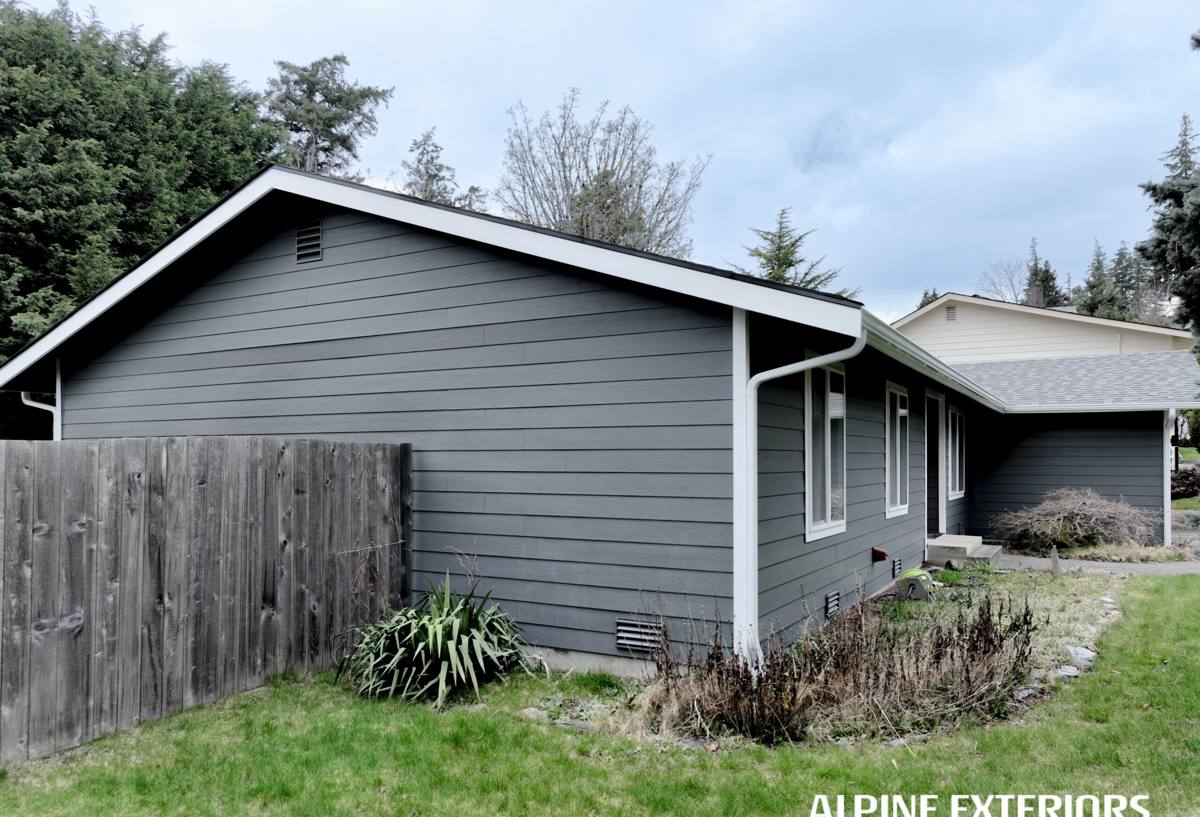
What Correct Fiber Cement Installation Requires Here
Fiber cement siding is only as good as the assembly behind it. In a climate that pushes rain sideways into wall seams, the details most homeowners never see are the ones that decide whether the siding lasts 10 years or 40. A correct installation in Sehome includes:
- A drainage plane (weather-resistant barrier plus a rainscreen gap) that lets any water that gets behind the siding drain out and dry, instead of sitting against the sheathing
- Properly lapped and sealed house wrap, with all penetrations — vents, hose bibs, light fixtures — flashed before the siding goes on, not caulked after
- Fastener spacing and type matched to the local wind-exposure and moisture zone, not just the manufacturer's minimum
- Factory-primed or ColorPlus-finished cut edges sealed with the correct edge sealant on every field cut
- Proper clearance at grade, decks, and roof lines so siding never sits in standing water or snow-melt runoff
Skip any one of these and you can end up with a house that looks fine for a year or two and then starts showing staining, soft spots, or paint failure at the seams — problems that trace back to installation, not the product itself.
James Hardie Product Lines Built for This Climate
We install James Hardie exclusively, and for a neighborhood like Sehome that matters more than it might seem. Hardie engineers its siding by climate zone, and the Pacific Northwest falls into their HZ5 category — formulated specifically for moisture exposure, not just temperature swings. That's a meaningful difference from generic fiber cement or products designed around a national average climate.
| Product | Best Use | Why It Fits Sehome |
|---|---|---|
| HardiePlank lap siding | Primary wall cladding on most home styles | Engineered moisture resistance for marine and high-rain climates; wide color range in ColorPlus finish |
| HardiePanel vertical siding | Modern or mixed-material facades, accent walls | Fewer horizontal laps means fewer potential water-entry points on exposed elevations |
| HardieTrim boards | Corners, window and door surrounds, fascia | Resists the swelling and rot that wood trim develops under sustained damp shade |
| HardieSoffit panels | Underside of eaves and overhangs | Holds up under moss and mildew exposure better than untreated wood soffit |
ColorPlus factory finish is worth calling out on its own. It's baked on in a controlled environment rather than field-applied, which means better adhesion and fade resistance than a job-site paint job — and it holds up to the pressure-washing homeowners in this neighborhood eventually need to do to keep moss and algae in check.
Why We Don't Install Other Fiber Cement or Vinyl Products
We get asked why we don't offer Allura, Cemplank, LP SmartSide, or vinyl as lower-cost options. The honest answer is that we standardized on one product line so we can install it correctly every time, and because James Hardie's engineered-for-climate approach and warranty backing are the strongest match for what this region does to a house. Vinyl can crack and warp under the temperature swings between sunny afternoons and cold, wet nights, and it doesn't hold paint if a homeowner ever wants to change the color. Engineered wood products carry real moisture-management requirements that are easy to get wrong in a climate this wet. None of these are bad products in every setting — they're just not what we're willing to warranty our labor against in Whatcom County conditions.
Signs Existing Siding Is Losing the Battle
If you're deciding whether Sehome siding needs attention now or can wait, look for these signs:
- Persistent moss or dark green-black staining that returns within weeks of cleaning
- Soft or spongy spots when you press on siding near the bottom courses or around window trim
- Paint that's peeling or bubbling rather than just fading
- Visible gaps or separation at seams, corners, or where siding meets trim
- Warping, buckling, or panels that have pulled away from the wall
Any one of these on its own might just need a repair. Several of them together usually mean the underlying moisture management has failed and a full re-side is the more honest recommendation.
How Our Process Works
1. On-Site Assessment
We walk the exterior, check for moisture intrusion at trim and penetrations, and look at how the home's orientation and tree cover affect sun and shade exposure — a real factor on Sehome's sloped, tree-lined lots.
2. Tear-Off and Substrate Check
We remove existing siding and inspect the sheathing underneath for hidden rot before anything new goes up. Problems found here get addressed before the new siding covers them again.
3. Weather Barrier and Drainage Plane
This is the step that determines long-term performance. We install house wrap and rainscreen properly lapped and flashed, so water that reaches the wall assembly has somewhere to go.
4. Siding, Trim, and Finish
HardiePlank, panel, or trim goes up to manufacturer spec — correct fastener pattern, correct exposure, sealed cut edges — followed by trim, caulking at appropriate joints only, and a final wash-down.
5. Walkthrough
We go over the finished job with the homeowner and cover basic care specific to the site conditions.
What a Sehome Siding Job Typically Costs
Every home is different, but the factors that move price the most in this neighborhood are consistent:
| Factor | Why It Matters in Sehome |
|---|---|
| Home size and story count | More surface area and taller elevations increase material and labor time |
| Extent of hidden rot | Sloped, tree-shaded lots see more moisture damage behind old siding than average |
| Access and lot terrain | Hillside lots and tight side yards can require more setup time for scaffolding and material staging |
| Trim and detail complexity | Older homes with more window trim, dormers, or architectural detail take longer to finish correctly |
| Product selection | HardiePlank, panel, and ColorPlus premium tiers price differently |
We provide itemized, honest estimates rather than a flat per-square-foot number pulled out of thin air, because the real cost drivers vary house to house.
Why Hiring a Crew That Already Works Sehome Matters
A contractor who regularly works this neighborhood already understands its terrain, tree cover, and moisture patterns before they ever step onto your property. That means fewer surprises once tear-off starts, a better read on how much drainage detailing a given elevation actually needs, and familiarity with City of Bellingham permitting requirements for exterior work. It also means the crew has already seen how this specific climate treats siding over years, not just on paper — which shapes real decisions about flashing details and product selection, not just sales talk.
Simple Maintenance That Extends Siding Life Here
- Rinse siding annually, and more often on shaded or north-facing walls, to keep moss and algae from establishing
- Keep gutters clear so overflow doesn't run down the face of the siding
- Trim back tree limbs and shrubs that hold moisture against walls
- Inspect caulking at trim joints yearly and touch up before gaps let water in
- Address any soft spots or staining early rather than waiting for a full season
If your Sehome home's siding is showing its age or you're planning ahead of the next wet season, we're happy to take a look and walk you through what we find. Request a free, no-pressure estimate below and we'll give you a straight assessment of what your home actually needs.