 Bellingham Exterior
 Happy Valley's Siding Challenge: Rain, Salt Air, and Moss
Happy Valley sits close enough to Bellingham Bay that homes here deal with a combination most inland neighborhoods never see: near-constant marine moisture, a steady drift of salt air off the water, and a wet season that stretches long enough to turn north-facing walls and shaded eaves into moss farms. Add Whatcom County's mature tree canopy, which keeps a lot of siding in partial shade for months at a time, and you have a set of conditions that will find every weak point in a siding system within a few winters.
That's not a scare tactic — it's just what the Pacific Northwest coast does to a building envelope. Wood-based products swell, crack, and rot faster here than almost anywhere else in the country. Vinyl gets brittle in the cold snaps and can't stop moisture from reaching whatever's behind it. The siding that holds up in Happy Valley is the siding that was engineered specifically for this kind of climate, installed by a crew that treats water management as the whole job, not an afterthought.
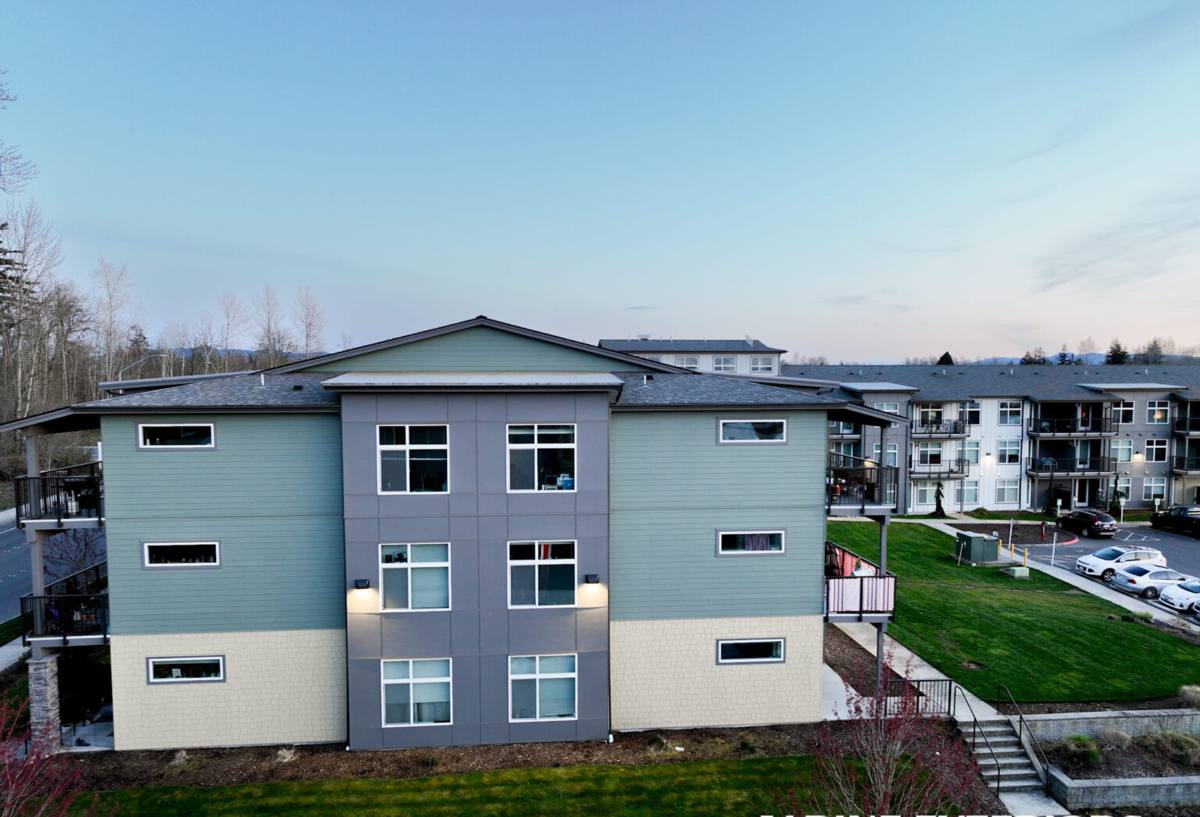
Why Fiber Cement Holds Up Where Other Materials Struggle
Moisture and the Rain Cycle
Fiber cement is a mix of cement, sand, and cellulose fiber, pressed and cured into a dense, dimensionally stable board. It doesn't absorb water the way wood or wood-composite siding does, and it doesn't swell and shrink with every wet-dry cycle the way those materials do. In a climate where a wall can go from soaked to damp to soaked again several times a week for half the year, that stability matters more than almost any other property.
Salt Air and Corrosion
Salt-laden air doesn't rot siding directly, but it accelerates corrosion in fasteners, flashing, and trim if those components aren't chosen and installed correctly. Fiber cement panels themselves are inert to salt exposure — the real risk in a bay-adjacent neighborhood like Happy Valley is cutting corners on fastener material or flashing details, which is a workmanship issue as much as a product one.
Moss, Algae, and Organic Growth
Moss and algae need a food source and a foothold. Untreated wood siding gives them both. Fiber cement's cement-based composition doesn't feed organic growth the way wood fiber does, and a factory-applied finish resists the kind of surface breakdown that gives spores something to grip. Shaded, damp walls in Happy Valley will still need occasional cleaning — no siding is maintenance-free here — but fiber cement starts from a much better position than wood, engineered wood, or primed spruce.
Why We Install Only James Hardie
We don't install LP SmartSide, vinyl, Cemplank, Allura, primed spruce, or cedar. That's a deliberate standard, not a sales preference. James Hardie is non-combustible, which matters given how dry Whatcom County summers have trended in recent years, and it's manufactured in specific formulations for different climate zones through Hardie's HZ engineering system. Homes in our region fall under the HZ5 line, built for cold, wet, freeze-thaw conditions rather than the hot, humid formulation sold in the Southeast.
Hardie backs its products with a strong, transferable limited warranty and a factory ColorPlus finish that's engineered to hold up under UV and moisture exposure far longer than a field-applied paint job. When we tell a Happy Valley homeowner what to expect from their siding in year five, year fifteen, and year thirty, we're speaking from a track record, not a guess — and that's the whole reason we standardized on one manufacturer instead of offering a menu of products with very different long-term behavior.
What Correct Installation Involves
Water Management and Flashing
Fiber cement siding is only as good as the water-resistive barrier and flashing behind it. Every window, door, and penetration needs properly lapped flashing that directs water out and away from the sheathing, not just a bead of caulk covering a gap. In a rain-heavy climate like this one, the flashing details around openings do more to prevent long-term damage than the siding material itself.
Fastening, Gapping, and Caulking
Hardie specifies exact nailing patterns, fastener types, and clearance gaps between panels, trim, and adjacent surfaces — gaps that exist specifically so the assembly can handle moisture and slight movement without trapping water. Skipping those gaps, over-driving fasteners, or caulking joints that are supposed to stay open are the most common ways an otherwise good product fails early. This is where installer experience matters as much as the material choice.
Below is a quick look at how installation quality affects real-world performance:
| Installation Detail | Done to Spec | Cut Corner |
|---|---|---|
| Window and door flashing | Water directed away from sheathing | Trapped moisture behind siding, hidden rot |
| Panel gapping | Room for seasonal movement | Buckling, cracked caulk lines |
| Fastener placement | Secure without splitting panels | Cracked edges, loosened panels over time |
| Bottom clearance above grade/decks | Panel stays dry, sheds water | Wicking, moss growth, edge deterioration |
ColorPlus Factory Finish vs. Field-Painted Siding
Hardie's ColorPlus finish is baked on in a controlled factory environment through multiple coats, which gives it more consistent coverage and better long-term color retention than a finish applied on-site after installation. In a neighborhood with heavy shade, salt air, and long stretches of damp weather, that matters — field-applied paint has more opportunity to miss thin spots, and it faces the same UV and moisture stress with a thinner, less uniform coating. ColorPlus also comes with its own warranty coverage, separate from the substrate warranty, which is part of why we don't recommend field-painting Hardie siding unless a specific situation calls for it.
Our Process for a Happy Valley Siding Project
- On-site inspection of the existing siding, sheathing, and trim to identify moisture damage, rot, or flashing problems before a bid is written.
- Removal of old siding and inspection of the water-resistive barrier and sheathing underneath, with repairs made before anything new goes up.
- Installation of James Hardie panels or lap siding to manufacturer specification — correct fastening, gapping, and flashing at every window, door, and penetration.
- Trim, caulking, and touch-up work using Hardie-compatible materials, keeping the whole system consistent rather than mixing in incompatible products.
- Final walkthrough and cleanup, including a review of what maintenance the specific site — shaded, exposed, near grade, or otherwise — will actually need.
What Affects the Cost of a Fiber Cement Siding Project
Every Happy Valley home is different, and pricing depends on more than square footage. The factors below are the ones that most often move a project up or down in cost:
| Factor | Why It Matters |
|---|---|
| Condition of existing sheathing | Hidden rot or moisture damage found during tear-off requires repair before new siding can go on |
| Home height and access | Multi-story walls, steep grades, or limited access add labor and equipment time |
| Trim and detail complexity | Multiple gables, dormers, or window trim styles increase cutting and flashing work |
| Siding profile chosen | Lap width, shingle-style panels, and board-and-batten each carry different material and labor costs |
| Amount of existing siding removal | Full tear-off versus partial replacement changes the scope significantly |
We give straightforward, itemized estimates rather than a single vague number, so homeowners can see exactly what's driving the price on their specific home.
Maintaining Fiber Cement Siding in a Coastal, Mossy Climate
Fiber cement is low-maintenance, not no-maintenance — especially in a shaded, damp, salt-air neighborhood like Happy Valley. A few habits go a long way:
- Rinse siding with a garden hose once or twice a year to clear salt residue, pollen, and early moss growth before it takes hold.
- Keep gutters clean and downspouts directed away from the wall so water isn't running down or pooling behind siding.
- Trim back tree branches and shrubs that keep siding shaded and damp for extended periods.
- Inspect caulk joints around windows and trim annually and re-caulk any that have cracked or pulled away.
- Avoid pressure washing directly into panel seams — a soft wash is safer for the caulking and flashing underneath.
Why Local Experience in Happy Valley Matters
A crew that already works in this part of Bellingham knows which walls take the brunt of the weather off the bay, which lots stay shaded and slow to dry, and how Whatcom County's permitting and inspection process works in practice. That familiarity shows up in small decisions — where to add extra flashing attention, which siding profile sheds water best on a shaded gable, how to sequence a tear-off around our rain patterns — that a crew unfamiliar with the area might miss entirely. It also means we're not learning the neighborhood's quirks on your project.
If your current siding is showing moss staining, soft spots, cracked caulk, or paint that won't hold anymore, it's worth having it looked at before those issues reach the sheathing. We'd be glad to walk your home, explain what we're seeing, and put together a straightforward, no-pressure estimate for James Hardie siding built for what Happy Valley actually deals with each year.