 Bellingham Exterior
 Siding Repair in Bellingham's Happy Valley Neighborhood
Happy Valley sits south of downtown Bellingham, near Western Washington University, on hillside terrain with a good amount of mature tree cover across much of the neighborhood. That mix matters for siding more than most homeowners expect. A shaded, tree-lined lot dries out differently than an open one, and Happy Valley's housing stock ranges from older mid-century homes to newer infill squeezed onto smaller lots, which means the siding we're called out to repair here varies widely in age, material, and how it was originally installed.
What doesn't vary is the climate underneath all of it. Whatcom County's marine air, wind-driven rain, and long moss season hit every neighborhood in Bellingham, but Happy Valley's terrain and tree cover shape exactly where and how fast that shows up on a wall. We do repair work throughout Bellingham, and this neighborhood is regular territory for our crew — enough that we've got a good sense of which walls fail first and why, before we ever pull the first piece of damaged siding off a house here.
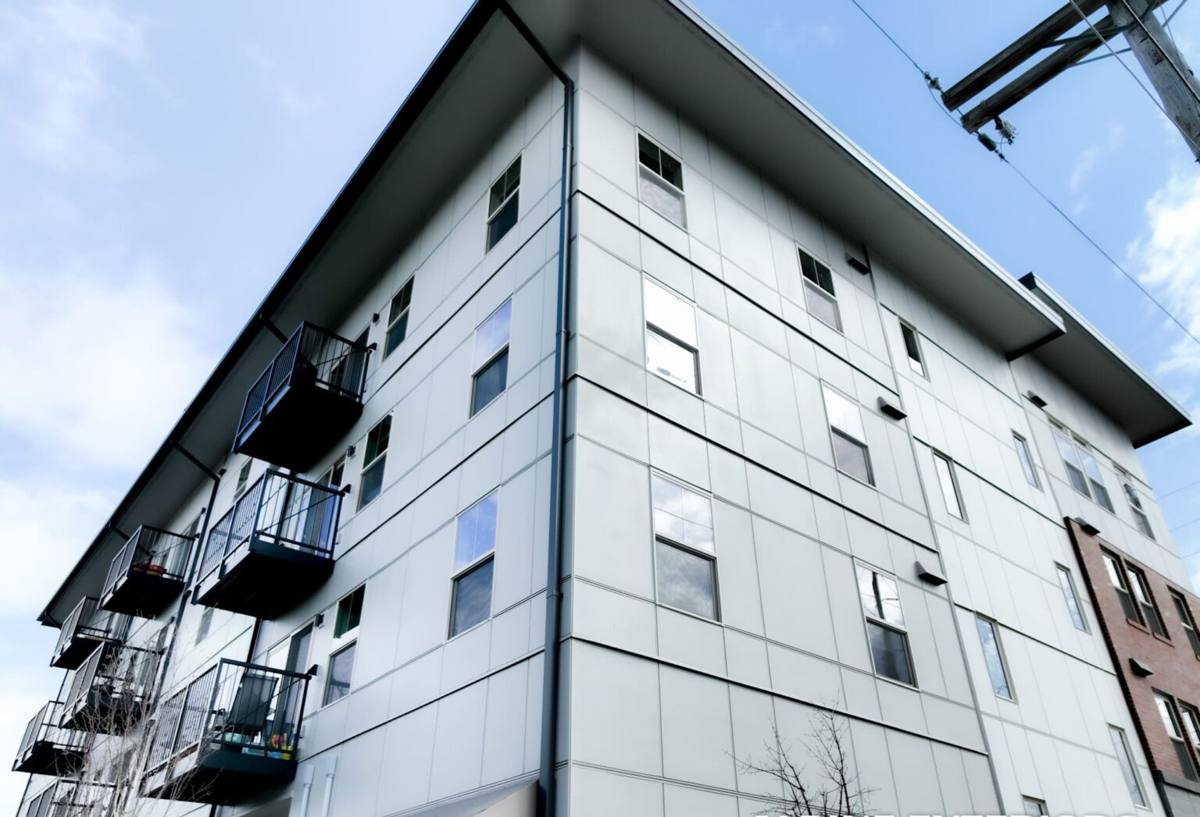
What Happy Valley's Conditions Actually Do to Siding
Salt Air and Marine Moisture
Bellingham sits on the bay, and that means a steady background of salt-tinged, moisture-laden air moves through the whole city, Happy Valley included, even on days without an obvious storm. It's a slow kind of damage — corroding fasteners, degrading caulk, and wearing down lower-grade finishes — that's rarely visible from the street until it's been working for years.
Wind-Driven Rain
Rain in this part of Whatcom County rarely just falls straight down. Wind pushes it sideways into lap joints, butt joints, and trim seams, and hillside terrain like Happy Valley's can funnel that wind in ways a flat, open lot doesn't. Siding, house wrap, and flashing that would hold up fine in a calmer climate can still take on water here specifically because of the angle it's arriving from.
A Long Moss Season Under Tree Cover
Happy Valley's mature tree canopy is part of what gives the neighborhood its character, but shade and moss go together. Walls that stay damp longest — north-facing, tree-shaded, tucked against landscaping — grow moss and mildew across most of the year, not just in the wettest months. Any siding material with even a little surface porosity becomes a growth surface over time, and that organic buildup holds moisture against the wall longer than a clean, dry surface would.
Common Siding Problems We Find on Repair Calls Here
Aging Wood and Cedar Siding
Older Happy Valley homes often still carry original wood or cedar siding, and the failure pattern is consistent: rot starting at butt joints and lower courses where moisture sits longest, cupping or splitting boards, and finish that's failed well ahead of its repaint schedule on shaded elevations. By the time it's visibly soft, the damage usually extends further than what's showing on the surface.
Vinyl Siding Cracking and Warping
Vinyl siding on older homes in this neighborhood tends to show brittleness and cracking at fastener points, along with warping where panels weren't left room to expand and contract. Because vinyl relies on lapped panels rather than a sealed surface, moisture that gets behind a cracked or gapped panel can sit against the wall sheathing for a long time before it's noticed from outside.
Engineered Wood Siding Swelling at Edges
Engineered wood products are vulnerable at cut edges and butt joints, where the factory sealant that protects the material stops. Once moisture gets into an exposed edge, the board swells, the paint or finish cracks along that swelling, and the damage spreads from there. This is one of the more common repair calls we get on homes with this type of siding, particularly on shaded walls.
Fiber Cement Installed Without the Right Details
Even fiber cement siding fails when it's installed without a rain screen gap, with caulked butt joints instead of properly flashed ones, or with the wrong fastener spacing. We see this on homes where fiber cement was installed by a crew that treated it like any other siding product instead of following the manufacturer's actual spec. The material itself isn't usually the problem in these cases — the installation is.
Repair or Replace: How That Call Actually Gets Made
Not every siding problem calls for the same response, and figuring out which category a home falls into is the real job of an honest repair estimate.
| Symptom | Usually Repairable | Often Signals Wider Replacement |
|---|---|---|
| Isolated rot at one or two boards or joints | Yes, if surrounding material is sound | Only if similar damage shows up elsewhere on the same wall |
| Cracked or warped vinyl panels | Yes, section replacement if matching material is available | If cracking is widespread across multiple elevations |
| Swollen edges on engineered wood siding | Sometimes, if isolated to a few boards | Usually, if swelling shows up at multiple joints across a wall |
| Soft or spongy siding over a large area | Rarely | Yes — indicates moisture has been behind the siding for a while |
| Peeling paint or finish failure on a shaded wall | Yes, if the substrate underneath is still sound | If the substrate is soft or the finish has failed repeatedly |
| Missing or failed rain screen behind fiber cement | Depends on extent of moisture already trapped | Yes, if trapped moisture has already damaged the sheathing |
These are general patterns, not a diagnosis for any specific house. Two homes with the same surface symptom can need very different scopes once the siding actually comes off, which is why we don't quote repair work without looking at it directly.
How We Diagnose Before Recommending Anything
A repair estimate that's actually worth trusting starts with a real inspection, not a guess from the driveway. That typically includes:
- Checking butt joints, corners, and lower courses first, since that's where moisture damage shows up earliest
- Probing suspect boards for softness rather than judging by appearance alone
- Looking behind a sample section of siding, where practical, to check for a rain screen gap and house wrap condition
- Inspecting fastener type and spacing against manufacturer spec, since incorrect fasteners are a common root cause we find on tear-offs
- Checking flashing at windows, doors, and wall penetrations, since a lot of siding damage actually starts at a poorly flashed opening
- Assessing how much shade and tree cover a given wall gets, since that affects how long moisture sits against it after a storm
We'll walk through what we actually find — what's cosmetic, what's a real repair, and what points to a bigger problem — before recommending a scope.
What a Correct Siding Repair Involves
Matching Existing Material Honestly
Repairing a section of siding means working with what's already on the wall. Where a close material, profile, or color match exists, we use it. Where it doesn't — a discontinued product or a finish that's faded unevenly — we say so upfront, because a mismatched patch is a bad surprise nobody wants to discover after the work is done.
Fixing the Moisture Path, Not Just the Symptom
A rotted board or a swollen edge is a symptom. Missing flashing, a failed rain screen, or a gap in the house wrap underneath is usually the actual cause. Replacing the visible damage without correcting what let moisture in behind it just resets the clock on the same failure, often faster the second time.
Correcting Fasteners and Flashing to Spec
When a repair involves removing and replacing siding, we bring the fastener type, spacing, and flashing details up to the manufacturer's actual installation spec rather than matching whatever shortcut was there before. This is where a repair either holds for years or needs redoing sooner than it should.
When a Repair Call Turns Into a Replacement Conversation
Sometimes what starts as a repair estimate turns into something bigger once we're actually into the wall — moisture damage that's spread further than expected, a substrate that's compromised, or an installation with problems throughout rather than in one spot. When that happens, we give a straight answer about it rather than patching over a problem that's going to resurface.
If a wall or full siding job genuinely needs replacing, we install one product: James Hardie fiber cement. We don't offer LP SmartSide, vinyl, Cemplank, Allura, primed spruce, or cedar as a replacement option, even mid-repair on a home that currently has one of those products. That's a professional standard built from what we consistently find on repair and tear-off calls in wet, shaded, marine-influenced neighborhoods like Happy Valley — not a sales position.
- Non-combustible core: Fiber cement doesn't feed a fire the way wood-based siding can.
- Factory-applied ColorPlus finish: The color is baked on under controlled conditions rather than field-applied, so it holds up longer against fading and moisture than site-applied paint.
- Climate-engineered HZ5 formulation: Built for regions with sustained moisture and freeze-thaw cycling, which describes coastal Whatcom County.
- Dimensional stability: It doesn't swell or cup at cut edges the way engineered wood products can once moisture gets in.
- Strong transferable warranty: Backed by the manufacturer, provided the installation follows their spec — which is why we follow it closely.
Each of the products we don't install has homeowners who are satisfied with it. We've just made the call, based on what we see on service calls, to stand fully behind one system rather than offer something that quietly shifts maintenance risk back onto the homeowner a few years out.
Maintenance That Extends a Repair's Life in a Shaded Neighborhood
- Trim back branches and landscaping that keep a wall shaded and damp longer than it needs to be
- Rinse moss and organic buildup off siding before it works into joints and fastener heads
- Check caulking at trim, corners, and penetrations yearly, and recaulk before it fails rather than after
- Watch for paint or finish failure on north-facing and tree-shaded walls specifically, since those go first
- Address soft spots or visible gaps right away — waiting rarely makes a moisture problem smaller
- Keep gutters and downspouts clear so roof runoff isn't adding extra water load to walls below
Why a Crew That Already Works Happy Valley Matters
A repair crew that mostly works open, sun-exposed lots can still do competent work here, but Happy Valley's hillside terrain and heavy tree cover change where moisture problems actually start and how long a wall stays wet after a storm. Working this neighborhood regularly means we're not guessing at that — we know which elevations tend to fail first, what a given home's age usually means for what's underneath the siding, and how to give an estimate that holds up once the work actually starts instead of growing in scope halfway through.
If your Happy Valley home has a siding problem — a soft spot, cracked or warped panels, a section that's clearly failing — we're glad to take an honest look and tell you plainly what it needs, whether that's a targeted repair or something bigger. Reach out using the form below to schedule a free, no-pressure estimate.