 Bellingham Exterior
 Why Silver Beach Homes Need a Different Siding Conversation
Silver Beach sits close enough to Bellingham Bay that salt-laden air is a daily fact of life for anything on the exterior of a house — trim, fasteners, paint, and siding included. Add in the region's long stretch of driving rain each fall and winter, plus the shaded, moisture-holding conditions that let moss and algae take hold on north- and west-facing walls, and you've got a climate that is genuinely hard on building materials. Not every siding product handles that combination well, and not every installation crew accounts for it. This page is about what James Hardie fiber cement siding specifically brings to a Silver Beach home, and what a correct installation looks like in this neighborhood's conditions.
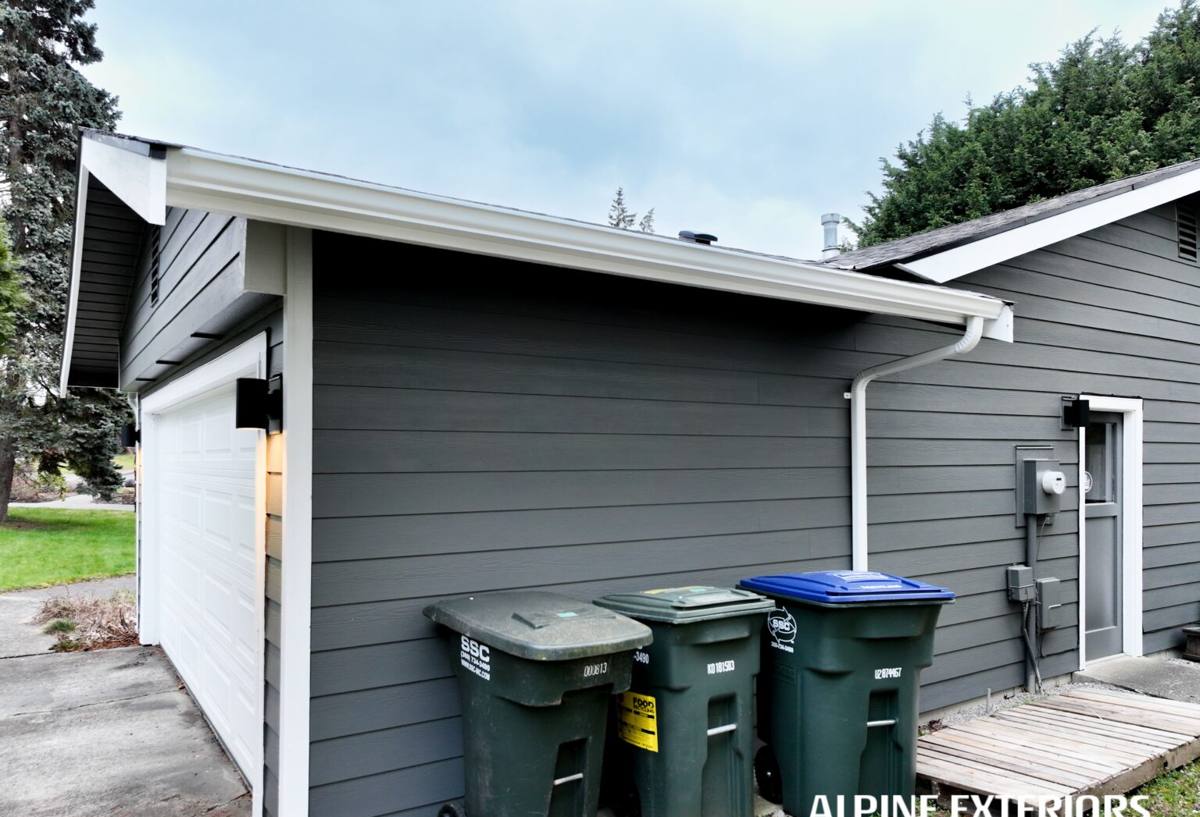
What Salt Air, Rain, and Moss Actually Do to Siding
It helps to be specific about the mechanisms at work, because "coastal climate" gets thrown around loosely in the siding trade without much explanation.
Salt Air
Airborne salt is corrosive to metal fasteners, flashing, and trim accessories, and it can accelerate the breakdown of lower-quality paint films over time. Siding that relies on a thin factory coating or field-applied paint is more exposed to this kind of slow degradation than siding with a genuinely engineered, baked-on finish.
Driving Rain
Wind-driven rain off the bay doesn't just fall — it gets pushed sideways into wall assemblies, seams, and butt joints. Siding and water-management details that aren't installed with correct gaps, flashing, and drainage paths will eventually let moisture behind the cladding, where it can sit against sheathing and framing.
Moss and Algae
Shaded walls, overhanging trees, and persistent damp conditions are exactly what moss and algae need to establish themselves. Porous or organic-based siding materials can hold moisture at the surface longer, giving growth more of a foothold and more opportunity to work into surface texture over the years.
None of these three factors is dramatic on its own. Together, applied year after year, they're what separates a wall that still looks tight and clean after fifteen years from one that's chalking, staining, or showing soft spots.
Why We Install James Hardie Here, Specifically
James Hardie fiber cement is a cement-based product, not wood or wood-derived. That matters directly for Silver Beach's conditions:
- Non-combustible core: fiber cement doesn't rot, delaminate, or feed insects the way wood-based siding products can when moisture gets in.
- ColorPlus factory finish: the color is baked on in a controlled factory process, which holds up to UV and salt exposure noticeably better than field-applied paint over time, and resists the fading and chalking that coastal sun and salt air accelerate.
- HZ5 product engineering: Hardie's HZ5 line is formulated for climates like ours — colder, wetter, higher humidity — with moisture and freeze-thaw performance built into the product itself rather than relying entirely on field coatings.
- Dense, low-absorption surface: a properly finished fiber cement surface gives moss and algae less to grab onto than more porous or textured wood-based products, and it cleans up more easily when growth does appear.
We install James Hardie exclusively. We don't offer LP SmartSide, vinyl, Cemplank, Allura, primed spruce, or cedar. That's a deliberate standard, not a sales pitch — we'd rather put our name behind one product system we trust completely for this climate than juggle several and hope each performs.
What a Correct Installation Involves
James Hardie siding performs the way it's engineered to only when it's installed to spec. In a climate like Bellingham's, the installation details matter as much as the product choice.
Water Management First
Before any siding goes up, the wall needs a correctly lapped weather-resistive barrier, proper flashing at every window, door, and penetration, and a drainage plane that lets any incidental moisture get out instead of sitting behind the cladding. This is the part of the job that's invisible once the siding is on — and it's the part that determines whether the wall stays dry for the next thirty years.
Fastening and Clearances
James Hardie specifies fastener type, spacing, and placement, along with minimum clearances from grade, roof lines, decks, and other siding-to-trim transitions. Skipping these clearances is one of the most common ways fiber cement siding traps moisture at the bottom edge — exactly the failure mode that shows up first in a wet climate.
Joint and Seam Treatment
Butt joints, corners, and panel seams have to be treated correctly — caulked, flashed, or engineered per Hardie's details — so driving rain off the bay doesn't find a path behind the board.
Ventilation Behind the Cladding
A rainscreen or properly vented assembly gives any moisture that does get past the siding a way to dry out, rather than staying trapped against sheathing. In a high-rain, high-humidity area like Silver Beach, this is not an optional upgrade — it's what keeps a correctly installed wall correct for decades.
What Goes Wrong When It's Installed Wrong
Fiber cement has a reputation in some circles as being installation-sensitive, and that reputation is earned — not because the product is fragile, but because the margin for error is smaller than with more forgiving materials. The most common issues we see on inspections of poorly installed Hardie siding are:
| Installation Error | What It Causes |
|---|---|
| Siding installed tight to grade or decking | Wicking moisture into the bottom edge of the board over time |
| Missing or incorrect flashing at windows/trim | Water intrusion behind the siding at penetrations |
| Wrong fastener spacing or type | Panel movement, cracking, or premature fastener corrosion in salt air |
| No rainscreen/ventilation gap | Trapped moisture against sheathing, slower drying, mold risk |
| Unsealed or poorly caulked joints | Water tracking behind panels during driving rain |
Every one of these is preventable. None of them is a defect in the material itself — they're installation mistakes, which is exactly why the crew matters as much as the product.
Why a Crew That Already Works Silver Beach Matters
Siding installation is a general skill, but a wet, salt-exposed, moss-prone microclimate rewards experience specific to it. A crew that regularly works Silver Beach and the surrounding Bellingham waterfront-adjacent neighborhoods has already seen where moisture tends to collect on homes like yours, which wall orientations get hit hardest by wind-driven rain, and how much drainage and ventilation margin to build in rather than just meeting the bare minimum spec. That's not something you can shortcut with a generic installation crew working from a different region's assumptions about how much rain and moss exposure a wall needs to handle.
Our Process, Start to Finish
- On-site assessment: we walk the home, look at current siding condition, moisture exposure by wall orientation, and existing water-management issues.
- Product and color selection: we go over the relevant James Hardie HZ5 lines, textures, and ColorPlus color options for your home.
- Written estimate: a clear scope covering removal, water-resistive barrier and flashing work, siding installation, and trim.
- Prep and water management: old siding removal, sheathing inspection and repair as needed, correct barrier and flashing installation.
- Installation to Hardie spec: proper fastening, clearances, joint treatment, and ventilation detailing throughout.
- Final walkthrough: we review the finished work with you before calling the job complete.
What to Check Before You Hire Anyone for This Job
- Do they install James Hardie regularly, or occasionally alongside several other siding brands?
- Can they explain their flashing and water-management approach in plain language, not just "we follow code"?
- Do they mention rainscreen or ventilation detailing without being asked?
- Are they familiar with HZ5 or climate-specific Hardie product lines versus a generic spec?
- Will the estimate be in writing, with scope specific to your home rather than a flat per-square-foot number with no detail?
Cost Factors Worth Understanding Up Front
| Factor | Why It Affects Cost |
|---|---|
| Current siding removal | Multiple layers or hidden damage add labor and disposal |
| Sheathing/framing repair | Moisture-damaged wood found during tear-off needs replacement before siding goes on |
| Home complexity | Corners, dormers, and trim details take more time per square foot than simple wall runs |
| Product line and finish | Panel vs. lap siding, texture, and ColorPlus color selection vary in material cost |
| Water-management upgrades | Adding a rainscreen or upgrading flashing where none existed adds labor but reduces long-term risk |
We won't quote a number without seeing the home — anyone who does is guessing, and in a climate this demanding, guessing on scope is how corners get cut.
If you're weighing a siding project for a Silver Beach home, we're happy to walk the exterior with you, point out what we see, and put together a straightforward written estimate — no pressure, no obligation. The form below is the easiest way to get that scheduled.