 Bellingham Exterior
 Asphalt Shingle Roofing in Lynden: Built for the Weather That Actually Shows Up Here
Lynden homes deal with a specific mix of weather that a generic roofing job doesn't always account for: long stretches of steady rain, humid air moving in off Whatcom County's lowlands and the nearby saltwater, and short winter days that never quite dry a roof out before the next system rolls through. An asphalt shingle roof can handle all of that for decades — but only if it's installed and maintained with this climate in mind, not the climate a shingle manufacturer's spec sheet was written for in a drier part of the country.
This page covers what asphalt shingle roofing actually needs to hold up in Lynden, what a correct installation looks like, and how we approach the job from the first estimate to the final walkthrough.
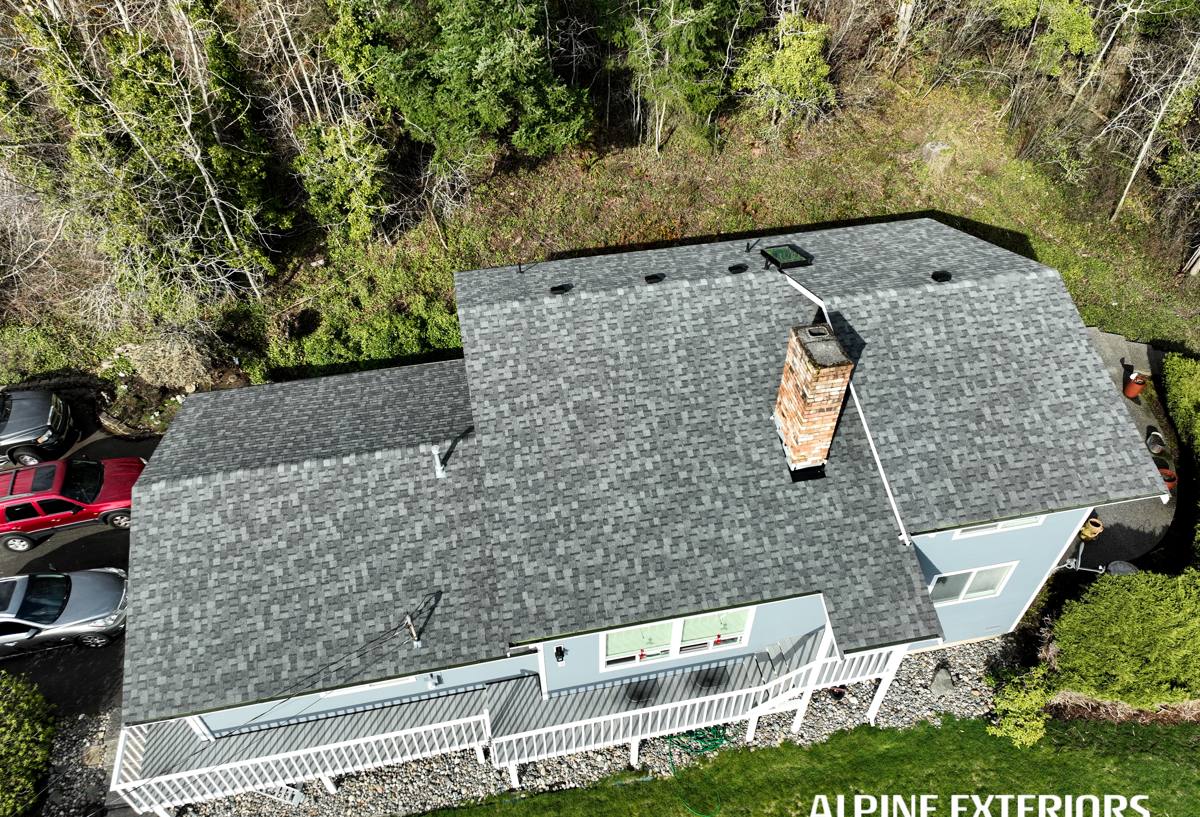
What Lynden's Climate Does to a Shingle Roof Over Time
Whatcom County's marine climate is generally mild, which is part of why asphalt shingles work so well here in the first place — there's no severe hail or extreme heat cycling to worry about. But mild and dry are not the same thing, and the specific combination of moisture, shade, and driving rain that shows up around Lynden creates its own wear pattern.
Moss and Algae
Shaded roof slopes, north-facing pitches, and roofs under overhanging trees stay damp longer than they should through fall, winter, and spring. That extended damp period is exactly what moss and algae need to get established. Once moss takes hold at the butt edges of shingles, it lifts them slightly, which lets wind-driven rain work its way underneath. Left unchecked for a few seasons, moss growth can shorten the usable life of an otherwise sound roof.
Driving Rain and Wind
Storms coming through the region often bring rain at an angle rather than straight down, which pushes water sideways into laps, valleys, and any spot where flashing or underlayment was cut short. A shingle roof that would perform fine in a calmer climate can leak in exactly these conditions if the underlayment and flashing details weren't built for wind-driven water.
Salt-Influenced Air
Air moving inland off Puget Sound and the Strait of Georgia carries a mild salt component that, over years, accelerates corrosion on exposed metal — nail heads, flashing edges, and vent housings in particular. It's a slow effect, but it's one more reason fastener quality and flashing material matter more here than they would somewhere further from the water.
What a Correct Asphalt Shingle Installation Actually Involves
A shingle roof is a system, not a single product. The shingles themselves get most of the attention, but the layers underneath and around them do most of the work of actually keeping water out.
Underlayment and Ice-and-Water Barrier
We use synthetic underlayment as the primary water-resistant layer under the field of the roof, with self-adhering ice-and-water membrane at the eaves, in valleys, and around penetrations like chimneys and skylights — the spots where water concentrates and where a nail-through underlayment alone isn't enough protection in a climate this wet.
Starter Strips and Nailing Pattern
A proper starter course along the eaves and rakes gives the first row of shingles something to bond to and closes off the gap that wind can otherwise get under. Nailing pattern and placement matter just as much as nail count — shingles nailed too high, too low, or with the wrong fastener can void the manufacturer's wind warranty even when the roof looks fine from the ground.
Flashing
Step flashing at walls and dormers, counter-flashing where a roof meets siding or masonry, and properly formed valley metal or valley shingle work are where most leaks actually originate — not in the open field of shingles. We treat flashing as its own trade within the job, not an afterthought bent to fit at the end.
Ridge and Hip Caps
Ridge cap shingles need to be rated for the exposure they'll see and fastened according to the manufacturer's high-wind pattern, especially on roofs with longer, more exposed ridgelines.
Ventilation and Moisture Control: The Part Homeowners Never See
Attic ventilation doesn't show up on a curb-appeal photo, but it's one of the biggest factors in how long a shingle roof actually lasts in a humid climate. An attic that can't breathe traps moisture from the living space below, and that moisture works its way into the roof deck from underneath — which shows up later as premature shingle curling, deck rot, or mold, none of which are caused by the shingles themselves.
Balanced Intake and Exhaust
Ventilation only works when intake at the soffits and exhaust at the ridge or roof are balanced. A ridge vent installed without enough soffit intake to feed it can actually pull conditioned air out of the living space instead of venting the attic, which wastes energy without solving the moisture problem.
Baffles and Insulation Clearance
Insulation that's been blown in or added over the years can block soffit vents from the inside without anyone noticing from the roof. Part of a correct reroof is confirming baffles are in place and airflow to the ridge isn't blocked, not just replacing what's visible from outside.
Choosing the Right Shingle for This Climate
Most manufacturers sell versions of the same shingle at a few different quality tiers, and the difference matters more in a wet, moss-prone climate than it would somewhere drier. We'll walk through the realistic options for a given roof rather than defaulting to one product for every job.
| Shingle Type | Typical Lifespan Here | Moss/Algae Resistance | Best Fit |
|---|---|---|---|
| 3-Tab (economy) | 15–20 years | Standard granules only | Budget-driven projects, rentals, short-hold properties |
| Architectural / Laminate | 25–30 years | Often available with algae-resistant granules | Most Lynden homes — better wind rating, thicker profile sheds water more effectively |
| Impact-Resistant (Class 4) | 25–30+ years | Algae-resistant options widely available | Homes wanting stronger hail/impact protection and, in some cases, an insurance discount |
Within architectural and impact-rated lines, most major manufacturers offer a version with copper- or zinc-infused granules specifically to slow algae and moss growth on shaded slopes. It costs somewhat more up front, but on a Lynden roof with any shade exposure, it's usually worth the difference over the life of the roof rather than fighting moss with chemical treatments every year or two.
Our Process, Start to Finish
- Roof evaluation. We inspect the existing roof, deck condition, ventilation setup, and flashing details — not just the shingles — so the estimate reflects what the roof actually needs, not a guess from the ground.
- Written estimate. You get a clear scope of work and material selection in writing before anything is scheduled, including what underlayment, ice-and-water coverage, and shingle line are being used.
- Tear-off and deck check. Old roofing comes off down to the deck so we can actually see the sheathing condition and replace any soft or damaged sections, rather than roofing over a problem.
- Underlayment, flashing, and ice-and-water installation. This layer goes down correctly before a single shingle is installed, since it's the layer that matters most once the shingles are on.
- Shingle installation. Installed to the manufacturer's nailing and exposure specifications, which is also what keeps the manufacturer's warranty valid.
- Ventilation check. Intake and exhaust airflow are confirmed as part of the job, not treated as a separate upsell.
- Final walkthrough. We go over the completed roof with you, including care and simple maintenance going forward.
Maintenance and Moss Control Between Roofs
A well-installed asphalt shingle roof in Lynden still benefits from a little regular attention, especially on shaded or north-facing slopes. None of this needs to be complicated or frequent, but skipping it entirely is how moss gets a multi-year head start.
- Keep overhanging branches trimmed back so more sunlight and airflow reach shaded roof slopes
- Clear gutters and valleys of needles and debris before the fall rains set in
- Have moss growth treated or gently removed before it lifts shingle edges, rather than after
- Check attic ventilation isn't blocked by added insulation after any insulation upgrade
- Walk the roofline visually after major windstorms for lifted or missing shingles
- Have flashing around chimneys, skylights, and vent pipes checked every few years, since these fail before the shingle field usually does
What Affects the Cost of a Lynden Reroof
We won't quote a number without seeing the roof, but these are the factors that actually move the price on a typical asphalt shingle project in this area, in rough order of impact.
| Factor | Why It Matters |
|---|---|
| Roof size and number of layers being removed | Tear-off labor and disposal scale directly with square footage and existing layers |
| Roof pitch and accessibility | Steeper or harder-to-access roofs require more safety setup and slow production |
| Deck condition | Rotted or soft sheathing found at tear-off needs replacement before shingles go on |
| Shingle tier selected | Architectural and impact-rated lines cost more than 3-tab but last longer and resist moss better |
| Number of penetrations and valleys | Chimneys, skylights, and valley work take more flashing labor per square foot than open field areas |
| Ventilation upgrades needed | Adding or correcting intake/exhaust venting is sometimes needed on older Lynden homes and adds modest cost |
Why a Crew That Already Works in Lynden Makes a Difference
Roofing crews that only pass through an area occasionally tend to install to a generic spec and move on. A crew that regularly works Lynden and the surrounding parts of Whatcom County has already seen which slopes hold moss, which older homes tend to be under-ventilated, and which flashing details fail first under this area's driving rain — and builds around that from the start instead of learning it from a callback.
It also means someone local is available if a question comes up after the job — about a warranty registration, a maintenance question, or a storm that raises a concern — rather than a crew that's a long drive away or no longer taking calls in the area.
If you're planning a reroof or need an honest look at what your current asphalt shingle roof needs, we're happy to come out, take a real look, and give you a straightforward, no-pressure estimate using the form below.