 Bellingham Exterior
 Roof Repair in Lynden: A Job Shaped by Local Weather
Lynden sits inland from Bellingham Bay, but it still gets the same weather pattern that runs through most of Whatcom County: long stretches of low, driving rain from fall through spring, damp air that never fully dries out, and a marine influence that carries salt and moisture further inland than most homeowners expect. Add in the tree cover common around Lynden's farms and residential streets, and you get near-ideal growing conditions for moss and algae on roofs almost year-round.
That combination — constant moisture, organic growth, and salt-tinged air — is harder on a roof than dry heat or occasional storms. It doesn't usually cause dramatic failures. It causes slow, quiet damage: a lifted shingle tab here, a soft spot in the decking there, a flashing seam that's been seeping for two winters before anyone notices a stain on the ceiling. Roof repair in this climate is less about patching obvious damage and more about catching and correcting that slow deterioration before it becomes a bigger, more expensive problem.
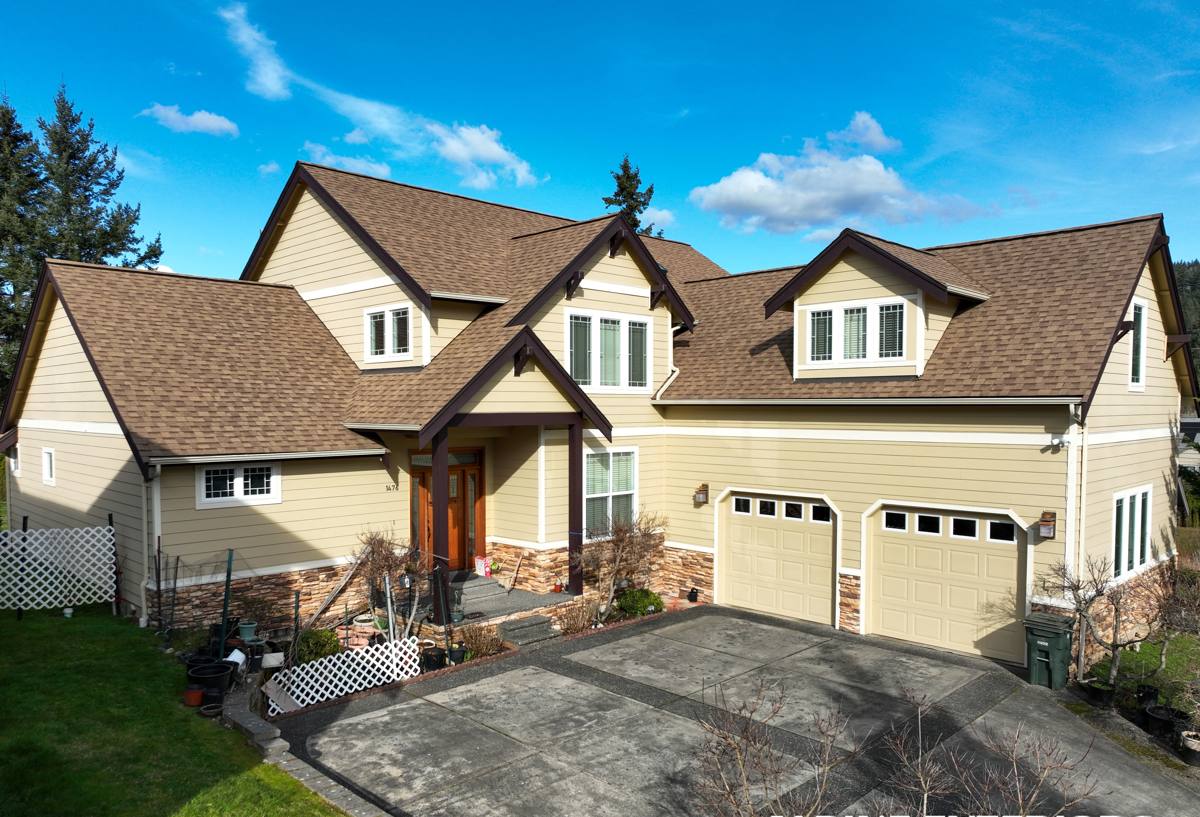
What Moss, Rain, and Salt Air Actually Do to a Roof
Moss and Algae
Moss doesn't just sit on top of shingles — it roots into the granule surface, holds moisture against the roofing material, and lifts shingle edges as it grows and spreads. Once tabs are lifted, wind-driven rain gets underneath them instead of running off. Given Lynden's mild, wet winters and shaded lots, moss can take hold within a few years of a roof going untreated, especially on north-facing slopes that stay damp longer.
Driving Rain
Rain that comes in mostly straight down is easy on a roof. Rain that comes in at an angle, pushed by wind off the water, tests every seam, lap, and penetration — chimneys, vents, skylights, valleys. A roof that's watertight in a light drizzle can still leak during a wind-driven storm if flashing or underlayment details weren't done right the first time.
Salt Air
Bellingham Bay's proximity means airborne salt reaches further inland than people assume, accelerating corrosion on exposed metal — flashing, fasteners, vent caps, and gutter hardware. Corroded metal fails quietly; a rusted-through flashing edge or a corroded nail head is often the real source of a "mystery leak" that looks unrelated to any visible roof damage.
Signs a Lynden Home Needs Roof Repair
Most repair calls we get fall into a few consistent categories. None of these mean the whole roof is shot — they mean something specific needs attention before it spreads.
- Dark streaking or thick moss growth, especially on shaded or north-facing slopes
- Granules collecting in gutters or at downspout outlets
- Curling, cupping, or lifted shingle tabs, particularly near roof edges
- Water stains on ceilings or in the attic, especially after wind-driven rain
- Rust staining around flashing, vents, or metal roof fasteners
- Soft or spongy spots when walking the roof (a sign of decking damage underneath)
- Daylight visible through the roof deck from inside the attic
- Gaps or cracked sealant around chimneys, skylights, and pipe boots
If you're seeing one or two of these, it's usually a targeted repair. If you're seeing several at once, especially decking softness combined with interior staining, it's worth an honest look at whether repair still makes sense or whether the roof is closer to end of life.
What a Correct Repair Actually Involves
A roof repair done right isn't just "cover the visible spot." The visible damage is usually the last symptom of a problem that started somewhere else — a failed flashing lap, a torn underlayment seam, or moss that's been holding water against the deck for a season or two. A repair that doesn't address the actual entry point will look fine for a few months and then leak again in the next hard rain.
A proper repair generally includes:
- Removing enough surrounding material to see the full extent of the damage, not just the visible symptom
- Checking the decking underneath for soft spots, rot, or delamination before re-covering anything
- Replacing damaged decking, not just shingling over it
- Re-flashing valleys, chimneys, or vent penetrations if the existing flashing is corroded, undersized, or improperly lapped
- Matching shingle or metal material as closely as possible so the repair blends and performs consistently with the surrounding roof
- Confirming proper water shedding direction and lap sequence — details that matter more in driving rain than in calm weather
This is also where moss removal matters. Treating and clearing moss without addressing shingle tabs that are already lifted or cracked underneath just delays the same repair by a season.
Repair or Replace? How We Help You Decide
Not every damaged roof needs a full replacement, and not every "just a small leak" is actually a small job once the decking is exposed. We look at age, extent of damage, and how the roof has been maintained before recommending either path.
| Factor | Leans Toward Repair | Leans Toward Replacement |
|---|---|---|
| Roof age | Well within expected material lifespan | At or past the material's typical service life |
| Extent of damage | Localized — one slope, one flashing point, one valley | Widespread across multiple slopes or repeated past repairs |
| Decking condition | Solid, no rot found on inspection | Soft, delaminated, or rotted in multiple areas |
| Moss/algae history | Recently treated or minimal growth | Long-term untreated growth with granule loss |
| Maintenance history | Regular gutter and moss upkeep | Little to no prior maintenance |
| Approximate cost range | Generally a few hundred to a couple thousand dollars, depending on scope | A larger investment, but resets the roof's full lifespan |
We'll always tell you honestly which side of that line your roof falls on. If a repair will genuinely hold for years, we say so. If a repair would just be a short-term patch on a roof that's already at the end of its life, we say that too.
Roofing Materials We Repair Around Lynden
Lynden's housing mix runs from older farmhouses to newer subdivisions, and the roofing materials reflect that range. Composition (asphalt) shingle is by far the most common, followed by metal roofing on outbuildings, barns, and a growing number of homes. Each has its own repair considerations in this climate.
Composition shingle repairs need close attention to granule loss and mat exposure — once the fiberglass mat underneath is exposed to UV and moisture, that section will keep degrading even after a patch. Metal roofing repairs are almost always about fastener and seam integrity rather than the panels themselves; in salt-influenced air, exposed fastener heads and cut edges are usually the first point of failure, well before the panel material itself.
We match our repair approach and materials to what's already on the roof and to what will actually hold up here, rather than defaulting to whatever's fastest to install. On some older or discontinued shingle profiles, an exact color or texture match isn't always possible — when that's the case, we'll walk you through the realistic options before starting, rather than surprise you afterward.
Our Repair Process
We keep the process straightforward because most homeowners just want to know what's wrong, what it'll take to fix, and what it'll cost — without a sales pitch attached.
- Inspection: We walk the roof and check the attic where accessible, looking for the actual source of any leak or damage, not just the visible symptom.
- Honest assessment: We tell you what we found, whether it's a repair or a bigger conversation, and why.
- Written estimate: Clear scope and price before any work starts — no vague allowances.
- The repair: Decking, flashing, and shingle or metal work done to match the existing roof's performance, not just its appearance.
- Cleanup and walkthrough: Debris and old material cleared, and we show you what was done and why.
Maintenance That Keeps a Repair Holding
A good repair can still fail early if moss and debris are left to build back up. In a climate like this, roof maintenance isn't optional upkeep — it's what keeps a repair from turning into a repeat repair.
- Keep gutters and downspouts clear so water isn't backing up under roof edges
- Have moss treated before it spreads across a slope, not after
- Trim back overhanging branches that keep shaded areas of the roof damp longer
- Check flashing and sealant around chimneys and vents at least once a year
- Address small leaks immediately — a slow drip in a Lynden winter has months to do damage before summer dry-out helps at all
Why Local Experience Matters for This Kind of Work
Roof repair is one of those jobs where local experience shows up in the details — knowing which slopes in this area hold moss longest, which flashing details actually stand up to wind-driven rain off the bay, and which "quick fixes" don't survive a Whatcom County winter. A crew that works Lynden and the surrounding Bellingham area regularly isn't guessing at how the local climate behaves; they've already seen how it treats roofs over multiple seasons.
That matters just as much when picking who does the work as it does for the repair itself. A contractor who's licensed, insured, and willing to put the scope of work in writing — rather than a vague verbal promise — is the baseline for any roofing job, repair or replacement. If in doubt, ask for proof of both before work starts.
If you're dealing with a leak, visible moss damage, or just want an honest read on your roof's condition, we're happy to take a look. Reach out for a free, no-pressure estimate using the form below.