 Bellingham Exterior
 Metal Roofing for Lynden Homes
Lynden sits inland from Bellingham Bay in the middle of Whatcom County's farmland, but the roofs here deal with the same wet, gray stretches of weather that define this whole corner of Washington. Long soaking rains move through in fall and winter, moss finds a foothold on anything shaded or north-facing, and the freeze-thaw swings of a Nooksack Valley winter work on roofing materials year after year. A roof that's built for a drier climate, or installed without attention to how water actually moves off a house here, tends to show its age fast.
Metal roofing has become a popular answer for homeowners in this area who are tired of replacing composition shingles every 15-20 years or scraping moss off a roof every spring. Done right, it's one of the longest-lasting roofing systems available for this climate. Done wrong, it can trap moisture, leak at the seams, or fail early at the fasteners. This page covers what a Lynden metal roof actually needs to hold up, what a correct installation looks like, and how we approach the job.
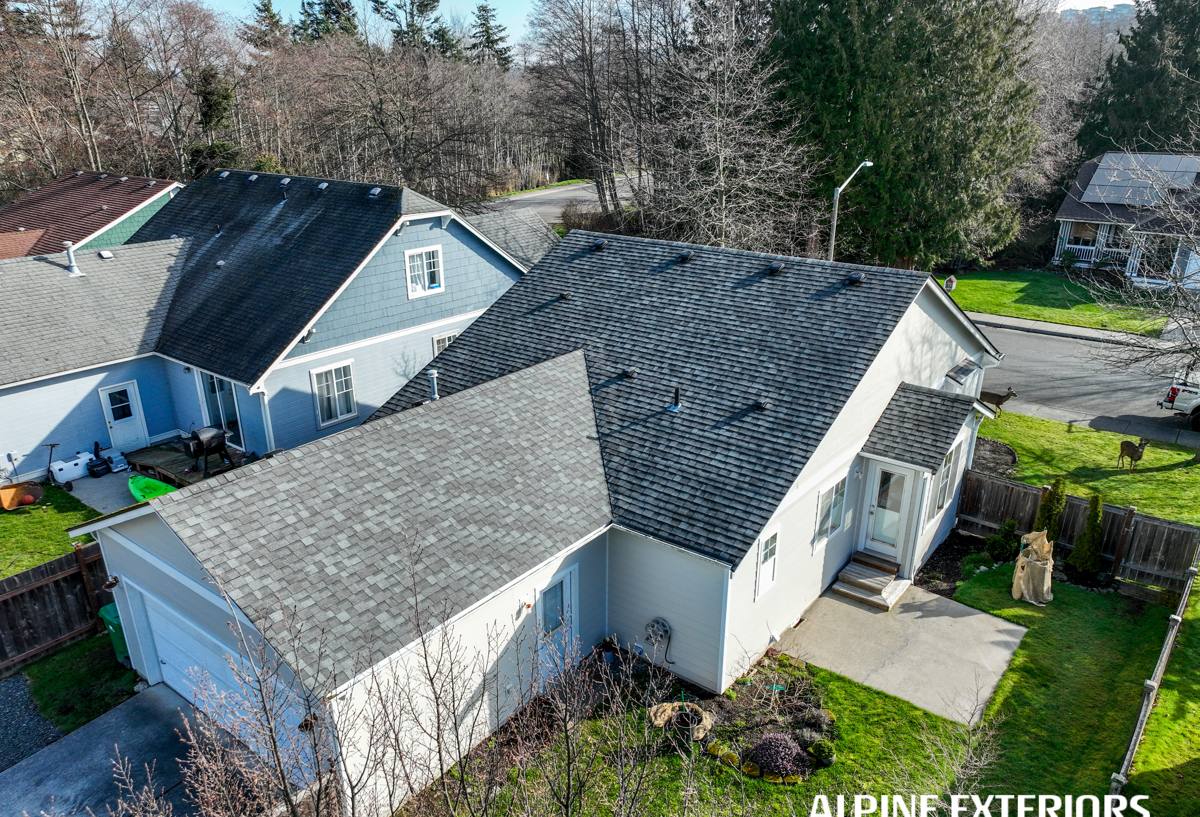
What Whatcom County Weather Does to a Roof
Homes in and around Lynden face a specific combination of stresses that shapes how we spec and install a metal roof here.
Driving Rain and Volume, Not Just Rain
Whatcom County doesn't just get rain — it gets extended stretches of it, often pushed sideways by wind off the Strait during winter storms. That matters more for roofing than a simple annual rainfall number. Wind-driven rain finds weak laps, poorly sealed penetrations, and underlayment that wasn't run high enough at valleys and walls. A roof that sheds water fine in a light shower can still leak in a January system that dumps rain sideways for two days straight.
Moss Season
Lynden's tree cover and the region's damp, mild winters give moss a long growing window — realistically most of the year outside of a dry summer stretch. Moss holds moisture against roofing material, lifts shingle edges, and works into any surface with texture or seams. It's one of the main reasons asphalt shingle roofs in this area age faster on their shaded, north-facing slopes than on the sun-exposed sides of the same house.
Salt Air and Regional Coastal Influence
Lynden is well inland from saltwater compared to Bellingham proper, so salt exposure isn't the primary concern here the way it is closer to the bay. That said, the same maritime weather systems that carry salt air onto coastal Whatcom County roofs also bring the wind and moisture that reach Lynden — so fastener quality and finish coatings still matter, just for slightly different reasons than a waterfront property would face.
Temperature Swings
Winter nights in the valley can dip well below freezing while days climb back above it. That freeze-thaw cycling is hard on roofing materials that absorb moisture, since trapped water expanding and contracting is what cracks shingles and works fasteners loose over time.
Why Metal Roofing Holds Up Well Here
Metal roofing isn't the right fit for every home or budget, but it addresses several of the specific problems Lynden's climate creates:
- Moss resistance: smooth metal panels give moss far less to grip onto than a textured shingle surface, and steeper metal roofs shed the standing moisture moss needs to establish.
- Water shedding: standing seam systems in particular are built around continuous panels with raised, mechanically sealed seams — there are far fewer horizontal laps for wind-driven rain to work into compared to shingles.
- Longevity: a properly installed metal roof commonly outlasts two or three shingle roof replacements, which matters in a climate that's hard on roofing in general.
- Low absorption: metal doesn't soak up water the way organic shingle mat can, which reduces the freeze-thaw damage cycle described above.
- Snow and debris shedding: useful for properties with more tree cover or slightly higher elevation on the edges of the valley, where wet snow can sit on lower-slope roofs.
The trade-off is upfront cost and installation sensitivity — metal roofing rewards a careful, experienced installer and punishes a rushed one more than shingles do, which is really the deciding factor in how the roof performs over its lifespan.
What a Correct Metal Roof Installation Involves
Most metal roof problems we get called out to inspect trace back to a handful of installation shortcuts, not the material itself. On a Lynden home, we pay particular attention to:
Underlayment and Ice/Water Barrier
A synthetic, high-temperature-rated underlayment goes down first, with self-adhered ice-and-water membrane at eaves, valleys, and around penetrations — the spots where wind-driven rain and ice damming are most likely to force water backward under the panels.
Ventilation
Metal roofs need a clear ventilation path between the roof deck and the panels to prevent condensation from forming on the underside of the metal, especially given how much moisture is in the air here for most of the year. Skipping proper venting is one of the most common causes of hidden deck rot under an otherwise sound-looking metal roof.
Fastening and Panel Movement
Metal panels expand and contract with temperature swings. Fasteners and clips need to allow for that movement, or the panels will eventually stress-crack around fixed points. This is a detail that's easy to get wrong and hard to see from the ground.
Flashing at Walls, Valleys, and Penetrations
Chimneys, vent stacks, skylights, and roof-to-wall transitions are where the large majority of roof leaks originate, on any roofing material. Flashing has to be custom-fit and properly lapped with the underlayment, not just caulked in place.
Panel Types and How We Help You Choose
Not every metal roofing system is built the same way, and the right choice depends on the home, the roof's slope and exposure, and budget.
| System | How it's fastened | Best fit | Trade-offs |
|---|---|---|---|
| Standing seam | Concealed clips, no exposed fasteners | Long-term performance, cleaner look, best water-shedding | Higher material and labor cost |
| Exposed-fastener panel | Screws through the panel face | Outbuildings, shops, budget-conscious projects | Fasteners need periodic inspection and eventual re-torquing or replacement |
| Metal shingles/shakes | Interlocking panels, concealed fasteners | Homes wanting a traditional look with metal's durability | More seams than standing seam, more installation labor |
For most primary residences in this area, we lean toward standing seam because of how well it handles sustained rain and moss exposure, but we'll walk through the honest trade-offs for your specific roof rather than push one system by default.
How We Work With Lynden Homeowners
- On-site inspection: we look at the existing roof deck, slope, ventilation, and any moisture or moss damage before recommending anything.
- Straightforward estimate: a written scope covering panel system, underlayment, flashing details, and ventilation — no vague allowances.
- Tear-off and deck check: we don't install a new roof over a compromised deck; any rot or soft spots found during tear-off get addressed and discussed with you before we cover them up.
- Installation: underlayment, ice-and-water membrane at critical areas, panels, and custom flashing installed in sequence, with attention to the fastening and ventilation details covered above.
- Final walkthrough: we go over the finished roof with you and cover what maintenance, if any, it will need.
Maintaining a Metal Roof in This Climate
Metal roofing is lower-maintenance than shingles, not maintenance-free. A short annual routine goes a long way in Whatcom County's climate:
- Clear debris and needles from valleys and around penetrations, especially after fall leaf-drop
- Check that gutters and downspouts are flowing freely before the winter rains set in
- Look for any moss or algae starting on shaded, north-facing slopes and address it early
- Have flashing around chimneys, vents, and skylights visually checked every couple of years
- Watch for any panel fastener backing out on exposed-fastener systems
Why a Local Crew Matters
A roofing crew that already works in Lynden and across Whatcom County knows how this specific climate treats a roof over time — not from a manual, but from having repaired the roofs that were installed without accounting for it. That shows up in small decisions: how high the ice-and-water membrane gets run at the eaves, how much ventilation a shaded roof actually needs, which flashing details hold up against sideways rain versus which ones look fine on installation day and fail two winters later. It also means someone who can get to your property quickly if a storm causes damage, rather than a crew working out of a distant service area.
If you're weighing a metal roof for a Lynden home, we're happy to take a look and give you a straightforward assessment — no pressure, no inflated urgency. Reach out for a free estimate using the form below.