 Bellingham Exterior
 Roofing on the Water: Why Blaine Homes Wear Out Roofs Differently
Blaine sits right on the water at the far northwest corner of Whatcom County, and that location shapes everything about how a roof ages here. Homes close to Semiahmoo Bay and the open water take on salt-laden air almost year-round, which speeds up corrosion on fasteners, flashing, and any exposed metal. Add in the driving, wind-blown rain that comes off the Strait during fall and winter storms, and you have a climate that tests every seam, lap, and nail penetration on a roof far harder than a typical inland installation ever gets tested.
Then there's moss. Whatcom County's long, damp, mild winters give moss and algae months at a time to establish themselves on north-facing slopes, shaded valleys, and anywhere debris collects. A roof that would stay relatively clean in a drier climate can grow a visible moss mat in Blaine within a couple of years if it isn't installed and maintained with that reality in mind. None of this means a roof can't last its full service life here — it means the installation has to account for wind-driven moisture and organic growth from day one, not as an afterthought.
Signs a Blaine Roof Has Reached Replacement, Not Repair
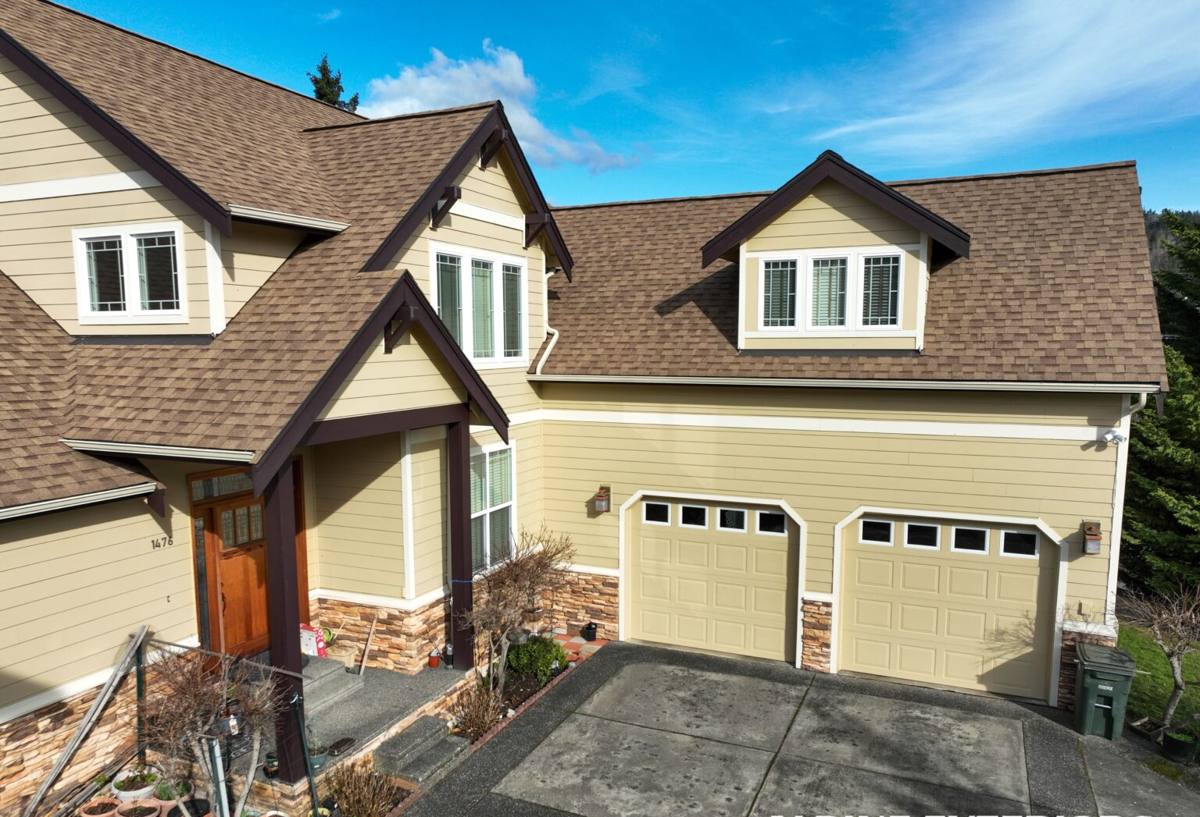
Coastal exposure tends to age a roof unevenly. We regularly see roofs where one slope — usually the one facing prevailing wind and rain — is failing well before the rest of the roof looks like it's in trouble. Knowing when repair stops making sense and replacement becomes the smarter investment saves homeowners from throwing money at a roof that's already past the point of patching.
- Granule loss heavy enough that you can see bare, shiny patches on asphalt shingles, especially on the weather-facing slope
- Moss or algae established at the shingle edges and butt joints, not just sitting on the surface — this usually means moisture is already working under the mat
- Curling, cupping, or cracked shingles, particularly where the roof gets direct salt air exposure
- Rust staining or pitting on flashing, vent caps, or exposed fasteners
- Soft spots in the decking when walked, or sagging visible from the ground
- Daylight visible through the roof deck from inside the attic, or damp insulation after wind-driven storms
- A roof that's had three or more repairs in the last five years — at that point you're usually paying repair prices for replacement-level problems
What a Correct New Roof Installation Actually Involves
A roof is only as good as what's underneath the material homeowners actually see. In a climate like Blaine's, the components most people never think about are the ones doing the most work against wind-driven rain and salt exposure.
Tear-Off and Deck Inspection
We remove the old roofing down to the deck rather than layering over it. That's the only way to actually see the plywood or plank sheathing underneath, check for soft or delaminated spots from long-term moisture intrusion, and replace only what's damaged instead of guessing. Skipping this step is how hidden rot gets sealed under a brand-new roof.
Underlayment Built for Wind-Driven Rain
Standard felt underlayment isn't enough for a property that regularly takes rain sideways off the water. We use synthetic underlayment rated for high wind exposure across the full roof, with self-adhered ice-and-water membrane at eaves, valleys, and any low-slope transitions where wind-driven moisture is most likely to find a way in.
Flashing and Fasteners That Won't Corrode
Salt air is hard on standard galvanized fasteners and thin flashing over time. We use corrosion-resistant flashing and fastener specifications appropriate for coastal exposure at every roof penetration — chimneys, plumbing stacks, skylights, and wall intersections — because these details fail long before the field of the roof does.
Ventilation Sized for the Actual Roof
Balanced intake and exhaust ventilation keeps the attic close to outdoor temperature and humidity, which reduces condensation and slows moss growth from the underside as well as the top. We calculate ventilation based on the attic's actual square footage, not a generic rule of thumb.
Comparing Roofing Materials for a Salt Air and Moss Environment
There's no single "best" roofing material for every Blaine home — the right choice depends on the home's exposure, roof pitch, budget, and how much long-term maintenance the owner wants to take on. Here's how the common options actually compare under coastal, moss-prone conditions.
| Material | Typical Lifespan Here | Salt Air / Moss Resistance | Maintenance Needs |
|---|---|---|---|
| Architectural asphalt shingle | 20-30 years | Good with algae-resistant granules; needs periodic cleaning | Moderate — moss removal every few years |
| Standing seam metal | 40-60 years | Very good when properly coated and fastened for coastal use | Low — sheds moss and debris well due to smooth, steep-shedding surface |
| Synthetic composite (shake/slate look) | 30-50 years | Good; resists moisture absorption better than natural wood | Low to moderate |
| Natural cedar shake | 20-30 years with upkeep | Fair — absorbs moisture and is more moss-prone without regular treatment | High — regular cleaning and treatment required to avoid premature rot |
We're upfront with homeowners about the trade-off with untreated natural wood shake in this climate: it can look great, but it absorbs and holds moisture longer than composite or metal alternatives, which means more moss and algae pressure and a shorter practical service life unless the owner commits to regular upkeep. That's a maintenance-burden and moisture-behavior issue, not a knock on the material itself — it's simply a harder fit for a wet, salt-exposed coastline than it might be inland.
Our Installation Process, Start to Finish
- On-site inspection and estimate — we walk the roof and attic, document existing damage, and give a written scope and price before any work starts.
- Material selection — we go over the options in the table above against your budget, roof pitch, and how much maintenance you want to take on.
- Scheduling around weather — in Whatcom County, timing matters. We plan install windows around forecasted dry stretches whenever possible to protect the open deck.
- Tear-off and deck repair — full removal of old roofing, deck inspection, and replacement of any compromised sheathing.
- Underlayment and flashing installation — synthetic underlayment, ice-and-water membrane at vulnerable areas, and corrosion-resistant flashing at every penetration.
- Roofing material installation — installed to manufacturer specification, with attention to fastening patterns appropriate for coastal wind exposure.
- Ventilation tie-in — intake and exhaust vents installed or upgraded to match the new roof system.
- Site cleanup and final walkthrough — magnetic sweep for stray fasteners, debris removal, and a walkthrough so you know exactly what was done.
Ventilation and Moisture Control: The Half of the Job You Don't See
A new roof that isn't ventilated correctly will underperform no matter how good the shingles or metal panels are. Poor attic ventilation traps warm, moist air against the underside of the deck, which accelerates rot from below and creates the exact damp, still conditions moss and algae thrive in from above once spores land on the surface. In a climate as consistently wet as Blaine's, we treat ventilation as a core part of the roofing system, not an optional add-on — checking existing intake and exhaust balance during the inspection and correcting it as part of the install whenever the numbers don't work.
Keeping a New Roof Clean in Moss Season
Even the right materials benefit from some basic upkeep in a climate with a long moss season. A little routine attention extends the life of any roof installed correctly in the first place.
- Keep gutters and valleys clear of needles and leaf debris, which trap moisture and give moss a place to start
- Trim back overhanging branches to reduce shade and debris fall on north-facing slopes
- Have moss growth removed gently (not pressure-washed, which can strip granules or damage seams) before it spreads under the shingle edge
- Check flashing and fastener points annually for early signs of corrosion, especially after winter storm season
- Schedule a roof walk-through every year or two rather than waiting for a leak to prompt an inspection
Permits, Timeline, and What Homeowners Should Expect
Most full roof replacements in this area require a building permit, which we handle as part of the project so you're not navigating that process yourself. A typical residential re-roof, once materials are on-site and weather cooperates, usually runs from a couple of days to about a week depending on roof size, pitch, and how much deck repair is needed. We'll give you a realistic timeline specific to your home before work starts, not a generic estimate, and we keep you informed if weather pushes the schedule.
Why It Matters That We Already Work in Blaine
Roofing a home a few blocks from the water isn't the same job as roofing one twenty miles inland, even within the same county. A crew that already works Blaine's coastline knows to spec corrosion-resistant fasteners and flashing as standard, not as an upsell after a homeowner asks about rust. We know which slopes in this kind of exposure tend to develop moss first, how to sequence a tear-off around the region's rain patterns, and what ventilation balance actually holds up against this much sustained moisture. That local familiarity shows up in fewer callbacks and a roof that's built for the specific conditions it has to survive, not just built to a generic spec sheet.
If your roof is showing its age, or you just want a straight answer about whether repair or replacement makes more sense for your home, we're glad to take a look. Reach out for a free, no-pressure estimate using the form below — we'll walk the roof, answer your questions honestly, and give you a clear, written scope before anything is decided.