 Bellingham Exterior
 Why Window Installation in Puget Takes a Different Approach
Homes in the Puget area of Bellingham sit in a climate that is harder on windows than most homeowners realize. Salt-laden air moving in off the water accelerates corrosion on hardware and fasteners. Driving rain, pushed sideways by wind rather than falling straight down, tests every seam and flashing detail around a window opening. And the long, damp moss season that Whatcom County is known for keeps wood trim and sills wet for weeks at a stretch, which is exactly the condition that lets rot get started. None of this means windows in Puget need to be exotic or overbuilt — it means the installation has to respect how water actually moves around a house here, not how it moves in a drier climate.
A window that is a perfectly good product can still fail early if it goes in without the right prep. Most of the leaks and drafts we get called out to inspect in this area trace back to installation details, not the window unit itself. That's the part of the job worth understanding before you hire anyone.
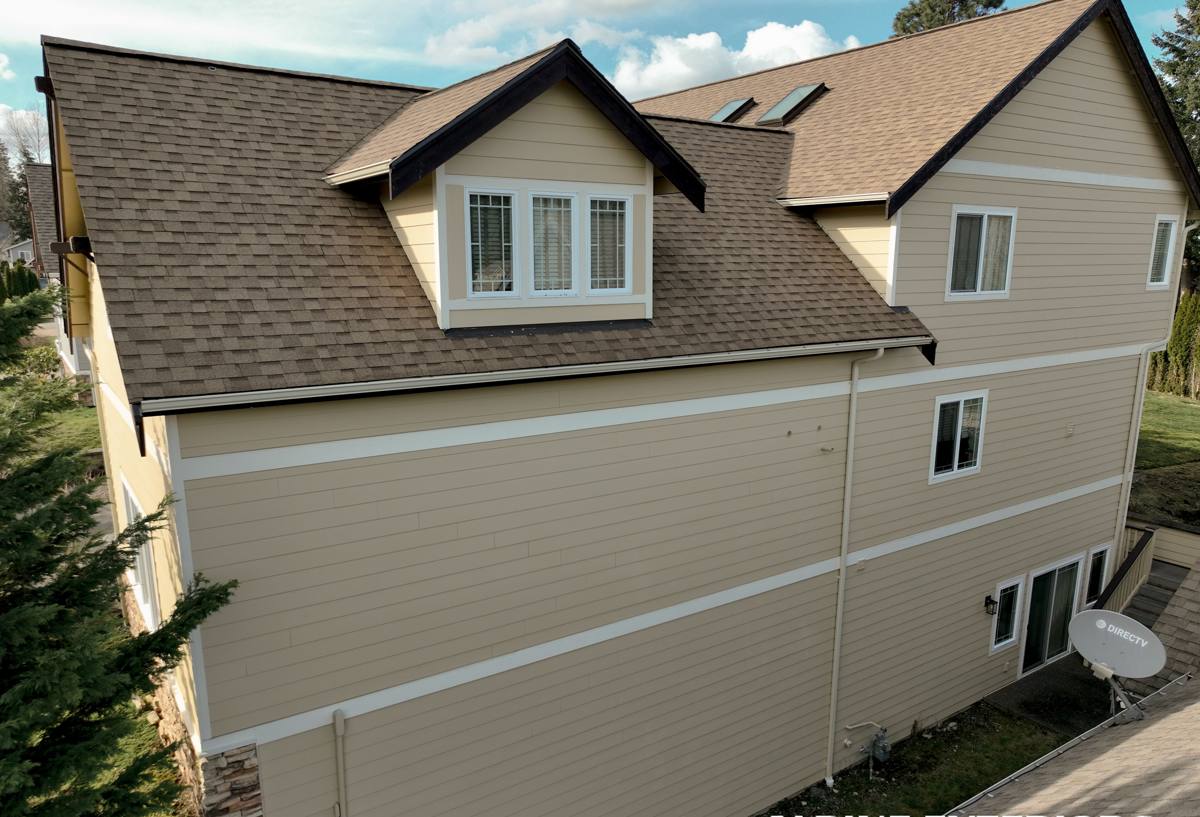
What a Correct Installation Actually Involves
Flashing and Water Management
The single biggest factor in a window's long-term performance in a wet, wind-driven climate is how water is directed away from the opening. That means a proper sequence of flashing tape and building wrap integration at the sill, jambs, and head — installed so that any water that gets behind the siding or trim drains back out rather than pooling at the bottom of the window frame. Skipping or rushing this step is invisible on installation day and expensive two or three winters later.
Sill and Sub-Sill Prep
The sill is the part of the opening most exposed to standing moisture. Before a new window goes in, we check the sub-sill for existing rot or softness, correct any slope so water sheds outward instead of toward the interior, and use sealants and sill pans rated for constant moisture exposure — not just splash protection.
Insulation and Air Sealing
Gaps between the window frame and rough opening need to be filled with a low-expansion foam or backer rod and sealant designed to stay flexible, not rigid foam that can bow the frame or crack over time. Done right, this step also cuts down on the condensation and drafts that many Puget homeowners associate with "old windows" when the real cause is a poor air seal around a window that's otherwise fine.
Choosing a Window That Suits This Climate
There is no single "best" window material — there are trade-offs, and the right call depends on the home, the budget, and how much upkeep you want to take on. Here's how the common options stack up for a coastal, high-moisture climate like Bellingham's:
| Frame Material | Moisture & Salt Air Resistance | Maintenance | Notes for This Climate |
|---|---|---|---|
| Vinyl | Very good — won't rot or corrode | Low | Solid all-around choice for driving rain and salt exposure; quality varies by manufacturer |
| Fiberglass | Excellent — dimensionally stable in temperature and moisture swings | Low | Handles the freeze-thaw and damp cycles of a Whatcom County winter well; higher upfront cost |
| Aluminum | Good structurally, but prone to corrosion near salt air without proper coatings | Moderate | Can perform well with marine-grade finishes; we're selective about where we recommend it here |
| Wood / Wood-Clad | Handsome, but the most exposed to rot if any seal fails | High | Requires diligent exterior maintenance in a moss-prone, high-moisture area; better suited to protected elevations |
Our default recommendation for exposed elevations in Puget leans toward vinyl or fiberglass, simply because they hold up with the least maintenance in a climate that doesn't give wood much of a break. Where wood-look is important to a homeowner, we'll talk through realistic upkeep expectations rather than let a good-looking material become a five-year problem.
Our Installation Process
- On-site assessment — we look at existing window condition, sill and framing health, and how water currently behaves around each opening.
- Accurate measurement — exact opening dimensions, out-of-square checks, and material selection based on exposure and budget.
- Careful removal — old units come out without unnecessary damage to siding or interior trim.
- Opening inspection and repair — any soft sill, hidden rot, or prior flashing failure gets addressed before the new window ever goes in.
- Flashing and sill pan installation — sequenced to shed water outward, per the details above.
- Window set and shim — leveled, plumbed, and secured per manufacturer fastening schedule.
- Air sealing and insulation — flexible sealant and low-expansion foam around the full perimeter.
- Interior and exterior trim — finished to match the home, with attention to caulking joints that will face driving rain.
- Final walkthrough — we operate every window with you and point out anything you should watch for during the first wet season.
Signs Your Current Windows Are Already Losing the Fight
Because failures in this climate tend to happen behind the trim, homeowners often don't notice a problem until it's well established. Watch for:
- Fogging or a milky haze between panes of a double- or triple-glazed window (sign the seal has failed)
- Soft, spongy, or discolored wood at the sill or surrounding trim
- Noticeable draft near the frame even with the window fully latched
- Black streaking or moss growth concentrated right at the window edges rather than spread evenly across siding
- Windows that stick, won't stay open, or are difficult to lock — often a sign the frame has shifted
- Peeling paint or bubbling on interior trim near the window, which usually means moisture is getting in somewhere
Any one of these on its own isn't an emergency, but they're worth having looked at before the next wet season adds to the damage.
Why Local Experience in Puget Matters
Window installation isn't identical from one part of Whatcom County to the next. Homes closer to the water take driving rain from a different direction and see more salt exposure than homes set further inland, and a crew that works this area regularly builds a feel for which elevations of a house need extra attention. That local pattern recognition — knowing which corner of a typical Puget home tends to catch the worst of a winter storm, or how moss season affects trim that isn't sealed correctly — is the kind of thing you only pick up by doing the work here repeatedly, not from a general install manual.
It also means fewer surprises during the job itself. A crew unfamiliar with this climate might not think twice about scheduling around a dry-looking forecast that turns in a hurry, or might use a sealant or flashing product that's fine in a milder climate but underperforms here. We plan around Bellingham's weather patterns as a matter of course, not an afterthought.
Cost Factors Worth Understanding
Window installation pricing varies by opening size, frame material, glazing options, and how much repair the existing opening needs — so we won't quote a number without seeing the job. What we can tell you is what tends to move the price:
- Whether the opening is a straightforward same-size replacement or requires reframing
- Frame material chosen (vinyl and standard fiberglass are generally the most cost-effective long-term)
- Extent of hidden rot or flashing repair discovered once trim is removed
- Number of windows done at once (per-unit costs typically drop with larger projects)
- Glazing package — standard double-pane versus upgraded coatings or triple-pane options
We'd rather walk a homeowner through these factors honestly during a free estimate than throw out a ballpark that doesn't hold up once we see the actual opening.
Warranty and What We Stand Behind
Two separate warranties are in play with any window job: the manufacturer's warranty on the window unit itself, and the installer's warranty on the workmanship. A window can carry a strong manufacturer warranty and still leak if it wasn't flashed and sealed correctly — and most manufacturer warranties are written to exclude damage caused by improper installation. That's exactly why we treat the installation details covered above as non-negotiable, not optional upgrades. We stand behind our own work separately from the manufacturer's coverage, and we'll explain both in plain terms before you sign anything.
Let's Look at Your Windows
If you're dealing with drafts, fogged glass, or trim that's showing its age after another wet Bellingham winter, it's worth getting a second set of eyes on it before the next moss season sets in. We offer free, no-pressure estimates for homeowners in Puget and throughout the surrounding area — use the form below to get a time on the calendar.