 Bellingham Exterior
 Why Birch Bay Roofs Take a Different Kind of Beating
Birch Bay sits right on the water, and that changes what a roof deals with compared to a home a few miles inland in Bellingham. The salt air off the Strait of Georgia works on metal fasteners, flashing, and exposed hardware in a way drier inland air doesn't. Add wind-driven rain that comes in sideways off the water during winter storms, and you've got a roof that's fighting moisture intrusion from angles a standard shingle layout wasn't always designed to handle. Then there's the moss. Whatcom County's long, wet, mild winters give moss and algae months to get established on any shaded or north-facing slope, and once it takes hold, it holds water against the roofing material far longer than it should sit there.
None of this means a Birch Bay roof is doomed — it means repairs here need to account for corrosion, wind uplift at the edges and ridge, and moisture that lingers instead of drying out fast. A patch that would hold up fine in a drier climate can fail early out here if it's not done with the right materials and the right attention to detail.
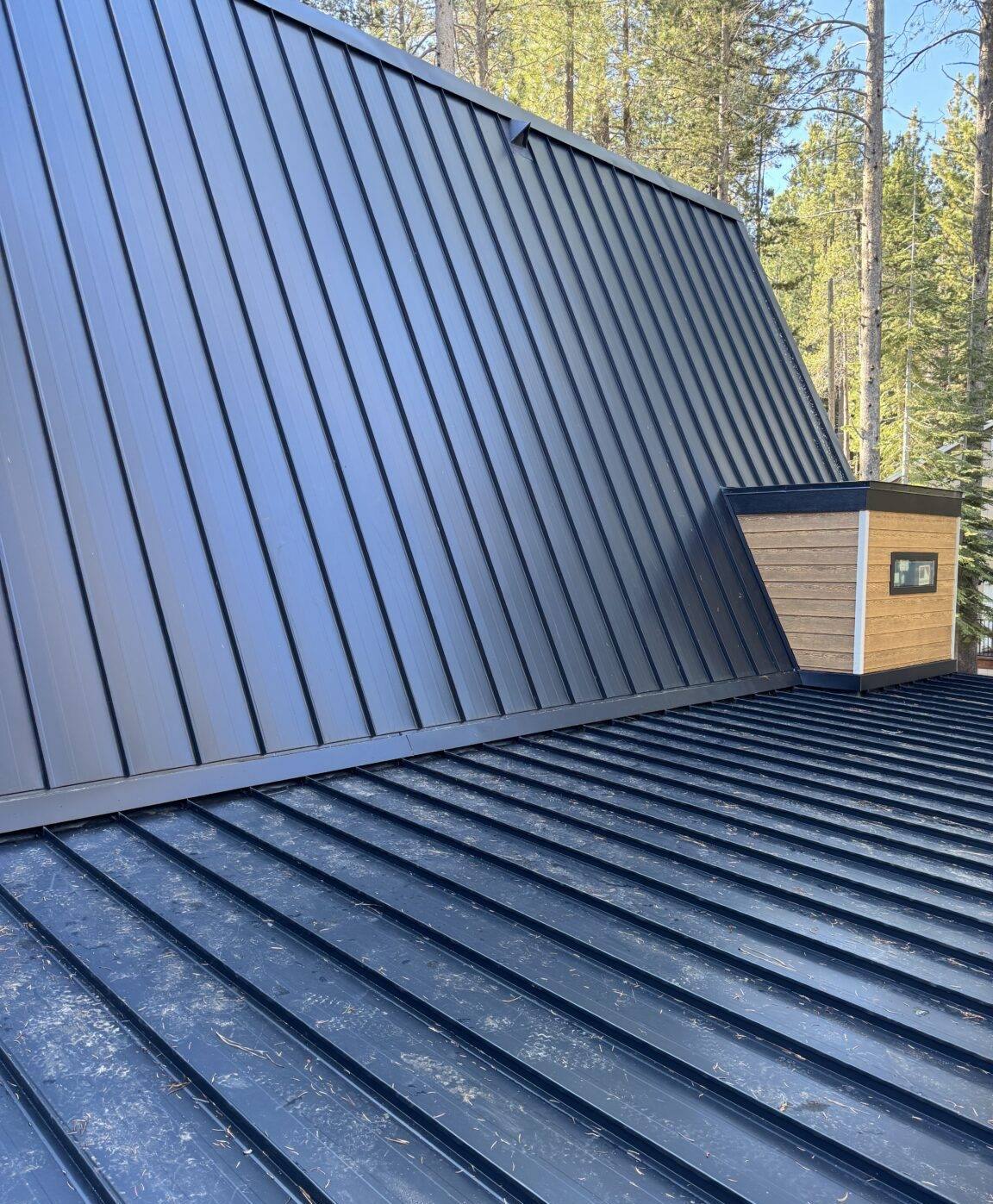
Common Roof Repair Issues We See in Birch Bay
Most repair calls in this part of Whatcom County fall into a handful of recurring categories:
Flashing and Fastener Corrosion
Flashing around chimneys, skylights, and vent pipes is usually the first thing to show wear near the water. Standard steel fasteners and thin flashing can start rusting and losing their seal years before the shingles themselves are worn out. A leak that seems to be "coming from the roof" is very often actually coming from a failed flashing seam.
Wind-Lifted or Missing Shingles
Storms pushing in off the bay put real uplift pressure on roof edges, ridges, and any shingle that's already got a compromised seal strip. Once a shingle lifts, wind-driven rain gets underneath it, and what started as a cosmetic issue becomes a leak path.
Moss and Debris Buildup
Moss doesn't just look bad — its root structure lifts shingle edges and traps moisture against the roofing surface for months at a time. On shaded slopes and around valleys where debris collects, this is one of the most common causes of premature granule loss and slow leaks we find during inspections.
Valley and Penetration Leaks
Roof valleys, where two slopes meet, and any point where something penetrates the roof (vents, pipes, chimneys) concentrate water flow. These are the spots that need the most careful repair work, because a rushed fix here tends to fail again within a season or two.
Signs a Repair — Not a Full Replacement — Makes Sense
Not every roof problem in Birch Bay means a new roof. A repair is usually the right call when the damage is localized and the rest of the roofing system is still in reasonably good shape. Watch for:
- A single leak source you can point to, rather than staining showing up in multiple unrelated rooms
- Missing or damaged shingles limited to one section, such as after a storm knocked a few loose
- Flashing that's visibly rusted, lifted, or separated at a chimney, skylight, or vent
- Moss buildup on part of the roof without significant granule loss or soft decking underneath
- A roof that's less than two-thirds through its expected lifespan with isolated wear
If the roof is older, has multiple leak points, or shows soft spots in the decking when walked, that's usually a sign the underlying structure has taken on water over time — and that conversation is worth having honestly rather than patching over it.
What a Correct Repair Actually Involves
A roof repair done right isn't just swapping a shingle and calling it done. It starts with figuring out how water is actually getting in, which isn't always where the stain shows up inside the house — water can travel along rafters or decking before it drips somewhere visible.
Once the source is identified, a proper repair typically includes:
- Removing the damaged material back to solid, dry decking — not just covering over it
- Checking the decking itself for soft spots or rot, since a new shingle over compromised wood won't hold
- Replacing underlayment in the repaired section so the water barrier is continuous, not patched
- Installing new flashing where corrosion or separation was part of the problem, using materials suited to a salt-air environment
- Matching shingles as closely as possible in type, color, and exposure so the repair blends in and performs the same as the surrounding roof
- Re-sealing and checking adjacent areas that took the same storm or moss exposure, so we're not back out in six months for the next section
Skipping any of these steps is how a "repair" turns into a callback. Covering a soft spot instead of replacing it, or reusing old flashing to save time, just delays the same failure.
Our Repair Process
1. Inspection and Honest Diagnosis
We start by getting on the roof and finding the actual source of the problem, not just the symptom. That includes checking flashing, penetrations, shingle condition, and — especially out here — how much moisture the roof has been holding onto from moss or shaded areas.
2. A Clear Repair Plan
We tell you what we found, what needs to happen, and what it's going to cost before any work starts. If a section turns out to need more than a patch — for example, rotted decking under what looked like a simple shingle repair — we'll explain that clearly rather than surprise you mid-job.
3. The Repair Itself
We do the work to the standard above: back to solid material, proper underlayment and flashing, matched shingles, and attention to the edges and transitions where most repairs actually fail.
4. Cleanup and Walkthrough
We clear debris and old material from the site and walk the repair with you so you know exactly what was done and why.
Repair vs. Replacement: Weighing the Decision
| Factor | Leans Toward Repair | Leans Toward Replacement |
|---|---|---|
| Age of roof | Under roughly two-thirds of expected lifespan | Near or past expected lifespan |
| Leak pattern | Single, identifiable source | Multiple leaks in unrelated areas |
| Decking condition | Solid, dry decking around the damage | Soft or rotted decking in multiple areas |
| Moss/algae extent | Limited to one section, granules intact | Widespread, with visible granule loss |
| Flashing condition | Isolated corrosion or separation | Widespread rust or failed flashing systems |
| Storm damage | A handful of shingles or one section affected | Damage spread across most of the roof |
This table is a starting point, not a diagnosis — the only reliable way to know which side of the line your roof is on is a physical inspection.
Materials That Hold Up Near the Water
Not every fastener, flashing metal, or underlayment performs the same way in a salt-air environment. For repairs in Birch Bay, we default to corrosion-resistant fasteners and flashing rather than the cheapest standard option, because the cost difference up front is small compared to the cost of redoing a repair in a few years when standard hardware has already started rusting. We also pay attention to shingle products with algae-resistant granules for roofs with shaded or moss-prone sections — it doesn't eliminate moss entirely, but it slows regrowth compared to standard shingles, which matters given how long the moss season runs here.
We're not going to tell you a specific product is "bad" — most name-brand roofing materials are engineered well. The trade-offs we weigh are things like how a material handles sustained moisture, how forgiving it is of minor installation variance, and what its warranty actually requires for upkeep. Those details matter more in a coastal, moss-heavy climate than they do somewhere drier.
Maintenance That Extends a Repair's Lifespan
A good repair lasts longer with basic upkeep, especially given Birch Bay's conditions. A short seasonal checklist:
- Clear moss and debris from valleys and shaded slopes before it accumulates heavily — earlier is easier and less damaging than later
- Keep gutters and downspouts clear so water isn't backing up under the roof edge during heavy rain
- Trim back overhanging branches that keep sections of roof shaded and slow to dry
- After major windstorms, do a visual check (from the ground, or ask us) for lifted or missing shingles
- Have flashing checked periodically, since corrosion here can progress faster than inland
Why Local Experience in Birch Bay Matters
A repair crew that mostly works drier, inland jobs isn't necessarily thinking about salt-air corrosion or how long moss has to sit on a shaded slope this close to the water. Working regularly in Birch Bay and along the rest of the Whatcom County coastline means we're used to diagnosing the specific failure patterns that show up out here — corroded flashing before shingles are worn, wind-lifted edges from storms coming off the water, and moss that's been quietly holding moisture against a roof for a season or two before it shows up as a leak inside.
That familiarity also means a more accurate first visit. We're not guessing at what coastal exposure does to a roof — we see it regularly, which means fewer surprises and a repair plan that's realistic from the start.
If you've got a leak, storm damage, or a section of moss you're not sure about, we're happy to take a look and give you a straight answer — whether that's a repair, a bit of maintenance, or, if it's warranted, a conversation about replacement. Reach out for a free, no-pressure estimate using the form below.