 Bellingham Exterior
 Roof Repair Built for Cordata's Climate, Not a Generic Checklist
Cordata sits in the part of Bellingham where new construction, older infill homes, and low-slope commercial-style roofs all sit close together, and every one of them is exposed to the same weather pattern: long stretches of steady, wind-driven rain off the Salish Sea, salt-laden air drifting in from Bellingham Bay, and a moss season that can run from October through May in a typical Whatcom County year. A roof repair here isn't just "patch the leak" — it's understanding why that leak happened in the first place, and whether the same conditions are quietly working on the rest of the roof.
This page is specifically about roof repair for homes in and around Cordata — not a full tear-off, and not a generic overview of roofing in general. If your roof is basically sound but has a problem area (a leak, a soft spot, missing shingles, a failing flashing detail), this is the service and the reasoning behind it.
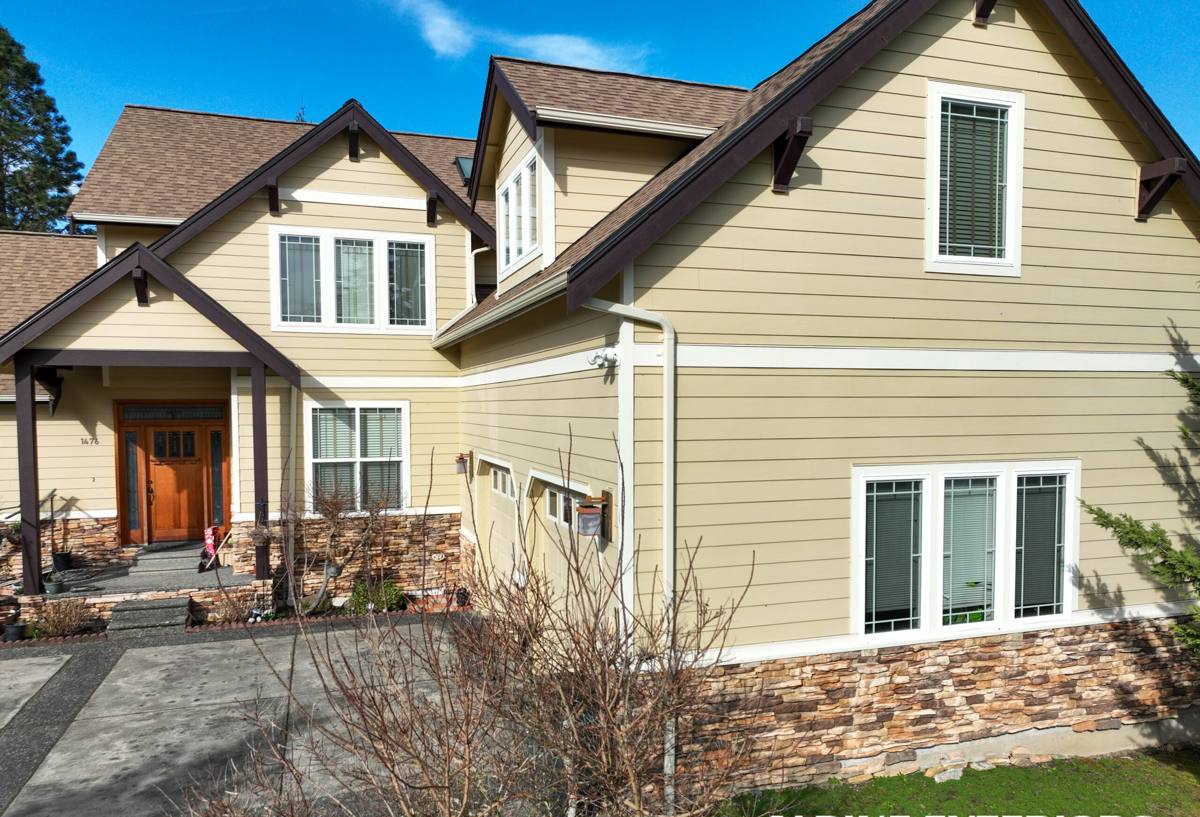
What Driving Rain, Salt Air, and Moss Season Actually Do to a Roof
Bellingham's weather doesn't damage roofs the way a hailstorm or a heat wave does elsewhere. It's slower and more persistent, which is exactly why it gets overlooked until water is already inside the house.
Driving rain
Rain here rarely falls straight down. Wind off the bay pushes it sideways and up under laps, edges, and flashing that would shed a vertical rain just fine. Over time this drives water into places the roofing system was never designed to seal against pressure — valley edges, step flashing at sidewalls, and the transition around vents and chimneys.
Salt air
Homes closer to Bellingham Bay get the most direct exposure, but salt-carrying air moves further inland than most homeowners expect, and Cordata isn't immune to it. Airborne salt accelerates corrosion on exposed metal — nail heads, flashing, gutter fasteners, and metal roof panels — long before the roofing material itself is worn out. A roof can look fine from the ground while its metal fasteners are quietly rusting through underneath.
Moss season
Shaded, north-facing slopes and roofs under overhanging trees stay damp for days at a time during our wet months. That moisture holds moss spores, and once moss establishes itself it does two things: it holds water directly against the roofing surface, and its root structure works into shingle granules and seams, lifting edges just enough for wind-driven rain to get underneath.
Signs a Cordata Roof Needs Repair Now, Not Later
- A ceiling stain that appears only during or right after a windy rainstorm, not steady rain
- Moss growing in visible mats rather than a light green tint — mats hold water, a tint usually doesn't yet
- Granules collecting in gutters or at downspout outlets, especially after a windstorm
- Flashing around a chimney, skylight, or sidewall that looks lifted, rusted, or has visible gaps in the sealant
- Shingles that look curled, cupped, or have lost their flat profile on south- or west-facing slopes
- A musty smell in an attic or top-floor closet that wasn't there before
- Gutters that overflow in normal rain, not just in a downpour
Any one of these on its own might be minor. Two or more together usually means water has already found a way past the roofing surface.
The Repairs We See Most Often in This Neighborhood
Flashing failures
Flashing is where most Bellingham-area roof leaks actually start, not the field shingles themselves. Step flashing at a sidewall, counter-flashing at a chimney, and the metal around plumbing vents all rely on overlapping metal and sealant working together. Wind-driven rain finds the one spot where that overlap has opened up, corroded, or was installed with too much reliance on caulk instead of proper metal lap. Repairing this correctly means rebuilding the flashing detail, not just recaulking over it.
Moss and organic growth removal
Moss removal has to be done carefully — pressure-washing or aggressively scraping a shingle roof strips granules and shortens its life faster than the moss itself would. We remove growth with methods that protect the shingle surface, then address the shade and moisture conditions that let the moss take hold in the first place, since removal without that step is a short-term fix.
Gutter and drainage problems
A roof repair often isn't complete until the water leaving the roof is dealt with too. Undersized, clogged, or poorly pitched gutters back water up under the roof edge, which shows up looking like a roofing leak even when the shingles above are fine. We check drainage as part of diagnosing any leak, not as an afterthought.
Wind-driven rain intrusion at edges and valleys
Valleys and rake edges take the brunt of sideways rain. Underlayment and edge metal that were adequate for a drier climate often aren't enough here, and repairs in these areas need materials rated for that kind of exposure, installed with enough lap and fastening to hold up to repeated wind events over a wet season.
What a Correct Roof Repair Actually Involves
A roof repair is only as good as the diagnosis behind it. Sealing the spot where water is dripping inside the house often isn't the same spot where water is actually getting in — it can travel along rafters or sheathing before it shows up as a stain. Doing the job right means:
- Tracing the leak from the interior stain or symptom back to its actual entry point, which may be several feet away
- Inspecting the surrounding roofing, flashing, and decking for hidden damage before closing anything up
- Replacing damaged decking or underlayment rather than covering over soft or wet wood
- Rebuilding flashing details with proper metal work, not just sealant
- Matching replacement shingles or roofing material as closely as reasonably possible to the existing roof
- Checking that gutters and drainage paths near the repair are functioning, since a repair next to a clogged gutter won't hold
Skipping steps here is how a "repaired" roof leaks again the following winter in the exact same spot.
Our Process, Start to Finish
We keep the repair process straightforward because homeowners dealing with an active leak don't need extra complexity added on top of it.
- Inspection: We look at the roof from the ground and on the surface itself where it's safe to do so, including areas near the reported leak and any shaded or north-facing slopes prone to moss.
- Diagnosis and explanation: We explain what we found in plain terms — what's causing the problem, what it will take to fix it correctly, and what it won't fix (we're honest if a repair is a stopgap versus a real solution).
- Written estimate: A clear scope and price range before any work starts, no surprise add-ons mid-job.
- The repair: Decking, underlayment, flashing, or shingle work as needed, using materials suited to sustained wind-driven rain exposure.
- Cleanup and check: Debris and old material cleared from the property, gutters checked, and the repair area reviewed with you before we consider the job done.
Repair or Replace? How We Help You Decide
Not every roof problem needs a full replacement, and not every leak should be treated as a one-spot patch. Here's generally how we think about it:
| Situation | Usually a Repair | Usually Points Toward Replacement |
|---|---|---|
| Age of roofing material | Roof is younger, or well within its expected service life | Roof is at or past its typical lifespan for its material |
| Extent of the problem | Isolated to one flashing detail, valley, or section | Similar wear or granule loss showing up across multiple slopes |
| Decking condition | Sheathing is sound once opened up | Soft, delaminated, or rotted decking found in more than one spot |
| History of repairs | First or second issue on this roof | Repeated repairs to the same or nearby areas over the years |
| Moss and growth pattern | Light to moderate, manageable with cleaning and maintenance | Heavy, embedded growth across large shaded sections |
When a repair is the right call, we do the repair. We don't push a replacement a roof doesn't need — but we'll also tell you plainly if a patch is only buying a season or two.
What Affects the Cost of a Roof Repair
Exact pricing depends on what we find once we're on the roof, but a few factors consistently move the cost up or down. In general, straightforward flashing or spot shingle repairs on an easily accessible roof run toward the lower end of the range, while repairs involving decking replacement, steep or complex rooflines, or multiple problem areas run higher.
| Factor | Why It Matters |
|---|---|
| Roof pitch and accessibility | Steeper or higher roofs take longer and require more safety setup |
| Decking condition | Rotted sheathing found underneath adds material and labor beyond the visible repair |
| Roofing material | Composition shingle, cedar shake, and metal each require different repair techniques and materials |
| Number of problem areas | One flashing failure costs less to fix than several spread across the roof |
| Moss and debris removal | Heavy growth adds cleaning time before the actual repair can begin |
Why a Crew That Already Works Cordata Makes a Difference
A roofer who works this neighborhood regularly already knows which slopes in the area tend to hold moss longest, how the mix of newer and older construction here handles wind-driven rain differently, and what Whatcom County permitting expects for repair work versus full replacement. That familiarity means less time spent re-learning the basics of the area on your dime, and a more accurate read on whether what looks like a small leak is a small problem or an early sign of something bigger. It also means we're a known, reachable local business if a repair needs a follow-up look after the next storm — not a crew that did one job and moved on.
Keeping Your Roof in Good Shape Between Visits
- Clear gutters and downspouts at least twice a year, more often if you have overhanging trees
- Trim back branches that shade the roof and keep it damp longer than the surrounding area
- Have moss addressed while it's still a light growth, before it establishes into thick mats
- Walk the interior after major windstorms and check attic spaces for any new staining
- Get a roof looked at before small issues turn into decking or interior damage, especially heading into the wetter months
If you're seeing any signs of trouble on your Cordata home, or just want an honest read on where your roof stands, we're happy to take a look. Use the form below to request a free, no-pressure estimate.