 Bellingham Exterior
 Roof Replacement in Barkley: Built for the Weather It Actually Faces
Barkley homes sit inside one of the more demanding roofing climates in Whatcom County. It isn't dramatic weather — no hailstorms or hurricane-force wind events most years — but it's relentless in a different way. Salt-laden air drifts in off the water, rain comes in sideways more often than it falls straight down, and moss has an entire fall-through-spring window to take hold on every shaded slope. A roof that would perform fine in a drier, calmer part of the country starts showing problems here years earlier than it should, simply because the climate never really gives it a break.
A correct roof replacement in Barkley isn't just about swapping old shingles for new ones. It's about accounting for how this specific stretch of Bellingham weather behaves, and building the roof system so it sheds water, resists moss, and holds its fasteners against corrosion for its full expected life — not just until the first wet winter exposes a shortcut.
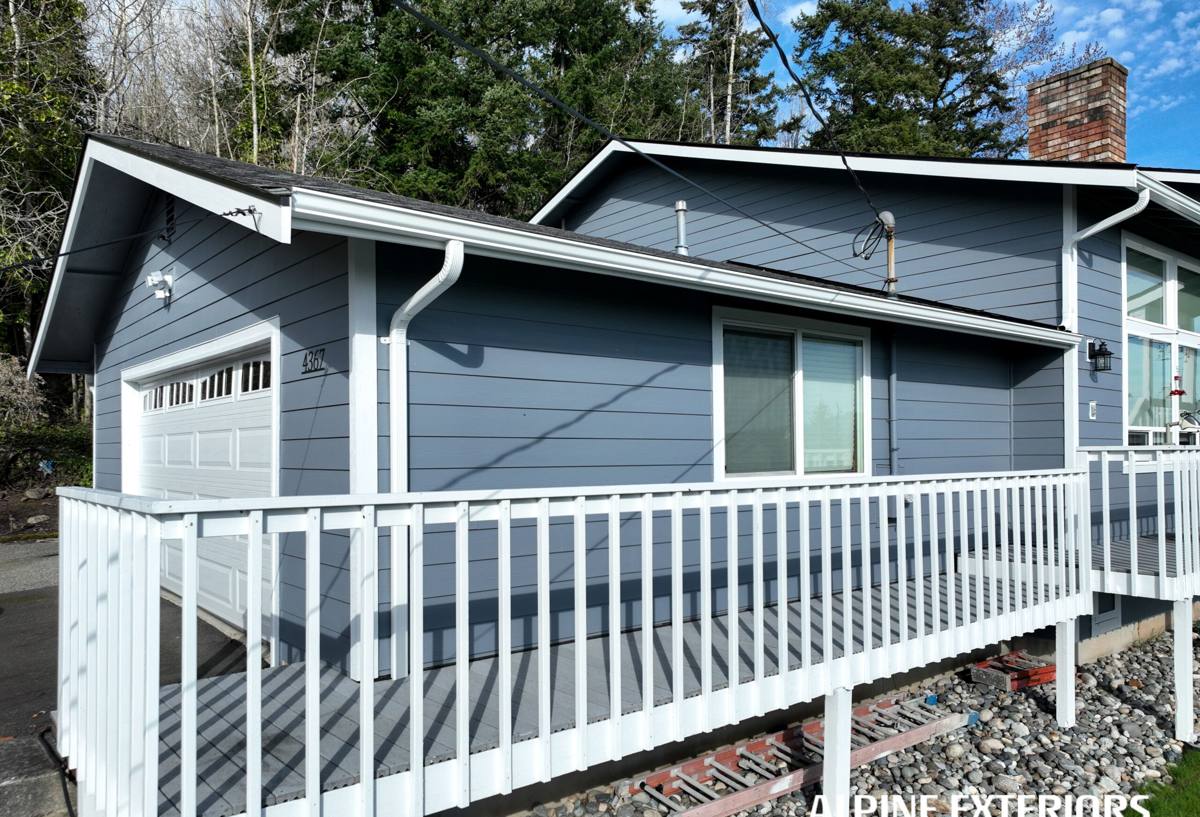
What Salt Air, Driving Rain, and a Long Moss Season Do to a Roof
Salt Air and Fastener Corrosion
Roofs are held together by hundreds of small metal points — nails, flashing fasteners, ridge cap screws — and salt-laden air speeds up corrosion on all of them. Once a fastener starts to rust, it loses grip strength and can back out slightly, which is exactly the kind of small failure that lets wind-driven rain start working its way underneath a shingle.
Wind-Driven Rain
Rain that's pushed sideways by wind behaves differently than rain that falls straight down. It gets forced up under shingle edges, into valleys, and around penetrations like vent stacks and chimneys in ways a calmer climate's roofing details don't need to guard against as aggressively. Flashing that's just "good enough" in a dry climate often isn't good enough here.
Moss and Sustained Moisture
Shaded slopes, north-facing roof planes, and anything under tree cover stay damp for extended stretches through fall, winter, and much of spring — exactly the condition moss needs to establish itself. Once moss takes hold, it lifts shingle edges as it grows, holds moisture directly against the roofing material, and accelerates granule loss on asphalt shingles well ahead of their normal wear timeline.
Signs a Barkley Roof Is Ready for Replacement
Most homeowners reach out because something specific caught their attention, not because they've been tracking every detail of their roof's condition. Here's what's actually worth watching for:
- Moss buildup that keeps returning within a season or two of being cleaned off
- Shingles that are cupping, curling, or missing granules in visible patches
- Dark streaking or staining that doesn't wash away with normal rain
- Soft spots in the roof deck, felt underfoot from the attic or noticeable from the ground
- Rust staining running down from nail heads or flashing
- Daylight visible through the roof deck from inside the attic
- A roof that's at or past its expected service life, especially if moss has been a recurring issue
Any single item on that list doesn't automatically mean a full replacement is the right call. But moisture-related roof damage in this climate tends to compound rather than sit still, so it's worth having a straightforward professional look rather than waiting to see if it resolves on its own.
What a Correct Roof Replacement Actually Involves
Tear-Off and Deck Inspection
A proper replacement starts with removing the existing roofing down to the deck, not layering new shingles over old ones. That's the only way to actually see the condition of the sheathing underneath — soft or delaminated deck sections need to be replaced before anything new goes down, because no amount of good roofing material fixes a rotten deck underneath it.
Underlayment and Flashing
In a climate with this much sustained rain, the underlayment and flashing matter as much as the visible shingles, if not more. Ice-and-water shield belongs at eaves, valleys, and around penetrations where wind-driven rain is most likely to get pushed backward under the roofing. Step flashing at walls and chimneys, and properly lapped valley flashing, are what actually keep water moving down and off the roof instead of finding a way inside.
Ventilation
A roof deck that can't breathe traps moisture from inside the house against the underside of the sheathing, which shortens the life of the deck and the roofing above it. Balanced intake and exhaust ventilation — soffit vents paired with a ridge vent, sized correctly for the attic — keeps that moisture moving out rather than settling in.
Fasteners and Ridge Detail
Given how much salt exposure Barkley roofs deal with, fastener quality isn't a place to cut corners. Corrosion-resistant nails and ridge cap fasteners, driven correctly and at the right pattern, are a small cost difference that has an outsized effect on how long the roof holds together.
Choosing the Right Roofing Material for This Climate
There isn't one universally "best" roofing material — the right choice depends on the home, the budget, and how much moss and moisture exposure a given roof plane actually gets. Here's how the common options compare for a Barkley property:
| Material | Moss and Moisture Behavior | Typical Maintenance |
|---|---|---|
| Architectural (laminate) asphalt shingles | Solid performance with proper ventilation and flashing; algae-resistant granule options help slow moss and streaking | Moderate — periodic moss removal on shaded slopes extends service life |
| Standard 3-tab asphalt shingles | More prone to curling and granule loss under sustained damp exposure than architectural shingles | Moderate to higher — shorter expected service life in this climate |
| Metal roofing | Sheds water fast and resists moss far better than any shingle since there's no granule surface for it to grip | Low — occasional inspection of seams and fasteners |
| Wood shake | Naturally moisture-absorbent; a preferred surface for moss growth in a shaded, damp climate | Highest — regular treatment, cleaning, and earlier replacement |
For most Barkley homes, a quality architectural shingle with algae-resistant granules, installed with correct ventilation and flashing, delivers the best balance of upfront cost and long-term performance. Metal roofing is worth a serious look for homeowners who want to minimize moss maintenance altogether or who are replacing a heavily shaded roof plane that's fought moss for years.
Our Roof Replacement Process
- Inspection and estimate: We walk the roof, assess the deck, flashing, and ventilation, and give a straightforward read on whether replacement or targeted repair makes sense.
- Material selection: We go over the realistic options for your roof's exposure and budget, without steering you toward the most expensive choice by default.
- Tear-off and deck repair: Old roofing comes off completely, and any compromised decking is replaced before anything new is installed.
- Underlayment, flashing, and ventilation: These get set up correctly the first time, since they're the details that determine how the roof performs during a real Whatcom County winter, not just on a dry install day.
- Installation: Roofing goes down to manufacturer specification, with fastener type and spacing matched to this climate's demands.
- Cleanup and walkthrough: We clear the site fully and walk the finished roof with you before calling the job done.
Why a Crew That Already Works Barkley Matters
A lot of what separates a roof that holds up from one that doesn't comes down to details an out-of-area crew tends to treat as generic: which slopes get enough shade and tree cover to need extra attention to moss prevention, how much wind-driven rain exposure a given roof orientation actually takes on, and how flashing needs to be detailed to shed water through an entire Whatcom County wet season rather than just pass a dry-day glance.
A crew that works Bellingham roofs regularly starts recognizing these patterns property to property — which is exactly the kind of on-site judgment that homeowners rarely notice directly but absolutely feel in how the roof performs over the following fifteen or twenty years.
Roof Replacement Cost Factors in Barkley
Every roof is different, so an honest, in-person look is the only way to give a real number. That said, these are the factors that most often move a project up or down in scope:
| Factor | Why It Affects the Job |
|---|---|
| Roof size and number of planes | More square footage and more valleys or hips mean more material and labor |
| Existing layers to remove | Multiple layers of old roofing take longer to tear off and dispose of |
| Deck condition | Soft or rotted sheathing found during tear-off needs to be replaced before new roofing goes down |
| Roof pitch and accessibility | Steeper or harder-to-access roofs take more time and safety setup |
| Material choice | Architectural shingle, metal, and other systems carry different material and labor costs |
| Ventilation upgrades | Adding or correcting soffit and ridge ventilation is worth doing during a replacement, not after |
What to Expect if You're Considering a Roof Replacement
Whether you've got a specific problem — a leak, visible moss, a roof approaching the end of its life — or you're just planning ahead, an honest look at the current roof is always the starting point before we make any recommendation. We're not going to push a full replacement when a repair and some moss treatment will hold for a few more years, and we're not going to recommend patching a roof that's genuinely done. That kind of straight talk is what a crew with a real, ongoing presence in this community has to protect.
If your Barkley home's roof is showing its age, dealing with recurring moss, or you just want an honest second opinion, we're glad to take a look. Reach out using the form below to schedule a free, no-pressure estimate.