 Bellingham Exterior
 Roofing in Sehome: A Different Set of Demands
Sehome sits close enough to Bellingham Bay that salt-laden air is a constant, and the hillside, tree-covered character of the neighborhood means many homes get less direct sun on at least one roof slope than they'd like. That combination — salt air, driving rain off the water, and shaded roof sections that stay damp longer after every storm — is exactly the environment that wears out a roof faster than a manufacturer's warranty chart ever accounts for. A roof replacement done right in Sehome isn't just about swapping old shingles for new ones; it's about specifying and installing a system that's built for this particular corner of Whatcom County.
Older housing stock is common in this part of Bellingham, which means a lot of roofs going in today are replacing original decking, older ventilation setups, or repairs layered on top of repairs over the decades. That history matters. A replacement is the one point in a roof's life where everything underneath the shingles can actually be inspected, corrected, and upgraded — not just patched.
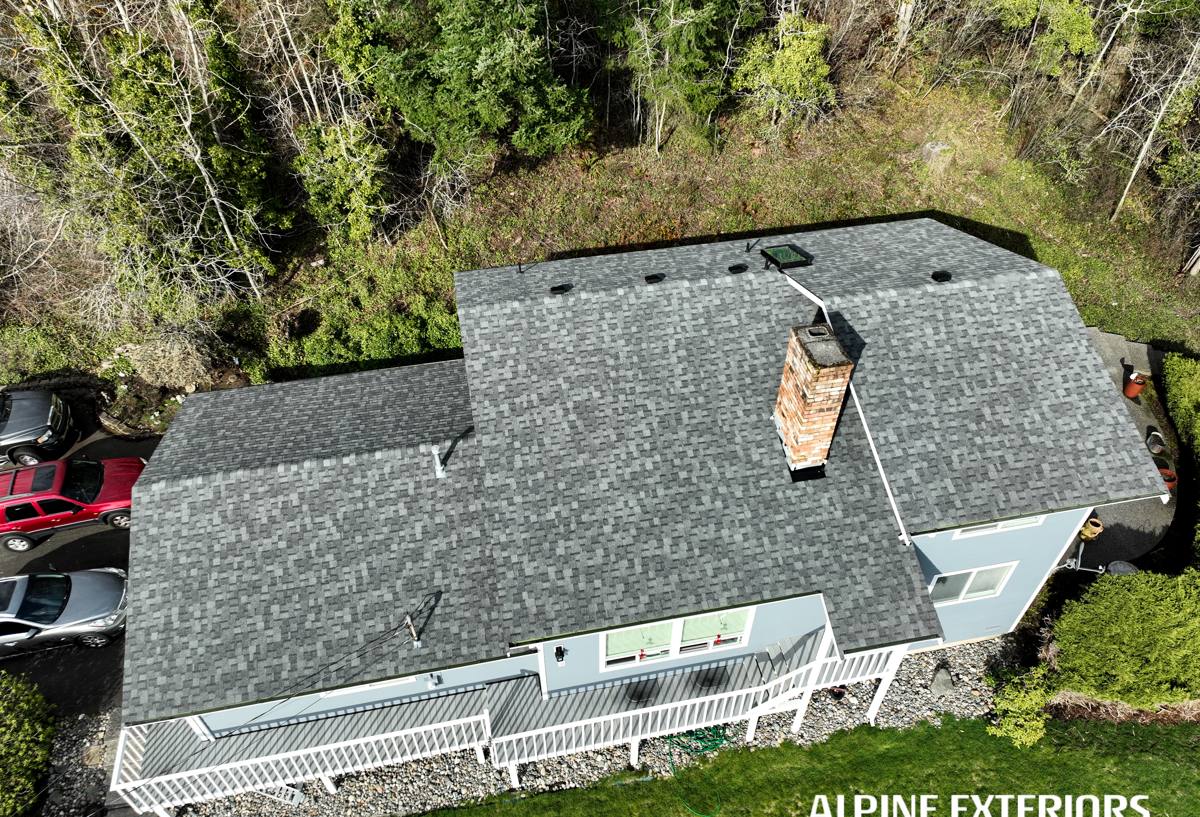
What Salt Air, Rain, and Moss Actually Do to a Roof
Salt Air
Airborne salt accelerates corrosion on exposed metal — flashing, fasteners, vent boots, gutter hardware. Standard steel fasteners and lower-grade flashing corrode faster near the water than they would ten or twenty miles inland. Over years, that corrosion is what lets water find its way under a roof system that otherwise looks intact from the ground.
Driving Rain
Bellingham doesn't just get a lot of rain — a good share of it comes in sideways during winter storms. Driving rain tests every seam, every piece of flashing, and every nail penetration in ways that a light, straight-down rain never will. Roofs that were installed to a bare-minimum standard tend to show their weaknesses first at valleys, chimney flashing, and low-slope transitions, exactly where wind-driven water gets pushed uphill under shingle edges.
Moss
Whatcom County's moss season is long, and Sehome's tree cover only extends it. Moss holds moisture against the roof surface, works its way under shingle tabs as it grows, and can lift edges enough to let wind and rain in. Left unchecked for years, moss growth is one of the more common reasons a roof that's only 12–15 years old already needs full replacement instead of a repair.
Repair or Replace? Reading the Signs
Not every roofing problem in Sehome means a full replacement, but there are signs that reliably point that direction:
- Granule loss heavy enough that you can see bare asphalt on multiple slopes, not just one exposed section
- Shingles that are cracking, curling, or cupping across large areas rather than a single patch
- Soft or spongy decking felt underfoot during an inspection, indicating moisture has reached the plywood
- Repeated leaks in different locations each winter, rather than one recurring spot
- Heavy, persistent moss or algae staining that keeps returning within a season or two of cleaning
- A roof already past 20–25 years old on standard asphalt shingle, regardless of visible condition
If a roof is showing one or two of these issues in isolation, a targeted repair is often the honest answer. When several show up together, replacement is usually the more cost-effective path — because at that point you're paying repair labor repeatedly to chase a problem that's systemic, not local.
What a Correct Roof Replacement Actually Involves
A roof replacement is more than new shingles nailed over an old deck. Done correctly for a Sehome home, the scope should include:
Tear-Off and Deck Inspection
Full removal of the old roofing down to the deck, not an overlay. This is the only way to find rot, delamination, or soft spots that a moisture-heavy climate tends to hide until they're serious.
Underlayment
A synthetic or high-quality underlayment across the full roof, with self-adhering ice-and-water membrane at vulnerable areas — eaves, valleys, and around penetrations — where wind-driven rain is most likely to push water uphill under the shingle edge.
Flashing
New flashing at every chimney, wall intersection, valley, and vent penetration. Reusing old flashing to save cost is one of the most common shortcuts that leads to a leak within the first few winters — corroded or bent flashing rarely seals as well the second time around.
Ventilation
Balanced intake and exhaust ventilation so moist air from inside the home isn't trapped against the underside of the new deck. Poor ventilation shortens the life of any roofing material and is a common contributor to moss and moisture problems on shaded slopes.
Fasteners and Hardware
Corrosion-resistant fasteners and hardware appropriate for a coastal-influenced climate, especially on metal flashing, gutters, and any exposed trim work.
Comparing Roofing Materials for a Sehome Home
| Material | Typical Lifespan | Moss/Moisture Resistance | Considerations for Sehome |
|---|---|---|---|
| Architectural asphalt shingle | 25–30 years | Good with proper underlayment; needs periodic moss treatment | Most common choice; wide range of quality tiers matters more here than most areas |
| Standing seam metal | 40–50+ years | Excellent; sheds moss and moisture well | Higher upfront cost; strong long-term value under heavy tree cover |
| Synthetic/composite shingle | 30–40 years | Very good; resists moisture absorption | Good middle ground between asphalt cost and metal durability |
| Cedar shake | 20–30 years with upkeep | Requires diligent maintenance in damp, shaded conditions | Higher maintenance burden here specifically; moisture and moss pressure are constant |
We don't push one material on every home. The right call depends on how much tree cover a particular roof sits under, the home's structure and budget, and how much ongoing maintenance the owner wants to take on. What we won't do is install a lower-tier product on a heavily shaded Sehome roof and call it equivalent to what it would do on a sunny, open lot across town — the performance gap in this climate is real.
Our Roof Replacement Process
- On-site inspection and estimate. We look at the current roof, attic ventilation, and any trouble spots before recommending a scope, not after.
- Material selection. We walk through the honest trade-offs for the home's specific sun/shade exposure and budget — no upselling for its own sake.
- Scheduling around weather. Bellingham's rain patterns mean timing matters; we plan tear-off and dry-in to minimize the roof's exposure to open weather.
- Tear-off and deck repair. Full removal, deck inspection, and replacement of any compromised sheathing before anything new goes down.
- Underlayment, flashing, and ventilation installation. The parts of the job that don't show but determine how long the roof actually lasts.
- Final roofing installation. Installed to manufacturer specification, not just "close enough."
- Cleanup and walkthrough. Job site cleared of debris and nails, with a final walkthrough so the homeowner knows what was done and why.
What Affects Roof Replacement Cost
| Factor | Why It Matters |
|---|---|
| Roof size and pitch | Steeper, more complex rooflines take longer and require more safety setup |
| Material choice | Asphalt, synthetic, and metal carry different material and labor costs |
| Deck condition | Rot or soft decking found during tear-off adds material and labor to repair before roofing can proceed |
| Number of penetrations | Chimneys, skylights, and multiple vents each require individual flashing work |
| Access and tree cover | Limited access or heavy overhanging branches can add setup time and site protection |
We give a written estimate after seeing the roof in person — broad ranges quoted over the phone rarely hold up once the actual deck condition and roof complexity are known.
Why a Crew That Already Works Sehome Matters
A roofing crew that regularly works this neighborhood already understands which slopes tend to hold moss longest, how the local tree canopy affects drying time after a storm, and which older homes are more likely to have outdated ventilation or deck issues under the surface. That local pattern recognition shortens the inspection process and reduces surprises mid-project. It also means we're a known, reachable local business if a warranty question or storm-related concern comes up years down the road — not a crew that worked one job in the area and moved on.
After Installation: Keeping a New Roof Performing
A correctly installed roof still benefits from basic upkeep in this climate. A simple annual routine goes a long way:
- Clear gutters and downspouts before the heaviest fall rains arrive
- Remove overhanging branches that keep sections of the roof shaded and damp longer than necessary
- Have moss growth treated early, before it works under shingle edges
- Check attic ventilation isn't blocked by insulation or debris
- Schedule a visual inspection every couple of years, especially after major storms
None of this is complicated, but skipping it is how a well-installed roof still ends up with an avoidable problem a decade in.
Get a Straight Answer on Your Sehome Roof
If your roof is showing wear, has been patched more than once, or you're just not sure whether repair or replacement makes sense, we're happy to take a look and give you an honest read — no pressure, no upsell. Use the form below to request a free estimate.