 Bellingham Exterior
 Roofing in Sudden Valley Is Its Own Kind of Job
Sudden Valley sits in a forested basin along Lake Whatcom, east of Bellingham, and that setting changes what a roof has to deal with compared to a house closer to town. Tall conifers shade large sections of most roofs for much of the day. Lake moisture keeps humidity higher than you'd get on open ground. And Whatcom County's marine climate — the same weather system that pushes damp, salt-tinged air in off the Salish Sea and Bellingham Bay — still reaches inland far enough to matter, especially combined with the long stretches of overcast, drizzly weather typical here. None of this is exotic. It's just a specific combination of shade, moisture, and time that a roof replacement needs to be built for, not just installed and hoped for.
We work Sudden Valley regularly, alongside the rest of Bellingham and Whatcom County, and this page covers what actually matters for a roof replacement in this neighborhood specifically — not a generic rundown of what a new roof is.
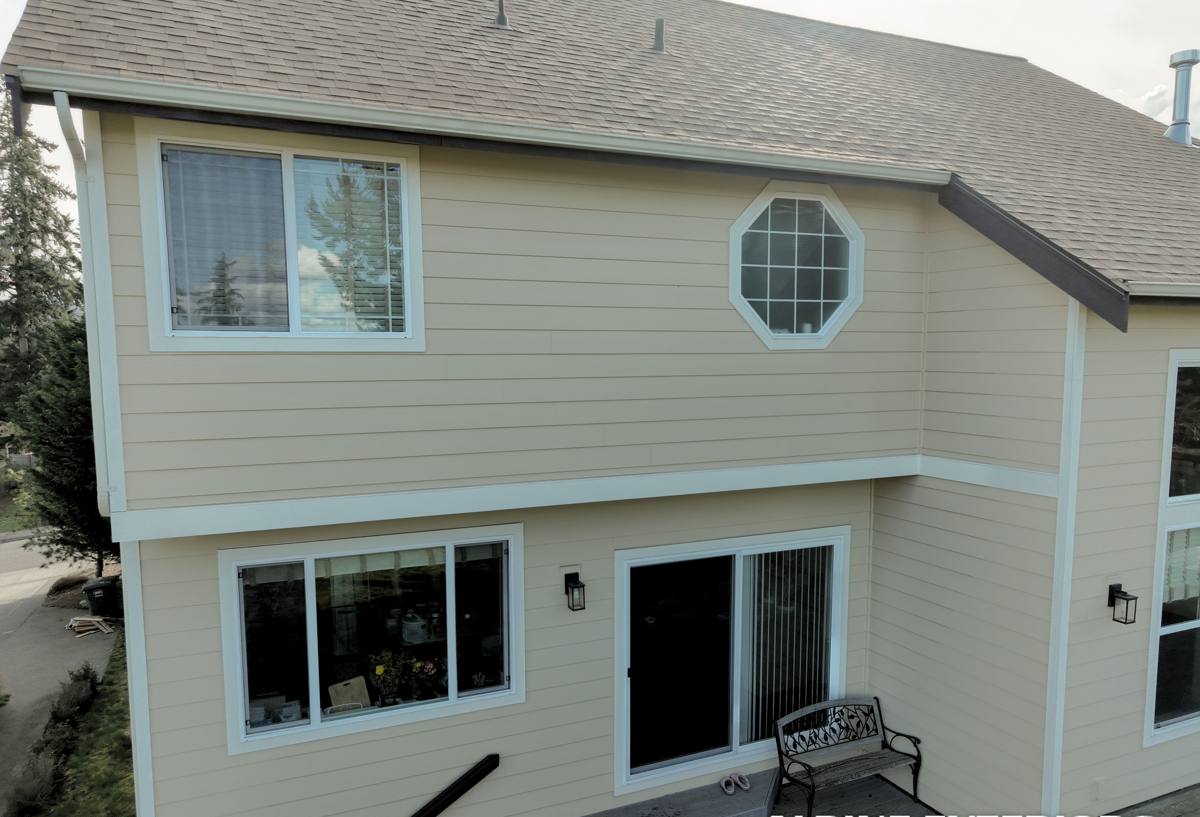
The Two Conditions That Wear Out Sudden Valley Roofs Early
Tree Canopy and Shade
Roofs under heavy tree cover dry out slower after every rain. Shingles, moss, algae, and organic debris all behave differently in shade than they do on a sun-exposed roof a few miles away. A roof that would last two decades in the open can start showing moss and granule loss years sooner under a canopy, simply because the surface never gets a real chance to dry between storms.
Sustained Moisture and Limited Airflow
Lake-basin air tends to sit still more than open coastal air. Combined with tree cover blocking wind, that means less natural drying and more time for moisture to work into fasteners, flashing seams, and any spot where the old roofing has started to fail. Over years, that moisture load is what turns a minor maintenance issue into a full deck repair.
Together, these two conditions mean the biggest threat to a Sudden Valley roof usually isn't one dramatic storm — it's years of low-grade moss growth and moisture retention that most homeowners don't notice until it shows up as a stain on a ceiling.
What a Correct Roof Replacement Actually Involves
A roof replacement is more than swapping old shingles for new ones. Done right, in conditions like Sudden Valley's, it includes several steps that matter more here than they would on a drier, more exposed roof.
Full Tear-Off and Deck Inspection
We remove the existing roofing down to the deck on every replacement — not layer over it. That's the only way to actually see the plywood or plank sheathing underneath, which is where shaded, moisture-heavy roofs tend to show their real damage: soft spots, delamination, or rot around old flashing and vent penetrations. Any damaged decking gets replaced before anything new goes down.
Underlayment and Moisture Barriers
On a roof that stays damp longer than average, the underlayment layer is doing more work over its lifespan than it would on a dry roof. We use synthetic underlayment rated for extended moisture exposure, and we run ice-and-water shield in the vulnerable spots — eaves, valleys, and around penetrations — where trapped moisture and freeze-thaw cycling do the most damage over time.
Ventilation
Shaded, humid roofs need attic ventilation that actually moves air, not just code-minimum vents. Poor ventilation traps warm, moist air against the underside of the deck, which accelerates rot and can void material warranties. We check intake and exhaust balance as part of every replacement, not as an upsell.
Flashing and Penetrations
Chimneys, skylights, vent stacks, and roof-to-wall transitions are where most leaks actually start, not in the open field of shingles. New flashing, properly lapped and sealed, is standard on every job — reused flashing is a false economy on a roof that's already fighting moisture.
Choosing a Roofing Material for Sudden Valley Conditions
There's no single "best" roofing material for every house — it depends on your roof's sun exposure, your budget, and how much upkeep you want to do. Here's how the common options actually perform under Sudden Valley's shade-and-moisture combination.
| Material | Moss/Moisture Resistance | Typical Lifespan Under Canopy | Maintenance Needs | Rough Cost Range |
|---|---|---|---|---|
| Architectural (dimensional) asphalt shingle | Good, especially with algae-resistant granules | 18–25 years | Periodic moss removal, gutter clearing | $$ |
| 3-tab asphalt shingle | Fair — thinner profile shows moss and wear sooner | 12–18 years | More frequent moss treatment | $ |
| Standing seam metal | Excellent — moss struggles to hold on smooth metal | 40+ years | Low; occasional debris clearing | $$$$ |
| Cedar shake | Poor to fair in heavy shade without diligent upkeep | Highly variable, shorter under canopy | High — regular treatment required | $$$ |
We'll walk you through actual pricing for your roof, but the table above reflects real trade-offs we see across shaded lots. Cedar shake, in particular, is a product we're upfront about: in heavy shade with limited airflow, it needs a level of ongoing maintenance most homeowners don't sign up for, and moisture-related deterioration can outpace the maintenance schedule. That's not a knock on the material in the right setting — it's a mismatch with this specific climate combination, and we'll tell you that honestly rather than sell you something that will disappoint you in year eight.
How Our Process Works
- Free on-site estimate. We walk your roof, check the attic if accessible, and look at drainage, shade patterns, and existing damage before quoting anything.
- Written scope and material selection. You get a clear breakdown of what's being replaced, what materials are proposed, and why — no vague line items.
- Scheduling around weather. Roof replacement needs a dry work window. In this area that means we plan around forecasts more carefully than a crew working drier terrain would.
- Tear-off, deck repair, and installation. Full removal, inspection, and reroofing as outlined above.
- Site cleanup. Magnetic sweep for nails, tarps under work areas to catch debris, and full haul-away of old materials.
- Final walkthrough. We go over the finished roof with you before we consider the job done.
Working on Sudden Valley Lots and Access
Sudden Valley properties often sit on wooded, sloped lots with tighter driveway access than you'd find on a flat in-town street. That affects equipment staging, debris chute placement, and how we protect landscaping during tear-off. Many properties in this community also fall under community association guidelines for exterior work — if yours does, we're glad to work within whatever notice or approval process your HOA requires; just let us know up front so it doesn't slow down scheduling.
Because we're routinely on roofs in this neighborhood, we're familiar with the general lot layouts and access patterns here, which usually means fewer surprises on estimate day and a tighter, more accurate quote than you'd get from a crew seeing a wooded Sudden Valley lot for the first time.
Maintaining Your Roof After Replacement
A new roof still needs some upkeep in this environment — especially under tree cover. A little attention goes a long way toward hitting the full expected lifespan of the material you chose.
- Clear gutters and valleys of needles and debris at least twice a year, more often under heavy conifer cover
- Have moss growth treated before it establishes a thick mat, not after
- Trim overhanging branches back to reduce shade and debris load where practical
- Check attic ventilation isn't blocked by insulation or stored items
- Have flashing and penetrations visually checked every couple of years, especially after major windstorms
- Address any interior ceiling staining immediately — it's almost always a roof issue, not a coincidence
Why Hiring a Crew That Already Works Sudden Valley Matters
A roof replacement is a decision you're living with for decades, and the details that go wrong on a shaded, moisture-heavy lot are rarely obvious until years later. A crew that already understands how Sudden Valley's tree cover, lake-basin humidity, and access conditions affect a roof is less likely to underspec ventilation, skip proper moisture barriers, or recommend a material that looks fine on paper but struggles in this specific setting. That local familiarity is less about knowing the neighborhood by name and more about having actually torn off and replaced roofs under these exact conditions, repeatedly, and knowing what holds up.
If you're weighing a roof replacement in Sudden Valley, we're happy to come take a look and give you a straightforward, no-pressure estimate — what your roof actually needs, what it'll cost, and why. Use the form below to get started.