 Bellingham Exterior
 Sehome's Exterior Walls Work Harder Than Most People Realize
Sehome sits close enough to Bellingham Bay that salt-laden air reaches its homes on a regular basis, and it shares the same wet, gray stretch of the calendar as the rest of Whatcom County. That combination — airborne salt, near-constant moisture, and shaded, tree-lined lots that hold onto damp air — is exactly the kind of environment that separates siding that lasts decades from siding that starts failing in year seven or eight. Most siding materials were never engineered with this climate in mind. James Hardie's fiber cement lines were, which is a big part of why we install nothing else.
This page is specifically about what James Hardie siding work looks like for a Sehome home: what the climate demands, what a correct installation actually involves, and why the installer matters as much as the product.
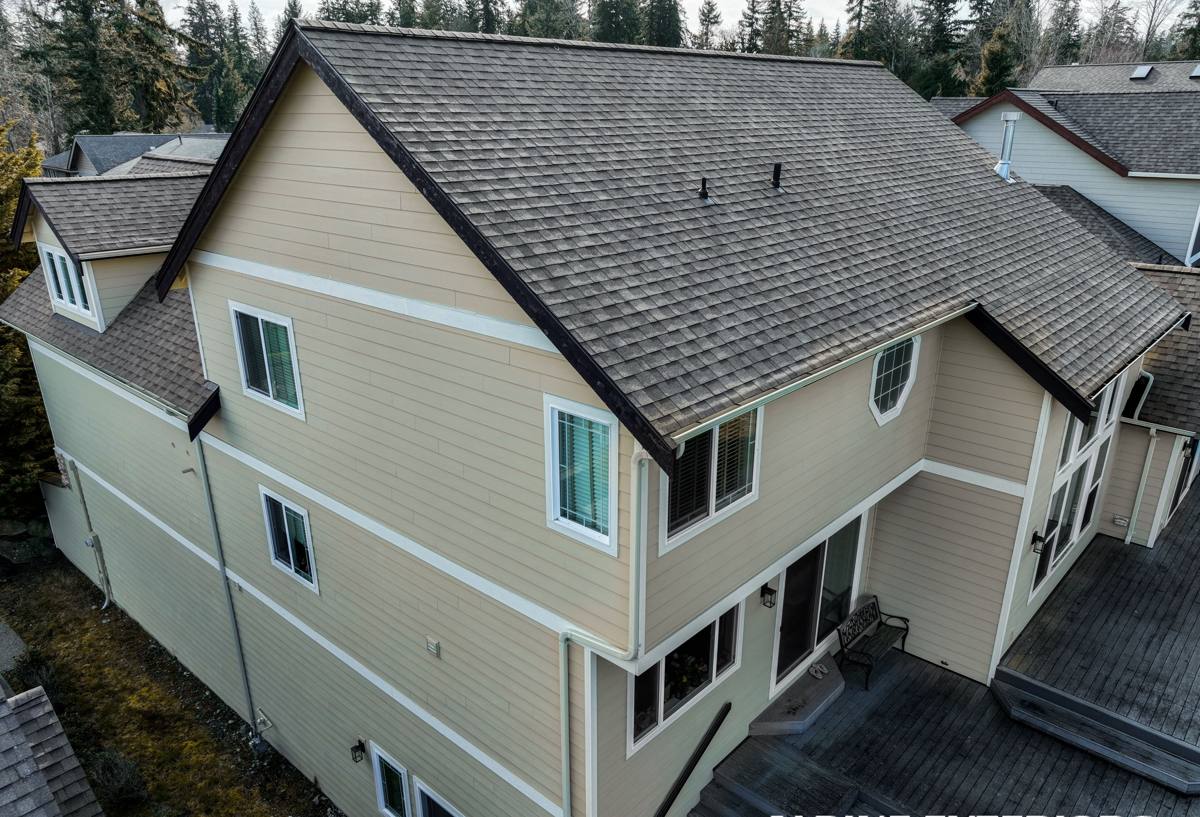
Why Salt Air, Rain, and Moss Change the Calculus
Any one of these three conditions is manageable on its own. Together, over years, they compound:
- Salt air accelerates corrosion on exposed fasteners and metal flashing, and it can degrade lesser paint finishes faster than inland homes ever experience.
- Driving rain — rain pushed sideways by wind rather than falling straight down — finds its way behind siding through gaps, poor laps, and unsealed penetrations that would never leak in a calmer climate.
- A long moss season means organic growth gets a real foothold on north-facing walls, shaded siding, and anywhere moisture lingers instead of drying out between storms.
Wood-based and wood-adjacent products absorb moisture and swell, crack, or rot under this kind of repeated exposure. Vinyl can hold up structurally but tends to show its age through fading, warping in temperature swings, and gaps that open at the seams over time. Fiber cement, installed correctly, resists all three pressures — it doesn't rot, it isn't a food source for moss and mildew the way wood is, and a factory-applied finish holds its color far longer than field-applied paint.
The James Hardie Product Lines That Make Sense in Sehome
Engineered for the Region
James Hardie manufactures siding in different formulations calibrated to different climate zones. For Western Washington, that means the HZ5 product line, engineered specifically for regions with prolonged moisture exposure and freeze-thaw cycling. This isn't a marketing distinction — the fiber cement mix and moisture resistance are tuned differently than the product sold in dry, hot climates.
ColorPlus Factory Finish
Rather than relying on a paint crew's spray pass, ColorPlus finishes are baked on at the factory in multiple coats under controlled conditions. That finish resists fading, chipping, and the kind of chalky breakdown that salt air and UV exposure cause on field-applied paint. It also means touch-up paint is formulated to match rather than guessed at.
Choosing a Profile
HardiePlank lap siding is the most common choice for Sehome homes and gives that traditional horizontal look in several exposure widths and textures. HardiePanel works well for accent sections, gable ends, or a more modern vertical look. HardieShingle is an option for homes wanting a shingled or shake-style appearance without the maintenance burden that comes with real wood shakes in a wet climate.
What a Correct Installation Actually Involves
James Hardie siding is only as good as the installation behind it. The material is engineered to perform for decades, but that performance depends entirely on details most homeowners never see once the siding is up.
Clearances and Flashing
Hardie's own installation specifications call for minimum clearances between siding and grade, roof lines, decks, and other horizontal surfaces where water collects or splashes back. Flashing has to be integrated at every window, door, and penetration — not caulked over as a substitute. In a climate that drives rain sideways, these details are what keep water out of the wall assembly in the first place.
Fastening Pattern
Fasteners need to hit framing at the correct spacing and depth — not overdriven, not underdriven, and placed according to Hardie's published fastening schedule for the specific product and exposure. In a salt-air environment, corrosion-resistant fasteners aren't optional; using the wrong fastener is one of the more common shortcuts that shows up as staining and failure years later.
Joints, Gaps, and Caulking
Butt joints need to be treated correctly — either flashed or sealed per spec — and gaps at trim and penetrations need the right sealant, applied at the right width and depth. Caulk is a detail, not a fix; it's not meant to compensate for a poorly cut or poorly flashed joint.
Weather-Resistive Barrier
Behind the siding, a properly lapped weather-resistive barrier and rainscreen or drainage plane give any moisture that does get past the siding a way to drain and dry out rather than sitting against the sheathing. This layer matters more here than in drier climates, precisely because of how often the siding gets wet.
Where Installations Go Wrong — and Why It Matters More Here
Fiber cement is a forgiving material in terms of durability, but an unforgiving one when it comes to installation shortcuts, because problems don't show up right away. In a drier climate, a missed clearance or a skipped flashing detail might go unnoticed for years. In Sehome's climate, the same shortcut gets tested by rain and moisture almost immediately and repeatedly. The most common issues we find on existing installs are siding installed tight to grade or decking, face-nailing at the wrong reveal, caulk used in place of flashing, and cut edges left unsealed where moisture can wick into the board. None of these are defects in the James Hardie product — they're installation errors, and they're preventable.
Our Process for a Sehome Home
- On-site assessment — we look at existing siding condition, moisture damage, trim, flashing, window integration, and how the specific lot's sun, shade, and wind exposure will affect the job.
- Product and color selection — choosing the right HardiePlank, panel, or shingle profile and ColorPlus finish for the home, factoring in HOA or neighborhood expectations where relevant.
- Tear-off and substrate check — removing old siding and inspecting sheathing for hidden rot or moisture damage before anything new goes on. Damaged sheathing gets addressed before siding starts, not covered up.
- Weather barrier and drainage plane installation — installed and lapped correctly, shingle-fashion, so water sheds outward.
- Hardie installation to manufacturer spec — correct clearances, fastening schedule, flashing integration, and joint treatment throughout.
- Trim, caulking, and touch-up — finished with Hardie-compatible trim and the correct sealants at penetrations and transitions.
- Final walkthrough — checking reveals, fastener lines, caulk joints, and cleanup before we call the job done.
Living With Hardie Siding Through Moss Season
Even the best siding benefits from a little homeowner attention in a climate like this. Fiber cement doesn't feed moss or mildew the way wood does, but organic growth can still take hold on the surface, especially on shaded, north-facing walls where moisture lingers longest. A periodic gentle rinse — garden hose pressure, not a pressure washer aimed at close range — keeps siding looking clean and prevents buildup from staining the ColorPlus finish over time. Keeping vegetation and sprinkler spray off the siding, and making sure gutters aren't overflowing onto walls below, does more for long-term appearance than any product choice alone.
What Affects the Cost of a Hardie Siding Project
Every home is different, but the same handful of factors drive cost on most Sehome projects:
| Factor | Why It Matters |
|---|---|
| Home size and wall complexity | More corners, gables, and cutouts mean more labor and material waste. |
| Existing siding removal | Tear-off and disposal add time compared to installing over new construction sheathing. |
| Sheathing or framing repair | Hidden moisture damage found during tear-off needs to be fixed before siding goes on. |
| Product profile chosen | Plank, panel, and shingle profiles differ in material and labor cost. |
| Trim and detail work | Window surrounds, corner boards, and accent details add labor time. |
| Site access | Tight lots, slopes, or limited staging space can affect crew efficiency. |
We don't quote broad ranges over the phone without seeing the home — every one of these factors changes the number, and a walkthrough is the only honest way to price a job.
Why a Crew That Already Works Sehome Is Worth Choosing
A contractor who works this area regularly already understands how Bellingham Bay's salt air, the region's rain patterns, and shaded lots affect siding performance — that's knowledge you don't have to pay to teach someone. Familiarity with local permitting requirements, typical framing and moisture conditions in homes of this age and area, and realistic scheduling around Whatcom County's wetter months all come from doing this work here repeatedly, not from a general contractor picking up a siding job on the side.
What to Look for in a Siding Contractor
- Manufacturer training or certification specific to James Hardie installation
- A written scope that references clearances, flashing details, and fastening schedule — not just "install siding"
- Willingness to explain what they found during tear-off, including any sheathing repairs
- Clear answers about warranty coverage — both the manufacturer's product warranty and the installer's workmanship warranty
- Local references and a track record of jobs in similar coastal or moisture-heavy conditions
If a contractor can't speak specifically to flashing details or fastening schedules, that's a sign the installation may lean on caulk and hope rather than the details that actually keep water out.
Get a Straightforward Estimate
If you're weighing options for a Sehome home's exterior, we're happy to take a look and talk through what your specific home needs — no pressure, no generic sales pitch. Request a free estimate below and we'll walk the property, answer your questions, and give you a clear picture of the work and the investment involved.