 Bellingham Exterior
 Siding in Sehome: A Neighborhood Between Bay Air and Wooded Slopes
Sehome is one of Bellingham's older, established neighborhoods, sitting close to downtown, Western Washington University, and the wooded rise of Sehome Hill. That combination of proximity to Bellingham Bay and heavy tree cover creates a specific set of conditions for exterior siding: salt-laden air moving in off the water, deep shade from mature trees that keeps wood surfaces damp long after a storm passes, and a moss season that in Whatcom County can run from October through May. Siding here doesn't just need to look good — it needs to survive a slow, steady moisture cycle that never fully lets up.
We've replaced siding on enough homes in this part of Bellingham to know the pattern: houses on shadier, tree-covered lots show moisture damage years before homes on open, sun-exposed streets, even when the siding itself is the same age. That's the local reality any siding replacement plan in this neighborhood has to account for.
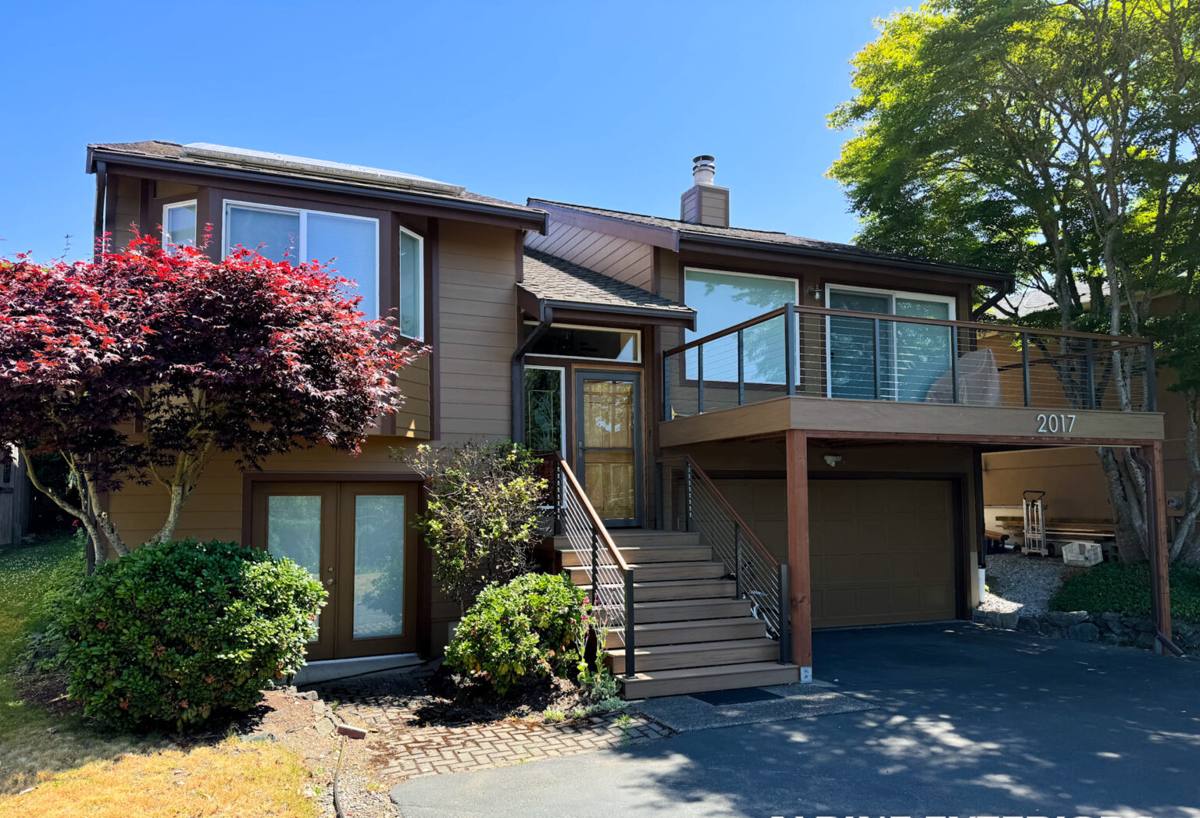
What Bellingham's Climate Actually Does to Siding
Three things drive most of the siding failures we see in Sehome and the rest of Bellingham:
- Salt air and moisture — proximity to Bellingham Bay means airborne salt and humidity accelerate the breakdown of fasteners, caulking, and any siding product that isn't built for sustained damp exposure.
- Driving rain — Pacific storms often come in sideways rather than straight down, pushing water into laps, seams, and trim joints that a fair-weather installation is never really tested against.
- Moss and algae season — shaded, moisture-retaining surfaces in Whatcom County grow moss for the better part of the year. Moss holds water against the siding surface, and on porous or poorly sealed materials that moisture eventually works its way behind the cladding.
None of this is unique to Sehome, but the neighborhood's tree cover and closeness to the water put it toward the harsher end of what Bellingham homes deal with. A siding system that performs adequately in a drier, sunnier part of town can fail noticeably faster here.
Signs a Sehome Home Needs Replacement, Not Just Repair
Not every siding problem calls for a full tear-off. But there's a point where patching stops making sense and replacement becomes the honest recommendation. Watch for:
- Soft or spongy spots when you press on the siding, especially near the bottom courses and around window trim
- Paint that won't hold — repeated peeling or bubbling within a year or two of repainting, which usually signals moisture trapped underneath
- Persistent moss or dark staining that returns within a season of cleaning
- Visible gaps, warping, or cupping in individual boards or panels
- Rot at butt joints, corners, or anywhere trim meets siding
- Rising energy bills alongside drafts near exterior walls, which can mean the water-resistive barrier behind the siding has failed
If one or two of these show up in an isolated spot, a repair may hold for a while. If they're spread across multiple walls, or the siding is original to a house more than 20–25 years old, replacement is almost always the more honest answer — repeated patching on failing siding tends to cost more over time than doing the job once, correctly.
What a Correct Siding Replacement Job Involves
Replacing siding is not simply pulling off old boards and nailing up new ones. In a climate like Bellingham's, the details that are invisible once the job is finished are the ones that decide whether it lasts. A correct job includes:
Tear-off and substrate inspection
Full removal of the old siding down to the sheathing, so we can see what's actually underneath — soft sheathing, hidden rot around windows, or old flashing that was never installed correctly. This is usually where problems surface that a visual inspection alone would have missed.
Water-resistive barrier and flashing
A new weather-resistive barrier goes on the sheathing, with flashing integrated at every window, door, and penetration so water is directed out and down, never behind the barrier. Given how much sideways rain this area gets, flashing details at horizontal trim and window heads matter as much as the siding material itself.
Proper clearances and fastening
Siding needs the right gap at grade, roof lines, and decks to keep it from sitting in standing water or trapped moisture, and it needs to be fastened to the manufacturer's specification — not a "close enough" version of it. This is one of the most common places we find shortcuts on older installations.
Trim, caulking, and finish
Corner boards, trim, and caulking joints need to be sealed with products rated for sustained wet climates, and the finish needs to hold up to months a year of damp, shaded conditions rather than just look good on install day.
Why We Install Only James Hardie Fiber Cement
We standardized on James Hardie fiber cement siding for every job we do, including here in Sehome, and we don't install vinyl, LP SmartSide, or unfinished wood siding. That's a professional standard we hold ourselves to, not a sales pitch, and it comes down to how each option actually holds up under the conditions this neighborhood sees.
Fiber cement is non-combustible and dimensionally stable — it doesn't expand, contract, or feed moisture the way wood-based products can, and it doesn't soften or distort under prolonged damp shade the way vinyl can under repeated heat and cold cycling. Hardie's factory-applied ColorPlus finish is baked on under controlled conditions, which holds color and resists the peeling and touch-up cycle that field-painted siding goes through in a wet climate. Hardie also builds climate-specific HZ5 product lines engineered for regions with heavy moisture exposure, which fits Bellingham's profile better than a one-size-fits-all siding spec, backed by a warranty that's meant to transfer if you sell the home.
None of that means other products are worthless — vinyl is inexpensive and low-maintenance in mild climates, and cedar has genuine visual appeal. But weighed against what salt air, driving rain, and a long moss season do to a house over 20-plus years, fiber cement is the material we're willing to warranty and stand behind on Sehome homes.
Comparing Siding Options for a Whatcom County Climate
| Material | Moisture Performance | Maintenance | Typical Lifespan |
|---|---|---|---|
| James Hardie fiber cement | Non-combustible, dimensionally stable, HZ5 lines engineered for wet climates | Low — factory finish resists fading and peeling | 30+ years with correct install |
| Vinyl | Can warp or distort with temperature swings; seams are a moisture entry point | Low, but color fades and it can't be repainted well | 15–25 years |
| Engineered wood siding | Wood-based core is moisture-sensitive if the surface finish is compromised | Moderate — needs prompt repair of any surface damage | 20–25 years, highly install-dependent |
| Cedar / untreated wood | Absorbs moisture readily; needs consistent sealing in shaded, damp areas | High — regular refinishing and moss treatment | Variable, often 15–20 years without diligent upkeep |
These are general performance patterns, not guarantees — installation quality affects every material's real-world lifespan more than the spec sheet does. But in a neighborhood with as much shade and moisture exposure as Sehome, the gap between materials tends to show up sooner rather than later.
Our Process, Start to Finish
- On-site assessment — we look at the actual condition of your current siding, sheathing where accessible, and the specific exposure of your lot: tree cover, prevailing wind and rain direction, and drainage.
- Written estimate — a clear scope covering tear-off, any anticipated substrate repair, materials, and timeline, with no surprise line items added mid-project.
- Tear-off and inspection — old siding comes off, and we document anything found underneath before covering it back up.
- Water management install — new barrier, flashing, and drainage details go in before a single piece of finished siding is hung.
- Hardie installation — siding, trim, and fastening done to manufacturer specification, not a shortcut version of it.
- Final walk-through — we go over the finished job with you before calling it done.
Why a Crew That Already Works Sehome Matters
Siding failure patterns aren't identical across Bellingham. A crew that's worked in Sehome specifically has already seen how tree cover on certain streets keeps siding wet longer, how proximity to the bay shows up as fastener corrosion faster than it does further inland, and where older homes in the neighborhood tend to carry outdated or missing flashing from past renovations. That's pattern recognition built from doing the work here — not something a generic regional siding checklist fully substitutes for.
It also matters for logistics that are easy to overlook: understanding the City of Bellingham's permitting and inspection process, being realistic about access on narrower, tree-lined lots, and reading how weather windows in this specific microclimate affect scheduling a tear-off. You don't want sheathing exposed the day a Pacific storm rolls through.
What to Expect After Replacement
Correctly installed Hardie siding is low-maintenance, but low-maintenance doesn't mean zero attention. In Sehome's climate, we recommend:
- An annual visual check for moss buildup, especially on shaded, north-facing walls, with gentle cleaning before it accumulates
- Periodic caulk inspection at trim joints and penetrations — caulking wears faster than the siding itself
- Keeping gutters clear so overflow doesn't run directly down the siding face
- Trimming back vegetation that holds moisture against exterior walls
None of this is heavy upkeep, but it's the difference between siding that reaches its full lifespan and siding that starts showing problems a decade early.
Questions Worth Asking Before You Hire
Whoever you hire for siding replacement in Sehome, it's worth asking directly:
- Will you remove the old siding down to the sheathing, or install over the existing wall?
- What water-resistive barrier and flashing details will you use, specifically?
- Will the fastening schedule follow the manufacturer's written specification?
- What's covered under warranty, and is it transferable if you sell the home?
- Have you worked on homes in this neighborhood before, and what have you seen go wrong here?
A contractor who answers these plainly, without hedging, is one worth trusting with the job.
If your Sehome home's siding is showing its age — moss that won't quit, paint that won't hold, or boards that feel soft to the touch — we're happy to take a look and put together a free, no-pressure estimate. There's no obligation, just a straight assessment of what your home actually needs.