 Bellingham Exterior
 Storm Damage Roof Repair in Sehome: What This Climate Actually Does to a Roof
Sehome sits in central Bellingham, close enough to Sehome Hill and the surrounding rise of land that wind, rain, and shade all behave a little differently than they do on a flat, open lot. When a storm moves through Whatcom County, it rarely just drops rain straight down. Wind pushes it sideways into roof valleys, under shingle tabs, and around flashing that was never designed to handle water coming from that angle. Add in salt air off the Salish Sea and a moss season that can run most of the year on shaded slopes, and Sehome roofs take on a slower, more cumulative kind of damage than homeowners in drier climates usually deal with.
That combination matters for storm damage repair specifically. A roof that looked fine before the storm may already have had weakened flashing, saturated underlayment, or moss holding moisture against the shingles. The storm doesn't create the vulnerability, it exposes it. Our job on a storm damage call in Sehome is to fix the storm's damage and tell you honestly what condition the roof was already in underneath it.
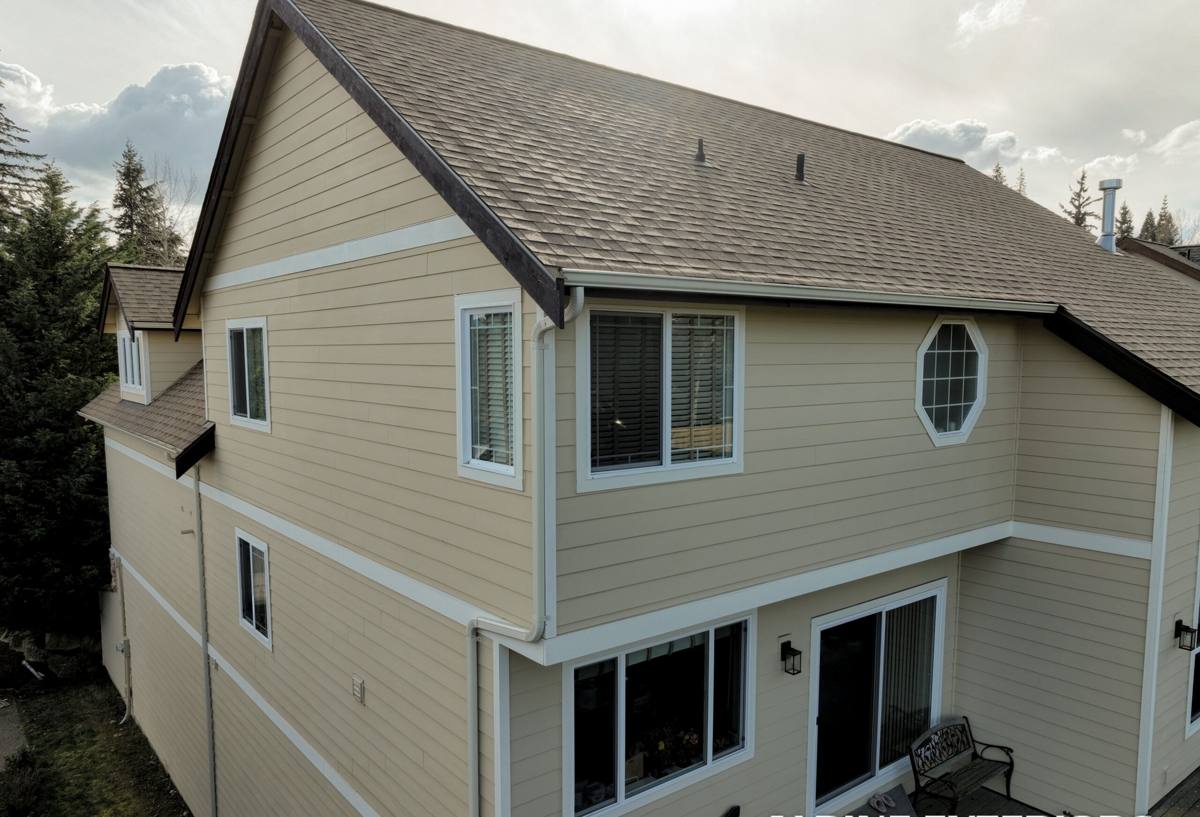
What Counts as Storm Damage Here
Wind Damage
Sustained wind and gusts moving off the Sound and up through Bellingham's central neighborhoods can lift, crease, or tear shingles, especially along ridgelines and roof edges where wind pressure concentrates. Once a shingle's seal is broken, it doesn't always blow off right away, it can sit loose and flap with every gust after, letting water underneath a little more each time.
Driving Rain Intrusion
Rain that arrives sideways on a storm wind finds its way into places straight-down rain never would: under lifted shingle tabs, behind flashing that's slightly separated from a chimney or wall, and into roof valleys where debris has slowed the water's path off the roof. This is usually the damage that's hardest to see from the ground and easiest to underestimate.
Debris Impact
Sehome's tree cover is part of what makes the neighborhood pleasant to live in, and it's also a source of storm-related roof damage. Branches, cones, and falling limbs from wind events can crack shingles, dent metal flashing, or in more serious cases puncture the roof deck itself. Impact damage is worth a direct visual inspection rather than a guess from the ground, since a cracked shingle can look minor from a distance and still be letting water through.
Moss and Trapped Moisture, Made Worse by a Storm
A roof that already had moss buildup going into a storm is at higher risk of shingle displacement, because moss lifts shingle edges and gives wind something to catch. After a storm, we often find that what looks like fresh wind damage is really pre-existing moss damage that the storm's wind and rain finally pushed past the point of holding water back.
Regional Storm Patterns That Affect Sehome Roofs
Most of the storms that cause roof damage in Whatcom County arrive in the fall and winter months, when systems moving in off the Pacific bring sustained wind alongside heavy, prolonged rainfall rather than a short, isolated squall. These systems can push rain sideways for hours at a time, which is a very different load on a roof than an intense but brief summer downpour. Wind funneling through Bellingham Bay and across the open water of the Salish Sea can also pick up speed before it reaches inland neighborhoods like Sehome, so gusts here don't always match what a general regional forecast suggests.
Storm season in this area also overlaps directly with the tail end of the wet season's moss buildup, which means roofs are often at their most vulnerable, softened shingle edges, waterlogged moss, saturated gutters, right when the heaviest wind and rain events are most likely to hit. That overlap is part of why we treat storm damage assessment in Sehome as connected to a roof's overall moisture history rather than as an isolated event.
Our Storm Damage Assessment Process
We don't quote storm repair work sight unseen, and we don't recommend a full roof replacement before we've actually confirmed one is needed. The process is straightforward:
- Ground-level and roof-surface inspection. We look at the whole roof, not just the area you think is damaged, since storm damage is often more widespread than what's visible from the yard or a single interior stain.
- Flashing and penetration check. Chimneys, vent pipes, skylights, and roof-to-wall transitions get specific attention, because that's where wind-driven rain during a storm most often finds a way in.
- Interior check where relevant. If you've noticed a ceiling stain, attic dampness, or a musty smell after a storm, we trace it back to its actual source on the roof rather than just patching the spot closest to the stain.
- Written findings before any work starts. You get a plain description of what we found, what's storm-caused versus pre-existing wear, and what the repair actually involves, before we ask you to approve anything.
- Insurance documentation, if needed. If you're filing a homeowner's insurance claim for storm damage, we document what we find with enough detail to support that claim, though the claim itself is between you and your insurer.
What a Correct Storm Damage Repair Involves
Storm repair done right isn't just replacing the shingles that are obviously missing. A proper repair addresses the whole path water could have taken:
- Replacing damaged or missing shingles with matching material, color-matched as closely as the existing roof allows
- Re-securing or replacing lifted flashing at valleys, chimneys, and vent penetrations rather than just resealing it in place
- Checking and, if needed, replacing underlayment beneath the damaged section, since a torn or saturated underlayment defeats the purpose of new shingles on top of it
- Inspecting the roof deck itself for soft spots or moisture damage where water may have been getting in for longer than the storm alone would explain
- Clearing debris and moss from valleys and gutters so water has a clear path off the roof going forward
- Confirming attic ventilation wasn't compromised, since trapped moisture after a repair can cause problems just as easily as the original leak did
Skipping any of these turns a repair into a temporary patch. We've seen roofs in Bellingham get "fixed" after a storm with new shingles laid over damaged underlayment, only for the same leak to reappear the next wet season in a slightly different spot.
Repair vs. Replacement After a Storm
Not every storm-damaged roof needs to be replaced, and we don't default to recommending one. The honest answer depends on a few specific factors:
| Factor | Usually Points to Repair | Usually Points to Replacement |
|---|---|---|
| Extent of damage | Isolated to one section or a handful of shingles | Spread across multiple roof planes |
| Roof age | Well within its rated service life | Already near or past expected lifespan |
| Underlayment and deck condition | Dry and intact beneath the damaged area | Saturated, soft, or showing rot |
| Prior repair history | First or second repair on an otherwise sound roof | Repeated patchwork over the same areas |
| Moss and moisture history | Minimal pre-existing moss or trapped moisture | Longstanding moss damage the storm exposed |
We'll walk you through which category your roof actually falls into, with our reasoning, rather than steering you toward whichever option pays out more on an insurance claim.
Working With Your Homeowner's Insurance on a Storm Claim
Many storm damage repairs in Sehome get filed as homeowner's insurance claims, and we're glad to work alongside that process even though the claim itself is a conversation between you and your insurer, not something we manage on your behalf. What generally helps a claim move smoothly is clear, dated documentation of the damage, a written scope of what the repair actually involves, and an honest distinction between what the storm caused and what was pre-existing wear the storm simply exposed. Insurers typically look closely at that distinction, since normal wear and tear is usually not a covered event the way sudden storm damage is.
We won't inflate a scope of work to chase a bigger claim payout, and we won't downplay real damage to keep a job simple either. If part of what we find during an inspection turns out to be long-term moss or moisture wear rather than storm-caused, we'll tell you that directly so you know what to expect from the claims conversation, rather than finding out after the fact.
Signs of Storm Damage Worth a Prompt Look
- Shingles that are visibly missing, cracked, curled, or lifted after a windstorm
- Granules collecting heavily in gutters or downspouts right after a storm, beyond normal seasonal shedding
- New water staining on interior ceilings or walls following a storm event
- Flashing that looks bent, separated, or missing around chimneys and vents
- Visible dents or cracks from branch or debris impact
- A musty smell or new dampness in the attic after heavy wind and rain
- Daylight visible through the roof deck when checked from inside the attic
Any one of these is worth a call, even if the damage looks minor. In this climate, a small unaddressed leak after a storm tends to get worse with the next round of rain rather than dry out and resolve on its own.
Why Timing Matters After a Storm
Whatcom County's wet season doesn't give a damaged roof much time to sit before the next round of rain arrives. A shingle that's lifted or missing after one storm is exposed to the next storm's wind and rain almost immediately, and each additional exposure tends to widen the damage, whether that's more underlayment saturation, a bigger stain on the ceiling, or moss and algae taking hold in the newly exposed area. Getting a roof assessed and, if needed, tarped or temporarily protected soon after a storm is one of the more effective ways to keep a repair a repair, instead of letting it grow into a replacement over a few more storms.
Why a Local Crew Matters for Storm Repair in Sehome
A crew that works roofs across Bellingham through every storm season sees how wind, driving rain, and moss actually interact on real houses in this specific terrain, not just how a shingle performs on a spec sheet. That matters in Sehome in particular: the neighborhood's mix of older homes and mature tree cover near Sehome Hill means flashing details and moss exposure vary block to block more than a generic storm-repair checklist accounts for. Knowing which roof orientations in this part of Bellingham tend to catch the worst of a wind-driven storm, and which flashing details are worth the extra attention on a repair, comes from having done this work here repeatedly, not from a one-size-fits-all approach brought in from outside the area.
What We Need From You After a Storm
If you think your roof took storm damage, a few things help us help you faster:
- A general sense of when you first noticed the damage or any interior signs like staining
- Whether you've already contacted your homeowner's insurance, or plan to
- Any photos you're comfortable taking from the ground, though we'll do our own roof-surface inspection regardless
- Access to the attic if there's an interior stain, so we can trace it properly
None of this is required to get a look scheduled, it just helps us come prepared.
Get a Free, No-Pressure Storm Damage Assessment
If a recent storm has you wondering whether your Sehome roof took real damage or you're just seeing normal wear, we're glad to come take a direct look and give you a straightforward, honest read on what it needs. Reach out using the form below to schedule a free estimate, no pressure, no upsell script.