 Bellingham Exterior
 Birch Bay Takes a Different Kind of Beating Than the Rest of Whatcom County
Birch Bay sits right on the water, exposed to wind coming straight off the Strait of Georgia. That changes what "normal wear" looks like on a house. A few miles inland in Bellingham, siding problems tend to show up slowly — moss on a shaded north wall, a little paint fade over a decade. On the water in Birch Bay, the same problems show up faster and in more places on the house, because the siding is dealing with three things at once: salt-laden air that accelerates corrosion of fasteners and trim, wind-driven rain that gets pushed sideways into seams and laps that were never designed to take water head-on, and a long wet season that keeps moss and algae growing on siding for months at a stretch.
None of that means a house on the bay is doomed to constant repairs. It means the repair work has to account for exposure, not just patch what's visible. A crew that mostly works inland neighborhoods and only occasionally sees a waterfront house can miss that distinction — they'll fix the crack you called about and leave the fastener corrosion or the trapped moisture behind it untouched, which just means another call in a year or two.
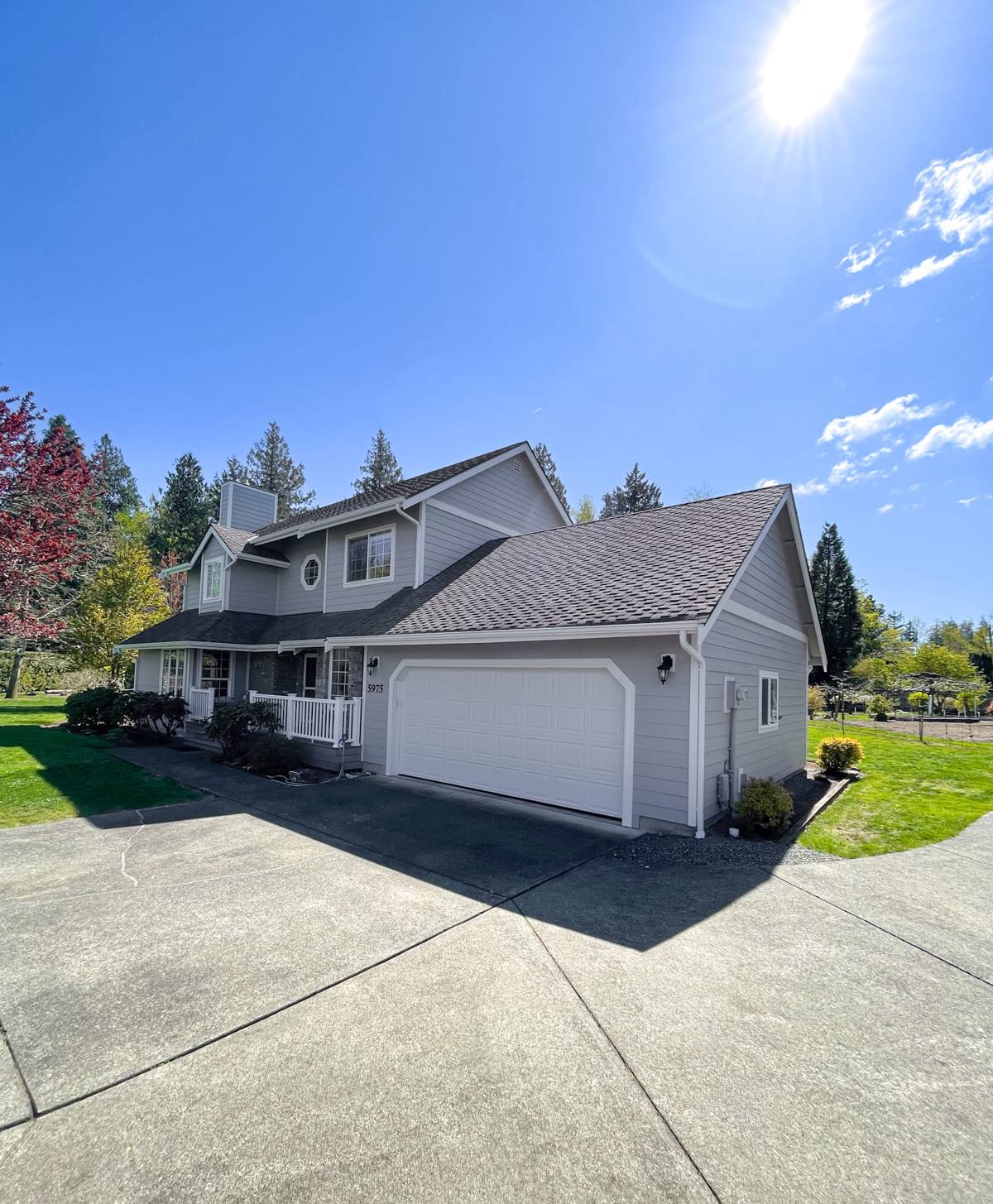
What "Siding Repair" Actually Covers on a Birch Bay Home
Impact and storm damage
Wind off the water throws debris — branches, gravel, loose yard items — and it does it more often than in a sheltered inland yard. That shows up as cracked panels, dented or split boards, and popped fasteners along the most exposed elevation of the house, which on the bay is usually the side facing the water or the prevailing wind.
Moisture and rot at seams, corners, and trim
This is the repair category that matters most and gets missed most often. Wind-driven rain finds any gap in caulking, any under-lapped joint, or any place trim meets siding without proper flashing, and pushes water in rather than letting it run off. On older homes with wood, LP SmartSide, or improperly sealed siding, that trapped moisture rots the substrate from behind — so the siding can look fine from the yard while the wall underneath is soft.
Moss, algae, and surface staining
Birch Bay's long damp season, combined with shaded and north-facing walls near mature trees, keeps siding wet longer than it dries. That grows moss and green algae staining that isn't just cosmetic — moss holds moisture against the siding surface and, over years, works its way into seams and fastener holes, opening a path for the rot problem above.
Repair or Replace? How We Make the Call
Not every damaged section needs to come off the house, and not every home needs a full re-side. The honest answer depends on how much of the wall is affected and what's happening behind the siding, not just what's visible from the street.
| Situation | Repair is usually right | Replacement is usually right |
|---|---|---|
| Damage extent | Isolated to one or two panels or a single elevation | Spread across multiple walls or the whole exposure facing the water |
| What's behind the siding | Sheathing and framing are dry and sound | Rot has reached the sheathing or framing |
| Material condition | Rest of the siding is structurally sound, just aged in color | Rest of the siding is brittle, delaminating, or failing at multiple points |
| Cause | One-time storm or impact event | Ongoing moisture intrusion from a design or installation flaw |
| Material match | Matching product or close equivalent is available | Discontinued profile or color that can't be matched cleanly |
When we're on site, that decision gets made after we've actually looked behind a sample section — not from the driveway. A house that only needs a repair shouldn't be sold a full re-side, and a house with rot spreading behind three walls shouldn't be patched and sent on its way for another two years.
What a Correct Repair Job Involves
- Full inspection, not just the reported spot. If one panel failed from wind-driven rain, the panels around it were exposed to the same conditions and often show early damage too.
- Checking what's behind the siding. A damaged or removed section is the only real chance to see the condition of the weather barrier and sheathing underneath before closing it back up.
- Addressing the cause, not just the symptom. If a failed seam let water in, the repair has to fix the flashing or lap detail — replacing the panel without fixing why it failed just resets the clock.
- Matching material and fastening correctly. Mismatched panel thickness, wrong fastener spacing, or the wrong caulk for coastal exposure are common shortcuts that fail again within a season or two.
- Finish and color matching. A visible patch looks worse than the damage it replaced; getting the reveal, caulk lines, and paint or factory finish to match is part of the job, not an extra.
Why the Siding Material Affects How Often You'll Be Making This Call
A lot of the older homes and cottages around Birch Bay were built or re-sided with whatever was standard at the time — cedar, vinyl, or engineered wood products like LP SmartSide. Each of those behaves differently once salt air and wind-driven rain are part of the equation, and that affects how often repair calls come up.
| Material | Common issue in this exposure | Repair frequency |
|---|---|---|
| Cedar | Moisture absorption, cupping, and rot at end grain and fastener points | Recurring — needs regular refinishing and periodic board replacement |
| Vinyl | Cracking and warping from wind and temperature swings; seams open under wind pressure | Moderate — individual panels crack or blow loose over time |
| LP SmartSide | Edge swelling and delamination if moisture reaches the wood-strand core | Moderate to high once a moisture path opens |
| James Hardie fiber cement | Non-combustible, doesn't absorb moisture the way wood-based products do; failures are typically installation-related, not material-related | Low, when installed and flashed correctly |
We repair whatever material is already on your house — we're not going to tell a homeowner with sound cedar or vinyl that it needs to come off. But when a wall has failed repeatedly, or when we're pricing out a full re-side because the damage is too spread out to patch, we install James Hardie fiber cement and explain why: it's the product we're willing to stand behind in this exposure, because it doesn't carry the same moisture-absorption risk that drives most of the repeat repair calls we see on the water.
Our Process for a Birch Bay Repair Call
Inspection first
We look at the reported damage, the surrounding panels, and — where the damage allows — what's happening behind the siding. You get a straight answer on whether this is a repair, a larger repair, or something that points to a bigger problem.
A clear scope before we start
You know what's being replaced, what's being resealed or reflashed, and roughly what it costs before work begins. No surprise change orders once the wall is open.
The repair itself
Damaged material comes out, the substrate and weather barrier get checked and repaired if needed, and new material goes in fastened and flashed to handle wind-driven rain — not just to look finished from the ground.
Finish match and cleanup
Where possible we match existing material, caulk color, and paint or factory finish so the repair blends in rather than standing out as a patch.
Timing Repairs Around the Whatcom County Weather Window
Siding repair can technically happen most of the year, but drier stretches make for a better result — caulk and paint cure properly, and any exposed sheathing isn't sitting open during a heavy rain event. If you've got active moisture intrusion, though, don't wait for a dry season to address it; a temporary weatherproofing fix now followed by a proper repair later beats leaving an open path for water through another wet Whatcom County winter.
Signs You Need a Repair Call Now
- Soft or spongy siding when pressed, especially near the bottom courses or around windows and doors
- Visible cracks, splits, or panels that have pulled away from the wall
- Persistent moss or dark staining that keeps returning after cleaning
- Paint that's bubbling, peeling, or failing in patches rather than evenly across a wall
- Caulk that's cracked, shrunk, or missing at seams, corners, and trim joints
- A musty smell or visible staining on interior walls that share an exterior wall with damaged siding
- Fasteners that are rusting, backing out, or leaving streak marks down the siding
Why a Crew That Already Works Birch Bay Matters
Coastal exposure isn't theoretical to a crew that's already out there regularly. It changes what we check first during an inspection, what fastening and flashing details we insist on, and which failure patterns we recognize on sight instead of having to diagnose from scratch. A contractor based inland who takes an occasional waterfront job doesn't build that same instinct for how wind, salt, and moss actually move through a wall in this specific stretch of Whatcom County coastline.
If you've got damaged, failing, or aging siding on a Birch Bay home, we're happy to take a look and give you a straight assessment — repair, bigger repair, or replacement — with no pressure either way. Reach out for a free estimate using the form below.