 Bellingham Exterior
 Siding Repair in Edgemoor: Working With What the Bay and the Trees Do to a House
Edgemoor sits along Bellingham Bay on a wooded, bluff-lined stretch of the city, and it's one of the more distinct microclimates we work in around Bellingham. The tree canopy is heavy, lots are often sloped or terraced toward the water, and homes here range from older construction to more recent builds, each carrying whatever siding decisions were made at the time. What that adds up to, from a repair standpoint, is a neighborhood where siding takes on damage from more than one direction at once — salt-laden air off the water, wind-driven rain that doesn't behave the same on every wall, and a moss season that runs long under all that shade.
Siding repair is a different job than new installation. It's diagnostic work first and craftsmanship second: figuring out why a section failed, how far the damage actually extends behind what's visible, and whether a targeted repair will actually hold or whether it's papering over a bigger problem. We do this work throughout Edgemoor regularly enough to know which failure patterns show up here more than elsewhere, and that's the difference this page is about.
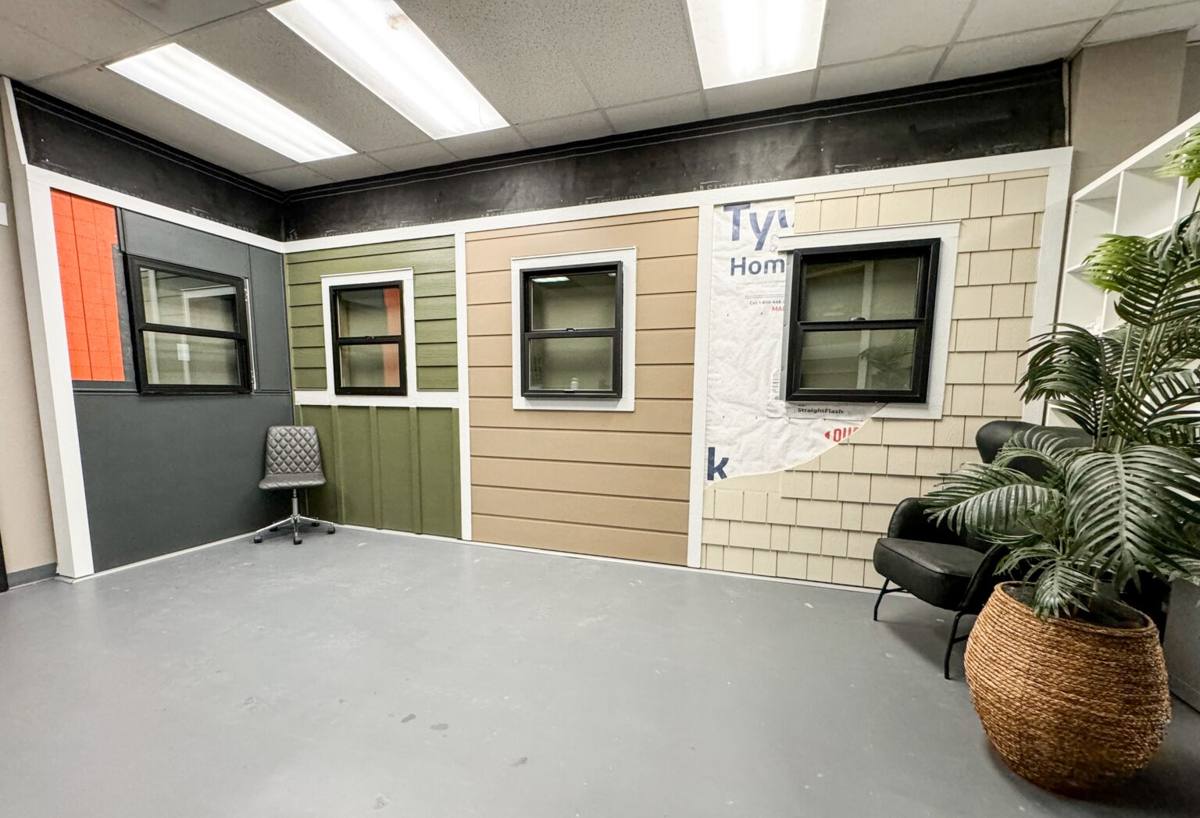
What Bellingham Bay Weather Does to Edgemoor Siding
Salt Air and Corrosion
Homes closer to the water pick up airborne salt that settles on exterior surfaces and accelerates corrosion in anything metal — fasteners, flashing, trim edges, and hardware. On siding itself, that corrosion often shows up first at fastener heads and cut edges, where a compromised finish lets moisture reach the substrate underneath. It's a slow process, which is exactly why it tends to go unnoticed until a repair is already needed rather than caught early.
Driving Rain Off the Bay
Edgemoor's terrain isn't flat, and that means wind-driven rain off the bay hits different elevations of the same house with different force depending on orientation and how exposed a given wall is to open water versus tree cover. A repair on a bay-facing wall has to account for more aggressive wind-driven moisture than a repair on a sheltered, tree-shaded wall of the same house — treating every wall the same is one of the more common mistakes in a rushed repair job.
A Long Moss Season Under the Trees
The combination of shade, humidity, and mild Pacific Northwest temperatures keeps moss and mildew active for most of the year on properties with heavy tree cover, and much of Edgemoor qualifies. Moss holds moisture against a surface far longer than an open, sun-exposed wall would ever experience, and on porous or moisture-sensitive siding, that constant dampness is what turns a cosmetic issue into a structural one.
Repair or Replace? Reading the Damage Correctly
Not every siding problem needs a full section replaced, and not every problem is safely solved with a patch. The judgment call comes down to how far moisture has actually traveled behind the surface, not just what's visible from the outside. A cracked or split board with dry framing behind it is usually a clean, contained repair. The same crack sitting over a wall assembly that's been absorbing water for a season or more is a different job entirely, even though the visible damage might look identical.
- Cracking, splitting, or buckling limited to one or two boards, with no soft spots in the surrounding wall
- Fastener corrosion or popped nails causing a board to loosen, without visible rot underneath
- Localized moss or mildew staining on an otherwise sound surface
- Caulking or trim failure at a window, door, or corner that's letting water track behind the siding
- Impact damage from a fallen branch or debris, common on tree-lined Edgemoor lots
Signs that point toward something bigger than a spot repair include soft or spongy siding across multiple boards, staining that keeps returning after cleaning, visible gaps or separation at seams, or interior signs like discoloration on walls or ceilings near an exterior corner. When we find that pattern, we say so directly rather than quoting a patch job that won't hold.
What a Correct Siding Repair Actually Involves
Diagnosing the Real Cause, Not Just the Symptom
A damaged board is a symptom. The cause is usually something upstream of it — a flashing detail that was never installed correctly, a caulk joint that failed years ago and went unnoticed, or a drainage path that got blocked. Replacing the visible board without addressing what let water in behind it means the same failure shows up again, often in the same spot, within a season or two.
Matching Material and Finish
On a Hardie repair, matching the profile, reveal, and ColorPlus finish of the existing siding matters for both appearance and performance — mismatched material can create its own moisture path at the seam. On older Edgemoor homes with non-Hardie siding already in place, we're upfront about what a repair can and can't accomplish with the existing product, and we'll talk through whether a broader repair or a phased transition to Hardie makes more sense for that specific wall.
Flashing and Water Management at the Repair Site
Any repair that opens up a section of wall is a chance to correct flashing and drainage details that may have been wrong from the original installation, not just close things back up the same way. Given how much wind-driven rain varies wall to wall on an Edgemoor property, we treat this as standard practice on bay-facing and exposed elevations, not an upsell.
Fastening and Sealant Details
Given the corrosion risk from salt air, we use fasteners and hardware rated for coastal exposure rather than whatever's fastest to grab off the shelf, and we're deliberate about sealant placement — too much sealant in the wrong spot can trap moisture just as easily as too little can let it in.
Why We Repair With James Hardie — and What Older Edgemoor Siding Changes About That
We install and repair with James Hardie fiber cement exclusively. We don't install LP SmartSide, vinyl siding, Cemplank, Allura, primed spruce, or cedar, and that standard applies to repair work too. On a property exposed to salt air and long wet seasons, we've found fiber cement holds a repair line cleanly and resists the swelling, warping, and finish breakdown that other materials are more prone to in this kind of environment. Hardie's factory-applied ColorPlus finish also means a well-matched repair section resists fading and moisture intrusion the way a field-painted patch on wood or engineered siding often doesn't.
Edgemoor's mix of home ages means we regularly work on properties with vinyl, cedar, or engineered wood siding already installed, sometimes from a much earlier renovation. We'll still repair what's there when a targeted repair is the honest answer, but we won't pretend those materials perform the same as fiber cement in a bay-exposed, moss-prone setting. If a homeowner is facing repeat repairs on the same wall, that's usually the point where a conversation about transitioning to Hardie — even just on the affected elevation — becomes worth having.
What Hardie's HZ5 Line Adds in a Setting Like This
Hardie's HZ5 formulation is engineered for regions with heavy moisture exposure and freeze-thaw cycling rather than hot, dry climates, which fits Whatcom County's marine conditions well. For repair work specifically, it means the replacement material is built for the same exposure the original wall has been dealing with for years, not a generic product pulled off a shelf.
Common Edgemoor Siding Repair Scenarios
| Symptom | Likely Cause | Typical Repair Approach |
|---|---|---|
| Soft or spongy board near a window or door | Failed caulk joint or missing flashing letting water track behind siding | Open the section, correct flashing, replace affected boards |
| Rust streaking near fastener heads | Salt-air corrosion on non-coastal-rated fasteners | Replace fasteners with corrosion-resistant hardware, patch finish |
| Persistent moss or dark staining that returns after cleaning | Shaded, slow-drying wall holding moisture against the surface | Clean, inspect substrate for damage, address drainage or clearance |
| Cracked board after a fallen branch or debris impact | Physical impact damage, tree cover common on Edgemoor lots | Cut out and replace the damaged board section |
| Gapping or separation at a seam or corner | Material movement, thermal cycling, or original installation error | Re-fasten or replace with correctly detailed materials |
Our Siding Repair Process
We start with an on-site inspection that looks past the visible damage to check what's happening behind it — probing for soft spots, checking flashing at nearby penetrations, and looking at how that specific wall is exposed to bay wind, rain, and shade compared to the rest of the house. From there we give a clear, written scope that spells out exactly what's being repaired and why, including whether we found anything beyond the original complaint. Repair work is completed with attention to matching existing material and finish where that's the right call, and we don't consider a repair finished until the water management behind it is correct, not just the surface in front of it.
We also tell homeowners plainly when a repair is a short-term fix versus a durable long-term one, since that distinction matters more on an exposed, bay-facing wall than it does on a sheltered one.
Why a Crew That Already Works Edgemoor Matters
Edgemoor isn't a uniform neighborhood from a siding standpoint — homes sit at different elevations relative to the water, under different amounts of tree cover, facing different directions relative to prevailing wind off the bay. A crew that regularly works this part of Bellingham has already seen how those variables play out on real houses: which walls tend to take the worst of the wind-driven rain, how far salt-air corrosion typically travels inland from the shoreline, and which older siding installations in the area are prone to repeat problems. That local pattern recognition shortens the diagnostic part of a repair and reduces the chance of missing a cause that isn't obvious from a first look.
Questions Worth Asking Before Hiring for Siding Repair
- What material do they repair with, and can they match the existing siding's profile and finish?
- Do they inspect for moisture and flashing problems behind the damaged area, or just replace what's visible?
- Do they carry current Washington contractor licensing and active liability insurance?
- Can they explain, specifically, why a wall in a shaded or bay-exposed location failed?
- Will they give a written scope of work before starting, including what happens if they find more damage once the wall is opened?
If siding on your Edgemoor property is showing damage, staining that won't clean off, or areas that feel soft to the touch, we're glad to take a look and give you an honest read on what it actually needs — repair, partial replacement, or nothing urgent at all. Reach out below for a free, no-pressure estimate.