 Bellingham Exterior
 Edgemoor's Wooded, Waterfront Setting Creates a Unique Siding Environment
Edgemoor sits along the water south of downtown Bellingham, on wooded, view-oriented lots that look out over Bellingham Bay. That setting is part of what makes the neighborhood desirable, and it's also exactly what makes siding age faster here than it does a few miles inland. Homes in Edgemoor deal with three things at once: salt-laden air coming off the bay, driving rain pushed sideways by marine wind, and heavy tree canopy that keeps large sections of exterior wall shaded and damp for months at a time.
Any one of those on its own is manageable. Together, they create a cycle that's hard on most siding materials — wet, shaded surfaces that never fully dry between rain events, salt air that accelerates corrosion on fasteners and trim, and a moss and algae season that in Whatcom County can run from fall through spring. We see the results on Edgemoor homes regularly: paint failing years ahead of schedule, dark staining on north- and west-facing walls, and soft or delaminating siding hiding behind a coat of paint that looked fine from the street.
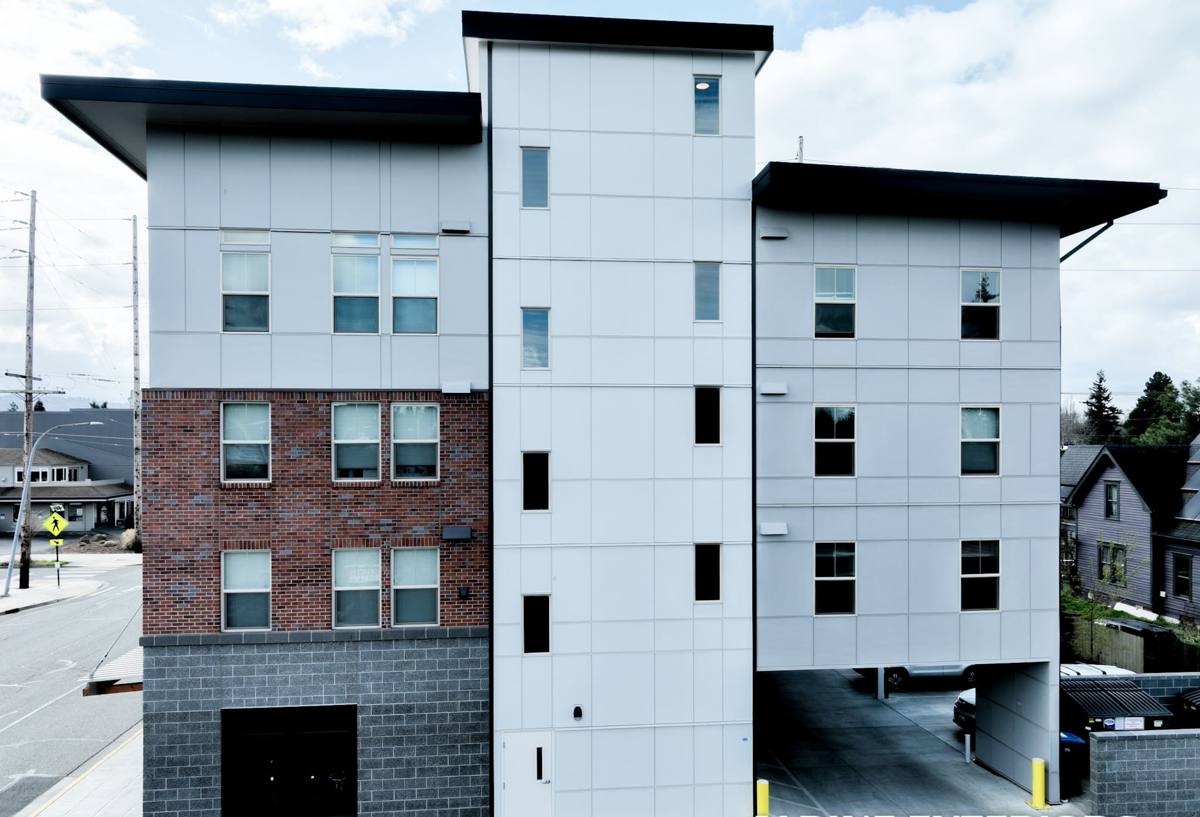
How This Climate Attacks Different Siding Materials
Not all siding responds to Bellingham's climate the same way. Understanding why is useful before you decide what to replace your siding with.
Wood and Cedar
Cedar looks right at home in a wooded neighborhood like Edgemoor, but it's also the most maintenance-intensive option in a wet, shaded climate. It needs regular refinishing, and once moisture gets behind a failed finish, rot follows — especially on shaded elevations that don't get enough sun to dry out between storms.
Vinyl
Vinyl resists moisture itself, but it moves with temperature swings, can crack in cold snaps, and tends to fade and go brittle with years of UV and salt-air exposure. It also doesn't hold up well against wind-driven debris from tree cover, and once a panel cracks, moisture can get behind the whole wall.
OSB-Based Composite (LP SmartSide and similar)
These products are wood-based at the core. That's manageable in a dry climate with good roof overhangs, but on a shaded, damp lot with driving rain, any breach in the finish or caulking gives moisture a path into a substrate that can swell and deteriorate if it isn't caught quickly.
Fiber Cement
Fiber cement doesn't have organic wood fiber for moisture to feed on, doesn't warp with humidity swings, and holds a factory finish far longer than field-applied paint. It's the reason we standardized on it — not because every other product is bad, but because this specific mix of salt air, shade, and rain rewards a material that simply doesn't care as much about staying wet.
Signs Your Edgemoor Home May Need Replacement, Not Just Repair
Repair makes sense when damage is isolated. Full replacement becomes the right call when the underlying material is failing broadly, even if it isn't obvious from the ground. Watch for:
- Paint that's peeling, bubbling, or needing a fresh coat every 2-3 years instead of holding up
- Soft, spongy, or crumbling spots when you press on the siding, especially near the bottom courses
- Persistent black or green staining on shaded or north-facing walls that pressure washing doesn't fully remove
- Visible gaps, warping, or buckling at panel seams
- Rot or discoloration around window and door trim
- A musty smell or damp feeling on interior walls that back up to exterior siding
- Noticeably higher heating bills, which can point to a compromised weather barrier behind the siding
If you're seeing more than one of these, it's usually a sign the whole wall system — not just the visible siding — needs attention.
What a Correct Siding Replacement Involves
Siding replacement is easy to do partway and hard to do right. A correct job goes well beyond nailing up new boards over the old wall.
- Full tear-off to bare sheathing, not installation over the old siding
- Sheathing inspection and repair — any water-damaged or rotted sheathing gets replaced before anything new goes up
- A proper weather-resistive barrier, installed and lapped correctly so water sheds outward, not into the wall
- Flashing at every vulnerable point — window and door heads, roof-to-wall transitions, and kick-out flashing where a roofline meets a wall, which matters even more on a lot with heavy rain runoff and tree debris
- Correct fastening pattern and spacing per manufacturer specification, not just "close enough"
- Factory-finished panels, caulked and sealed at seams and penetrations per the manufacturer's installation guide
Skip any one of these steps and you can end up with siding that looks good for a year or two and then fails from the inside out — which is exactly the kind of hidden failure a heavily shaded, rain-exposed neighborhood like Edgemoor tends to expose fastest.
Why We Install Only James Hardie Fiber Cement
We install James Hardie fiber cement siding exclusively. Not because there's no such thing as a good vinyl or wood-based product, but because after years of doing this work in Whatcom County's climate, Hardie is what consistently holds up on homes like the ones in Edgemoor without the maintenance treadmill.
Built for This Climate
James Hardie's HZ product lines are engineered around regional moisture exposure. Fiber cement is non-combustible, doesn't swell or rot when it stays damp longer than it should, and won't feed mold or moss growth the way organic wood-based materials can on shaded, north-facing walls. The ColorPlus factory finish is baked on under controlled conditions, which holds color and resists the chip-and-peel cycle that field-applied paint goes through in a marine climate far better than repainting every few years.
Choosing Products and Colors for a Wooded, View Lot
On a property with heavy tree cover, siding spends a lot of time shaded and damp, which is exactly where moss and algae streaking shows up first. We help homeowners think through panel style — traditional lap siding, board-and-batten, or panel systems — and color choice with that in mind, since some finishes show pollen and organic staining more than others. Hardie's warranty is also transferable, which matters on a property in a neighborhood where resale value and curb appeal carry real weight.
Our Siding Replacement Process
We run the same process on every job, adjusted for the site:
- On-site inspection and estimate — we look at the current siding, sheathing condition where accessible, trim, and any trouble spots like shaded walls or roof-to-wall transitions
- Product and color selection — walking through Hardie's lines and ColorPlus options against your home's exposure and style
- Site protection — protecting landscaping, decks, and walkways before tear-off begins, which matters more on wooded lots with established plantings
- Tear-off and sheathing repair — removing old material down to the studs where needed and replacing any compromised sheathing
- Weather barrier and flashing installation — the step that determines whether the wall stays dry for the next 30+ years
- Siding installation to manufacturer spec, including proper fastening, caulking, and trim work
- Cleanup and final walkthrough — job-site debris removed and the finished work reviewed with you before we call it done
Cost Factors to Expect
Every home is different, but the same factors tend to move the price on Edgemoor projects:
| Factor | Why It Matters |
|---|---|
| Home size and wall complexity | More square footage and more corners, gables, and trim details mean more material and labor |
| Condition of existing sheathing | Hidden rot found during tear-off adds repair work that can't always be predicted upfront |
| Site access | Wooded, sloped, or view lots with limited staging space can slow material handling and setup |
| Siding profile chosen | Lap siding, panel systems, and board-and-batten carry different material and labor costs |
| Trim and detail work | Homes with more windows, dormers, or architectural trim take more time to finish correctly |
| Tear-off scope | Removing multiple old layers or hazardous materials adds time beyond a straightforward single-layer tear-off |
We give firm, itemized numbers after an on-site look — not a phone estimate — since so much of the real cost depends on what's actually behind the existing siding.
Maintaining Your New Siding — and Why Local Experience Matters
A Simple Maintenance Routine
Fiber cement is low-maintenance, not no-maintenance. A little seasonal attention keeps it performing the way it should in a shaded, salt-air environment:
- Rinse siding once or twice a year to clear salt residue, pollen, and organic buildup, especially on shaded walls
- Keep gutters and downspouts clear of leaf debris so water doesn't back up behind trim
- Trim back tree limbs and brush that keep any section of wall in constant shade or contact
- Check caulking around windows, doors, and trim annually and touch up before winter rains set in
- Watch shaded, north-facing sections for early moss or algae growth and address it before it spreads
Why Local Experience Matters
Edgemoor's wooded, sloped lots aren't always straightforward to work on — staging materials, protecting mature landscaping, and managing water runoff patterns around a shaded, tree-covered property all take site-specific judgment. A crew that already works this neighborhood knows how Bellingham's rain and shade patterns actually behave on a wall over time, not just in a brochure. That experience shows up in where flashing gets extra attention, how a job is sequenced around weather, and how the site gets left when the job is done.
If your Edgemoor home's siding is showing its age, we're glad to take a look and give you a straightforward, no-pressure estimate — no obligation, just an honest read on what your home actually needs.