 Bellingham Exterior
 New-Construction Windows: A Different Job Than Replacement
New-construction windows are installed into a bare rough opening before siding goes on, using a nailing flange that ties directly into the home's weather-resistive barrier (WRB) and flashing system. That's a different job than a retrofit or pocket replacement, where a window drops into an existing frame and the exterior trim is never fully opened up. If you're building or framing a home in the Silver Beach area of Bellingham, the window install happens at a specific point in the build sequence, and getting that sequence right the first time matters more here than it would somewhere with a milder, drier climate.
Whatcom County's weather doesn't give a new window opening much grace period. Rain can move in fast off the water, and a rough opening left exposed or flashed out of order can take on moisture before the siding crew ever shows up. We build our new-construction window process around that reality.
What Silver Beach's Climate Asks of a Window Install
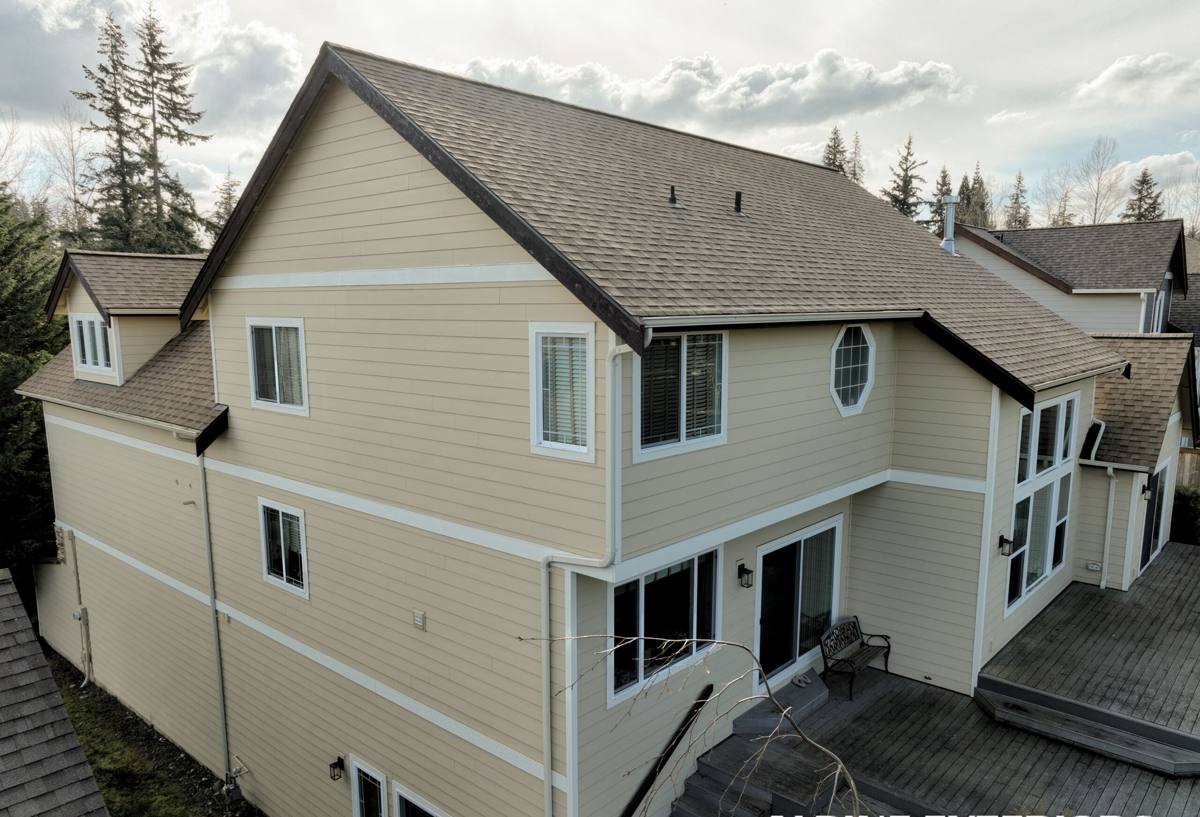
Silver Beach sits close to Lake Whatcom, with tree cover and shade that keep a lot of moisture sitting on siding, trim, and window sills longer than it would on an open, sun-exposed lot. Combine that with the moisture-laden marine air that moves through greater Bellingham off Bellingham Bay, and you get a long stretch of the year where building materials rarely fully dry out. That's the same set of conditions that produces this area's long moss season — moss doesn't just grow on roofs, it colonizes shaded siding, trim, and window sills that stay damp.
Add in driving, wind-driven rain during fall and winter storms, and a new-construction window opening has three things working against it before the house is even weathertight: standing moisture, biological growth, and wind-pushed water that doesn't behave like a straight-down rain event.
What This Means in Practice
- Flashing details have to shed water outward and downward in the right order — no shortcuts, because wind can drive rain sideways and upward under a poorly lapped joint.
- Sill pans and end dams matter more here than in drier climates, since any water that does get behind the window needs somewhere to go besides the framing.
- Sealants and tapes need to hold up to sustained damp conditions, not just occasional rain.
- Shaded, tree-lined lots near the lake need materials and details that resist moss and mildew buildup at the sill and trim, not just materials that look good on install day.
What a Correct New-Construction Window Install Involves
Flashing and Water Management
The window opening gets flashed in a specific shingle-lap order: sill flashing first (with a sloped or pan-style sill so any water drains back out, not into the wall), then jamb flashing up both sides, then head flashing last, lapped over the jamb flashing and integrated with the housewrap above. Skipping or reversing this order is one of the most common causes of hidden water damage in new construction — and it's invisible from the outside once siding goes on.
Nail-Fin Installation and Air Sealing
New-construction windows are set square, plumb, and level in the opening, fastened through the nailing fin per the manufacturer's schedule, then sealed and taped to the WRB. We also air-seal the interior gap between the window frame and rough framing with low-expansion foam or backer rod and sealant — this is as much about comfort and energy performance as it is about water, since an unsealed gap is a direct path for drafts and moisture-laden air to reach the wall cavity.
Trim and Exterior Detailing
Exterior trim and drip caps get installed so water is directed away from the window head and jambs, not allowed to sit and wick into end grain or seams. On shaded lots, we pay attention to details that reduce standing moisture at the sill — small choices that add up over years of Whatcom County winters.
Choosing the Right Window for a Silver Beach Lot
Frame material is a real decision, not just a budget line. Each option has trade-offs worth understanding before you commit, especially on a shaded, moisture-prone site.
| Frame Material | How It Handles This Climate | Maintenance |
|---|---|---|
| Vinyl | Good moisture resistance, won't rot; performance depends heavily on installation quality | Low — occasional cleaning |
| Fiberglass | Very stable in wet/humid conditions, minimal expansion or contraction with temperature swings | Low |
| Wood-clad | Attractive interior wood look, but exposed end grain or damaged cladding is vulnerable in a shaded, damp setting | Higher — cladding and seals need periodic checks |
| Aluminum | Durable but conducts heat and cold, and can be prone to condensation in humid conditions without a thermal break | Low, but condensation management matters |
We don't push one brand or material as the only right answer — the correct choice depends on your home's design, budget, and how much sun exposure the site actually gets. What we do insist on is proper flashing and installation, because even the best window on the market will underperform if it's set into the opening incorrectly.
Glass and Energy Performance
For this climate, we look at U-factor (how well the window resists heat loss) more than solar heat gain, since Whatcom County doesn't deal with intense summer sun the way inland climates do. A properly specified low-E glass package keeps homes warmer through our long wet season without over-investing in solar control you don't need here.
How Our Process Works
- Rough opening verification. We check every opening against the window schedule for size, square, and plumb before a single window arrives on site — catching framing issues now is far cheaper than after windows are ordered.
- Coordination with your builder or framer. New-construction windows have to land at the right point in the build — after the WRB is on, before siding starts. We coordinate timing so the house isn't sitting open to weather longer than necessary.
- Install and flash each window. Sill pan, window set, fin fastening, jamb and head flashing, interior air sealing — done in sequence, per window, per opening.
- Quality check. Every opening gets a final look before we sign off — flashing laps, fastener pattern, and air seal continuity.
Timing Matters on Wet-Climate Job Sites
On a Silver Beach build, we watch the forecast as closely as the framing schedule. A rough opening that sits exposed through a stretch of driving rain can absorb moisture into the sheathing before a window ever goes in. We sequence our crews to minimize how long any opening sits unprotected, and we're willing to adjust the schedule around weather rather than force an install during a soaking rain just to hit a date. That's a harder discipline to keep on a compressed build schedule, but it's the difference between a window that performs for decades and one that starts causing problems within a few wet seasons.
Common Mistakes We See on New-Construction Openings
Most of the water problems we get called to diagnose in newer homes trace back to a handful of repeatable errors — not bad windows, but bad sequencing or shortcuts during install.
- Flashing installed out of shingle-lap order, so water gets directed behind the layer below instead of over it
- No sill pan, or a flat sill with no slope or drainage path for water that gets behind the window
- Housewrap cut and taped to the window fin without proper head flashing integration
- Interior gap between window and framing left unsealed, creating a draft and condensation path
- Windows fastened before verifying the opening is square, leading to operational problems (windows that stick or won't latch) down the road
- Exterior trim installed without a drip cap, letting water sit against the head casing
Why a Crew That Already Works Silver Beach Makes a Difference
New-construction window installation isn't exotic work, but doing it well in this specific setting — shaded, lake-adjacent lots, sustained damp conditions, and wind-driven rain off the water — rewards a crew that has already seen how these houses hold up a few years after the framing crew moves on. We know which details tend to fail first in Whatcom County's climate, and we build our process around avoiding those failure points rather than just meeting the minimum manufacturer install instructions. That local pattern recognition is hard to get from a crew that installs windows in a dry inland climate one week and here the next.
Get a Straightforward Estimate
If you're framing a new home or an addition in Silver Beach and want the window package planned and installed right the first time, we're happy to walk the site, look at your window schedule, and give you a clear, no-pressure estimate. Use the form below to get started.