 Bellingham Exterior
 Storm Damage Roof Repair Built for Sunnyland's Weather
Sunnyland is a well-established residential neighborhood on Bellingham's north side, with a mix of older homes and newer infill sitting under mature tree cover just a few miles from Bellingham Bay. That combination — salt-tinged air off the water, frequent wind-driven rain, and shade from big conifers and maples — is exactly the mix that wears roofs out faster than homeowners expect. A roof that would last decades in a dry inland climate can start showing real problems in half that time here if it isn't maintained and repaired correctly after storms.
Storm damage repair isn't just patching a leak. Done right, it's an assessment of the whole roof system — decking, underlayment, flashing, ventilation, and the shingles or panels themselves — because Whatcom County storms rarely damage just one spot. Wind lifts multiple courses of shingles at once, rain finds every gap in flashing, and moss works into weaknesses that were already there before the storm hit.
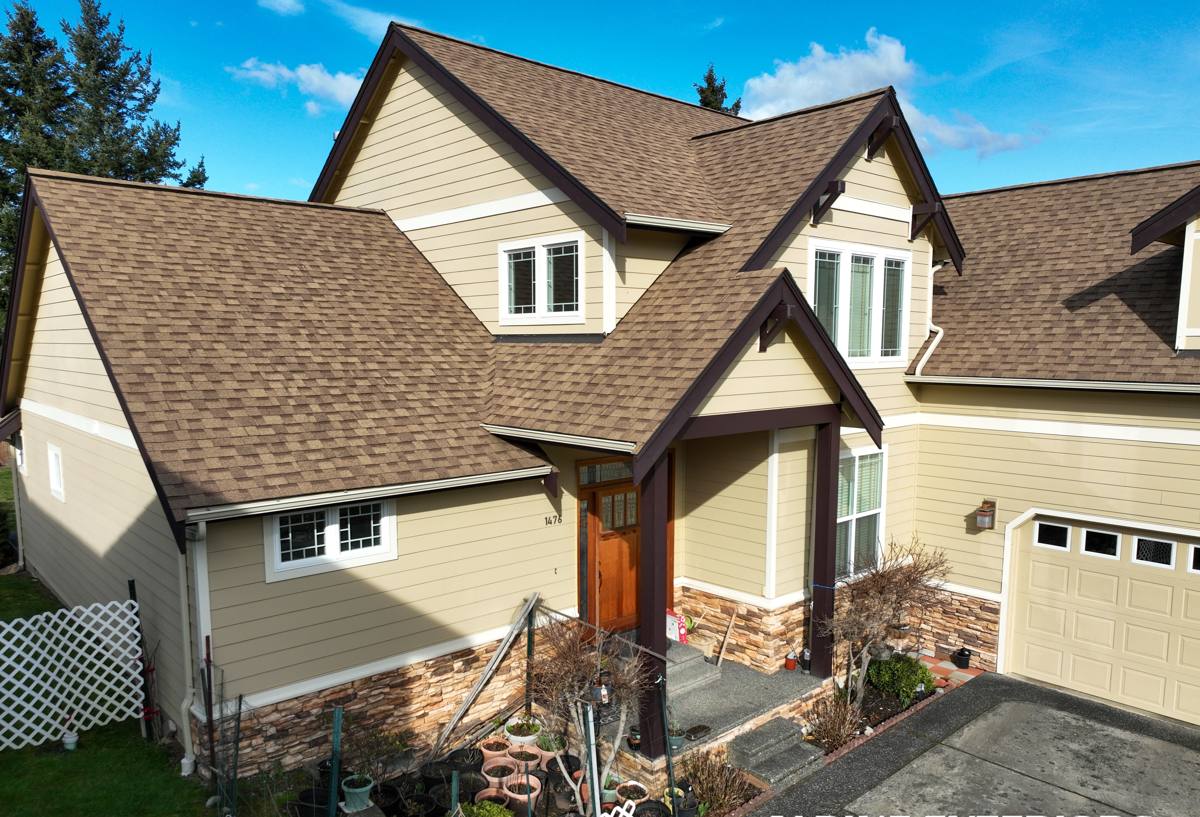
How Bellingham Storms Actually Damage a Roof
Most storm damage here doesn't look like the dramatic wind-ripped-a-hole-in-my-roof scenario people picture. It's more subtle, and that's what makes it dangerous — subtle damage gets ignored until it's a bigger, more expensive repair.
Wind and Driving Rain
Winter storms off the Salish Sea bring sustained wind combined with heavy, near-horizontal rain. That combination is worse than either one alone. Wind lifts shingle edges just enough to break the seal strip without tearing the shingle off, and then driving rain gets pushed sideways underneath. The shingle looks fine from the ground. The water intrusion doesn't show up until it stains a ceiling weeks later.
Salt Air Corrosion
Homes closer to Bellingham Bay deal with airborne salt that accelerates corrosion on exposed metal — flashing, fasteners, vent caps, gutter hardware. Salt-air corrosion is slow and easy to miss during a quick visual check, but it's often the actual point of failure when a "sudden" leak shows up after a storm. The metal was already compromised; the storm just finished the job.
Moss and Trapped Moisture
Whatcom County's long wet season, paired with the tree canopy common in Sunnyland, means moss growth is close to a given on any roof that isn't cleaned regularly. Moss holds moisture against the roof surface far longer than open air would allow, which softens shingles, works into fastener holes, and lifts roofing material at the edges. A storm hitting a moss-affected roof causes more damage than the same storm would on a clean one, because the roofing material is already weakened.
Signs a Sunnyland Roof Needs a Storm Damage Assessment
Homeowners often wait for an obvious leak, but there are earlier warning signs worth acting on:
- Granules collecting in gutters or at downspout outlets after a storm
- Shingles that look curled, cupped, or slightly raised at the edges
- Visible gaps or lifted flashing around chimneys, vents, and skylights
- Moss buildup along the north-facing slope or shaded valleys
- New water stains, discoloration, or a musty smell in the attic or upper ceilings
- Missing or displaced shingles anywhere on the roof, not just the storm-facing side
- Sagging or soft spots when walking the roof or viewing from a ladder
If more than one or two of these apply after a windstorm, it's worth having someone look before the next round of rain gets underneath.
What a Correct Storm Damage Repair Actually Involves
Assessment Before Repair
A proper repair starts with identifying the actual extent of the damage, not just the spot where water is showing up inside the house. Water travels along decking and framing before it drips, so the interior stain and the roof-level entry point are often several feet apart. We check the full roof plane the damage is on, the flashing details around penetrations, and the decking underneath — not just the shingles.
Repair vs. Replacement
Isolated storm damage — a section of lifted or missing shingles, a flashing failure at one penetration — is usually a straightforward repair if it's caught before water has soaked the decking. But if the roofing is already near the end of its service life, or if moss and moisture have compromised a broader area, patching one spot is a short-term fix that doesn't address the underlying condition. Part of an honest assessment is telling a homeowner when a repair makes sense and when it doesn't — we'd rather explain the trade-off than sell an undersized fix.
Matching Materials to the Climate
Repairs need to match not just the existing roof but the conditions it's actually exposed to. That means corrosion-resistant fasteners and flashing metal appropriate for salt-air exposure, underlayment that performs under sustained wet conditions rather than just occasional rain, and proper sealing at every penetration point — not just the one that's currently leaking.
| Roof Element | Common Storm Damage | What a Correct Repair Addresses |
|---|---|---|
| Shingles | Lifted seals, missing tabs, granule loss | Reseat or replace affected courses; check surrounding shingles for wind stress |
| Flashing | Lifted, corroded, or gapped at penetrations | Replace with corrosion-resistant metal, reseal properly, not just caulk over gaps |
| Decking | Soft or delaminated from prolonged moisture | Replace affected sheathing before new roofing goes back down |
| Ventilation | Blocked or damaged vents trapping moisture | Clear or repair to restore proper attic airflow |
| Gutters/Edges | Overflow damage from moss or debris blockage | Clear channels, confirm proper roof-edge drainage |
Our Storm Damage Repair Process
- Initial inspection. We walk the roof (or use a safe vantage point when conditions don't allow it) and check the interior for water tracking, not just the exterior surface.
- Written assessment. We explain what we found, what caused it, and what it will take to fix it correctly — including if a smaller repair is genuinely sufficient.
- Repair plan and materials. We spec materials suited to Bellingham's conditions, not the cheapest option that technically fits the hole.
- Repair work. Decking, flashing, underlayment, and roofing material addressed in the correct order — not just shingles swapped over a compromised base.
- Final check. We confirm the repair area, surrounding transitions, and drainage are all sound before calling the job done.
What Affects the Cost of a Storm Damage Repair
Every roof and every storm event is different, so we don't quote a flat number without seeing the damage. But the main cost drivers are consistent:
| Factor | Why It Matters |
|---|---|
| Extent of decking damage | Soaked or rotted sheathing has to be replaced before new roofing goes down, which adds labor and material |
| Roof pitch and access | Steeper roofs and limited access points take longer and require more safety setup |
| Age and condition of surrounding roofing | Older roofing nearby may need to be addressed to properly tie in the repair |
| Number of penetrations affected | Chimneys, skylights, and multiple vents each add flashing work |
| Moss and moisture history | Roofs with a history of moss growth often need cleaning and treatment along with the repair |
Most isolated storm repairs land in a moderate range compared to full re-roofing, but we won't estimate a number over the phone — an honest quote requires actually seeing the damage.
Storm Damage and Homeowners Insurance
Many storm-related roof repairs in Whatcom County are eligible for homeowners insurance coverage, particularly when there's a documented wind event. A written, itemized assessment from a contractor who inspected the roof in person is generally what an adjuster wants to see — vague descriptions or phone-only estimates tend to slow claims down or get disputed. We provide documentation homeowners can use for their claim, but we're not the insurance company and don't make coverage promises; that determination is always the carrier's call.
A Practical Post-Storm Checklist for Sunnyland Homeowners
- Check gutters and downspouts for granules or shingle fragments after any significant wind event
- Look at the attic (if accessible) for new stains, damp insulation, or daylight where there shouldn't be any
- Photograph any visible exterior damage right after a storm, before debris cleanup
- Note the date and general conditions of the storm for insurance purposes
- Don't walk on a wet or moss-covered roof yourself — it's one of the more common ways homeowners get hurt after a storm
- Get an inspection before the next significant rain, not after a small leak becomes a bigger one
Why It Matters to Hire a Crew That Already Works in Sunnyland
Roofing crews unfamiliar with this specific stretch of Whatcom County sometimes miss the details that matter here — how much moss buildup is normal versus a real problem, which flashing details tend to fail first under salt-air exposure, or how the tree canopy in a neighborhood like Sunnyland changes drainage and drying patterns compared to a more open lot. A crew that regularly works this area brings that context into every assessment instead of treating every roof the same way regardless of where it sits.
There's also a practical side to it: local availability matters after a storm. When a windstorm rolls through Bellingham, roofs across the whole area need attention at once, and a contractor already established in the neighborhood can respond faster than one coming from outside the county.
Get an Honest Look at Your Roof
If your Sunnyland home took a hit in a recent storm — or you just want a professional set of eyes on your roof before the next one rolls through — we're happy to take a look. The estimate is free, there's no pressure to sign anything on the spot, and if the honest answer is "this doesn't need a repair yet," we'll tell you that too. Use the form below to get started.