 Bellingham Exterior
 Why Silver Beach Roofs Wear Differently
Roofs in Bellingham's Silver Beach area don't fail the way roofs do in drier parts of the country. The damage here is slower and sneakier — marine air off the Salish Sea keeps everything slightly damp for most of the year, driving rain finds its way sideways under loose or aging shingle edges, and shaded, tree-lined lots give moss a long growing season with almost no dry stretch to check its spread. None of these things destroy a roof overnight. They wear it down a little at a time, until a homeowner notices a stain on the ceiling and realizes the problem has been building for a while.
That's the case for roof repair as its own specialty, not just a smaller version of a full roof replacement. A repair done right accounts for how water actually moves across a roof in this climate — not just how it moves on paper.
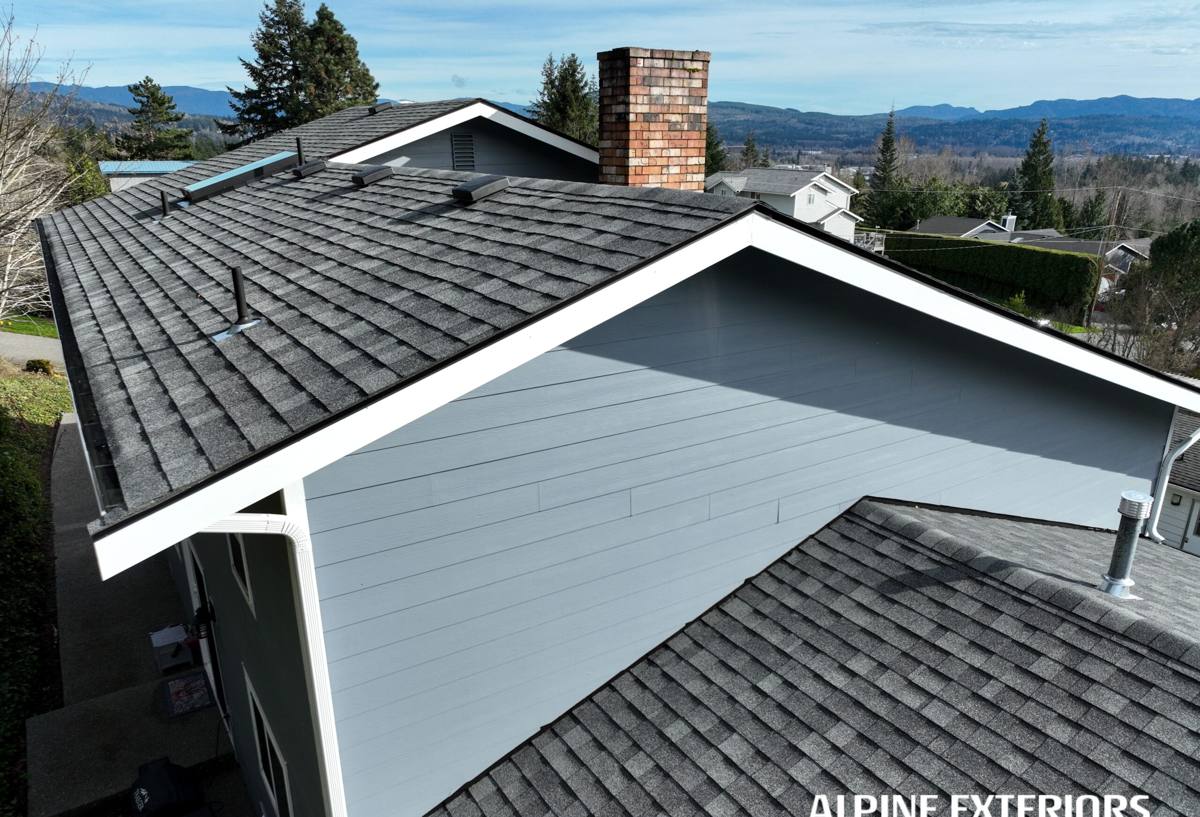
Signs a Silver Beach Roof Needs Repair
Most roof problems show themselves before they become emergencies, if you know where to look. Some of the most common signs we see on repair calls in this part of Whatcom County include:
- Thick moss mats along the north-facing slope or anywhere tree cover keeps shingles shaded and damp
- Granules collecting in gutters or at the base of downspouts, a sign shingles are wearing thin
- Shingle tabs that are curled, cupped, or lifted, especially after a windy winter
- Rust streaks or soft spots around chimney flashing, vent pipes, or skylights
- Water stains on ceilings or attic sheathing, even faint ones that seem to come and go with the weather
- Daylight visible through the roof deck when you look up from inside the attic
Any one of these on its own doesn't necessarily mean a major problem. But in a climate that gives water this many chances to work its way in, it's worth having someone look before the next round of driving rain turns a small issue into a bigger one.
What Actually Causes Most Repairs Here
Moss and Organic Growth
Moss doesn't just sit on top of a roof — its root structure holds moisture against the shingle surface and, over time, lifts shingle edges enough for wind-driven rain to get underneath. In Bellingham's climate, moss season runs long, and a roof that isn't cleared regularly can go from a light green tint to a real structural liability within a couple of seasons.
Wind-Driven Rain at Penetrations
Chimneys, vent pipes, skylights, and valleys are where most leaks actually start, not out in the open field of the roof. Driving rain — rain that's being pushed sideways by wind rather than falling straight down — finds any gap in flashing or any shingle that isn't lapped correctly at these transition points. A roof can look fine from the ground and still be leaking at a poorly flashed valley.
Marine Air and Metal Fatigue
Salt-laden marine air speeds up corrosion on exposed metal — flashing, fasteners, gutter hardware — faster than it would inland. Once flashing starts to rust and pit, it stops shedding water the way it's supposed to, and that's usually when a slow drip turns into a stain on the ceiling below.
What a Correct Repair Actually Involves
Diagnosis Before Patching
A repair that starts with cutting out the damaged shingles and slapping on new ones without figuring out why that spot failed is a repair that's likely to fail again. Before we touch anything, we trace the water — checking the attic side of the deck, the condition of the underlayment, and whether the sheathing itself has started to soften or delaminate. That tells us whether we're looking at a simple shingle-and-flashing fix or something that needs to go deeper.
Flashing Done Right
Caulk and roofing cement have their place, but they're not a substitute for properly lapped, correctly fastened flashing. When we repair a valley, chimney, or vent penetration, we remove the surrounding shingles, replace the flashing itself rather than sealing over the old piece, and reinstall shingles with the correct overlap so water sheds the way it's designed to.
Matching Materials
We try to match the existing shingle type, weight, and color as closely as possible. On an older roof, an exact match isn't always realistic — shingles fade and product lines change — and we'll be upfront about that before starting rather than let it be a surprise afterward.
Repair or Replace? How We Make the Call
Not every roof problem calls for a full replacement, and not every roof problem should be patched. The honest answer usually comes down to a handful of factors we check in person, not from a photo or a phone call.
| Factor | Usually Points to Repair | Usually Points to Replacement |
|---|---|---|
| Roof age | Well within its expected service life | Near or past the roofing material's typical lifespan |
| Damage pattern | Isolated to one valley, penetration, or storm-damaged section | Spread across multiple slopes or recurring in the same area |
| Decking condition | Solid, dry sheathing found once we open up the damaged area | Soft, delaminated, or rotted decking underneath |
| Repair history | First or second repair to this roof | Third or more repair to the same general spot |
| Moss and staining | Surface growth, shingles still flat and holding granules | Granule loss, curling, or soft spots showing under the moss |
Most single-area repairs on a typical home run from a few hundred dollars for a straightforward flashing or shingle fix up to a few thousand for larger valley work or decking repair. We won't know which category your roof falls into until we've had someone up there — we'd rather give you an honest number after an inspection than a guess that changes once we start.
Our Process, From Estimate to Finished Repair
- Inspection. We get on the roof (not just the ground) and check the attic side too, so we're diagnosing the actual cause, not just the visible symptom.
- Written scope and estimate. You get a clear description of what we found, what we're proposing to do about it, and a price — before any work starts.
- Scheduling around the weather. Roof repairs need a reasonably dry window to do properly. We plan around Bellingham's forecast rather than rushing a repair into a wet day.
- The repair itself. Damaged materials come off, the deck gets checked again once it's exposed, and flashing and shingles go back on correctly — not just covered over.
- Cleanup and walkthrough. We clear debris, check gutters near the work area, and walk you through what was done before we call it finished.
Materials We Use for Coastal Repair Work
Not every material or fastener holds up the same way in a marine climate, and our choices reflect that rather than just going with whatever's cheapest or fastest to install.
- Corrosion-resistant fasteners and flashing — standard fasteners can rust and lose their grip faster in salt-influenced air, so we favor hardware built to hold up longer in this environment.
- Ice-and-water membrane at vulnerable points — valleys, eaves, and penetrations get a self-adhering waterproof membrane underneath, as a backup layer in case wind-driven rain gets past the surface materials.
- Algae-resistant shingles where it makes sense — on repairs where we're replacing a meaningful section, we'll discuss shingle options that resist moss and algae staining better, understanding that no shingle is maintenance-free in this climate.
- Proper underlayment — we'll walk you through the trade-offs between synthetic and traditional felt underlayment for your specific roof rather than defaulting to one without explanation.
Maintenance Checklist to Protect Your Repair
A repair done correctly can last a long time, but a little upkeep goes a long way in a climate this wet. Some habits worth building into your yearly routine:
- Have moss and debris cleared off the roof and out of valleys once a year, ideally before fall rains set in
- Keep gutters and downspouts flowing freely so water doesn't back up under the shingle edge
- Trim back tree limbs that keep sections of the roof shaded and damp longer than the rest
- Check the attic once a year — or have us do it — for daylight, staining, or damp insulation
- Inspect exposed flashing and fasteners for rust or lifting after any major windstorm
- Avoid pressure-washing the roof; it strips protective granules and can drive water under the laps
Why Hire a Crew That Already Works in Silver Beach
Roofing problems in this neighborhood tend to follow patterns — which slopes hold moss longest, which roof styles are more prone to valley leaks, how a given storm direction tends to expose weak flashing. A crew that's already worked roofs in this part of Bellingham has seen those patterns before, which means less time spent guessing and more time spent fixing the actual problem. We're also familiar with Bellingham's permitting requirements, so if a repair happens to cross into territory that needs a permit, that gets handled as part of the job instead of catching you off guard later.
Local also means responsive. When a windstorm off the water knocks flashing loose or tears back a section of shingles, you want a crew that can get out to Silver Beach quickly, not one working its way through a service area that spans half the state.
If you're dealing with a leak, storm damage, or just want an honest opinion on what your roof actually needs, we're glad to come take a look. The estimate is free, there's no pressure attached to it, and you'll get a straight answer about whether you're looking at a repair or something bigger — fill out the form below to get started.