 Bellingham Exterior
 Roof Replacement Built for How Silver Beach Actually Weathers
Silver Beach is one of Bellingham's older, tree-shaded neighborhoods, and that combination — mature canopy, close-set lots, and a marine climate that never really dries out — puts a specific kind of stress on a roof. It isn't the same stress a roof in a wide-open, sun-baked subdivision deals with. Homes here fight shade, humidity, and slow-drying surfaces for a good chunk of the year, and that changes what "correct" roofing work looks like. A roof replacement here isn't just stripping old shingles and nailing down new ones; it's a chance to fix the ventilation, flashing, and moisture-control details that let the last roof age faster than it should have.
We work throughout Bellingham and Whatcom County, but a neighborhood like Silver Beach rewards a crew that understands its particular mix of tree cover, older housing stock, and damp exposure. That local pattern recognition is worth more than it sounds like on paper — it's the difference between a roof that just looks new and one that's actually built to hold up here.
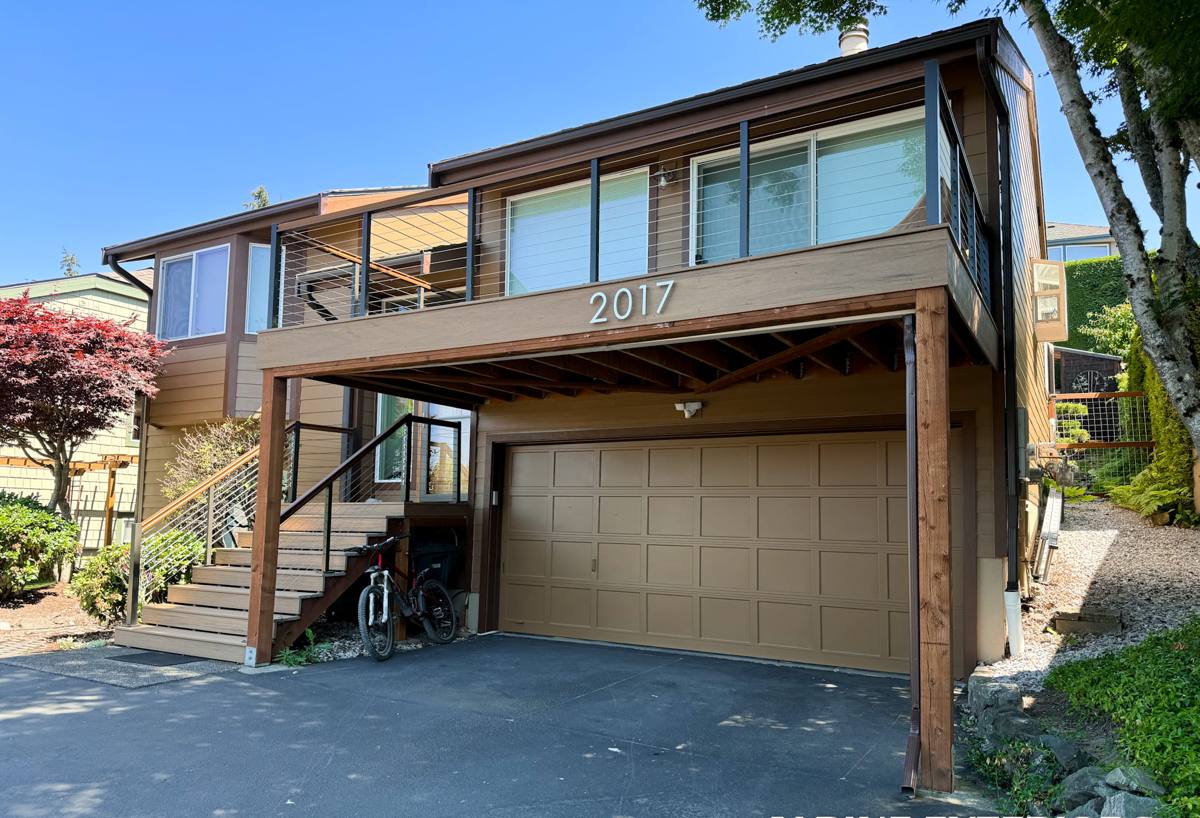
What Silver Beach's Climate Does to a Roof Over Time
Whatcom County sits in a marine climate zone, and that means roofs deal with a long, low-intensity wet season rather than short, hard storms. Salt-laden marine air moves through the region off the water, driving rain comes in at an angle rather than straight down, and shaded, tree-lined streets like the ones common in Silver Beach hold onto moisture longer than roofs out in the open. Put those three things together and you get a roofing environment that punishes shortcuts.
The Three Big Factors
- Salt air: accelerates corrosion on exposed metal — fasteners, flashing, and vent components — if they aren't rated and installed for a coastal-influenced climate.
- Driving rain: wind-blown rain finds its way under poorly lapped shingles, undersized flashing, and old nail patterns, which is why wind-driven leaks often show up at valleys, chimneys, and wall intersections rather than open field areas.
- Moss and shade: tree cover common in older Bellingham neighborhoods keeps roof surfaces damp and shaded for extended stretches, which is exactly what moss and algae need to establish and spread.
None of these factors are dramatic on their own. The damage they cause is cumulative — a roof that's "fine" for years can lose integrity quietly, one damp season at a time, until a homeowner is dealing with soft decking or interior staining that shows up faster than expected.
Signs a Silver Beach Roof Needs Replacement, Not Another Repair
Repair makes sense when a roof has isolated damage and years of usable life left. Replacement makes sense when the roofing system as a whole — not just one spot — is past the point where patching is the honest recommendation. Here's how we tell the difference in the field:
- Granule loss heavy enough that you can see bare, shiny patches of shingle mat, especially on south- and west-facing slopes.
- Moss growth that's lifted shingle edges rather than just sitting on the surface — lifted edges let wind-driven rain underneath.
- Multiple past repairs in different areas, which usually signals a roof that's aging out system-wide rather than failing in one spot.
- Soft or spongy decking felt underfoot during inspection, which means moisture has already reached the wood below the shingles.
- Daylight visible through the attic roof deck, or consistent staining on interior ceilings near exterior walls.
- A roof at or past 20–25 years old (asphalt) with no major upgrades to ventilation or underlayment since installation.
If a roof shows one or two of these, repair may still be the right call. If it shows several at once, replacement is usually the more honest and, in the long run, cheaper answer than another round of patchwork.
What a Correct Roof Replacement Actually Involves
A roof replacement is only as good as what's underneath the shingles. Anyone can lay new shingles over old ones or reuse questionable flashing to save time — that's how a "new roof" ends up leaking within a few years. Here's what we consider non-negotiable on a proper tear-off and replacement:
Tear-Off and Deck Inspection
Full removal of old roofing material down to the deck, not a layover. This is the only way to actually see the condition of the sheathing underneath. Any soft, delaminated, or water-damaged decking gets replaced before anything new goes down — installing new roofing over compromised decking just hides the problem for another few years.
Underlayment and Moisture Barrier
Synthetic underlayment across the full deck, with self-adhered ice-and-water membrane in the vulnerable spots — valleys, eaves, around chimneys and skylights, and anywhere roof planes meet a wall. In a climate with sustained wind-driven rain, this layer is doing more real work than most homeowners realize; it's the backup system for when wind pushes water past the shingle surface.
Flashing
New flashing at every penetration and transition — chimneys, vent pipes, skylights, and roof-to-wall intersections. Reusing old flashing to save a step is one of the most common causes of "new roof, old leak" callbacks, and it's not something we'll cut a corner on.
Ventilation
Balanced intake and exhaust ventilation matched to the attic space. Poor ventilation traps moist air under the deck, which speeds up rot from the inside and can shorten shingle life even when everything above the deck was installed correctly.
Fasteners and Metal Components
Corrosion-resistant fasteners and flashing rated for a coastal-influenced, high-moisture environment — not a spec that's fine for a dry inland climate but marginal here.
Choosing the Right Roofing Material for This Neighborhood
There's no single "best" roofing material — the right choice depends on budget, roof pitch, tree exposure, and how much upkeep a homeowner actually wants to do. Here's how the common options stack up for a shaded, damp-climate neighborhood like Silver Beach:
| Material | Typical Lifespan | Moss/Moisture Behavior | Maintenance Load |
|---|---|---|---|
| Architectural asphalt shingle | 25–30 years | Good with algae-resistant granules; still needs periodic moss removal under heavy shade | Low to moderate |
| Standing seam metal | 40–50+ years | Sheds moisture fast, very moss-resistant; needs corrosion-rated fasteners near the coast | Low |
| Synthetic/composite shingle | 30–50 years | Resists moisture absorption well; good option under heavy tree cover | Low |
| Cedar shake | 20–30 years with upkeep | Attractive but absorbs moisture and needs regular treatment to resist moss and rot in shaded, damp settings | High |
We're upfront with homeowners about trade-offs rather than pushing one product. Cedar shake, for example, has real curb appeal, but in a shaded, moisture-heavy setting it demands a maintenance commitment — periodic cleaning and treatment — that a lot of homeowners underestimate going in. That's a maintenance conversation, not a knock on the material; it's just honest about what it takes to keep it performing here.
Dealing With Moss and Shade Long-Term
Tree cover is part of what makes older Bellingham neighborhoods like Silver Beach pleasant to live in — it's also the main reason moss becomes a recurring issue instead of a one-time problem. Replacing a roof is the right moment to build in moss resistance rather than just hoping the new shingles hold out longer than the old ones:
- Algae-resistant shingles with copper- or zinc-infused granules slow regrowth in shaded areas.
- Zinc or copper strips near the ridge let rainwater carry trace metal down the roof slope, which suppresses moss without chemical treatments.
- Keeping overhanging branches trimmed back improves airflow and sun exposure, which does more for long-term moss prevention than any product applied after the fact.
- Gentle, scheduled moss removal — not pressure washing, which can strip granules and shorten shingle life — keeps a roof healthier between major service visits.
None of this makes a roof moss-proof. It shifts moss from an annual scraping chore to an occasional maintenance item, which is a realistic and worthwhile goal in a neighborhood with this much tree cover.
Our Replacement Process, Start to Finish
Homeowners want to know what's actually going to happen at their house, not just a sales pitch. Here's the sequence we follow on a typical Silver Beach replacement:
- On-site inspection and estimate. We walk the roof (weather permitting) and check the attic, looking at deck condition, ventilation, flashing points, and any active leak evidence.
- Written scope and material selection. A clear breakdown of what's being replaced, what materials are proposed, and why — no vague line items.
- Scheduling around weather. Roofing in Whatcom County means working around the wet season; we build realistic timelines rather than promising a date we can't guarantee in the rain.
- Property protection. Tarps and ground protection for landscaping, siding, and any areas below the work zone before tear-off begins.
- Tear-off and deck inspection. Full removal, deck assessment, and replacement of any compromised sheathing.
- Underlayment, flashing, and ventilation installation. The system-level work described above, done before a single new shingle goes down.
- New roofing installation. Installed to manufacturer specification, which matters for both performance and warranty validity.
- Cleanup and magnetic sweep. Full site cleanup, including a nail/debris sweep of the yard and driveway.
- Final walkthrough. We review the finished roof and paperwork — warranty details, material documentation — with the homeowner before calling the job done.
Permits, Warranties, and Documentation
A roof replacement in Bellingham typically requires a building permit, and that's a good thing for a homeowner — it means the work gets inspected against code rather than taken on trust. We handle the permit process as part of the job rather than leaving it to the homeowner to sort out.
Warranty coverage on a roof replacement usually comes in two parts: a manufacturer's warranty on the material itself, and a workmanship warranty from the installing contractor covering the labor. It's worth understanding both before signing anything — a strong material warranty doesn't help much if the installation itself isn't covered, and vice versa. We go over both plainly, in writing, so there's no ambiguity about what's covered and for how long.
Questions Worth Asking Any Roofing Contractor
- Are you licensed and insured to work in Washington State, and can you provide proof?
- Will you pull the required building permit, or is that left to me?
- What's included in your workmanship warranty, and for how long?
- Will you inspect and replace damaged decking as part of the base scope, or is that a separate charge?
- What underlayment and flashing materials are you using, and are they rated for this climate?
Why Local Experience in Silver Beach Matters
A roofing crew that regularly works Silver Beach and similar Bellingham neighborhoods already knows the patterns — where moss tends to build up fastest, which roof details take the worst of the driving rain, and how much tree trimming coordination a job usually needs before work can start cleanly. That familiarity shows up in fewer surprises during the job and a roof that's built with this specific climate in mind, not a generic specification pulled from a drier region.
It also matters for the boring-but-important logistics: knowing the local permitting process, understanding realistic scheduling windows around Whatcom County's wet season, and having a track record in the neighborhood that a homeowner can actually check on. Roofing is a significant investment, and working with a crew that treats this climate as the standard — not the exception — is one of the most practical ways to protect that investment.
If your roof is showing its age or you're just not sure whether it's a repair or a replacement situation, we're happy to take a look. Reach out for a free, no-pressure estimate using the form below — we'll give you a straight answer about where your roof actually stands.