 Bellingham Exterior
 Siding Replacement for Silver Beach Homes
Silver Beach is one of Bellingham's older residential neighborhoods, with a mix of homes ranging from mid-century originals to more recent remodels, many tucked under mature tree canopy near Lake Whatcom. That setting is part of what makes the neighborhood desirable, and it's also exactly what puts extra wear on exterior siding. Constant shade, high humidity, and limited direct sun exposure on many lots mean siding here has less chance to dry out between rain events than siding on an open, sunny lot across town.
Add in Whatcom County's broader climate pattern — driving rain off Puget Sound, salt-laden marine air moving inland, and a moss season that can stretch from fall through spring — and you get a set of conditions that punishes the wrong siding choice or a sloppy install. We've worked on homes throughout this part of Bellingham long enough to know which failure points show up again and again, and we build our replacement process around avoiding them.
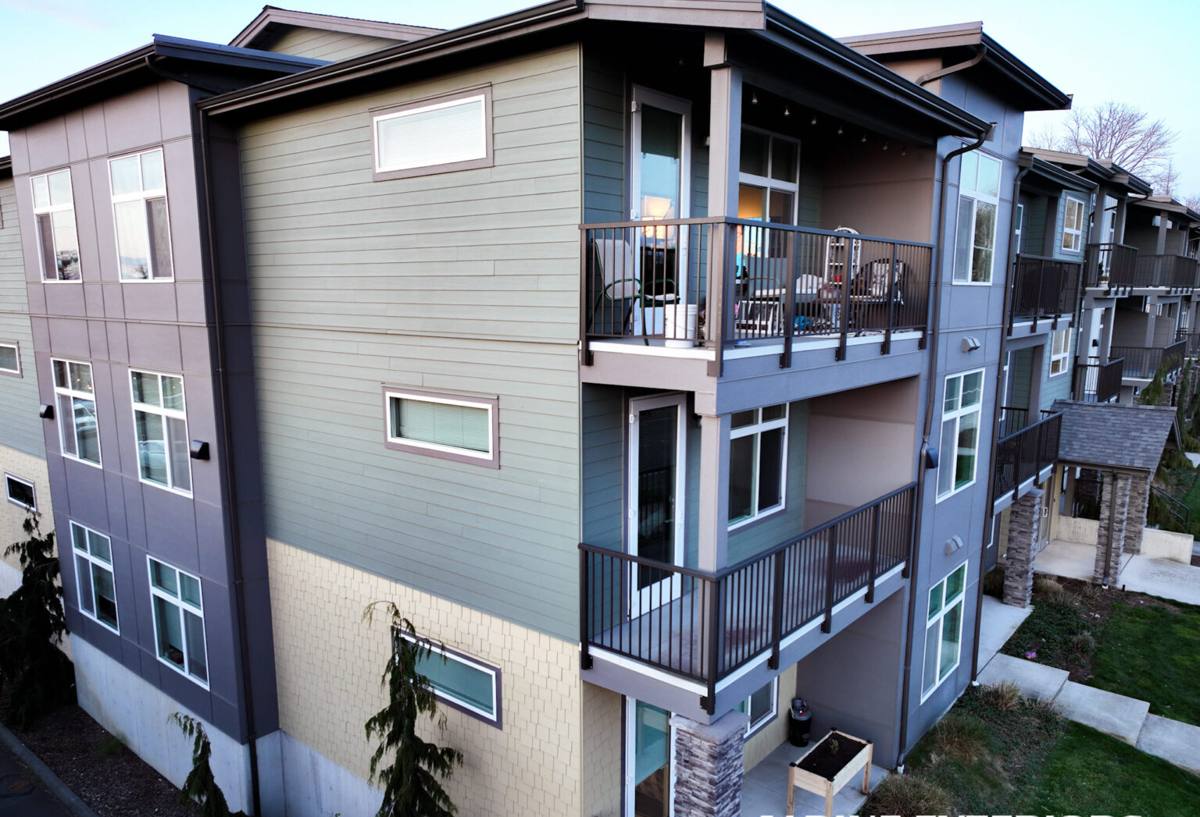
Why Siding Wears Differently in This Neighborhood
Shade and slow drying
Homes with tree cover or lake-adjacent siting don't get the same solar drying that a south-facing, open lot gets. Wood-based and wood-fiber products that rely on periodic dry-out to stay stable can stay damp longer here, which accelerates swelling, rot, and paint failure at joints and butt seams.
Moss and organic growth
A long moss season isn't just cosmetic. Moss and algae hold moisture directly against the siding surface, and on porous or absorbent materials that moisture works its way into seams, nail holes, and cut edges over time. Homes under tree canopy in Silver Beach tend to need moss treatment and gutter/downspout maintenance more often than homes in more exposed parts of Bellingham.
Wind-driven rain and marine air
Whatcom County's marine climate brings rain that doesn't just fall straight down — it drives sideways during storms, working into any gap in flashing, trim, or caulk. Combined with the salt content in coastal air, this accelerates corrosion of fasteners and hardware that aren't rated for the exposure, and it finds the weak points in a marginal install faster than a dry inland climate ever would.
Signs Your Siding Needs Replacing, Not Just Repair
- Soft or spongy spots when you press on the siding, especially near the bottom courses and around window trim
- Paint that keeps failing in the same spots within a year or two of repainting
- Visible cupping, buckling, or warping of individual boards or panels
- Persistent moss or dark staining that returns within months of cleaning
- Gaps opening up at seams, corners, or where siding meets trim and flashing
- Rising energy bills that track with drafts or cold spots along exterior walls
- Visible rot at the bottom edge of siding near grade, decks, or downspouts
Any one of these can sometimes be spot-repaired. Several at once, or repeated failures in the same area, usually means the siding system itself — not just the surface — has reached the end of its useful life.
What a Correct Siding Replacement Actually Involves
Siding replacement is not just swapping old boards for new ones. On a shaded, moisture-exposed lot like many in Silver Beach, what's underneath the siding matters as much as the siding itself.
Full tear-off and inspection
We remove the old siding down to the sheathing so we can actually see what's there. This is the point where hidden rot, damaged sheathing, or old flashing failures get found — problems that get covered up, not fixed, if a crew just re-sides over the top of them.
Weather-resistive barrier and flashing
A correctly installed water-resistive barrier, properly lapped and taped, combined with correct flashing at every window, door, and penetration, is what actually keeps water out of the wall assembly. This step matters more in a climate with driving rain than almost any other part of the job, and it's the step that gets rushed on low-bid jobs.
Proper fastening and clearances
Fasteners need to be corrosion-resistant given the marine air in this region, and siding needs correct clearance from grade, decks, and roof lines so water can't wick up into the material. These details are in the manufacturer's install manual for a reason — skipping them is one of the fastest ways to void a warranty and shorten the life of the job.
Product selection suited to the site
A shaded, tree-covered lot near the water needs a siding product that tolerates sustained moisture exposure without losing structural integrity — which is a major part of why we standardized on James Hardie fiber cement rather than wood-based or vinyl alternatives.
Why We Install James Hardie — and Only James Hardie
We don't install LP SmartSide, vinyl, Cemplank, Allura, primed spruce, or cedar. That's a deliberate standard, not a lack of options. Fiber cement is inherently non-combustible and dimensionally stable — it doesn't swell, cup, or rot the way wood-based products can when they stay damp for extended periods, which is a real risk on shaded Silver Beach lots. James Hardie's ColorPlus factory finish is baked on and warrantied against fading and peeling, which matters in a climate that already stresses paint jobs through moss, moisture, and UV cycling. And Hardie's HZ5 product line is engineered specifically for climates like the Pacific Northwest's, not a generic all-climate formulation.
None of that means fiber cement is maintenance-free — it still needs periodic cleaning, caulk maintenance, and a repaint cycle over time. But it holds up to this region's specific combination of moisture, moss, and salt air better than the alternatives we've chosen not to install, and it comes with a strong, transferable warranty when installed to spec.
Comparing Siding Materials for This Climate
| Factor | James Hardie Fiber Cement | Vinyl | Wood / Wood-Fiber |
|---|---|---|---|
| Moisture tolerance | High — non-combustible, dimensionally stable | Moderate — can warp in heat, gaps let water behind panels | Low to moderate — absorbs moisture, prone to rot if not maintained |
| Moss/algae resistance | Good with routine cleaning | Fair — grows on both, harder to repaint if damaged | Poor — organic material feeds growth over time |
| Finish longevity | Factory ColorPlus finish, long fade warranty | Color molded in, can fade and chalk over time | Requires more frequent repainting/staining |
| Fire resistance | Non-combustible | Combustible, can melt/deform | Combustible |
| Typical lifespan when installed correctly | Multiple decades | Two to four decades, seams degrade sooner | Highly dependent on maintenance and climate exposure |
Our Process for a Silver Beach Siding Replacement
- On-site assessment — we walk the property, check drainage patterns, tree cover, and existing moisture damage before quoting anything
- Detailed proposal — scope, product lines, color options, and a clear cost breakdown, no vague allowances
- Tear-off and sheathing inspection — full removal, with photos and a direct conversation if we find hidden damage
- Repair and barrier installation — any damaged sheathing addressed, weather-resistive barrier and flashing installed correctly at every penetration
- Hardie installation to manufacturer spec — correct fastening, clearances, and joint treatment for this climate
- Final walkthrough — we go over the finished work with you before calling the job done
Why a Crew That Already Works Silver Beach Matters
A contractor unfamiliar with this specific neighborhood is guessing at things a local crew already knows: how tree cover on a given street affects drying time, where drainage tends to collect on lake-adjacent lots, and what Bellingham's permitting process actually requires for exterior work. We've handled siding jobs across this part of Bellingham, and that familiarity shows up in fewer surprises mid-project and a scope that accounts for site conditions from the first estimate — not after tear-off reveals something we should have anticipated.
It also matters for accountability. A local company with a track record in your specific neighborhood has a reputation to protect with your actual neighbors, not just a service area on a website.
What to Expect in Terms of Cost
Siding replacement cost depends on the size of the home, the amount of tear-off and repair needed, trim complexity, and product line chosen within the Hardie system. Homes with existing rot or sheathing damage — more common on shaded, moisture-exposed lots — will run higher than a straightforward re-side. We don't quote a number without seeing the property, because guessing at hidden damage from a listing photo does homeowners a disservice. What we can tell you is that a correct install, done once with the right materials, costs less over the life of the siding than a cheaper job that needs premature repair or replacement.
Get a Free, No-Pressure Estimate
If your Silver Beach home is showing signs of siding wear — moss that won't stay gone, paint that keeps failing, or soft spots you've noticed near the bottom courses — it's worth getting a straight assessment before the damage spreads further into the wall assembly. Fill out the form below for a free estimate, and we'll walk the property with you and give you an honest read on what it actually needs.