 Bellingham Exterior
 Building Decks for South Hill's Hillside Homes
South Hill is one of the more distinctive neighborhoods we work in around Bellingham. The lots climb, the tree canopy is heavy in places, and a lot of the housing stock here is older, which means decks that were built decades ago under different codes and different expectations. When a South Hill homeowner calls us about a new deck or a rebuild, the conversation is rarely as simple as "how big and what color." Grade, drainage, shade, and access all shape the job before we ever talk about decking boards.
This page is about that specific combination: what a deck needs to hold up on a sloped, tree-covered lot in Whatcom County, and how we build to match it.
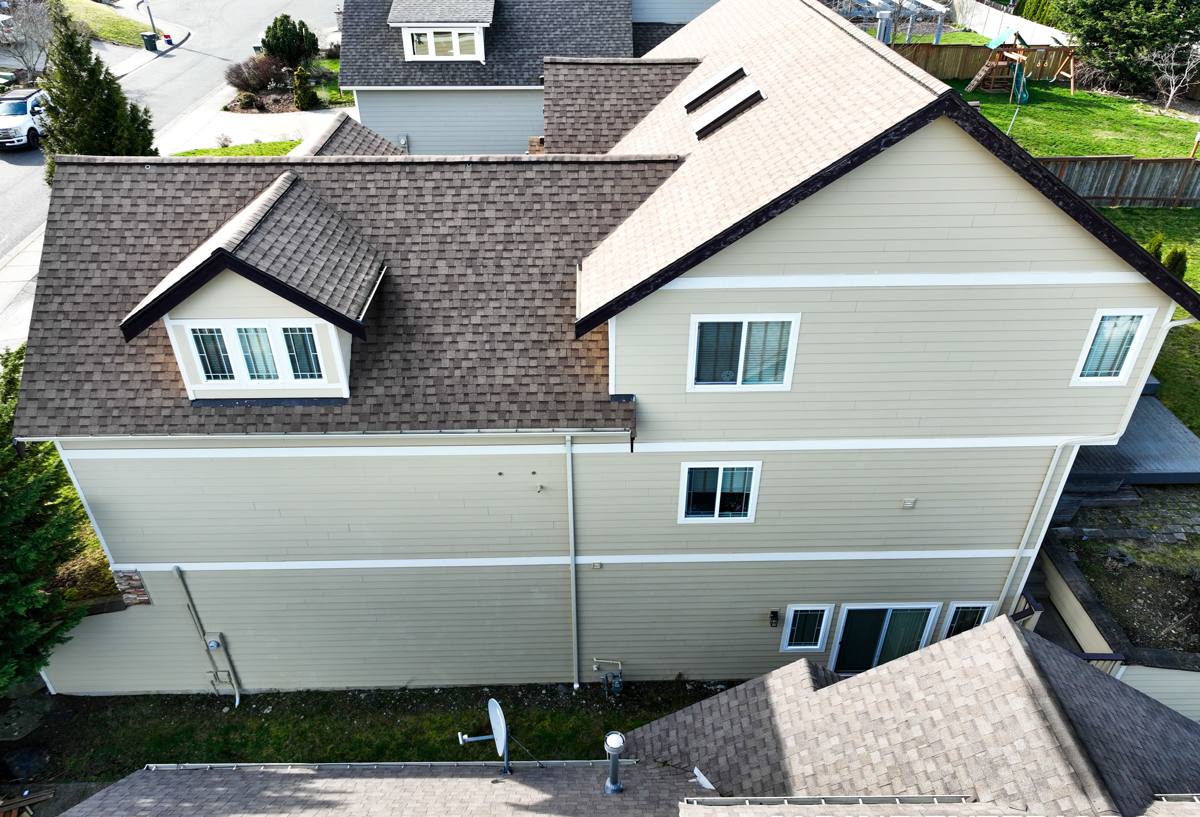
What South Hill's Terrain Means for a Deck
Slope Changes the Structure
A lot of South Hill properties step down from the street or fall away toward a view of the bay. That changes the engineering of a deck in ways a flat backyard job doesn't require. Post heights vary across the same structure, footings often land at different depths to reach stable soil, and taller decks need bracing and guardrail detailing that a low deck simply doesn't. We treat every sloped-lot deck as its own structural puzzle rather than trying to force a standard flat-yard layout onto uneven ground.
Shade and Airflow
Mature trees are part of what makes South Hill attractive, but they also mean less sun reaching the deck surface and less air moving underneath it. Wood and even composite decking dry out much slower in shaded, tree-covered yards than they would in an open lot. That single fact drives a lot of our material and spacing decisions on this side of town.
The Regional Climate Factor: Salt Air, Driving Rain, and a Long Moss Season
Bellingham sits on the bay, and Whatcom County's marine air carries salt that accelerates corrosion on unprotected metal fasteners and hardware — a detail that matters more here than it would fifty miles inland. Layer on our driving rain, which comes in sideways often enough to soak areas a straight-down rain wouldn't reach, and you get decking, framing, and ledger connections that see more sustained moisture exposure than most of the country ever deals with.
Then there's moss. Between the shade from tree cover and our long wet season, South Hill decks can stay damp for weeks at a stretch, and moss and algae take hold on any surface that doesn't shed water and dry out efficiently. Moss isn't just cosmetic — it holds moisture against the decking surface, breaks down wood fiber faster, and turns boards slick and genuinely dangerous underfoot. A deck built without this in mind will look tired and grow slippery within a couple of seasons, no matter how nice the lumber looked on install day.
Decking Material Options for This Climate
There's no single "correct" decking material for every South Hill yard — it depends on how much shade the deck sits in, your maintenance appetite, and budget. Here's how the common options actually perform once salt air, rain, and moss are part of the equation.
| Material | Upfront Cost | Moisture & Moss Behavior | Maintenance | Typical Lifespan |
|---|---|---|---|---|
| Pressure-treated wood | Lowest | Absorbs moisture, needs sealing to shed water; moss takes hold if not cleaned | Annual cleaning, re-sealing every 1-3 years | 15-20 years with upkeep |
| Cedar | Mid-range | Naturally rot-resistant but still needs sealing in shaded, wet spots to prevent moss and graying | Regular cleaning, re-sealing every 2-3 years | 20-25 years with upkeep |
| Composite decking | Highest | Doesn't absorb water or rot, but moss and algae can still grow on the surface film in deep shade | Periodic washing, no sealing or staining | 25-30+ years, manufacturer-warrantied |
We're honest with clients about the trade-offs rather than pushing one product. Composite costs more up front but removes the rot risk entirely, which matters a great deal under heavy tree cover. Wood costs less and can look beautiful, but it demands a real maintenance commitment from the homeowner — sealing schedules aren't optional in this climate, they're what keeps the deck from failing early.
What a Correctly Built Deck Requires Here
Footings and Framing
On sloped South Hill lots, footings need to reach undisturbed, stable soil, which can mean different depths across a single deck's footprint. We size and space footings to the actual grade rather than reusing a standard layout, and we frame with lumber rated for exterior exposure, not interior-grade material that's been repurposed.
Fasteners and Hardware
Given the salt content in our marine air, we use corrosion-resistant fasteners and structural hardware throughout — this is a place we don't cut corners, because a rusted-out connector is a hidden structural failure waiting to happen, not just an ugly stain. Hardware compatibility with treated lumber also matters; mismatched metals accelerate corrosion in wet climates like ours.
Ledger Attachment and Flashing
The ledger board — where the deck attaches to the house — is the single most common failure point on older decks we're asked to rebuild. Proper flashing keeps water from working its way behind the ledger and into the house framing, and it's especially critical here given how much sustained rain the connection sees over a Whatcom County winter.
Guardrails and Stairs on Grade Changes
Taller decks on sloped lots need guardrails and stair stringers built to code for the actual height involved, not a generic assumption. We size these to the real elevation change on your property.
Our Deck-Building Process
- Site visit and grade assessment. We walk the actual lot, note slope, drainage paths, tree canopy, and existing structure before proposing a design.
- Design and material discussion. We talk through decking material trade-offs honestly based on how much shade and moisture your specific spot will see.
- Permitting. We handle the permit process for the scope of work involved, so the deck is built and documented to code.
- Footings and framing. Footings are set to reach stable soil at the depth your slope requires; framing goes in with exterior-rated lumber and corrosion-resistant hardware.
- Decking, railing, and stairs. Installed with attention to spacing and drainage so the surface can actually dry between rains.
- Final walkthrough. We review the finished deck with you, including a realistic maintenance plan for the material you chose.
Keeping a South Hill Deck Healthy Year-Round
A well-built deck still needs some upkeep in this climate — the difference is that a correctly built one is easy to maintain instead of fighting you the whole way. A basic seasonal checklist we give clients:
- Sweep leaves and debris off the deck surface regularly during fall — trapped organic matter is what feeds moss and algae growth.
- Wash the deck surface at least once a year with a deck-safe cleaner to remove moss, pollen, and grime before it builds up.
- Check that gaps between boards remain clear so water can drain through instead of pooling.
- Inspect fasteners and hardware annually for rust or corrosion, especially near the ledger board.
- Re-seal or re-stain wood decking on the schedule appropriate to the product — don't wait until it's visibly gray and dry.
- Trim back overhanging branches where practical to improve sun and airflow across the deck surface.
Why a Crew That Already Works in South Hill Matters
Building a deck on a flat, sunny lot in a different climate is a different job than building one on a shaded, sloped South Hill property with salt air and a long wet season to contend with. A crew that already works this neighborhood knows to expect variable footing depths before they even dig, knows which fastener grades hold up against our marine air, and knows how much shade a given yard is really dealing with once the trees leaf out. That familiarity shows up in fewer surprises during construction and a deck that's built to actually handle the conditions it will sit in, not generic conditions from a manual.
We've built and repaired decks across Bellingham and greater Whatcom County long enough to know that the difference between a deck that lasts and one that needs early repairs almost always comes down to decisions made before the first board goes down — grade assessment, footing depth, fastener choice, and ledger flashing.
Get a Straightforward Estimate
If you're planning a new deck or need an honest look at an aging one on your South Hill property, we're glad to come take a look. There's no pressure and no sales pitch — just a straightforward assessment of what your yard and your budget call for. Use the form below to request a free estimate.