 Bellingham Exterior
 Siding Repair in South Hill: What the Local Climate Demands
South Hill sits close enough to Bellingham Bay that homes here take on a specific mix of weather stress: salt-laden air drifting up off the water, driving rain that comes in sideways during winter storms, and long stretches of gray, damp months where moss and algae get every chance they need to establish themselves on north- and west-facing walls. None of that is unique to South Hill by itself, but the combination — elevation, exposure, and an older mix of housing stock on the hill — means siding here tends to show wear in specific, predictable places. A repair that ignores that context usually fails again within a couple of seasons.
We approach siding repair in this neighborhood the same way we'd want a contractor to approach it on our own home: figure out why the siding failed before touching it, then fix the actual cause, not just the visible symptom. A patch over rot, or a bead of caulk over a moisture path that's still active, buys you a year or two at most. Whatcom County's wet season will find the weak point again.
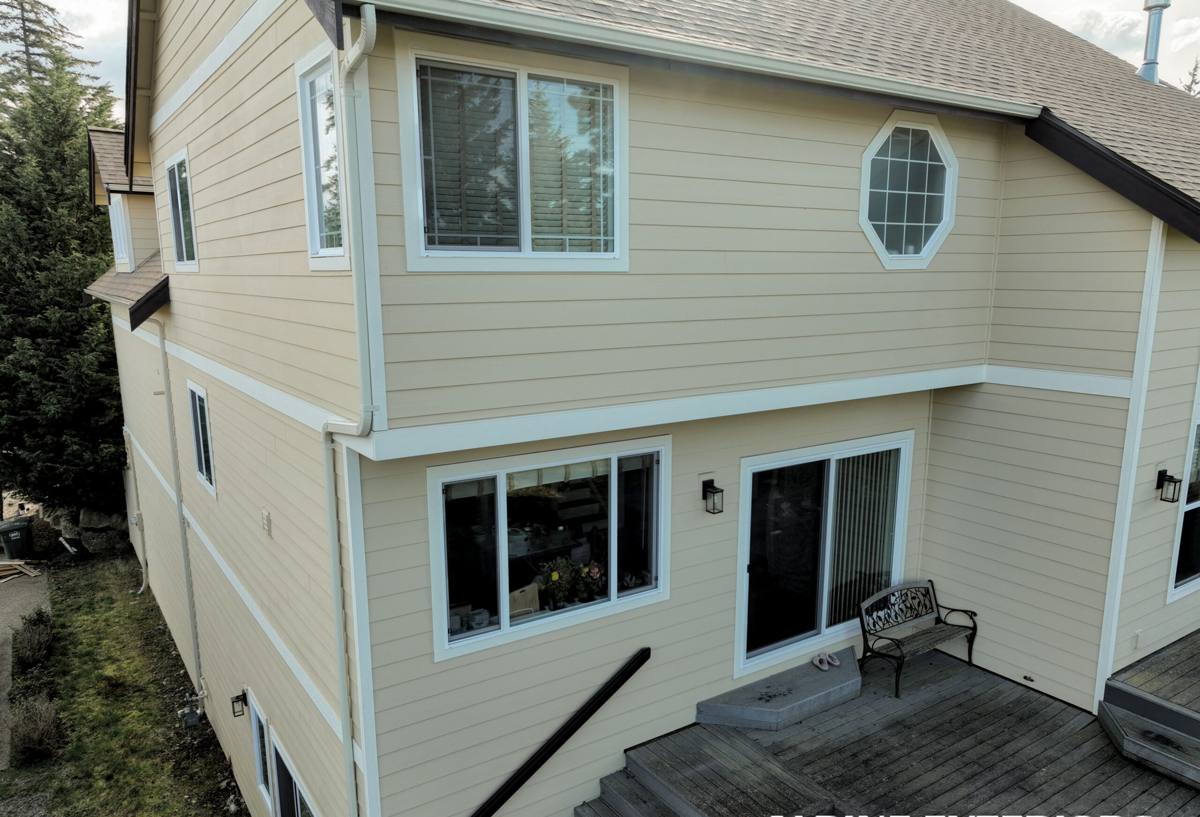
Common Siding Repair Issues We See in South Hill
Moisture Intrusion and Rot
This is the big one. Driving rain finds any gap in flashing, trim, or caulking and pushes moisture behind the siding rather than off of it. On wood-based products — cedar, primed spruce, or engineered wood siding — that trapped moisture leads to swelling, soft spots, and eventually structural rot in the sheathing behind the siding, not just the siding itself. By the time you can see damage from the ground, there's often more going on behind the wall than is visible.
Moss, Algae, and Surface Staining
Bellingham's long damp season is ideal for moss and algae growth on shaded or north-facing walls. On its own, surface growth is mostly cosmetic, but moss holds moisture against the siding surface for extended periods, which accelerates whatever underlying vulnerability the material already has. Left unaddressed on a wood-based product, months of moss cover can be the difference between a surface clean and a section that needs to be replaced.
Impact and Physical Damage
Cracked boards, dented panels, and damage from falling branches or storm debris are common on a hillside property with mature trees. This kind of damage is usually straightforward to diagnose but the repair quality depends heavily on whether the replacement material matches the existing siding's profile, thickness, and finish.
Caulking, Trim, and Fastener Failure
Caulk has a service life, and once it cracks or pulls away from a joint, it stops doing its job. Trim boards that have separated from the wall, nail heads that have backed out, or fastener corrosion around joints are all small issues that, if caught early, are inexpensive to fix — and expensive to ignore.
Repair or Replace: How We Make the Call
Not every siding problem in South Hill needs a full re-side, and we're not going to tell you it does. But there's a point where patchwork repair stops making financial sense. Here's roughly how we think through it:
| Signal | Usually Repairable | Usually Warrants Replacement |
|---|---|---|
| Extent of damage | Isolated to one or two boards or panels | Spread across multiple walls or elevations |
| Underlying sheathing | Dry, sound wood behind the siding | Soft, discolored, or rotted sheathing found during inspection |
| Siding material | Fiber cement with a localized crack or impact mark | Failing wood-based or composite siding with widespread moisture history |
| Age of siding | Under 10-15 years, otherwise in good condition | Near or past the material's realistic service life |
| Moisture source | Identified and fixable (flashing, caulk, grading) | Chronic, tied to the product's inherent moisture behavior |
When the sheathing behind the siding is compromised, patching the surface without addressing what's underneath is not a real repair — it's a temporary cover. We'll tell you plainly when that's what we're looking at.
What a Correct Siding Repair Actually Involves
Diagnosis Before Demolition
Every repair starts with figuring out the moisture path or damage source, not just removing the damaged board. We check the flashing above windows and doors, the condition of the water-resistive barrier where it's exposed, and whether the damage is isolated or a symptom of a broader issue on that wall.
Matching Materials and Profile
A repair that doesn't match the existing siding's exposure, thickness, and texture stands out visually and can create its own water-shedding problems at the seam. On homes we've previously installed or re-sided with James Hardie fiber cement, matching is straightforward because the product line and colors are documented and consistent. On homes with older or mixed siding, matching takes more care — and sometimes means we recommend replacing a full wall section rather than trying to blend a mismatched patch.
Rebuilding the Water Management, Not Just the Surface
Correct flashing details, properly lapped house wrap or building paper, and correctly sealed penetrations (hose bibs, light fixtures, vents) matter more to long-term performance than the siding material sitting on top of them. If we open a wall and find the underlying water barrier was never installed correctly, we address that as part of the repair — patching over it would just set up the same failure again.
Fastening and Finish Work
Fastener type, placement, and spacing affect how well a repaired section holds up to wind-driven rain. We finish repairs with caulking and paint or factory-matched finish appropriate to the material, so the repaired area is protected the same way the rest of the wall is.
Our Siding Repair Process for South Hill Homes
- On-site inspection. We look at the damaged area and the surrounding wall, and where the siding allows it, check for signs of moisture behind the surface.
- Honest diagnosis. We tell you what we found — including if the repair area suggests a bigger issue elsewhere on the house.
- Written scope and estimate. You get a clear description of what will be repaired, what materials will be used, and what it costs, before any work starts.
- Repair work. Damaged material is removed, the substrate is checked and addressed if needed, and new material is installed with correct flashing and fastening.
- Finish and cleanup. Caulking, paint or factory finish matching, and job site cleanup so the repair blends into the rest of the wall.
Why We Only Work With James Hardie Fiber Cement
We install and repair James Hardie fiber cement siding exclusively — we don't install vinyl, LP SmartSide, cedar, primed spruce, or other fiber cement brands. That standard shapes how we approach repairs, too. Fiber cement doesn't absorb and swell with moisture the way wood-based siding does, it's non-combustible, and Hardie's HZ product lines are engineered for wet, marine-influenced climates like ours. When we're repairing a section on a home that's already got Hardie siding, we're working with a product whose moisture behavior and long-term performance we trust and understand thoroughly, and ColorPlus finished boards are made to be color-matched years after original installation.
If your South Hill home currently has a different siding material and is showing repeated moisture or maintenance problems, we'll say so honestly during the inspection — including when a full re-side with fiber cement is the more sensible long-term fix than another round of patching a material that's fighting the climate by design.
What Affects the Cost of a Siding Repair
| Factor | Why It Matters |
|---|---|
| Size and location of damage | Ground-level repairs are simpler than second-story or hard-to-access sections |
| Condition of the sheathing | Rotted sheathing behind the siding adds carpentry work beyond the visible siding |
| Material match | Matching an existing Hardie color and profile is faster than sourcing or blending mismatched materials |
| Underlying water barrier | If flashing or house wrap needs correction, that's addressed alongside the siding |
| Number of repair areas | Multiple isolated spots across a home take more time than one contiguous section |
We give a written estimate after inspecting the damage in person — general online price ranges for siding repair don't account for what's actually happening behind the wall, which is the part that determines most of the real cost.
Signs Your South Hill Home May Need a Siding Repair Inspection
- Soft or spongy spots when you press on the siding near the bottom of walls or below windows
- Visible cracking, warping, or buckling in one or more boards or panels
- Persistent moss or algae growth that keeps returning after cleaning
- Paint that's peeling, bubbling, or failing faster than the rest of the house
- Caulking that's cracked, shrunk, or pulled away from trim and joints
- Staining or discoloration on interior walls near an exterior wall, which can point to moisture already inside
- Gaps or separation where siding meets trim, corners, or window and door casings
Why It Matters to Hire a Crew That Already Works in South Hill
A siding repair contractor who works regularly in this part of Bellingham has already seen how this hillside's exposure, tree cover, and weather pattern affect different homes and different siding materials over time. That familiarity shows up in small but important ways — knowing which wall orientations tend to see the worst moss growth, understanding how driving rain off the bay behaves against a given elevation, and recognizing early signs of a moisture problem before it becomes a structural one.
It also matters for accountability. A local, established crew is easy to reach if a repair needs a follow-up look, and stands behind its work because it's not going anywhere. When you're trusting someone to open up a wall on your home, that local track record is worth as much as the estimate itself.
Get a Straight Answer on Your South Hill Siding Repair
If you're seeing damage, moss buildup, or moisture signs on your South Hill home, we're happy to take a look and give you an honest read on what's actually going on — no pressure, no inflated scope. Request a free estimate below and we'll schedule a time to inspect the siding in person.