 Bellingham Exterior
 Decks in Sudden Valley Take a Different Kind of Beating
Sudden Valley sits in a wooded, hilly pocket of Whatcom County near Lake Whatcom, and that setting changes how a deck ages. Heavy tree cover keeps decks shaded and damp for long stretches of the year. Add in Bellingham's long, wet fall-through-spring stretch, and you get the two conditions that do the most damage to an outdoor deck: standing moisture and moss that never fully dries out. We also see a fair amount of exposure to blown-in salt air on decks closer to the lake and the surrounding low ground, which speeds up corrosion on fasteners, brackets, and any exposed metal hardware.
None of that means a deck in Sudden Valley is doomed to rot early. It means the repair and maintenance approach has to account for shade, moss, and moisture cycling in a way that a deck in a sunny, open yard doesn't need. A lot of the deck problems we get called out for in this neighborhood trace back to one thing: moss and organic debris sitting on boards long enough to trap water against the wood.
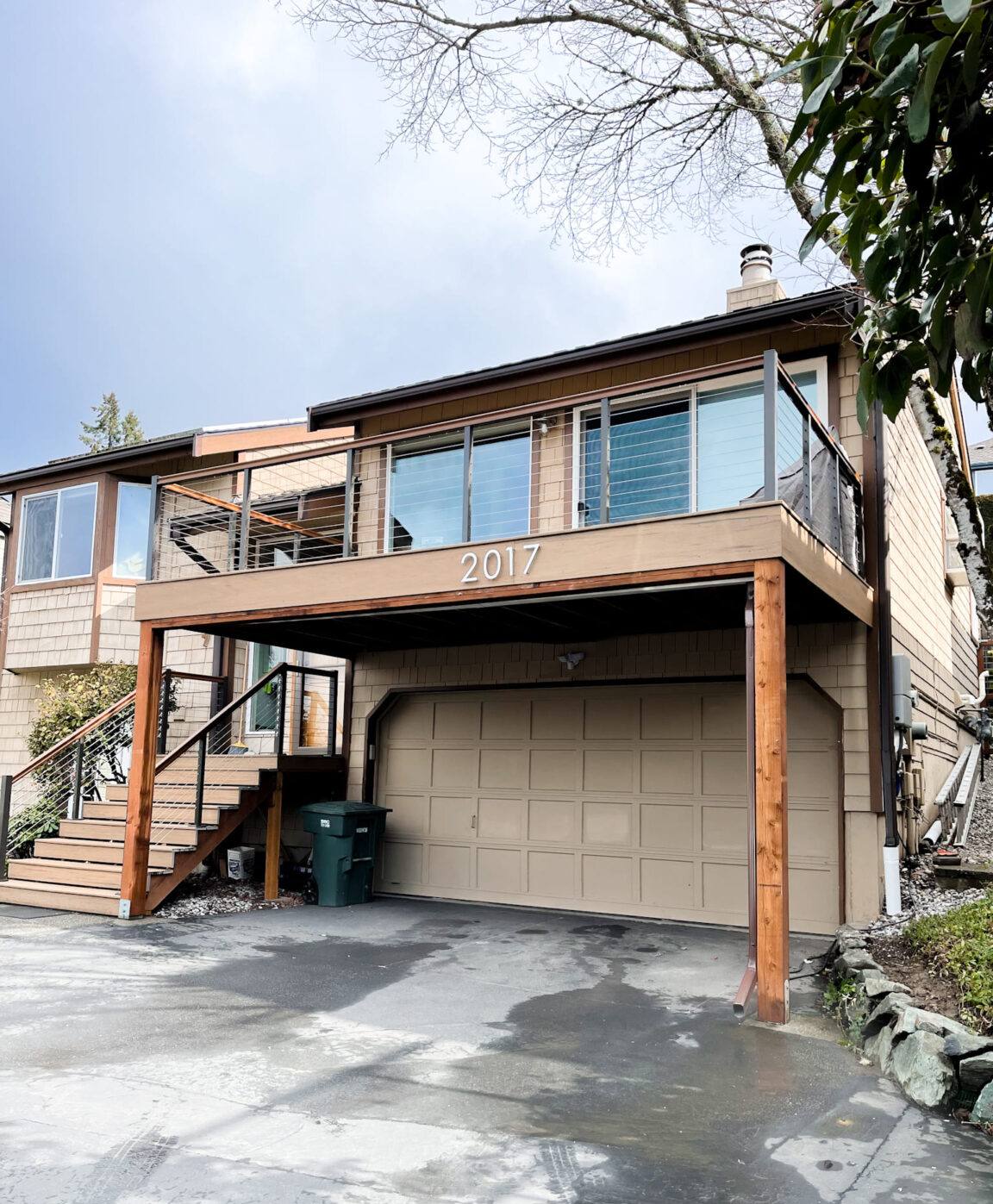
What Moss and Driving Rain Actually Do to a Deck
Moss isn't just a cosmetic nuisance. It holds moisture directly against the wood surface, which keeps boards wet far longer than open air and rain alone would. That constant dampness is what breaks down wood fiber, lifts finishes, and lets rot get started in places that look fine from a few feet away.
The most common damage patterns we find
- Soft, spongy spots on deck boards where moss has sat undisturbed for one or more seasons
- Rot at board ends and around fastener holes, where water collects and doesn't drain
- Corroded or loosening fasteners and joist hangers, especially on decks with any salt-air exposure
- Ledger board moisture intrusion where the deck meets the house, often hidden until flashing is checked
- Slick, moss-covered surfaces that become a slip hazard well before the wood itself is compromised
- Railing post rot at the base, where posts sit in standing water or moss buildup
Driving rain adds a second problem on top of moss: wind-blown rain gets pushed sideways into gaps, under railings, and behind fascia boards that a straight-down rain would never reach. Over years, that's what causes damage in spots homeowners don't think to check, like the underside of a ledger board or the back face of a rim joist.
How We Diagnose a Deck Repair Correctly
A deck repair is only as good as the diagnosis behind it. Replacing a few obviously bad boards without checking what's underneath is how homeowners end up paying for the same repair twice. Our process on every Sudden Valley deck call starts with a structural walk-through, not just a surface look.
What we check before quoting any repair
- Probe suspect boards and framing members for soft spots, not just visible discoloration
- Check the ledger board connection and flashing where the deck attaches to the house
- Inspect joists, beams, and posts from underneath, where rot often starts and shows last
- Test railing posts and guardrail connections for movement or give
- Look at fastener condition — corroded nails and screws are a sign of moisture exposure even if the wood looks okay
- Check drainage: is water pooling on the deck surface, and if so, why
That last point matters more than most people realize. If a deck keeps growing moss or rotting in the same spots year after year, the underlying cause is usually a drainage or airflow problem, not just wood age. Fixing the symptom without fixing the cause means the same repair shows up again in two or three years.
Repair vs. Replace: How We Make the Call
Not every damaged deck needs a full rebuild, and not every deck with a few soft boards can be patched and called done. The honest answer depends on how much of the structure is affected and where the damage sits.
| Condition | Typical Approach | Why |
|---|---|---|
| A handful of surface boards soft or moss-stained, framing solid | Board replacement + surface treatment | Structure is sound; isolated boards took the moisture hit |
| Rot at ledger board or ledger flashing failure | Ledger repair/replacement, re-flash connection | This is the deck's structural attachment point to the house — it has to be solid |
| Multiple joists or the rim joist soft or rotted | Framing repair or partial rebuild | Framing carries the load; patching boards over bad framing doesn't fix the real problem |
| Railing posts loose or rotted at the base | Post and baluster repair, hardware upgrade | Guardrails are a safety system, not just cosmetic |
| Widespread rot, corrosion, and moss across the whole deck | Full or near-full rebuild | Patching a deck this far gone rarely holds and costs more over time than starting fresh |
Cost ranges for deck repair vary widely depending on square footage, framing access, and how much of the structure is affected — from a modest board-and-hardware repair up to a framing rebuild that approaches new-deck pricing. We'll always tell you honestly when a repair isn't worth doing versus a partial or full rebuild, rather than patching something that's going to fail again.
Materials That Hold Up to This Climate
What we use to repair a deck matters as much as the repair itself, especially in a shaded, moisture-heavy setting like Sudden Valley.
Wood repairs
When matching existing cedar or treated lumber decking, we use kiln-dried, properly treated lumber and stainless or coated hardware rated for ground contact and outdoor exposure. Untreated or under-rated fasteners are one of the fastest ways a repair fails early in a damp, shaded yard — the wood might hold up fine while the hardware corrodes and lets the connection loosen.
Composite and PVC decking
For homeowners looking to reduce moss buildup and long-term maintenance, composite or PVC boards are a reasonable option in a shaded, damp lot like much of Sudden Valley, since they don't absorb water the way wood does. That said, composite decking still needs proper airflow underneath and periodic cleaning — moss and algae will still grow on the surface of any decking material that stays wet and shaded, composite included. We won't tell a homeowner that composite decking is maintenance-free, because it isn't; it just shifts the maintenance from wood rot prevention to surface cleaning.
Fasteners and hardware
Given the salt air and moisture exposure common in this area, we default to stainless steel or heavy hot-dip galvanized hardware on repairs rather than standard coated fasteners, particularly for structural connections like joist hangers and ledger bolts. It costs a bit more up front and saves a callback down the road.
Why Local Experience with Sudden Valley Decks Matters
A deck repair crew that mostly works drier, sunnier parts of Whatcom County can miss things that are obvious to a crew that regularly works shaded, lake-adjacent properties. Knowing how fast moss regrows on a north-facing deck here, or where driving rain tends to force water in on homes exposed to open wind lines, changes what gets checked and how a repair is built to last.
We also know that access matters in this neighborhood — sloped lots, mature trees, and community layout can affect how a crew stages material and equipment. Planning for that ahead of time instead of showing up and figuring it out keeps a repair project on schedule and off your lawn any longer than necessary.
Maintenance That Extends the Life of a Repair
A well-done repair still needs basic upkeep to get its full lifespan, especially in a moss-prone, shaded setting.
- Sweep or blow off leaves and debris regularly during fall, when they build up fastest under tree cover
- Clean moss and algae off the surface at least once a year, ideally before the wet season sets in
- Check that gaps between boards stay clear so water can drain instead of pooling
- Look underneath the deck once a year for early signs of moisture staining or soft framing
- Reseal or restain wood decking on the manufacturer's recommended cycle, not just when it looks worn
- Trim back overhanging branches where possible to improve sun and airflow exposure
None of this is complicated, but it's the difference between a repair that lasts a decade and one that needs revisiting in two or three years.
Get an Honest Look at Your Deck
If your deck in Sudden Valley has soft boards, persistent moss, a rail that's started to give, or you just haven't had it checked in a while, we're glad to come take a straightforward look and tell you what it actually needs — repair, partial rebuild, or nothing urgent at all. Reach out for a free, no-pressure estimate using the form below.