 Bellingham Exterior
 Why Sunnyland's Siding Has to Work Harder Than Most
Sunnyland sits close enough to Bellingham Bay that homes here deal with a combination most siding was never engineered for: salt-laden air rolling off the water, long stretches of driving rain, and a moss season that can run from October well into spring. Any one of those on its own is manageable. Together, they wear down siding that isn't built for the Pacific Northwest, and they punish installation shortcuts that might go unnoticed in a drier climate.
We install fiber cement siding on homes throughout Whatcom County, and Sunnyland is one of the neighborhoods where the difference between a correct installation and a rushed one shows up fastest. Salt air accelerates corrosion on fasteners and trim. Wind-driven rain finds every gap in flashing and caulking. Shade from mature trees and marine humidity keep north- and west-facing walls damp long enough for moss and algae to take hold. This page covers what that means for a Sunnyland home specifically, and what a correct fiber cement siding job looks like when it's done for this climate rather than a generic one.
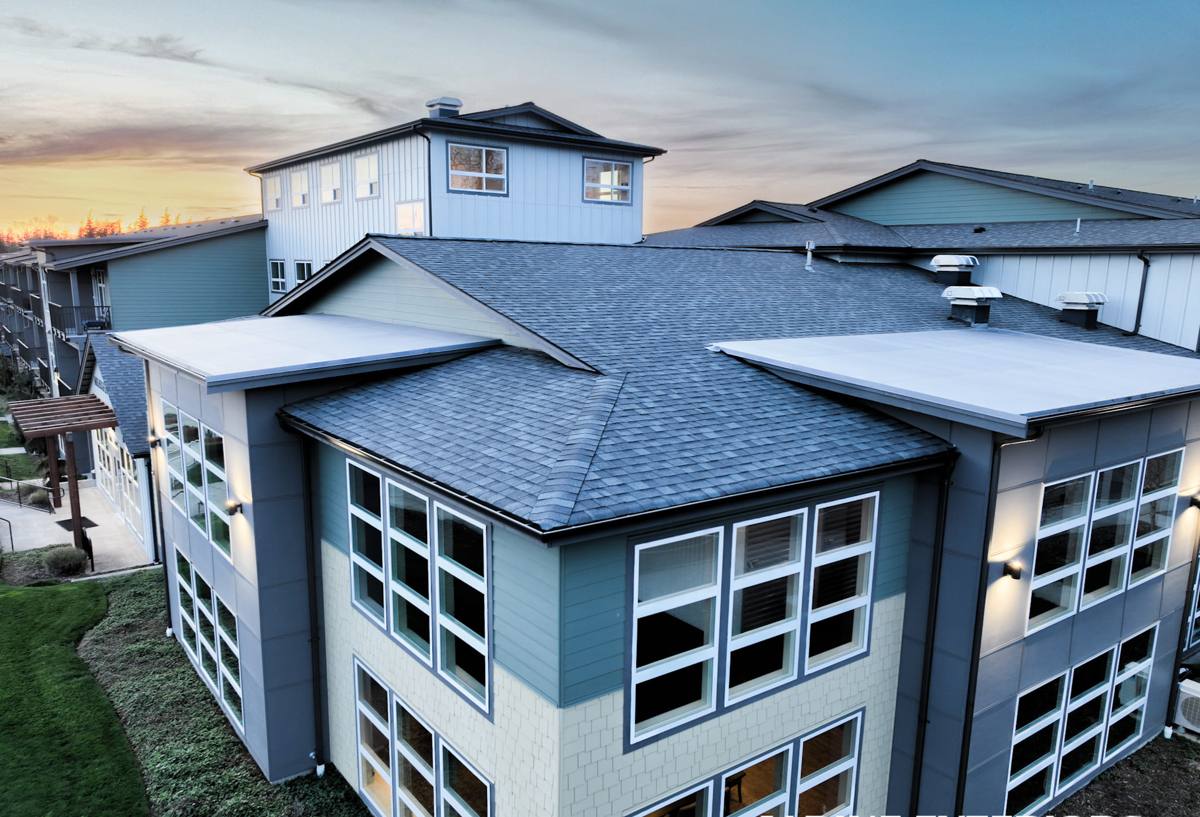
What Salt Air, Rain, and Moss Actually Do to Siding
Salt Air and Corrosion
Homes within a few miles of the water absorb fine salt particles carried on the wind. Over years, that salt accelerates corrosion on anything metal — nails, screws, flashing, and trim fasteners. Siding that looks fine on the surface can fail early if the fasteners holding it up were never rated for a coastal-adjacent environment. This is one of the most overlooked details in Bellingham siding work, because the fasteners are invisible once the job is finished.
Driving Rain and Moisture Intrusion
Whatcom County doesn't just get a lot of rain — it gets a lot of wind-driven rain, which pushes water sideways into seams, joints, and butt ends that would stay dry in a straight-down rainstorm. Any siding product is only as good as the water-resistive barrier and flashing details behind it. A beautiful siding job with poor flashing will still let water into the wall assembly, and that damage is usually invisible until it's expensive.
Moss, Algae, and Extended Shade
Sunnyland's tree cover and proximity to the bay mean north- and west-facing walls, and anything shaded most of the day, stay damp far longer than walls in full sun. That extended dampness is exactly what moss and algae need to establish themselves. On untreated or poorly finished siding, that shows up as green-black staining and, over time, surface degradation as organic growth holds moisture against the material.
Why We Install Fiber Cement — and Only James Hardie
We standardized on James Hardie fiber cement siding for every home we side, and we don't install vinyl, LP SmartSide, Cemplank, Allura, or bare wood siding. That's not a marketing position — it's a practical one, built around what actually holds up in Whatcom County weather.
Fiber cement is dense, non-combustible, and dimensionally stable, meaning it doesn't expand and contract with moisture the way wood-based products can. James Hardie backs that up with HZ5 formulations engineered specifically for the wetter, cooler climate zones of the Pacific Northwest, and a factory-applied ColorPlus finish that resists fading and holds up to UV and moisture exposure far better than field-applied paint. For a neighborhood dealing with salt air and near-constant moisture cycling, that combination matters more than it does somewhere dry and inland.
What ColorPlus Finish Means for a Sunnyland Home
ColorPlus is baked on in a controlled factory environment, in multiple coats, before the boards ever reach the job site. That gives it better adhesion and more consistent coverage than siding painted after installation. In a climate where moisture and salt exposure are constant stressors, a factory finish that isn't relying on field conditions to cure properly is a meaningful advantage — and it's backed by its own finish warranty separate from the substrate warranty.
Fiber Cement vs. Other Siding Products for This Climate
| Factor | James Hardie Fiber Cement | Vinyl | Wood / Engineered Wood |
|---|---|---|---|
| Moisture behavior | Dimensionally stable, HZ5 climate-engineered | Can warp, buckle in temperature swings | Prone to swelling, rot at cut edges and joints |
| Salt air / coastal exposure | Not affected by salt itself; fasteners must be correct | Generally tolerant but can become brittle over time | Accelerated deterioration with repeated wetting |
| Moss / algae resistance | Factory finish resists organic growth better than field paint | Growth can attach to surface texture | Absorbs moisture, feeds organic growth |
| Fire rating | Non-combustible | Combustible, can melt/deform | Combustible |
| Finish longevity | Factory-cured ColorPlus finish | Color molded in, can fade/chalk | Field-applied paint, needs repainting |
What a Correct Installation Actually Involves
Fiber cement is only as good as the installation behind it. Most of the failures we get called out to inspect in this area trace back to installation shortcuts, not the material itself. A correct job on a Sunnyland home includes:
Weather-Resistive Barrier and Flashing
Every wall gets a properly lapped weather-resistive barrier before a single piece of siding goes up. Window and door flashing has to shed water outward and downward — never trap it behind the siding. Given how much wind-driven rain this area gets, this step is not optional trim work; it's the difference between siding that lasts decades and siding that hides rot behind it.
Fasteners and Clearances
Fasteners need to be corrosion-resistant and installed to the manufacturer's specified pattern and depth — over-driven or under-driven nails are one of the most common defects we find on re-siding jobs. Siding also needs proper clearance from grade, roof lines, and decks so water has somewhere to go instead of wicking up into the bottom edge of the boards.
Joints, Caulking, and Butt Seams
Butt joints and seams are the most vulnerable points on any siding job. They need to be treated with the correct sealant, backed properly, and in some cases hidden behind trim rather than left as exposed caulk lines that will eventually crack and let water in.
Cutting and Sealing Edges
Every cut edge on a fiber cement board exposes the raw substrate, which needs to be primed or sealed per manufacturer specification before installation. Skipping this step is invisible at first — the failure shows up years later as localized moisture damage right at the cut.
Choosing the Right Hardie Product Line
James Hardie makes several siding profiles, and the right one for a given home depends on the architecture, exposure, and the homeowner's maintenance preferences.
- HardiePlank lap siding — the most common choice for traditional Bellingham home styles, available in smooth or cedar-textured finishes
- HardiePanel vertical siding — often used for accent sections, gables, or a more modern look
- HardieShingle — for homes wanting a shingle-style look without the maintenance burden of real wood shingles
- HardieTrim — matching trim boards that hold up to the same moisture and salt exposure as the field siding
For homes in Sunnyland specifically, we pay close attention to which elevations face the water and prevailing weather, since that often affects trim detailing and flashing choices even when the siding profile itself stays consistent across the house.
Our Process, Start to Finish
We approach every Sunnyland siding job the same methodical way:
- On-site inspection of the existing siding, sheathing, and any signs of moisture damage before quoting anything
- A written scope covering product line, color, trim details, and any repair work needed to the wall assembly underneath
- Removal of old siding and inspection of sheathing — any rot or damage gets addressed before new siding goes up, not covered over
- Installation of a correctly lapped weather-resistive barrier and flashing at every penetration
- Fiber cement installation to manufacturer specification: fastener pattern, clearances, sealed cut edges, and properly treated joints
- Final walkthrough with the homeowner before we consider the job complete
We don't cover up problems we find underneath the old siding. If sheathing is soft or framing has moisture damage, that gets flagged and addressed as part of the scope — not discovered by the next contractor in ten years.
What Drives Cost on a Sunnyland Siding Project
| Factor | Why It Matters |
|---|---|
| Home size and wall complexity | More corners, gables, and dormers mean more cutting, trim, and labor time |
| Condition of existing sheathing | Rot or moisture damage found during tear-off adds repair scope before new siding can go on |
| Product line and profile | Lap, panel, and shingle profiles carry different material and labor costs |
| Trim and detail work | Corner boards, window trim, and accent details add labor beyond the flat wall area |
| Site access | Tree cover, tight lots, and limited staging space common in established neighborhoods can affect labor time |
We give homeowners a real, written scope after an on-site look — not a rough number based on square footage alone, since the condition underneath the old siding is often the biggest variable.
Maintenance Through Bellingham's Moss Season
One advantage of a correctly installed, factory-finished fiber cement system is how little ongoing maintenance it needs compared to wood or field-painted siding. That said, no siding is maintenance-free in this climate. A simple annual rinse-down before moss season sets in, keeping gutters clear so water isn't sheeting down the wall face, and trimming back vegetation that keeps a wall shaded and damp all go a long way toward keeping Hardie siding looking like new for decades.
- Rinse siding annually, especially shaded and north-facing walls, before fall rains set in
- Keep gutters and downspouts clear so water isn't running down the siding face
- Trim back shrubs and tree limbs that keep walls shaded and slow-drying
- Re-caulk or address any cracked sealant at joints and trim promptly rather than waiting
- Have an occasional visual check of low areas near grade and deck ledgers, where moisture risk is highest
Why Hiring a Crew That Already Works in Sunnyland Matters
Siding detailing that works fine in a dry inland climate can fall short here. A crew that already works Whatcom County homes knows to prioritize flashing and fastener choices for salt air and wind-driven rain, knows which elevations in this area take the worst weather exposure, and isn't learning those lessons on your house. That local experience shows up in the details that don't get noticed until they fail — or don't.
If you're weighing a siding replacement in Sunnyland, we're glad to come take a look and give you a straightforward, no-pressure estimate — what your home actually needs, what it would cost, and why. There's no obligation, and no hard sell. Use the form below to get started.