 Bellingham Exterior
 Siding That Has to Work in Sunnyland's Microclimate
Sunnyland sits close enough to Bellingham Bay that salt-laden air is a real factor in how exterior materials age here, and it's also one of the city's more established, tree-shaded residential neighborhoods. That combination — salt air off the water, driving rain that comes in sideways during winter storms, and a long moss season fed by mature tree canopy and constant Pacific Northwest moisture — is a tough test for any siding product. Wood-based siding swells, cracks, and rots under that kind of cycle. Vinyl gets brittle and can warp with UV and temperature swings. We install James Hardie fiber cement siding on Sunnyland homes because it's engineered specifically for climates like this one, and because we've seen firsthand what happens to siding that wasn't built or installed to handle it.
This page focuses on one service, in one neighborhood: what correct James Hardie siding installation looks like for a Sunnyland home, and why the details matter more here than they would in a drier, less exposed part of the country.
What Bellingham's Climate Actually Does to Siding
Salt Air and Corrosion
Homes closer to Bellingham Bay deal with airborne salt that accelerates corrosion on fasteners, flashing, and any exposed metal trim. Over years, that corrosion can compromise the very components that keep water out from behind the siding — even if the siding face itself looks fine.
Driving Rain
Whatcom County doesn't just get a lot of rain — much of it arrives horizontally during winter storms, pushed by wind off the water. That means siding here isn't just shedding water that falls straight down; it's fighting water that's being driven sideways into laps, seams, and butt joints. Any gap in the water management plan behind the siding becomes a problem faster in this kind of weather.
Moss and Mildew
Mature tree cover, common throughout Sunnyland, keeps north- and shade-facing walls damp for longer stretches of the year. That's ideal growing conditions for moss and mildew, which hold moisture against the siding surface and, on untreated wood products, accelerate rot from the outside in.
Why James Hardie Is Built for This
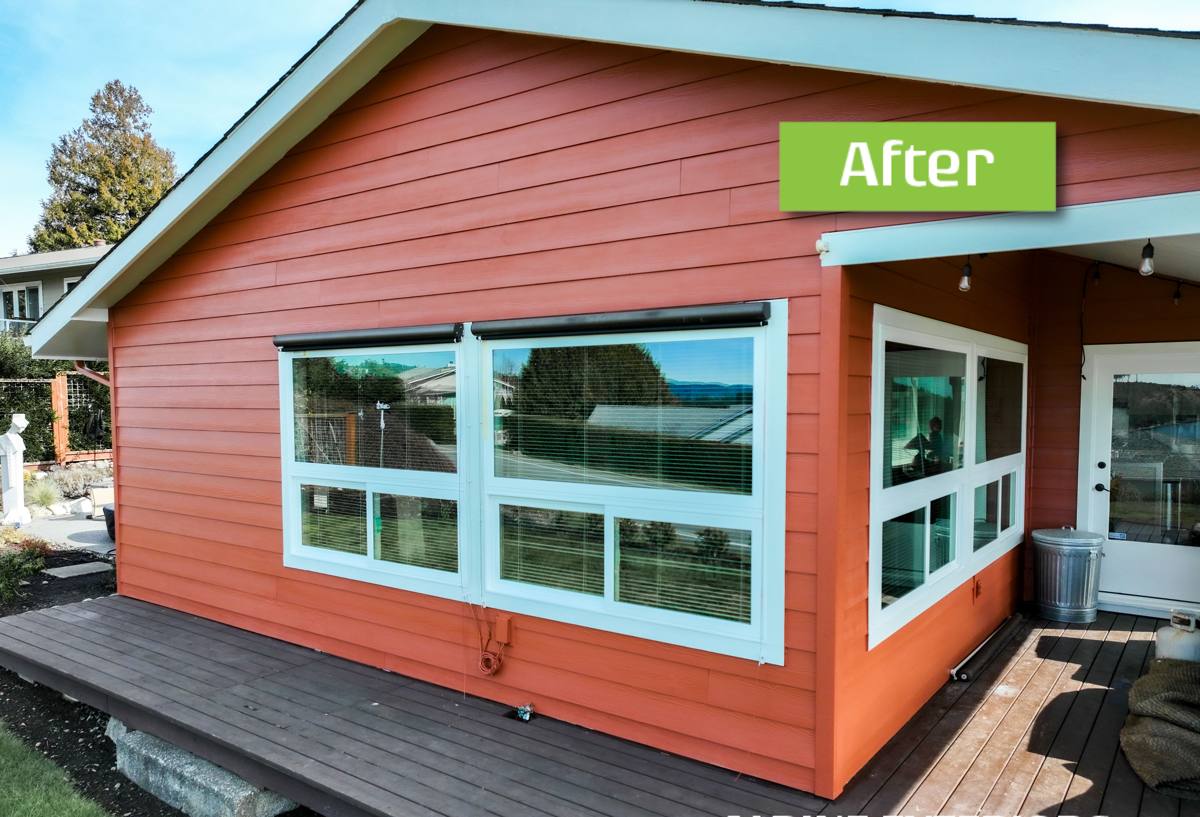
James Hardie fiber cement is a cement, sand, and cellulose fiber composite — it doesn't absorb and swell with moisture the way wood-based products do, and it's non-combustible, which matters given the wildfire smoke seasons the Pacific Northwest has seen in recent summers. Hardie also engineers regional product lines under its HardieZone system, and the Pacific Northwest falls under the HZ5 designation, built around exactly the wet, temperate conditions Whatcom County sees — freeze-thaw cycles, sustained moisture exposure, and long damp seasons rather than dry heat.
The factory-applied ColorPlus finish is baked on under controlled conditions rather than sprayed on-site, which gives it more consistent coverage and better resistance to fading, chipping, and the kind of moss and mildew staining that shows up fastest on shaded, damp-prone walls.
What Correct Installation Involves
Fiber cement siding is only as good as the installation behind it. Hardie publishes detailed installation requirements, and skipping them is the single biggest reason siding fails early — not the product itself.
- Weather-resistive barrier: A continuous, properly lapped water-resistive barrier goes on before any siding, giving the wall a drainage plane if water ever gets past the cladding.
- Flashing at every penetration: Windows, doors, vents, and any wall penetration get flashed so water is directed out and down, never trapped behind the siding.
- Proper clearances: Hardie requires minimum clearance from roof lines, decks, and grade — corners cut here are invisible on install day and expensive years later.
- Correct fastening: Nailing patterns, fastener type, and penetration depth all follow Hardie's spec, not a generic "close enough" approach, especially given how corrosion-prone poorly rated fasteners become in salt air.
- Caulking only where Hardie specifies: Over-caulking traps moisture; under-caulking lets it in. Both are common mistakes from crews who don't install Hardie regularly.
- Painted or factory-finished cut edges: Every field-cut edge gets sealed so the cut end doesn't become the weak point in an otherwise well-protected wall.
Our Process for Sunnyland Projects
Assessment
We start by walking the exterior and identifying the conditions specific to that property — tree cover and shade patterns, proximity to the water, existing moisture or rot damage, and how the current siding and trim have held up. Older homes in established neighborhoods like Sunnyland often have layers of prior repairs worth understanding before we plan the new install.
Tear-Off and Substrate Check
We remove the old siding down to the sheathing and check for hidden water damage, especially around windows, corners, and low-clearance areas near grade or decks — the spots driving rain and moss tend to find first.
Water Management Install
Barrier, flashing, and any needed sheathing repair go in before a single piece of Hardie siding is hung. This step is the one homeowners never see once the project is done, and it's the one that determines whether the siding lasts twenty years or fails in five.
Siding Installation
Panels, planks, or shingle-style siding go up to Hardie's fastening and clearance specifications, with trim, corners, and any transitions detailed to keep water moving out and away from the wall assembly.
Final Inspection
We walk the finished job checking caulk lines, fastener seating, clearances, and overall fit before calling it complete.
Common Problems We Find on Older Sunnyland Homes
A lot of the calls we get in this neighborhood aren't about siding that's simply old — they're about siding that was never given a real water management plan in the first place, or trim and flashing details that were skipped to save time on the original build. We regularly find:
- Rot at window sills and corner trim where flashing was missing or improperly lapped
- Moss buildup on shaded, tree-covered walls that's held moisture against the surface for years
- Corroded fasteners on older installations, consistent with long-term salt air exposure
- Siding installed too close to grade or deck surfaces, violating basic clearance requirements
- Caulk used as a substitute for proper flashing, which fails long before the siding does
What Affects the Cost of a Sunnyland James Hardie Project
| Cost Factor | Why It Matters |
|---|---|
| Home size and wall complexity | More square footage and more corners, dormers, or gables mean more material and labor time |
| Condition of existing sheathing | Rot or moisture damage found during tear-off adds repair work before new siding can go on |
| Siding profile chosen | Lap siding, shingle-style, and panel systems differ in material and installation time |
| Trim and detail work | Window and door trim, corner boards, and fascia detailing add labor beyond flat wall area |
| Access and site conditions | Mature trees, tight lot lines, or limited staging space common in established neighborhoods can affect scheduling and equipment needs |
| Color and finish | Factory ColorPlus finishes carry a different cost structure than field-painted options |
Why Hiring a Crew That Already Works in Sunnyland Matters
A siding job is only as good as the crew's familiarity with the specific conditions it has to survive. A contractor who regularly works in Bellingham neighborhoods near the water understands how much clearance and flashing detail actually matters here, not just what a spec sheet says. They know what driving rain does to a poorly detailed corner, what a shaded, tree-covered wall looks like after five years without proper drainage, and how salt air changes which fasteners are worth using. That local pattern recognition is the difference between a crew executing a checklist and a crew catching the problem before it's built into the wall.
We also install James Hardie exclusively — not as one option among several, but as our standard. That means our crews aren't relearning a new product's quirks on every job; they're refining the same installation details project after project, on homes with the same climate exposure yours has.
Maintaining James Hardie Siding in a Wet, Shaded Climate
Fiber cement siding is low-maintenance compared to wood, but "low-maintenance" isn't "no-maintenance," especially with the moss and moisture load Sunnyland's tree cover produces.
- Rinse siding periodically to keep moss and mildew spores from taking hold, especially on shaded walls
- Keep gutters clear so overflow doesn't run down the siding face repeatedly
- Trim back vegetation and tree limbs that keep walls shaded and damp longer than necessary
- Inspect caulk lines and trim joints annually for cracking or separation
- Address any small chips or damage promptly so the underlying substrate stays protected
If your Sunnyland home's siding is showing its age, or you're planning ahead for a replacement, we're happy to walk the property and give you a straightforward, no-pressure estimate for James Hardie siding built for this exact climate. Fill out the form below to get started.