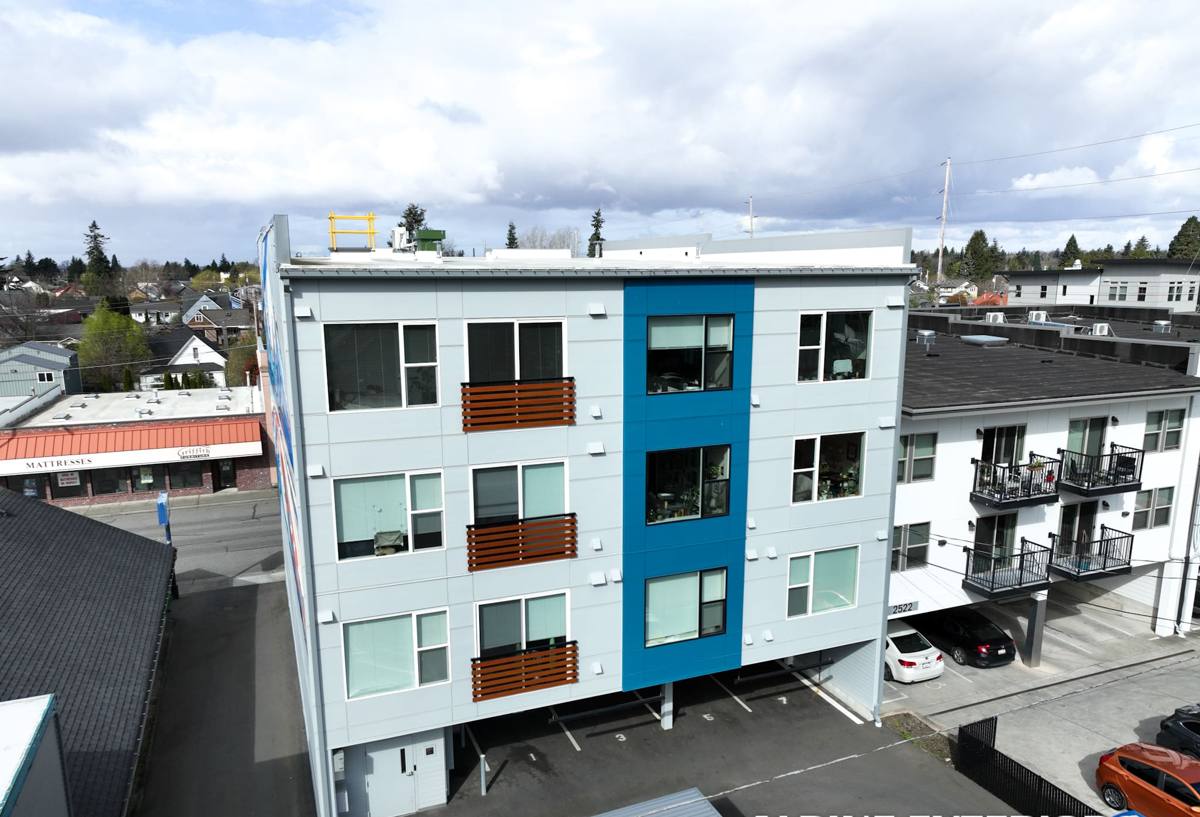
 Bellingham Exterior
 Blaine sits right on the water at the northern edge of Whatcom County, and that location comes with a specific set of demands on a home's windows. Salt-laden air off the coast, wind-driven rain that comes in sideways more often than straight down, and a moss and mildew season that can stretch for months all work on window frames, sills, and seals in ways that inland installations don't have to deal with. A window installation done for a home in eastern Washington or even a few miles inland from Bellingham Bay isn't automatically the right approach for a house in Blaine. The materials, flashing details, and sealing methods all need to account for what this stretch of coastline actually throws at a building.
Blaine's Coastal Climate and What It Means for Your Windows
Being this close to the water changes the math on window performance. Salt air accelerates corrosion on hardware and fasteners that aren't rated for coastal exposure, and it degrades certain finishes faster than manufacturers' general warranty language assumes. Add in the wind that comes off the Strait and Boundary Bay area, and you get rain that gets pushed horizontally into wall assemblies rather than simply running down the glass. That combination means water management at the window opening — not just the window unit itself — is often the difference between an installation that lasts and one that causes rot behind the trim five years later.
How Salt Air, Wind-Driven Rain, and Moss Season Wear Down Windows
Three separate stresses show up repeatedly on Blaine homes:
- Salt air corrosion — pitting and white oxidation on lower-grade aluminum and unprotected fasteners, plus premature failure of weatherstripping and gaskets that dry out and crack faster near the coast.
- Wind-driven rain — water intrusion at the sill and jamb when flashing wasn't lapped correctly or sealant was used as a substitute for proper drainage, rather than as a backup to it.
- Extended moss and mildew season — organic growth on sills, tracks, and exterior trim that holds moisture against wood and painted surfaces for weeks at a time instead of drying between rain events.
None of these show up overnight. They show up as soft trim, foggy double-pane glass from a failed seal, windows that stick or won't latch tight, or a musty smell near the frame after a hard rain. By the time those symptoms are obvious, there's usually been moisture sitting in the wall assembly for a while.
What Correct Window Installation Actually Involves
A window installation is really a water-management project that happens to have glass in the middle of it. The window unit itself is often the easiest part to get right — most manufacturers build a solid product. What separates a durable install from one that fails early is the work around the opening:
- A sloped sill pan that directs any water that gets past the window back outside the wall, not into the framing.
- Flashing tape and building paper lapped in the correct shingle-style order so water always drains down and out, never into a seam.
- Backer rod and exterior-grade sealant sized and placed correctly — sealant is a backup to good flashing, not a substitute for it.
- Proper shimming and fastening so the window operates square and doesn't rack, which is what causes seal failure and hardware wear over time.
- Insulation in the gap between the frame and the rough opening, so the window doesn't become a cold spot that condenses moisture on the interior side during Whatcom County's damp winters.
Skipping any one of these steps can still look fine on install day. The problems it causes usually take a wet season or two to show up, which is part of why window installation is not a great place to save money on labor.
Choosing Frame and Glass for a Blaine Home
There's no single "best" window material for every coastal home — the right choice depends on exposure, budget, and how much upkeep you want to take on. Here's how the common options generally hold up in this climate:
| Material | Coastal/Salt Air Behavior | Maintenance | Typical Fit |
|---|---|---|---|
| Vinyl | Doesn't corrode; performs well against salt air; can look worn if UV/finish quality is low-grade | Low — occasional cleaning | Most Blaine homes on a value-to-durability basis |
| Fiberglass | Very stable in moisture and temperature swings; strong resistance to warping and corrosion | Low | Homes prioritizing longevity and paintability |
| Wood-clad | Attractive interior wood with an exterior clad shell; the clad must be fully sealed at joints or moisture gets behind it | Moderate — watch clad seams over time | Homes where interior wood trim look matters most |
| Bare aluminum | Prone to pitting and oxidation in direct salt air unless it's a marine-grade finish; also a poor thermal performer | Higher — finish upkeep | We generally steer coastal clients away from unprotected aluminum for this reason |
On the glass side, most homes in this climate benefit from double-pane units with a low-E coating and argon fill as a baseline for both energy performance and condensation control. Triple-pane adds cost and weight and is worth discussing case by case rather than assuming it's always the better upgrade — the return depends on the specific wall assembly and exposure of your home.
Our Window Installation Process
- On-site assessment — we look at existing window condition, sill and framing health, and how exposed each elevation of the house is to wind and rain.
- Product selection — we walk through material and glass options against your budget and how much maintenance you want going forward.
- Removal and opening inspection — old windows come out carefully so we can check the rough opening, sill, and sheathing for hidden moisture damage before anything new goes in.
- Repair as needed — any soft framing or compromised sheathing gets addressed before installation, not covered over.
- Flashing and sill pan installation — built for this climate's wind-driven rain, not a generic inland detail.
- Window set, shim, and fasten — checked for square and level operation before final sealing.
- Insulation, interior and exterior trim — gaps filled correctly, trim reinstalled or replaced to match.
- Final walkthrough — operation, locks, and seals checked with you before we consider the job done.
Signs It's Time to Replace Your Windows
Not every window issue means a full replacement, but these are worth having looked at:
- Fogging or a visible haze between the panes — a sign the seal has failed and the gas fill is gone.
- Windows that are hard to open, close, or lock, especially after damp weather.
- Visible gaps, soft spots, or paint failure on the exterior trim or sill.
- Noticeable drafts or a cold wall around the window frame in winter.
- Persistent moss, algae, or dark staining on the sill or lower frame.
- A musty smell near the window after heavy rain, which can point to moisture already inside the wall.
- Single-pane or original builder-grade windows that were never upgraded and are now decades old.
What Affects the Cost of Window Installation
Every home is different, but the main cost drivers on a Blaine project are generally the same:
| Factor | Why It Matters |
|---|---|
| Number and size of openings | More or larger windows mean more material and labor |
| Frame material | Vinyl, fiberglass, and wood-clad carry different price points and lifespans |
| Glass package | Standard double-pane vs. upgraded low-E/argon vs. triple-pane |
| Condition of the existing opening | Rot repair or resizing adds time and material beyond a straight swap |
| Access and site conditions | Second-story or hard-to-reach windows take more time to do safely |
As a broad guideline, most single-window replacements run from a few hundred dollars to well over a thousand per opening depending on those factors — and a whole-house project scales from there. The only way to get a number that means anything for your home is a site visit, since the condition behind the old window often matters more than the window itself.
Why a Bellingham-Based Crew That Already Works Blaine Matters
A crew that regularly works homes along this stretch of Whatcom County has already seen how salt exposure, wind direction, and moss growth behave on this coastline specific to Blaine's position on the water. That's not something you can fully learn from a general contractor training or a manufacturer's install manual — it comes from doing the flashing details, sill work, and material selection for houses that face the same weather, season after season. Being based out of Bellingham also means we're a short drive away if a warranty question or a follow-up adjustment comes up, rather than a crew that installed once and moved on to the next region.
If you're weighing a window replacement or have a specific opening that's giving you trouble, we're happy to take a look and give you an honest read on what it needs. Use the form below to request a free, no-pressure estimate — there's no obligation, and it's the fastest way to get a real answer for your home.