 Bellingham Exterior
 Siding Replacement for York Homes: Built for Bellingham's Wet Side of the Weather
York is one of Bellingham's older, established neighborhoods, sitting close enough to Bellingham Bay that salt-laden air is a daily fact of life, not an occasional nuisance. Add Whatcom County's long wet season — driving rain that comes in sideways off the water, months of overcast humidity, and a moss season that can stretch from October well into spring — and you have a climate that is genuinely hard on exterior siding. Homes in York see a mix of building eras and siding types, and a lot of that siding is now old enough that its original protective coatings, caulking, and flashing details have simply worn out. This page is about one thing: what a correct siding replacement looks like for a York home, and why the details matter more here than in a drier climate.
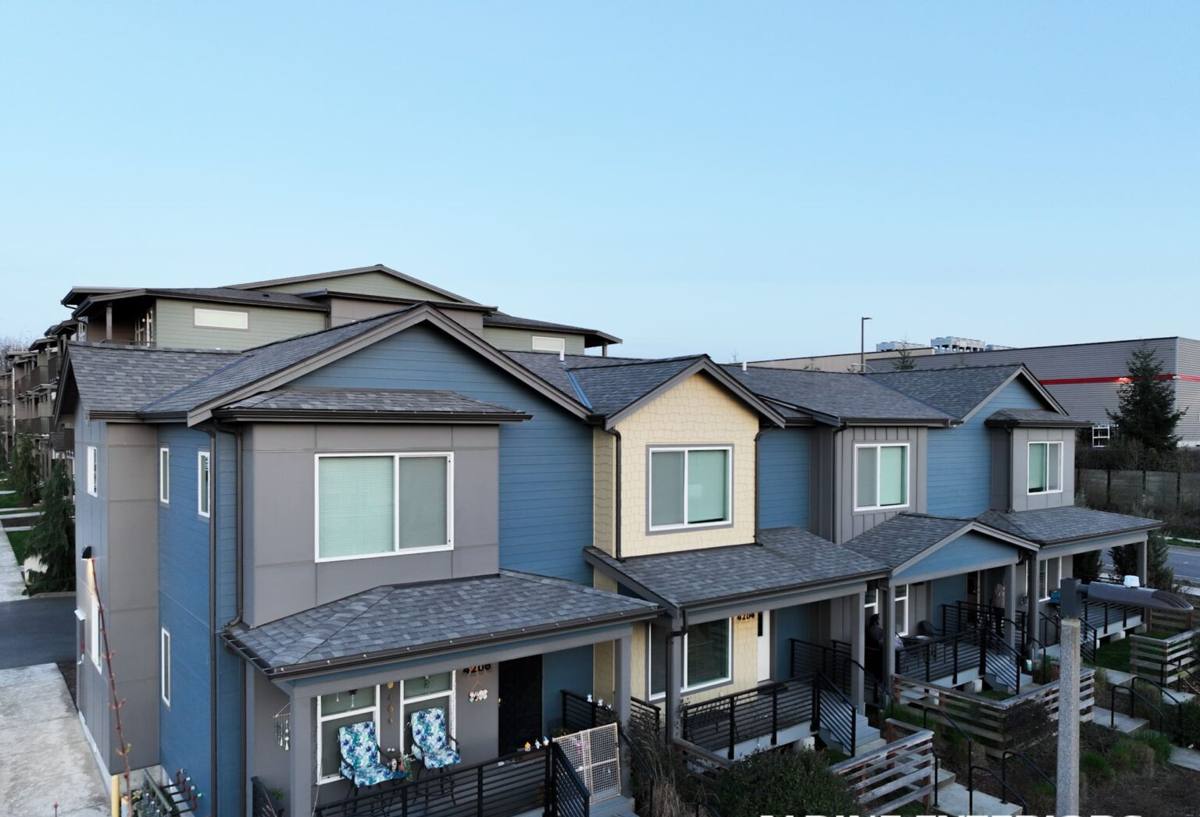
What This Climate Actually Does to Siding
It helps to understand the specific mechanisms at work, because they explain why some siding materials hold up in York and others don't.
Salt Air
Proximity to Bellingham Bay means airborne salt settles on exterior surfaces year-round. Salt is hygroscopic — it pulls moisture out of the air and holds it against whatever surface it's on. On painted wood or lower-grade composite siding, that means paint failure, swelling, and accelerated rot at seams and butt joints. On metal fasteners and trim, it accelerates corrosion. Any siding product installed in York needs a finish that can shrug off repeated salt exposure without chalking, fading, or losing adhesion.
Driving Rain
Wind off the water doesn't just drop rain straight down — it pushes it sideways and up under laps, trim, and penetrations. Siding systems that rely on caulk and paint film alone to keep water out eventually fail, because caulk joints move and crack over years of temperature and moisture cycling. What actually keeps a house dry in driving rain is the water-resistive barrier and flashing behind the siding, not the siding's surface finish. This is where a lot of older installations in York fall short — not because the siding itself failed, but because the water management behind it was never done correctly in the first place.
Moss Season
Shade from mature trees, north-facing walls, and Whatcom County's long stretch of damp, low-light months all combine to keep siding surfaces wet for extended periods. Moss and algae take hold wherever moisture lingers, and once established they hold even more water against the siding surface — a cycle that accelerates rot in wood-based products and staining on porous surfaces. Siding replacement in York has to account for this reality: proper spacing, drainage, and a factory finish that resists organic growth matter as much as the material itself.
Signs a York Home Needs Siding Replacement
Not every issue means a full replacement, but these are the signs that point toward it rather than a patch or repaint:
- Soft, spongy, or crumbling siding when pressed, especially near the bottom courses and around window and door trim
- Paint that keeps failing within a year or two of repainting, even after prep work
- Persistent moss or dark staining that returns within months of cleaning
- Visible gaps, warping, or cupping in individual boards or panels
- Bubbling, peeling, or delamination on composite or engineered wood siding
- Interior signs of moisture — musty smells, stained drywall, or peeling interior paint on exterior walls
- Siding that's original to a home more than 20-25 years old and has never been fully replaced
What a Correct Siding Replacement Actually Involves
Siding replacement isn't just removing old material and nailing up new panels. Done correctly, especially in a climate like York's, it's a system:
- Full tear-off and inspection — removing old siding to expose the sheathing and check for rot, soft spots, or prior water damage that needs to be addressed before anything new goes up.
- Water-resistive barrier — a properly lapped and sealed weather barrier installed over the sheathing, which is the actual line of defense against driving rain, not the siding itself.
- Flashing at every penetration — windows, doors, hose bibs, vents, and any other wall penetration need correctly integrated flashing so water is directed out and down, never trapped behind the siding.
- Correct fastening — the right fastener type, spacing, and depth for the material being installed, following manufacturer specifications rather than shortcuts.
- Proper clearances — siding held off decks, grade, roof lines, and other surfaces by the manufacturer's minimum clearance, so it can drain and dry rather than wick moisture.
- Finish work — trim, caulking at appropriate joints only (not as a substitute for flashing), and touch-up painting where field cuts expose raw material.
Skipping or rushing any one of these steps is how a siding job that looks fine on day one starts failing within a few years — and in a climate that pushes rain sideways and grows moss on anything damp, those shortcuts show up faster than they would somewhere drier.
Why We Install Only James Hardie Fiber Cement
We made a decision as a company to install James Hardie fiber cement siding exclusively, and we don't install vinyl, LP SmartSide, Cemplank, Allura, primed spruce, or cedar. That's not a marketing position — it's a standard we hold because of what we've seen these products do over time in exactly this kind of climate.
Fiber cement is non-combustible, dimensionally stable across Whatcom County's temperature and moisture swings, and doesn't feed the organic growth that moss and algae thrive on the way untreated or lightly treated wood products can. James Hardie's ColorPlus factory finish is baked on under controlled conditions rather than field-applied, which gives it more consistent, longer-lasting resistance to salt air and UV exposure than a job-site paint job can match. Hardie's HZ5 product line in particular is engineered for wetter, harsher climates — it's a meaningful distinction for a neighborhood sitting this close to the water. The company also backs it with a strong transferable warranty, which matters to homeowners who may sell before the siding's functional life is over.
None of this means other products are without merit — vinyl is inexpensive, cedar has real aesthetic appeal, and engineered wood has improved over the years. But when we weigh moisture behavior, maintenance burden, and long-term performance against what York's climate demands, fiber cement is what we're willing to put our name behind.
How Materials Compare in York's Climate
| Factor | James Hardie Fiber Cement | Vinyl | Cedar / Wood |
|---|---|---|---|
| Salt air resistance | Strong — factory finish resists chalking and fading | Moderate — can become brittle over time | Weak — finish breaks down, invites rot |
| Moss / moisture resistance | Strong — non-organic, engineered for wet climates (HZ5) | Moderate — doesn't feed growth but traps moisture behind panels | Weak — organic material, prone to rot under sustained moisture |
| Driving rain performance | Strong when installed with proper flashing and WRB | Moderate — seams and laps are vulnerable points | Variable — highly dependent on maintenance |
| Maintenance burden | Low — repaint cycle measured in decades | Low — but cracks/fades and can't be easily repaired | High — regular staining/sealing required |
| Fire resistance | Non-combustible | Combustible, can melt/warp | Combustible |
Why a Crew Already Working in York Matters
York's mix of home ages and styles means no two siding jobs are identical — a home built decades ago often has different sheathing, framing quirks, and prior repair history than a newer build a few streets over. A crew that already works this specific pocket of Bellingham has seen the common issues before: where moisture tends to collect on north- and west-facing walls, how prior owners patched things over the years, and what local permitting and inspection expects. That familiarity shows up as fewer surprises mid-project and a tighter, more accurate estimate up front, instead of change orders once tear-off reveals what's really behind the old siding.
Our Process, Start to Finish
Every siding replacement follows the same disciplined sequence, whether it's a full-house re-side or a targeted section:
- On-site assessment of current siding condition, moisture history, and any problem areas specific to the home's orientation and exposure
- A written estimate that breaks down material, labor, and any anticipated sheathing repair as a separate line item, not a guess buried in the total
- Full tear-off with inspection of sheathing and framing before anything new is installed
- Correct water-resistive barrier and flashing installation at every penetration
- James Hardie fiber cement installed to manufacturer specification — fastening, clearances, and joint treatment
- Final walkthrough so you understand what was done and why, before we consider the job complete
What Drives Cost on a York Siding Replacement
| Cost Factor | Why It Matters |
|---|---|
| Sheathing condition | Rot discovered during tear-off requires repair before new siding goes on — this is the biggest source of variance between estimate and final cost |
| Home size and complexity | More corners, dormers, and trim details mean more cutting, flashing, and labor time |
| Siding profile and color | Lap width, texture, and ColorPlus finish options carry different material costs |
| Accessibility | Tight lot lines, steep grades, or limited staging area can add labor time |
| Trim and accessory work | Fascia, soffit, and trim replacement alongside siding affects total scope |
We won't quote a number without seeing the home, but we'll always explain what's driving the price before you commit to anything.
Ready for an Honest Look at Your Siding?
If your York home is showing the wear that salt air, driving rain, and moss season tend to cause, we're happy to take a look and give you a straight assessment — no pressure, no inflated urgency. Use the form below to request a free estimate, and we'll walk the property with you and explain exactly what we see.