 Bellingham Exterior
 Asphalt Shingle Roofing for York, Bellingham
York is one of Bellingham's older, closer-in neighborhoods, and that shows in the roofs. A lot of the housing stock here dates back decades, mixed in with newer infill construction on smaller lots, and the roofs on both kinds of homes are dealing with the same Whatcom County weather: salt-tinged marine air, rain that comes in sideways as often as it falls straight, and a moss season that barely takes a break most years. Asphalt shingle roofing remains the most common and most cost-effective roofing choice for homes in York, but "asphalt shingles" covers a wide range of product quality and installation practices, and in this climate those differences show up faster than they would somewhere drier.
This page is specifically about asphalt shingle roofing in York, not a generic rundown of roofing in general. The tree cover, lot sizes, and roof pitches common in this part of Bellingham create some specific patterns we watch for, and they're worth understanding before you decide what your roof actually needs.
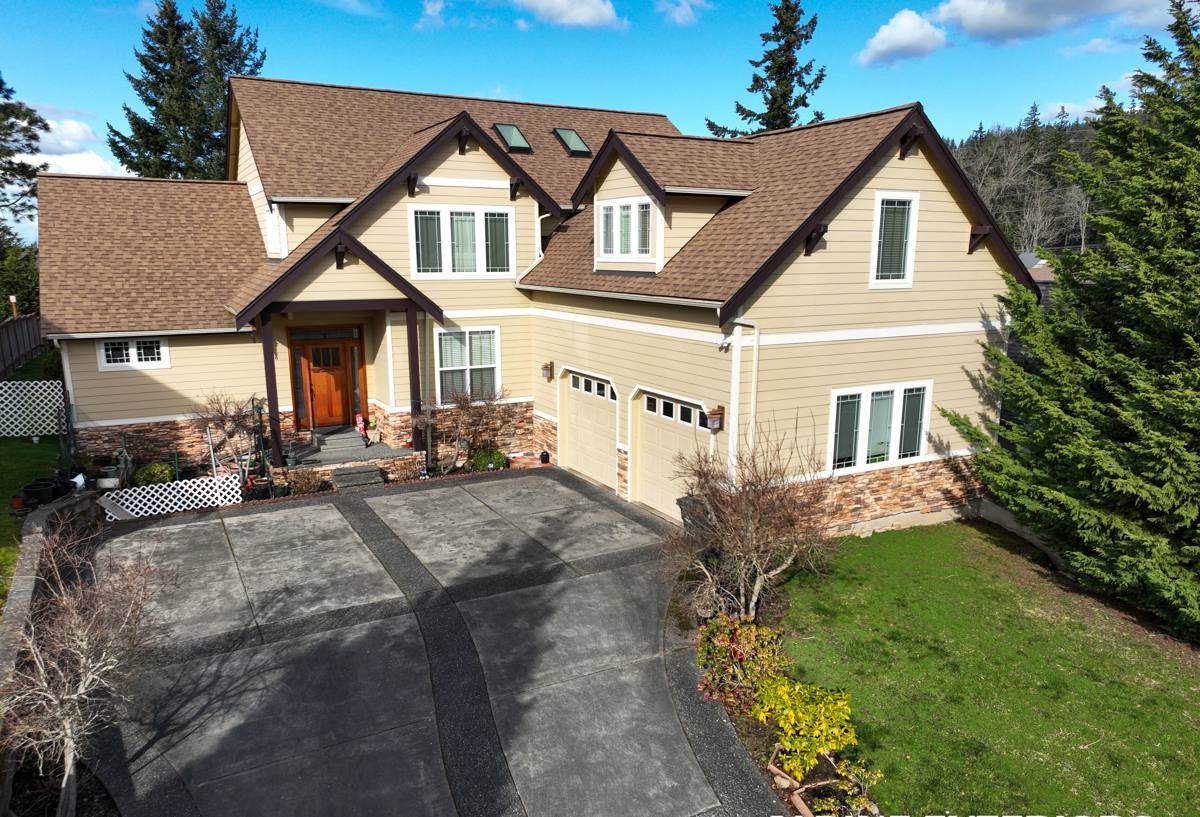
What York's Climate Does to an Asphalt Shingle Roof
Salt Air and Marine Exposure
Bellingham sits close enough to the bay that salt-laden air moves through neighborhoods like York even when there's no storm in the forecast. Over years, that steady exposure accelerates corrosion on exposed metal, particularly cheaper flashing, fasteners, and roof vents that weren't specified for a marine environment. It's slow damage, the kind that's easy to miss until a flashing seam starts letting water through.
Wind-Driven Rain
Rain in this part of Whatcom County rarely falls straight down. Wind pushes it sideways and up under shingle tabs, into valleys, and around penetrations like vent pipes and chimneys. A roof that would perform fine under calm, vertical rainfall can still leak here because the water is being driven at angles a basic installation doesn't account for. That's why underlayment coverage and flashing detail matter as much as the shingles themselves.
A Long Moss and Moisture Season
York has real tree cover on a lot of lots, and combined with Bellingham's mild, damp climate, that means moss growth is a near year-round concern rather than a seasonal nuisance. Moss holds moisture against the shingle surface, works its way under tabs as it grows, and can lift shingles enough to let water underneath. North-facing slopes and roof sections shaded by mature trees are usually the first places it shows up.
What a Correct Asphalt Shingle Installation Requires Here
Asphalt shingles are a forgiving, well-understood product, but that doesn't mean every installation performs the same. In a climate that drives rain sideways and grows moss for most of the year, the details underneath the shingles matter as much as the shingles on top.
Underlayment and Ice-and-Water Protection
A synthetic underlayment layer across the full roof deck is the baseline, but valleys, eaves, and any low-slope transitions need self-adhered ice-and-water shield underneath the shingles, not just felt paper. Those are the areas where wind-driven rain and ponding are most likely to find a way in, and they're the spots where a corner cut during installation shows up first as a leak.
Flashing at Every Penetration
Chimneys, skylights, vent pipes, and wall-to-roof transitions all need properly formed, correctly lapped flashing, not just a bead of roofing cement covering a gap. Cement patches degrade with UV exposure and temperature cycling; correctly installed metal flashing doesn't rely on a sealant to do the structural work.
Ventilation
A roof deck that can't breathe traps moisture in the attic, which shortens the life of the sheathing and the shingles from underneath, not just from weather above. Balanced intake and exhaust ventilation matters in any climate, but in one this damp, an under-ventilated attic is one of the more common reasons a shingle roof fails early from the inside out.
Nailing Pattern and Fastener Choice
Manufacturer-specified nailing patterns exist for a reason, and skipping to a faster four-nail pattern on a roof rated for six, or using undersized nails, is a common way installers shave time off a job. It also voids the manufacturer's wind warranty and leaves shingles more likely to lift in the wind events this area gets through fall and winter.
Shingle Options: What We Install and Why
Not all asphalt shingles are built the same, and the difference matters more in a wet, moss-prone climate than it would somewhere dry.
| Shingle Type | What It Is | Fit for York's Climate |
|---|---|---|
| 3-tab shingles | Flat, single-layer, lowest-cost asphalt shingle | Shorter lifespan and lower wind rating; we don't recommend them for this exposure level |
| Architectural (laminate) shingles | Multi-layer, dimensional shingle with heavier weight | Better wind resistance and longer service life; our standard recommendation for York homes |
| Algae-resistant (AR) shingles | Shingles treated with copper or zinc granules | Directly addresses the moss and algae growth common on shaded York roofs |
| Impact-rated shingles | Reinforced for hail and debris resistance | Optional upgrade; less critical here than the moisture and moss resistance features |
For most York homes, we recommend a laminate architectural shingle with algae-resistant granules as the practical baseline, not because it's the most expensive option available, but because it's the combination that actually addresses what this climate does to a roof over time.
Why We Don't Push the Cheapest Shingle Option
Standard 3-tab shingles are a legitimate product and plenty of contractors install them well. We generally steer York homeowners away from them because their lighter weight and lower wind rating are a worse match for the wind-driven storms this area sees, and their flatter profile gives moss less to grip but also less material depth to wear through before a leak develops. It's a trade-off, not a defect, and we'd rather explain that up front than let a lower upfront price create a shorter roof life down the road.
Roofing Cost Factors for York Homes
| Factor | What It Affects | Why It Matters in York |
|---|---|---|
| Roof pitch and complexity | Labor time and safety equipment | York's mix of older and newer homes includes plenty of steeper or multi-plane roofs that take longer to work safely |
| Tear-off vs. overlay | Labor scope and deck access | Tear-off exposes deck rot that's common under older shingle layers in this damp climate |
| Deck condition | Repair costs before new shingles go on | Trapped moisture from a failing roof can rot sheathing that isn't visible until the old shingles come off |
| Shingle grade selected | Material cost and expected service life | Algae-resistant, higher-wind-rated shingles cost more up front but hold up longer against moss and wind here |
| Tree cover and site access | Labor time, cleanup, and staging | Mature trees common on York lots can mean more debris cleanup and careful staging around landscaping |
These are the variables that move a quote up or down; we walk the actual roof before giving you a number rather than pricing off square footage alone.
Signs Your York Home's Roof Needs Attention
- Moss growth returning quickly on shaded or north-facing slopes, even after cleaning
- Granules collecting in gutters or at downspout outlets
- Shingles that are curling, cupping, or lifting at the tabs
- Dark streaking or staining across large sections of the roof
- Soft spots or sagging visible along the roofline
- Water stains on interior ceilings, especially near valleys, chimneys, or skylights
- Daylight visible through the roof deck from inside the attic
- Missing or cracked shingles after a wind event
Repair vs. Full Replacement
Not every roofing problem in York means a full tear-off. Isolated wind damage, a section around a vent pipe that's failed, or a single valley that's letting water through can often be repaired without replacing the whole roof, especially if the shingles are still within their service life and matching material is available. A roof that's shedding granules across most of its surface, has widespread moss undermining shingles, or is simply at the end of its rated life is a different situation, and a repair there usually just delays a bigger job while moisture keeps working on the deck underneath. We'll tell you plainly which category your roof is actually in before recommending either one.
How We Approach a York Roofing Project
We start with a full roof inspection, not just a look from the ground, so we can see the actual condition of the shingles, flashing, and deck before recommending anything. From there we walk you through what we're seeing, what your realistic options are, and why we'd recommend one approach over another for your specific roof and budget. Once a project is scoped, we handle tear-off, deck repair where needed, underlayment and flashing, and shingle installation as one connected process, not a series of separate steps handed off between crews. We also stand behind the workmanship, not just the manufacturer's material warranty.
Why a Crew That Works York Regularly Matters
A roofing crew that works this part of Bellingham regularly has already seen how salt air, wind-driven rain, and moss actually behave on real York roofs across a full year, not just how a shingle performs in a manufacturer's spec sheet. That experience shows up in practical decisions on install day, like where extra flashing attention is worth the time, which slopes hold moss the longest, and which roof details tend to cause callbacks if they're rushed. York's tree cover and mix of older and newer construction aren't identical to every Bellingham neighborhood, and a crew that's worked here before accounts for that instead of treating every roof the same.
If your York home's roof needs a repair, a full replacement, or just an honest look to find out which one you're actually facing, we're glad to take a look. Reach out using the form below to schedule a free, no-pressure estimate.