 Bellingham Exterior
 Siding Replacement in Lynden: Built for Whatcom County's Weather, Not Just Its Curb Appeal
Lynden sits inland from Bellingham Bay, but it doesn't escape what makes Whatcom County siding work different from siding work almost anywhere else in the country. Homes here deal with a long, wet moss season, salt-tinged marine air that drifts in off the Sound, and driving rain that comes in sideways during winter storms. Add in agricultural humidity from the surrounding farmland and you have a climate that is genuinely hard on exterior building materials. When we replace siding in Lynden, we're not just matching a color swatch to a homeowner's taste — we're solving for moisture, for cycles of wet and dry, and for the slow biological growth that eats away at lesser materials year after year.
This page is specifically about siding replacement for Lynden homes. If you're comparing products or trying to understand what "correct installation" actually means before you sign a contract, this is written for you.
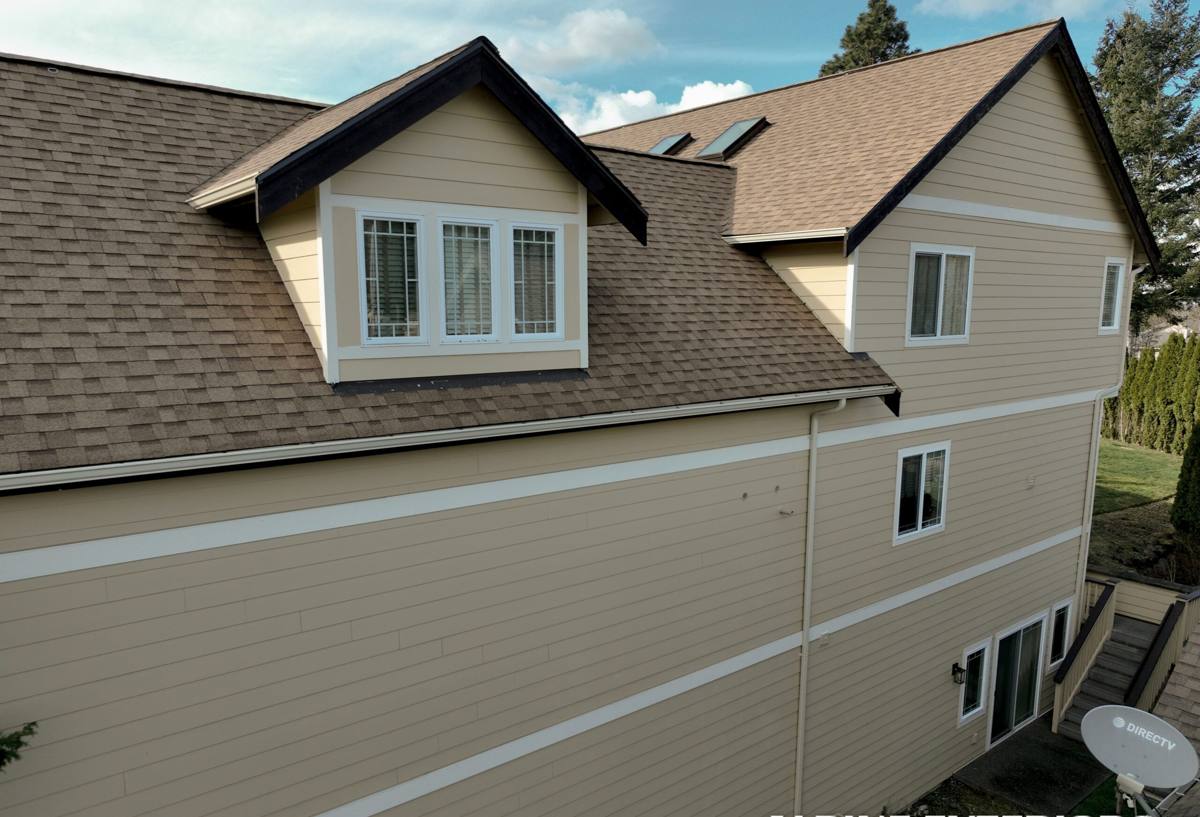
What Lynden's Climate Actually Does to Siding
Moss and Sustained Moisture
Whatcom County's moss season isn't a two-week nuisance — it's a months-long condition. North-facing walls, shaded siding runs, and anything tucked under an overhang stay damp far longer than homeowners in drier climates would expect. Moss and algae don't just look bad; they hold moisture against the siding surface, which accelerates rot in wood-based products and speeds up finish breakdown on anything with a weak factory coating.
Salt Air
Lynden isn't oceanfront, but prevailing weather off the Sound still carries salt-laden moisture inland, especially during winter storm systems. Salt exposure corrodes fasteners, pits weaker metal trim, and accelerates the breakdown of paint and coatings that weren't engineered for a marine-influenced climate.
Driving, Wind-Driven Rain
Storms in this part of Washington rarely fall straight down. Wind-driven rain gets pushed up under laps, into seams, and behind poorly flashed trim. Siding that isn't installed with the right overlaps, gaps, and flashing details will eventually let water behind it — and once water gets behind siding, the sheathing and framing pay the price, not just the surface material.
Why Product Choice Matters More Here Than in Milder Climates
We install James Hardie fiber cement siding exclusively. We don't install vinyl, LP SmartSide, Cemplank, Allura, primed spruce, or cedar. That's not a marketing position — it's a standard we hold ourselves to because of what we've seen this climate do to those materials over time.
- Vinyl expands and contracts with temperature swings, and its seams and J-channels give wind-driven rain an easy path behind the panel. It doesn't rot, but it also doesn't stop moisture problems — it just hides them longer.
- Wood-based products (LP SmartSide, primed spruce, cedar) depend entirely on an intact factory finish and diligent, ongoing maintenance to resist moisture. In a moss-heavy, rain-heavy climate, any lapse in caulking, painting, or gutter maintenance shortens their life significantly.
- Other fiber cement brands (Cemplank, Allura) are legitimate products, but we've standardized on one manufacturer, one finish system, and one warranty structure so we can install to a single spec we know cold, rather than juggling installation quirks across brands.
James Hardie's fiber cement is non-combustible, dimensionally stable in wet-dry cycling, and comes with a factory-applied ColorPlus finish that's engineered to resist fading and moisture intrusion far better than field-applied paint. Hardie's HZ5 product line in particular is engineered for harsher, wetter climates — which describes Whatcom County well.
What a Correct Siding Replacement Involves
Replacing siding correctly is mostly about what happens before the new siding ever goes up. In a climate like this, skipping steps here is where premature failures come from.
Tear-Off and Sheathing Inspection
Full removal of the old siding lets us actually see the sheathing underneath. Moss holds moisture against walls for months at a time, and it's common to find soft or water-stained sheathing behind older siding, especially on shaded or north-facing walls. Any compromised sheathing gets replaced before anything new goes on — covering it up is how small problems become expensive ones.
Weather-Resistive Barrier and Flashing
A correctly lapped weather-resistive barrier, properly integrated window and door flashing, and correct kick-out flashing at roof-wall intersections are what actually keep wind-driven rain from reaching the wall assembly. Siding is the visible layer, but this hidden layer is what does the real work in a wet climate.
Installation to Manufacturer Spec
James Hardie publishes specific fastener patterns, clearances, and gapping requirements, and they vary by product line and climate zone. Correct clearance from grade, decks, and roof lines matters especially here, where standing moisture and moss both need airflow and drainage to stay away from the siding's bottom edge.
Trim, Caulking, and Paint Details
Factory-finished ColorPlus panels need far less field caulking and painting than raw wood products, but the joints, trim, and cut edges still need to be sealed correctly to keep the system's warranty intact and keep water from tracking in at seams.
How We Approach a Lynden Siding Replacement
- On-site assessment — we look at wall orientation, moss patterns, drainage, roofline intersections, and existing damage before quoting anything.
- Sheathing and moisture check — we flag any suspected rot or moisture-damaged sheathing so there are no surprises once tear-off starts.
- Product and line selection — we help you choose the right Hardie board profile, texture, and HZ line for your home's exposure.
- Full tear-off — no installing over existing siding; we want to see the wall assembly.
- Barrier and flashing correction — we fix or upgrade weather barrier and flashing details as part of the job, not as an upsell.
- Installation to spec — fastener patterns, clearances, and gapping done to Hardie's published requirements.
- Final walkthrough — trim, caulking, and paint-match details reviewed with you before we call it done.
Cost Factors for Siding Replacement in Lynden
Every home is different, but these are the variables that most often move the price up or down on a Whatcom County siding job:
| Factor | Why It Matters Locally |
|---|---|
| Sheathing condition | Moss and prolonged moisture exposure increase the odds of hidden water damage needing repair before new siding goes on |
| Wall exposure and orientation | Shaded, north-facing, or wind-exposed walls may need extra flashing or drainage detailing |
| Home size and wall complexity | More corners, gables, and trim details mean more labor and material cuts |
| Existing siding type | Removing multiple layers or brittle old material takes longer than a single clean tear-off |
| Product line and profile | HZ5 boards and certain textures/profiles cost more than standard lines |
| Trim and accessory scope | Full trim replacement alongside siding adds cost but improves long-term weather performance |
We provide a written, itemized estimate after the on-site assessment — we don't quote sight unseen, because the moisture and sheathing condition behind the old siding genuinely changes the scope.
Why Local Experience Matters for This Job
A crew that already works Whatcom County knows which walls in a given neighborhood tend to hold moss, how local roof-wall intersections typically get built, and what moisture problems show up most often behind older siding in this specific climate. That's different from general siding experience picked up in a drier region. It shows up in small decisions — where to add extra flashing, which walls need better clearance from grade, how much ventilation a shaded wall assembly needs — that don't show up on a basic spec sheet but make a real difference in how the siding performs ten and twenty years down the road.
Signs Your Lynden Home May Need Siding Replacement Soon
- Persistent moss or algae staining that returns shortly after cleaning
- Soft spots, bubbling, or visible warping in wood-based siding
- Paint that's peeling, chalking, or needs repainting more often than every few years
- Visible gaps, cracks, or separated seams at trim and corner boards
- Water stains or musty smells on interior walls near exterior siding
- Siding that flexes, feels hollow, or shows fastener pops
A Straightforward Recommendation
For Lynden homes, the combination of moss season, salt-influenced air, and driving rain makes siding material choice and installation quality matter more than they would in a milder climate. That's the honest reason we've standardized on James Hardie fiber cement rather than offering a menu of lower-cost alternatives — it's the product we're comfortable standing behind for this specific set of conditions.
If you're planning a siding replacement in Lynden, we're happy to come take a look, assess your home's specific exposure, and put together a clear, no-pressure estimate. There's a form below to get that scheduled.