 Bellingham Exterior
 Windows Built for Barkley's Particular Climate Load
Barkley sits close enough to Bellingham Bay and the surrounding wetlands that homes here take on a specific mix of weather stress: salt-tinged air moving in off the water, wind-driven rain that hits window walls at an angle instead of falling straight down, and a wet season that runs long enough for moss and algae to get a real foothold on anything that stays damp. None of that is unique to one street or one subdivision — it's a Whatcom County reality — but it adds up differently on custom-sized or older window openings than it does on standard new-construction units, and that's where a lot of window jobs go wrong.
Custom windows, by definition, are built to fit an opening that isn't a stock size — an older home with settled framing, an addition with a non-standard rough opening, a bay or picture window that was never a catalog item to begin with. Getting the fit and the weatherproofing right on a custom unit takes more care than swapping a standard size, and in a climate that pushes rain sideways for months at a time, small gaps in that work show up fast as leaks, fogged glass, or rot in the surrounding trim.
Why This Matters More Here Than in a Dry Climate
In a drier region, a slightly imperfect seal might go unnoticed for years. In Bellingham, sustained wind-driven rain finds every weak point in a window installation within a season or two — often through the first real fall storm cycle. Salt air adds a second layer of stress by accelerating corrosion on hardware, fasteners, and some metal frame components, which is part of why material choice matters as much as installation quality.
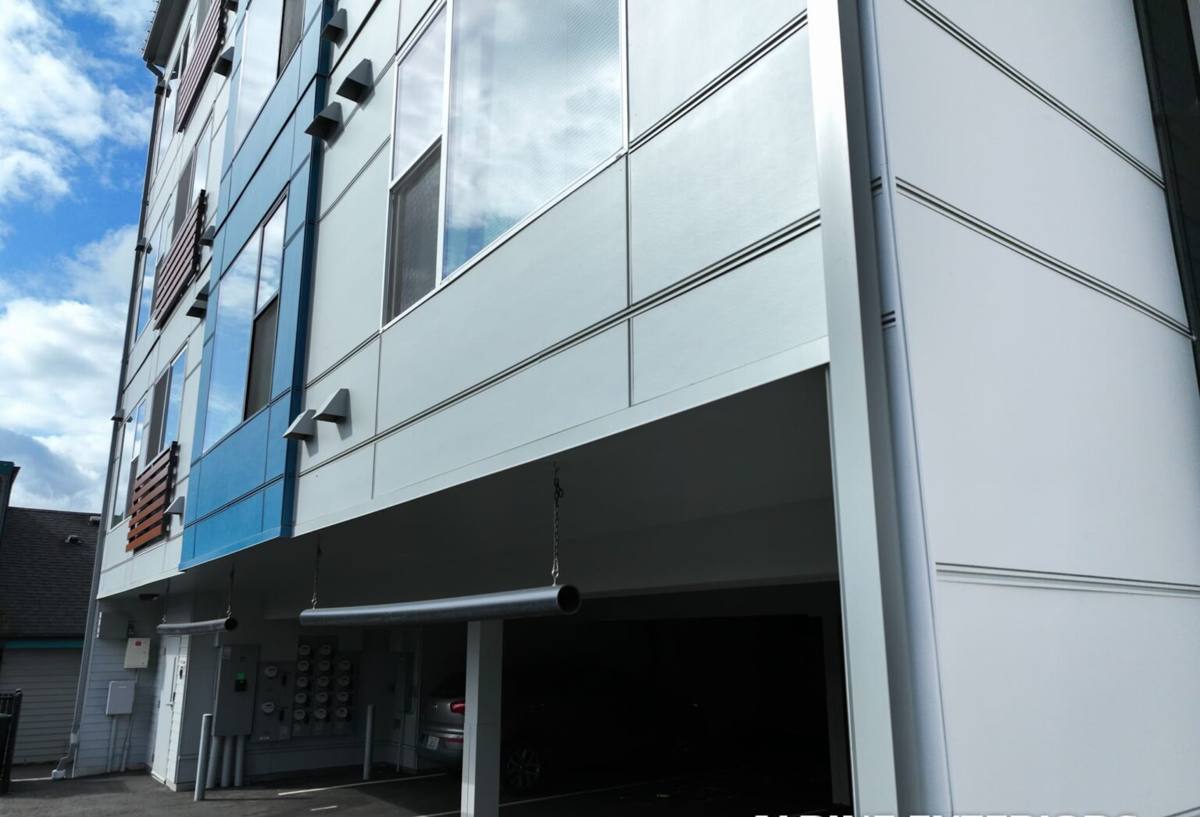
What Driving Rain and Salt Air Actually Do to a Window Over Time
It helps to understand the specific failure patterns we see on window jobs in this area, because they shape how we install and what we recommend.
Moisture Intrusion at the Frame
Wind-driven rain doesn't just sit on the glass — it gets pushed up under sills and into any gap between the window frame and the rough opening. Once water gets behind the frame, it can travel along framing members and cause hidden rot well before any interior staining shows up. This is almost always an installation and flashing issue, not a product defect.
Moss, Algae, and Trapped Moisture
Bellingham's long wet season gives moss and green algae plenty of time to establish on horizontal surfaces — window sills, trim ledges, and mulled window assemblies where water can pool instead of shedding. Beyond the cosmetic issue, trapped organic growth holds moisture against wood trim and caulking, which shortens the life of both.
Seal and Hardware Fatigue
Salt-laden air speeds up corrosion on lower-grade fasteners, hinges, and cranks, and it can degrade some sealants faster than the manufacturer's stated service life would suggest. Insulated glass units also rely on a perimeter seal to keep the argon fill in and moisture out — once that seal fails, you get the fogging or condensation between panes that no amount of cleaning will fix.
Signs a Barkley Home's Windows Need Attention
Most homeowners call us after noticing one or two of these — worth checking the rest before deciding whether you're looking at a repair or a replacement.
- Fogging or a hazy film between the glass panes that doesn't clean off (failed seal)
- Soft or discolored wood trim around the window, especially at the bottom sill
- Visible moss or algae buildup on sills or horizontal trim that returns quickly after cleaning
- Drafts or a noticeable temperature difference near the window on windy days
- Difficulty opening, closing, or locking the window — often a sign the frame has shifted or swollen
- Water staining on interior drywall or trim below or beside the window after storms
- Visible daylight or gaps between the frame and the wall from outside
- Peeling paint or bubbling on interior sills, which usually points to moisture getting in from outside
What a Correct Custom Window Installation Involves
Accurate Measurement and Fit
Custom work starts with precise measurement of the actual opening, not an assumed standard size — especially important on older Bellingham homes where framing has settled or been altered over the years. A window that's slightly undersized for its opening relies on caulk and shims to close the gap, which is exactly the kind of weak point that driving rain will eventually find.
Flashing and Weatherproofing Detail
This is the part of the job that doesn't show once it's finished, and it's the part that matters most in this climate. Proper installation means correctly lapped flashing (so water sheds down and out, never into the wall), sill pans on new or replacement openings to catch and redirect any moisture that does get past the exterior seal, and sealant applied at the right points — not everywhere, since over-sealing a window can trap moisture instead of letting it escape.
Frame and Glass Selection for the Opening
The right glass package (typically dual-pane with a low-E coating for this region) and frame material depend on the window's exposure — a west- or south-facing wall catching direct wind-driven rain has different needs than a sheltered opening on the lee side of the house.
Choosing Window Materials for This Climate
There's no single "best" window material — the right call depends on exposure, maintenance appetite, and budget. Here's how the common options generally hold up under Bellingham's rain and salt air:
| Material | Moisture & Salt Air Resistance | Maintenance | General Cost Position |
|---|---|---|---|
| Vinyl | Good — won't rot or corrode; UV can cause slow color fade over many years | Low — occasional cleaning | Lower to mid |
| Fiberglass | Very good — dimensionally stable, resists moisture and corrosion well | Low | Mid to higher |
| Wood (unclad) | Requires diligent upkeep — attractive but the most vulnerable to prolonged wet exposure | High — regular repainting/sealing | Mid to higher |
| Wood-clad (exterior aluminum or vinyl shell) | Good — exterior shell protects the wood core from direct weather | Low to moderate | Higher |
| Aluminum | Fair — durable but more prone to corrosion near salt air without a quality finish | Low | Mid |
For homes in Barkley with direct exposure to prevailing wind and rain, we generally steer homeowners toward vinyl, fiberglass, or clad-wood options over bare wood or standard-grade aluminum — not because any product is inherently bad, but because those materials ask less of you in ongoing maintenance while standing up better to this specific combination of moisture and salt air over the long run.
How Our Process Works
- On-site assessment — we look at the existing openings, exposure direction, current condition of framing and trim, and talk through what you're trying to solve (energy loss, leaks, appearance, or general age).
- Measurement and product selection — accurate measurements are taken for custom sizing, and we walk through material and glass options suited to that specific opening's exposure.
- Written estimate — a clear scope and price range before any work is scheduled, no pressure to decide on the spot.
- Removal and prep — old units are removed carefully, and we inspect the framing underneath for any hidden moisture damage before installing anything new.
- Installation with proper flashing and sealing — this is the step that determines how the window performs in a storm, and it's where we spend the most care.
- Final walkthrough — operation, seals, and finish work checked with you before we consider the job done.
Why a Crew That Already Works Barkley Matters
Window performance in Bellingham isn't just about the product — it's about installation decisions matched to local exposure. A crew that regularly works this area has already seen how homes here take on wind-driven rain, how quickly moss establishes on north- and shade-facing surfaces, and which installation details actually hold up through a full Whatcom County wet season rather than just looking good on install day. That local repetition matters more than it sounds like it should: it's the difference between a generic install and one that accounts for the way weather actually hits this part of Bellingham.
It also means fewer surprises during permitting or inspection, since local requirements and typical construction types in this area are already familiar territory rather than something being figured out on your job.
What Affects the Cost of a Custom Window Job
Every home is different, so we won't quote a number without seeing the openings, but the main cost drivers on most Barkley jobs are:
- Number of windows and whether sizes are standard or fully custom
- Frame material chosen (vinyl, fiberglass, wood-clad, etc.)
- Condition of the existing framing — hidden rot or moisture damage adds repair time
- Glass package (standard dual-pane vs. upgraded low-E or gas-fill options)
- Access and height (second-story or hard-to-reach openings take longer)
- Trim and finish work needed to match the surrounding exterior
We'll give you an honest range once we've actually looked at the job — broad ballpark guesses without seeing the openings tend to be wrong in one direction or the other, and we'd rather give you a number you can trust.
Maintaining New Windows Through Bellingham's Wet Season
Even a well-installed window benefits from a little seasonal attention here. A quick rinse of sills and tracks a couple times a year keeps moss and algae from getting established, and checking that weep holes (the small drainage openings along the bottom of the frame) stay clear lets the window shed water the way it's designed to. Catching a failed seal or a soft spot in trim early is always cheaper than waiting until it becomes a framing repair.
If you're weighing a window project for a home in the Barkley area, we're happy to take a look and give you a straightforward, no-pressure estimate — just fill out the form below and we'll get in touch.