 Bellingham Exterior
 Building a Deck That Belongs on the Birch Bay Coastline
Birch Bay sits right where Whatcom County meets the Salish Sea, and that location shapes what a deck out here needs to survive. Homes just blocks from the water deal with a different set of conditions than a deck built inland in Bellingham proper — salt-laden air, wind-driven rain that gets pushed sideways under railings and into ledger connections, and a long, damp shoulder season where moss and algae get a real head start on any surface that holds moisture. A deck built to a generic spec might look fine for a year or two, but out here the difference between a deck that lasts and one that starts failing early usually comes down to material choice, fastener selection, and how the structure handles water — not the parts anyone can see standing on it.
We build and rebuild decks for homeowners throughout Birch Bay and the surrounding Whatcom County coastline, and the projects that hold up best are the ones where those details were treated as part of the design from the start, not an afterthought.
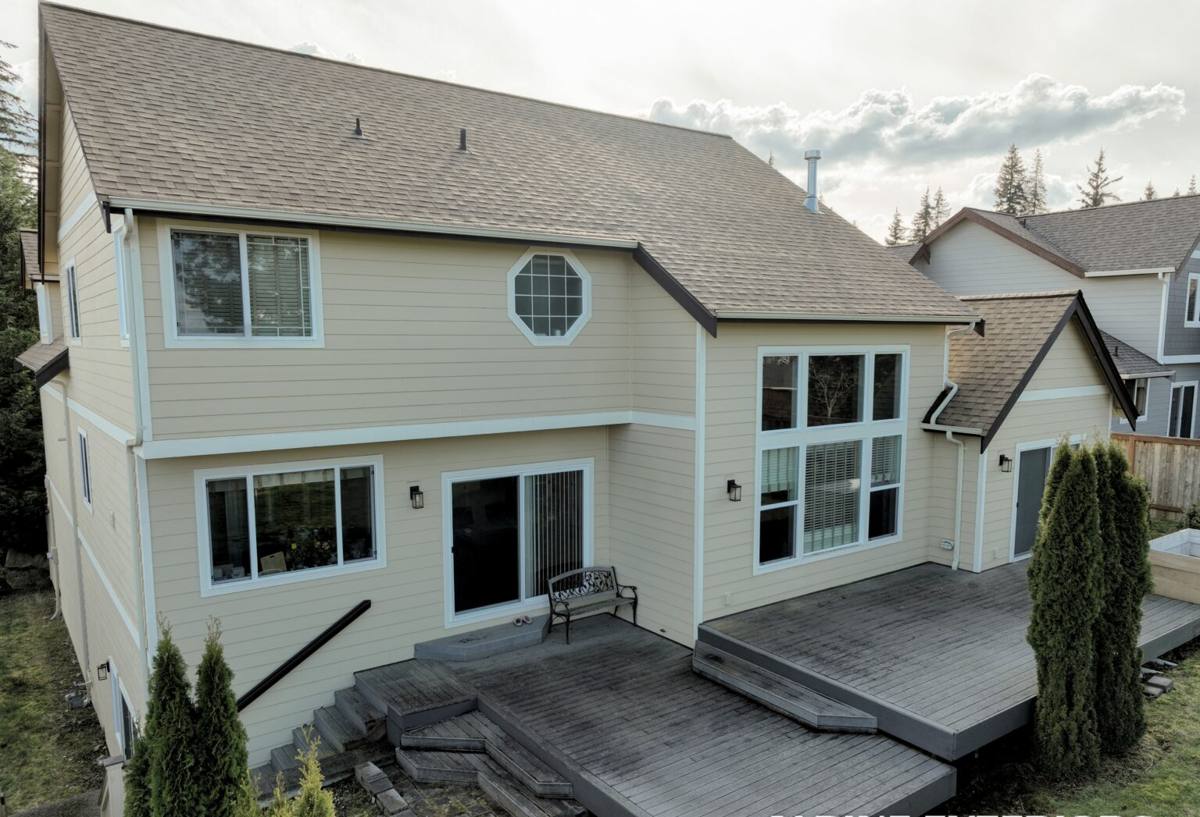
What Salt Air and Coastal Moisture Actually Do to a Deck
Salt air is corrosive to metal, full stop. Fasteners, brackets, and hardware that would last decades in a drier inland location can start showing rust and pitting much sooner within a mile or two of the water. That corrosion isn't just cosmetic — a corroding joist hanger or ledger bolt is a structural problem waiting to happen, and it's usually hidden under the decking where nobody sees it until something moves or sags.
Driving rain adds a second layer to the problem. Wind off the bay pushes water horizontally, not just straight down, which means it gets into gaps and joints that a deck in a calmer inland yard would never see moisture reach. Combine that with our region's long wet season and you get wood that stays damp longer, finishes that break down faster, and the ideal conditions for moss, algae, and mildew to take hold on any horizontal surface that doesn't drain and dry quickly.
None of this means a deck can't hold up in Birch Bay — it means the materials and details have to account for it on purpose.
Choosing the Right Decking Material for This Environment
There's no single "correct" decking material for every home, but some options handle salt air and constant moisture noticeably better than others. We walk homeowners through the real trade-offs rather than pushing whatever is easiest to install.
Wood Decking
Cedar and pressure-treated lumber are still solid choices for homeowners who want a natural look and are willing to keep up with maintenance. The trade-off near the coast is that wood needs more frequent cleaning, sealing, and inspection to keep moisture from working into the grain and to stay ahead of moss growth on shaded or north-facing sections.
Composite Decking
Composite boards resist moisture absorption and don't need staining or sealing, which is a real advantage in a climate where upkeep windows are short. The trade-off is a higher upfront material cost and the need for proper hidden fastener systems and airflow underneath — composite that's installed without adequate ventilation can still develop mold or algae on the surface, especially in shaded, damp yards common around Birch Bay.
PVC Decking
Fully synthetic PVC boards are the most moisture-indifferent option and hold up well against salt exposure, but they come at the highest material cost and some homeowners find the look and feel less natural than wood or wood-composite blends. We treat this as an honest trade-off between cost, appearance, and long-term maintenance rather than steering everyone toward the same product.
| Material | Salt Air / Moisture Resistance | Maintenance Needs | Typical Lifespan Here |
|---|---|---|---|
| Cedar / Treated Wood | Moderate — needs sealing | Annual cleaning and periodic sealing | 10-20 years with upkeep |
| Composite | Good | Periodic washing, no sealing | 20-30 years |
| PVC / Synthetic | Very good | Low — occasional washing | 25-30+ years |
Framing, Fasteners, and Hardware That Hold Up Near the Bay
What's underneath the decking matters as much as the boards themselves, especially in a corrosive coastal environment. We use fasteners and structural hardware rated for exterior and coastal exposure rather than standard interior-grade hardware, because the cost difference over the life of a deck is small compared to the cost of replacing corroded joist hangers or bolts a decade in. Stainless steel or coated, corrosion-resistant hardware is a standard part of how we frame decks in Birch Bay, not an upgrade we hold back unless asked.
We also pay close attention to joist spacing and beam sizing relative to the decking material chosen, since composite and PVC products often have different span requirements than solid wood. Following the manufacturer's engineering specs — not just what's worked on a different material in the past — is part of building something that stays level and solid.
Drainage and Ledger Attachment: Where Most Deck Failures Start
The ledger board — where the deck attaches to the house — is the single most common point of failure on any deck, and it's even more critical in a wet, wind-driven climate like ours. A proper ledger installation includes correct flashing that directs water away from the house framing rather than trapping it against the wall, along with the right fasteners spaced and installed to manufacturer specification. Skipping or shortcutting ledger flashing is invisible on installation day and can lead to rot in the house framing itself years later.
Beyond the ledger, we build in drainage from the start: consistent surface slope so water sheds off the deck rather than pooling, adequate gaps between boards for airflow and drying, and attention to how water moves underneath the structure and away from the foundation. A deck that dries out quickly after a storm is a deck that resists moss, mildew, and rot far longer than one that stays damp for days.
Railings, Structure, and Wind Exposure
Open, exposed lots near the water see more sustained wind than a sheltered inland yard, and railings take the brunt of that load along with everyday use. We build railing systems with attachment points and post connections sized for real wind exposure, not the minimum that happens to pass a casual look. This matters most on elevated decks or homes with a more open exposure toward the bay, where wind loads on railings are higher than code minimums might assume for a typical suburban lot.
Our Process for Birch Bay Deck Projects
Every deck project starts with a site visit, not a phone estimate. We look at the home's exposure — how close to the water, how much wind and salt spray the site actually sees, existing drainage patterns, and the condition of anything being replaced. From there we walk through material options honestly, including what each one will actually cost to maintain over time, not just to install.
- On-site evaluation of exposure, drainage, and existing structure
- Material selection based on your maintenance preferences and budget, not a default upsell
- Proper permitting where required by the county or local jurisdiction
- Ledger flashing, corrosion-resistant fasteners, and engineered framing as standard, not optional
- Final walkthrough covering slope, drainage, and what maintenance to expect going forward
Maintenance in a Moss-Prone, Salt-Air Climate
Even a well-built deck needs some upkeep in this climate, and setting realistic expectations up front saves homeowners frustration later. Shaded areas and north-facing sections are the first places moss and algae take hold, so periodic washing — especially heading into fall and winter — keeps surfaces from becoming slick and keeps organic growth from holding moisture against the boards. Wood decks need their sealant checked annually; composite and PVC decks need far less, but hardware, railings, and the ledger connection are worth a visual check at least once a year regardless of material.
A homeowner who knows what to look for — soft spots, discoloration around fasteners, standing water after a storm — can catch small problems long before they become expensive ones.
Why Local Experience in Birch Bay Actually Matters
A deck built to a generic regional spec and a deck built by a crew that regularly works this specific stretch of Whatcom County coastline are not the same thing. Knowing how exposed a given lot is to wind and salt spray, which sides of a house dry out slowest, and which fastener and flashing details actually hold up here isn't something that comes from a manual — it comes from building and maintaining decks in this exact environment repeatedly. That's the experience we bring to every Birch Bay project, and it shows up in decks that are still solid well past when a shortcut-built one would need major repairs.
If you're planning a new deck or need to replace one that's showing its age, we're happy to take a look and put together a free, no-pressure estimate — just fill out the form below.