 Bellingham Exterior
 Why Birch Bay Roofs Take More Punishment Than Roofs a Few Miles Inland
Birch Bay sits right on the water, and that changes what a roof has to deal with year-round. Salt-laden air off the bay accelerates corrosion on anything metal that isn't properly rated or coated. Wind-driven rain off Georgia Strait doesn't fall straight down — it gets pushed sideways under flashing, around vents, and into any seam that wasn't detailed correctly. And like most of Whatcom County, Birch Bay gets a long, damp moss season that starts early and doesn't let up until well into spring.
None of that is unusual for this part of Washington. But it does mean a roof that would hold up fine in a drier, inland part of the state can fail early here if it wasn't installed with the local conditions in mind. Metal roofing, done right, handles this environment better than most materials — but "done right" is doing a lot of work in that sentence, and it's worth understanding what that actually means before you sign a contract.
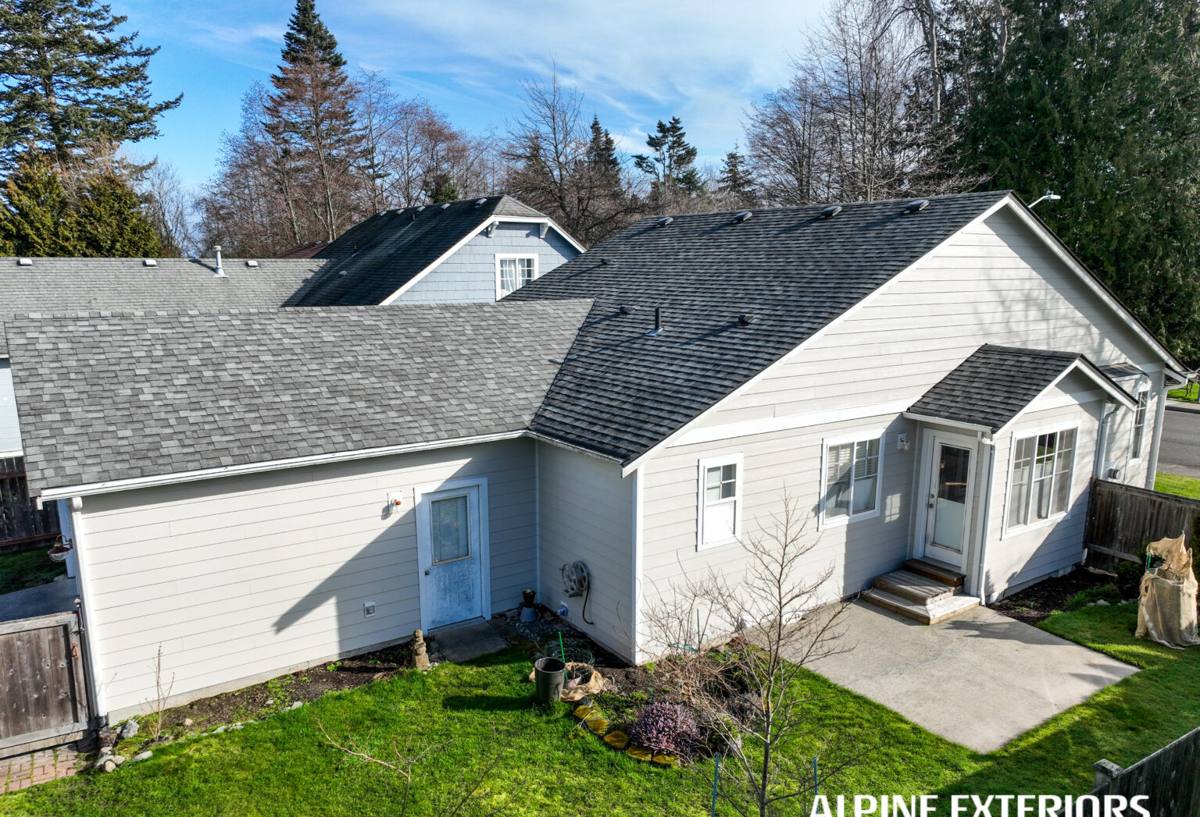
What Salt Air and Coastal Moisture Actually Do to a Roof
Corrosion Isn't Just a Cosmetic Problem
Bare or poorly coated fasteners and flashing near the coast will rust faster than the same materials used a few miles inland. Once corrosion starts at a fastener or seam, it doesn't stay contained — it works its way into the panel material and compromises the watertight seal around it. This is why the specific alloy, coating, and fastener hardware matter more here than they would on a roof further from the bay.
Wind-Driven Rain Finds Weak Details
Most roof leaks near the water don't come from a hole in a flat panel — they come from a flashing detail, a penetration, or a seam that was installed for a calmer climate. Chimneys, plumbing vents, skylights, and valleys are where wind-driven rain gets pushed sideways and tests every lap and seal on the roof.
Moss Season Runs Long
Cool, wet, and shaded conditions for much of the year give moss and algae plenty of time to establish themselves. On some roofing materials that means trapped moisture, lifted shingles, and granule loss. Metal roofing resists moss growth far better because there's no porous surface for spores to root into — but debris still needs to be kept off the roof and out of the valleys, or organic buildup can hold moisture against seams over time.
Metal Roofing Options: How They Compare for a Coastal Home
Not all metal roofing is the same product wearing different colors. The panel style, the metal itself, and the coating all affect how the roof performs specifically in a salt-air, high-rainfall setting like Birch Bay.
| Option | Best For | Coastal Considerations |
|---|---|---|
| Standing seam steel | Homeowners wanting the longest service life and cleanest look | Concealed fasteners mean fewer penetration points for water and corrosion to start at |
| Exposed-fastener steel panels | Budget-conscious projects, outbuildings, garages | Exposed screws need periodic inspection — gaskets wear over time and are a common source of small leaks near the water |
| Aluminum panels | Homes closest to the water or exposed to direct salt spray | Naturally corrosion-resistant, doesn't rust, but is softer and needs correct handling during install |
| Stone-coated steel | Homeowners wanting a shake or tile look with metal's durability | Heavier system — underlayment and structural details still need to match coastal exposure |
For most Birch Bay homes, we lean toward standing seam steel or aluminum specifically because they minimize the number of exposed fasteners and seams — the two things that cause the most trouble in salt air over a roof's lifetime.
What a Correct Metal Roof Installation Actually Involves
A metal roof is only as good as the details underneath and around it. The panels themselves are rarely where problems start — it's almost always the underlayment, flashing, fastening, and edge details. On a coastal job, we pay particular attention to:
- Underlayment rated for high-moisture, coastal conditions — not a builder-grade felt
- Corrosion-resistant fasteners and flashing that match the panel metal, so you don't get galvanic corrosion between dissimilar metals
- Properly lapped and sealed flashing at every penetration — chimneys, vents, skylights — since these are where wind-driven rain gets tested first
- Valley and eave detailing sized for real rainfall volume, not just code minimums
- Ventilation that lets the roof deck breathe, so trapped moisture doesn't condense under the panels
- Panel fastening patterns and clip spacing suited to coastal wind exposure, not just a standard inland spec
Skipping or shortcutting any one of these doesn't usually show up as a problem in year one. It shows up three, five, or ten years in, as a leak, a rust stain, or a panel that's started to lift — and by then it's a repair instead of a five-minute install detail.
Our Process, From First Call to Final Walkthrough
1. On-Site Assessment
We walk the roof, check the existing deck and ventilation, and look at how the home is oriented relative to the water and prevailing wind. That orientation affects where we'll pay extra attention to flashing and fastening.
2. Material and System Recommendation
We'll walk you through panel style, metal type, and coating options honestly — including trade-offs on cost, appearance, and long-term maintenance — rather than steering you toward whatever's easiest to install.
3. Written Scope and Estimate
You get a clear, written scope covering the underlayment, flashing, fastening approach, and cleanup — not just a panel price. This is where a lot of the "why did this cost more than the other guy's quote" confusion gets avoided up front.
4. Installation
We follow manufacturer specs for coastal exposure and our own detailing standards on top of that, especially around penetrations and edges. Weather windows matter here, and we plan around them rather than rushing a job into a rain system.
5. Final Walkthrough
We go over the finished roof with you, confirm ventilation and drainage are working as intended, and make sure you know what routine maintenance — if any — the system needs going forward.
What Affects the Cost of a Metal Roof in a Coastal Setting
Metal roofing costs more up front than asphalt shingles, and coastal-grade detailing adds to that compared to a standard inland install. The trade-off is a much longer service life and far less maintenance. Rough cost drivers for a Birch Bay project include:
| Factor | Why It Affects Cost |
|---|---|
| Panel material (steel vs. aluminum) | Aluminum typically costs more but resists corrosion better right at the waterline |
| Roof complexity | More valleys, penetrations, and roof planes mean more flashing labor |
| Existing roof condition | Deck repair or re-decking adds cost but is sometimes necessary before panels go on |
| Fastener and flashing spec | Coastal-grade, corrosion-resistant hardware costs more than standard hardware |
| Access and roof pitch | Steeper or harder-to-access roofs take longer and require more safety setup |
We'll always give you an honest range and explain what's driving it, rather than a flat number with no context. If a lower bid from another contractor is missing coastal-grade underlayment or fasteners, that's usually where the difference is coming from.
Moss, Debris, and Ongoing Roof Care Near the Bay
A properly installed metal roof needs very little maintenance, but "very little" isn't "none." In a moss-prone, coastal area like Birch Bay, we recommend:
- Clearing debris from valleys and gutters at least once or twice a year, since trapped organic material holds moisture against seams
- Trimming back overhanging branches that shade the roof and slow drying after rain
- A visual check after major windstorms for lifted flashing or debris impact
- Avoiding pressure washing or harsh chemical treatments that can damage coatings — a soft wash and rinse is usually all that's needed
This is a fraction of the upkeep an asphalt shingle roof needs in the same conditions, which is a big part of why metal holds up so well here over the long run.
Why It Matters That We Already Work in Birch Bay
A roof installed by a crew that hasn't worked this specific stretch of coastline will often be built to a generic spec — technically fine somewhere drier, but not accounting for what salt air and driving rain actually do here over time. Working regularly in Birch Bay and the surrounding Bellingham and Whatcom County area means we've seen how roofs in this environment age, what details hold up, and what shortcuts show up as problems a few years later. That's not a marketing point — it's the difference between a roof detailed for average conditions and one detailed for the conditions your home actually faces.
If you're weighing metal roofing for a home in Birch Bay, we're glad to come take a look, walk you through your options honestly, and put together a written estimate — no pressure, no obligation. Use the form below to get started.