 Bellingham Exterior
 Building Decks for Birchwood's Specific Conditions
Birchwood sits close enough to the water and the Whatcom County tree canopy that a deck here takes a different kind of beating than one built further inland or in a drier climate. Salt-laden air moving off the bay accelerates corrosion on fasteners and hardware. Long stretches of driving rain push moisture into every seam, joint, and screw hole. And the shade from mature trees combined with our wet fall-through-spring stretch means moss and algae get a real foothold on any horizontal surface that doesn't shed water well. None of this is exotic — it's just the reality of building outdoors in this part of Washington — but it means a deck built the way you'd build one in Arizona or even eastern Washington won't hold up the same way out here.
We build decks in Birchwood the way local conditions actually require: with drainage as a first priority, hardware rated for corrosion resistance, and material choices matched to how much upkeep a homeowner actually wants to do. That's the difference between a deck that looks good for two summers and one that's still solid in fifteen years.
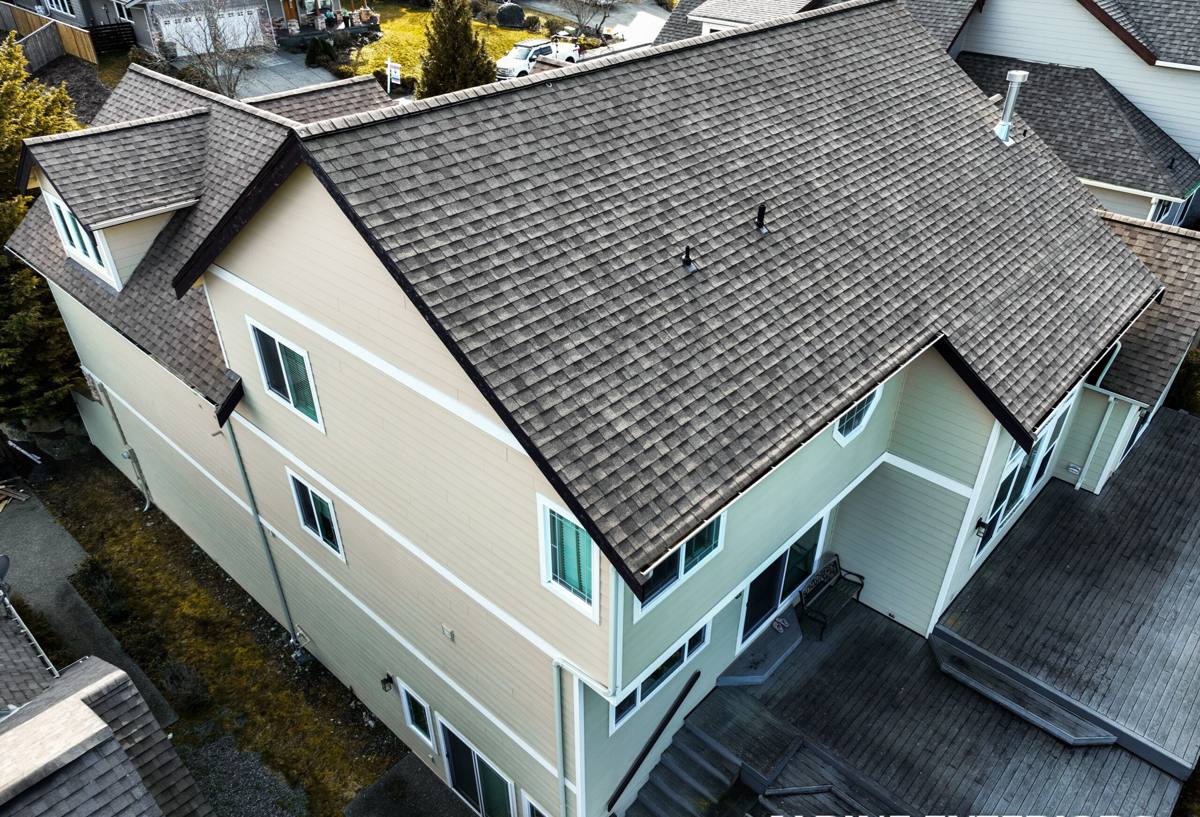
What a Correctly Built Deck Needs in This Climate
Footings and Framing
Everything starts below the decking boards. Footings need to be sized and set to the depth local code requires so they're not subject to frost heave or soil movement, and the framing lumber needs to be rated for ground contact or exposure, not just "treated" in a generic sense. We see a lot of older decks around Whatcom County where the visible boards were replaced at some point but the framing underneath was never inspected — and that's usually where the real rot is hiding.
Ledger Attachment and Flashing
The ledger board — where the deck attaches to the house — is the single most common failure point on decks in wet climates. If it's not flashed correctly to shed water away from the house rim joist, moisture gets trapped between the ledger and the siding and rots both from the inside out, often for years before anyone notices. Proper flashing, correct fasteners, and a small air gap or drainage path at that connection point are non-negotiable on every deck we build.
Fasteners and Hardware
Coastal air corrodes standard fasteners faster than most homeowners expect. We use hot-dip galvanized or stainless hardware rated for the environment, and we make sure the metal in the joist hangers, structural screws, and post bases is compatible with whatever treated lumber or composite decking is being used — mixing incompatible metals with certain treated wood chemicals speeds up corrosion significantly.
Drainage and Slope
A deck surface needs a slight slope away from the house so water doesn't pool. Between boards, spacing needs to be consistent enough to let water and debris pass through rather than collecting. Underneath, we think about how air and water move through the substructure, because a deck that stays damp underneath for weeks at a time is a deck that grows moss, mildew, and eventually rot, regardless of what's on top.
Choosing the Right Decking Material for Birchwood
There's no single "best" decking material — it depends on how much maintenance a homeowner wants to take on, budget, and how much sun versus shade the deck gets. In a moss-prone, shaded, wet environment like Birchwood, some materials simply require more attention than others to stay safe and good-looking.
| Material | Moss/Algae Resistance | Maintenance | Typical Lifespan |
|---|---|---|---|
| Pressure-treated wood | Low — needs regular cleaning and sealing | Annual cleaning, periodic staining/sealing | 10-15 years with upkeep |
| Cedar | Moderate — natural oils help but fade over time | Cleaning and re-oiling every 1-2 years | 15-20 years with upkeep |
| Capped composite | High — sheds moisture, resists staining | Occasional washing, no sealing/staining | 25-30+ years |
| PVC decking | High — fully synthetic, non-porous surface | Occasional washing | 25-30+ years |
We install all of these depending on what a homeowner wants. Wood costs less up front and has a natural look many people prefer, but it asks for real annual maintenance in this climate or it will gray, stain, and eventually harbor moss in the grain. Capped composite and PVC cost more initially but shed water and resist organic growth far better, which matters a lot under tree cover or on a north-facing deck that doesn't get much direct sun to dry out. We'll walk through the honest trade-offs for your specific site rather than push one product on everyone.
Our Deck Building Process
- Site assessment — We look at grade, drainage, sun/shade exposure, existing structure (for replacements), and how the house's siding and roofline interact with where the deck will attach.
- Design and permitting — We handle the layout, size, and structural plan, and pull the permits required by the local jurisdiction for footings, framing, and guardrails.
- Footings and framing — Footings set to proper depth, ledger flashed correctly, framing built to span and load requirements with corrosion-resistant hardware throughout.
- Decking installation — Boards installed with consistent spacing for drainage and airflow, using fasteners matched to the decking material.
- Railings and stairs — Built to code for height and baluster spacing, with the same attention to weatherproof hardware.
- Final walkthrough — We go over the finished deck with you, including what maintenance (if any) the material you chose will need going forward.
Moss, Algae, and Long-Term Care
Even a well-built deck needs some ongoing attention in a climate that stays wet and shaded for months at a stretch. The good news is that most of it is straightforward if it's done consistently rather than left until moss has taken hold.
- Sweep leaves, needles, and debris off the deck surface regularly, especially in fall — trapped organic matter holds moisture and feeds moss growth.
- Rinse or lightly wash the deck a few times a year to remove the fine layer of algae and pollen that builds up before it becomes a slip hazard.
- Check that gaps between boards stay clear so water can drain through rather than pooling.
- For wood decks, re-seal or re-stain on the schedule the product calls for — usually every one to two years in this climate — before graying and moisture damage set in.
- Trim back overhanging branches where practical to let more sun and air reach the deck surface.
- Inspect railings, stair connections, and the ledger area once a year for any soft spots, rust streaks, or gaps in flashing.
Common Problems We See on Older Birchwood Decks
When we're called out to repair or replace an existing deck in this area, a handful of issues show up again and again:
- Ledger boards rotted from missing or improperly installed flashing, sometimes with damage extending into the house rim joist.
- Rusted or corroded fasteners and joist hangers, particularly on decks built with standard hardware instead of coastal-rated materials.
- Moss and algae buildup on boards that were never cleaned or sealed, leading to slick, deteriorating surfaces.
- Undersized or improperly set footings that have shifted, causing the deck to feel bouncy or uneven.
- Railings that no longer meet current safety height or spacing standards, especially on decks built or altered without a permit.
Most of these are preventable with correct construction the first time, and several are things a homeowner can catch early with a simple annual inspection before they turn into structural repairs.
Permits, Codes, and Doing It Right
Most elevated decks in Bellingham and unincorporated Whatcom County require a building permit, and inspections at key stages — footings, framing, and final — are part of that process. Guardrails are required once a deck surface reaches a certain height above grade, and there are specific requirements for railing height and the spacing between balusters so a small child can't slip through. Skipping the permit process might save time up front, but it creates real problems at resale, with insurance, and with safety if the structure wasn't inspected. We pull the proper permits and build to the code that applies to your property, not around it.
What Cost Factors to Expect
Every deck project is different, but the same handful of factors drive most of the cost difference between projects of similar size:
| Factor | Why It Matters |
|---|---|
| Decking material | Wood costs less upfront; composite and PVC cost more but reduce long-term maintenance |
| Deck height and footing depth | Taller decks and deeper footings mean more structural work and material |
| Site access and grade | Sloped or hard-to-access lots take more labor to prep and build safely |
| Railing style | Cable, glass, and composite railing systems cost more than standard wood or metal baluster railings |
| Ledger and structural condition | Replacement projects sometimes uncover rim joist or framing damage that needs repair before decking can proceed |
We give straightforward, itemized estimates so you know what's driving the number, and we'll flag any structural surprises before we proceed rather than after.
Why a Crew That Already Works in Birchwood Matters
Building decks in this specific pocket of Whatcom County means understanding how the local mix of tree cover, moisture, and salt air actually affects a structure over time — not just in the first year, but in year eight or year fifteen. We know what hardware holds up here, what wood species and finishes actually perform under the shade and rain patterns typical of Birchwood lots, and how to build drainage and flashing details that keep water moving instead of sitting. We're also familiar with the local permitting process for Bellingham and Whatcom County, which keeps projects moving instead of stalling on paperwork. That local, repeated experience is the difference between a deck built to a generic national standard and one built for the conditions it will actually face outside your door.
Get a Free Estimate
If you're planning a new deck, replacing an aging one, or just want an honest opinion on whether your current deck is holding up the way it should, we're happy to take a look. Reach out for a free, no-pressure estimate using the form below, and we'll walk the site with you and talk through what makes sense for your home in Birchwood.