 Bellingham Exterior
 Metal Roofing Built for Birchwood's Weather, Not Just Its Rooftops
Birchwood sits close enough to the water and tree cover that its roofs take a different kind of beating than homes further inland. Salt-laden air moves through on a regular basis, rain doesn't just fall here — it drives sideways under wind, and shaded lots hold moisture long after a storm has passed. Add in a moss season that can stretch for months out of the year, and you've got a set of conditions that will find every weak point in a roofing system, metal or otherwise. We install and repair metal roofing specifically with those conditions in mind, because a roof that performs well in a dry climate can still fail early here if it isn't detailed correctly.
This page is about metal roofing for homes in the Birchwood area specifically — what the local climate demands, what a correct installation actually involves, and how our process works from first look to final walkthrough.
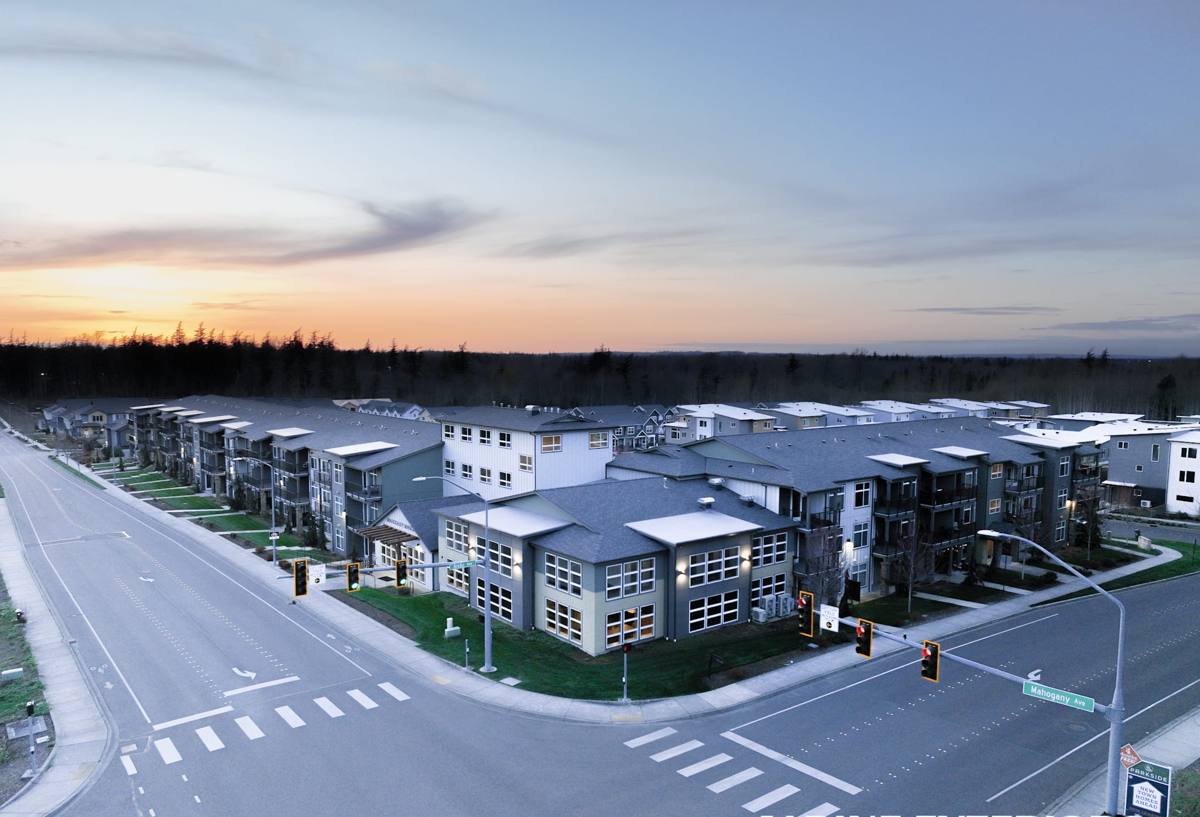
What Bellingham's Coastal Climate Does to a Roof Over Time
Whatcom County weather isn't extreme in the way that hailstorms or heavy snow loads are extreme elsewhere. It's persistent, and that's the part homeowners underestimate. A roof here doesn't get hit hard once — it gets worked on slowly, season after season, by three things in particular:
Salt Air and Corrosion
Even a few miles from saltwater, airborne salt accelerates corrosion on any exposed metal — fasteners, flashing, cut edges of panels. It's not usually the panel finish that fails first; it's the small metal details that get overlooked. Fastener quality and flashing material matter more here than they would in a dry inland climate.
Driving Rain
Wind-driven rain doesn't behave like straight-down rain. It gets pushed up under laps, around penetrations, and into any gap that a calmer climate could get away with. Underlayment choice and lap details have to account for water moving sideways and even slightly upward under wind pressure, not just downhill with gravity.
Moss and Trapped Moisture
Shaded, tree-heavy lots — common throughout Birchwood — stay damp longer after rain. That moisture supports moss and organic growth, which on a roof isn't just cosmetic. Moss holds water against the roof surface, works into laps and fastener heads, and on a poorly ventilated roof, keeps the deck below damp far longer than it should be.
What a Correct Metal Roof Installation Actually Involves
Metal roofing has a reputation for being low-maintenance, and it generally is — but only when it's installed correctly for the conditions it's going into. In a climate like Bellingham's, that means paying close attention to a handful of details that don't show up in a sales brochure:
- Underlayment: A high-quality synthetic or self-adhered underlayment underneath the panels, not a minimum-code product, to give the deck a second line of defense against wind-driven rain and any water that gets past the panels.
- Fasteners and flashing metal: Corrosion-resistant fasteners and flashing matched to the panel material, so you don't get galvanic corrosion where two dissimilar metals meet.
- Ventilation: Proper intake and exhaust airflow so moisture from inside the house doesn't get trapped against the underside of the roof deck — this matters as much for metal as it does for any other roofing material.
- Panel laps and seams: Correct overlap and seam sealing so wind-driven rain can't work its way sideways or upward under a panel edge.
- Penetration detailing: Pipe boots, vents, and chimney flashing are usually where a roof leaks first — these get more attention than the flat field of the roof does.
- Edge and eave protection: Drip edge and eave flashing sized and installed to shed water cleanly, especially where gutters can back up during heavy rain.
Skip any one of these and the roof may still look fine for a few years. The problems show up later, usually as a slow leak that's hard to trace back to its source.
Choosing a Metal Roofing System for This Area
Not every metal roofing product performs the same way in a wet, salt-influenced climate. We'll walk through the real trade-offs with you rather than push one system, but here's a general comparison of what's commonly used:
| System | Typical Strengths | Considerations in This Climate |
|---|---|---|
| Standing seam (concealed fastener) | Very clean water-shedding profile, long service life, no exposed fasteners to maintain | Higher upfront cost; installation quality is critical since laps and seams do the sealing work |
| Exposed-fastener metal panels | Lower material cost, straightforward installation | Fasteners and their washers are wear points — need periodic checking and eventual replacement in a wet, salty climate |
| Metal shingles/shakes | Traditional appearance with metal's durability | More seams and interlocks than standing seam, so detailing at laps matters more |
| Steel vs. aluminum substrate | Steel: strength, wide finish options. Aluminum: naturally corrosion-resistant | Aluminum has an edge in salt-air exposure; steel needs a well-maintained protective coating |
For most Birchwood homes with meaningful salt-air exposure and tree cover, we lean toward systems and finishes with strong corrosion resistance and fewer exposed fasteners — but the right call depends on your roof's specific exposure, budget, and how long you plan to be in the home.
How We Handle Metal Roofing Projects in Birchwood
Our process is the same whether it's a full replacement or a targeted repair — the goal is to know exactly what we're dealing with before any work starts.
1. On-Site Inspection
We look at the existing roof, the deck condition underneath if accessible, ventilation setup, and how the roof's slopes and shading line up with typical wind and rain exposure for that specific lot. Two homes a block apart in Birchwood can have very different exposure depending on tree cover and orientation.
2. Straightforward Recommendation
You get an honest read on what your roof actually needs — full replacement, a repair, or in some cases just better ventilation or flashing work rather than a full system. We explain the reasoning, not just the price.
3. Written Estimate
Materials, labor, and scope spelled out clearly, with the panel or system options relevant to your home and budget.
4. Installation
Proper tear-off or deck prep where needed, correct underlayment, and careful attention to the flashing and penetration details that matter most in this climate — the parts that don't show up in a quick visual inspection five years later but determine whether the roof leaks.
5. Final Walkthrough
We go over the finished work with you, including any maintenance points specific to your roof — moss-prone areas, gutter tie-ins, or anything else worth keeping an eye on.
Moss, Debris, and Realistic Maintenance
Metal roofing resists moss growth far better than composition shingles, but "resists" isn't "immune." Debris still collects in valleys and against any obstruction, and shaded sections can still stay damp longer than sun-exposed ones. A short annual check — clearing debris, confirming gutters and downspouts are flowing, and looking at penetration seals — goes a long way toward getting the full service life out of the system. We can walk you through what to watch for on your specific roof, or handle that check for you.
Common Problems We See on Metal Roofs in This Area
- Leaks at pipe boots and vent flashing rather than the panel field itself
- Fastener backing out or corroding on exposed-fastener panel systems
- Trapped moisture and condensation from inadequate attic or roof-deck ventilation
- Moss and organic buildup holding moisture against laps and seams in shaded sections
- Improper flashing where a metal roof ties into a wall, chimney, or dissimilar roofing material
Most of these trace back to installation shortcuts rather than the metal itself failing — which is exactly why installation detail matters more than which brand of panel you choose.
What Drives the Cost of a Metal Roof
| Factor | Why It Matters |
|---|---|
| Roof size and complexity | More valleys, penetrations, and roof planes mean more flashing work and labor time |
| Panel system and material | Standing seam typically costs more than exposed-fastener panels; steel vs. aluminum affects both cost and corrosion resistance |
| Tear-off vs. overlay | Removing an old roof and inspecting the deck adds cost but avoids covering up existing problems |
| Ventilation and deck repair | Any deck rot or ventilation upgrades found during tear-off add to scope but are worth addressing while the roof is open |
| Finish and warranty tier | Higher-grade paint finishes cost more upfront and hold up better against salt air and UV over time |
We'll always give you a broad, honest range up front and firm numbers once we've actually seen the roof — no surprise line items added after work starts.
Questions Worth Asking Before You Hire Anyone
- Are you licensed and insured to work in Washington, and can you provide proof?
- What underlayment and fastener materials do you use, and why those specifically?
- How do you handle flashing at penetrations, walls, and valleys?
- What's your plan for roof ventilation as part of the project?
- Do you carry both a material warranty and a workmanship warranty, and what's the difference between them?
- Have you worked on homes in this specific neighborhood or with similar tree/salt exposure?
Why a Crew That Already Works in Birchwood Matters
Roofing crews that mostly work drier, inland climates sometimes install to a general spec rather than the specific conditions a coastal Whatcom County roof faces. A crew that regularly works in and around Birchwood already knows how wind-driven rain behaves on these lots, where moss tends to build up first, and which flashing details actually hold up to salt air over years, not just through the first winter. That local pattern recognition is the difference between a roof that looks right at installation and one that still performs right ten years later.
If you're considering a metal roof for your Birchwood home — or want an honest opinion on whether your current roof needs replacement, repair, or just better maintenance — we're happy to take a look and give you a straightforward assessment. Reach out for a free, no-pressure estimate using the form below.