 Bellingham Exterior
 Why Decks in Blaine Wear Differently Than Decks Inland
Blaine sits right where the Salish Sea meets Whatcom County's wettest weather patterns, and that combination is hard on outdoor structures. A deck here doesn't just deal with rain — it deals with salt-laden air rolling off Drayton Harbor and Semiahmoo Bay, near-constant humidity for much of the year, and a moss and algae season that can stretch from October through April. Fasteners corrode faster. Wood fibers stay damp longer between dry spells. And any spot where water can collect — a low board, a clogged gap, a shaded corner under a tree — becomes a slow-motion rot problem long before it looks like one from a distance.
None of this means a deck in Blaine is doomed to fail early. It means the repair work has to account for salt exposure and moisture cycling specifically, not just patch what's visibly broken. A repair that would hold up fine in a drier part of Whatcom County can fail within a season or two out here if it ignores how this coastal environment actually behaves.
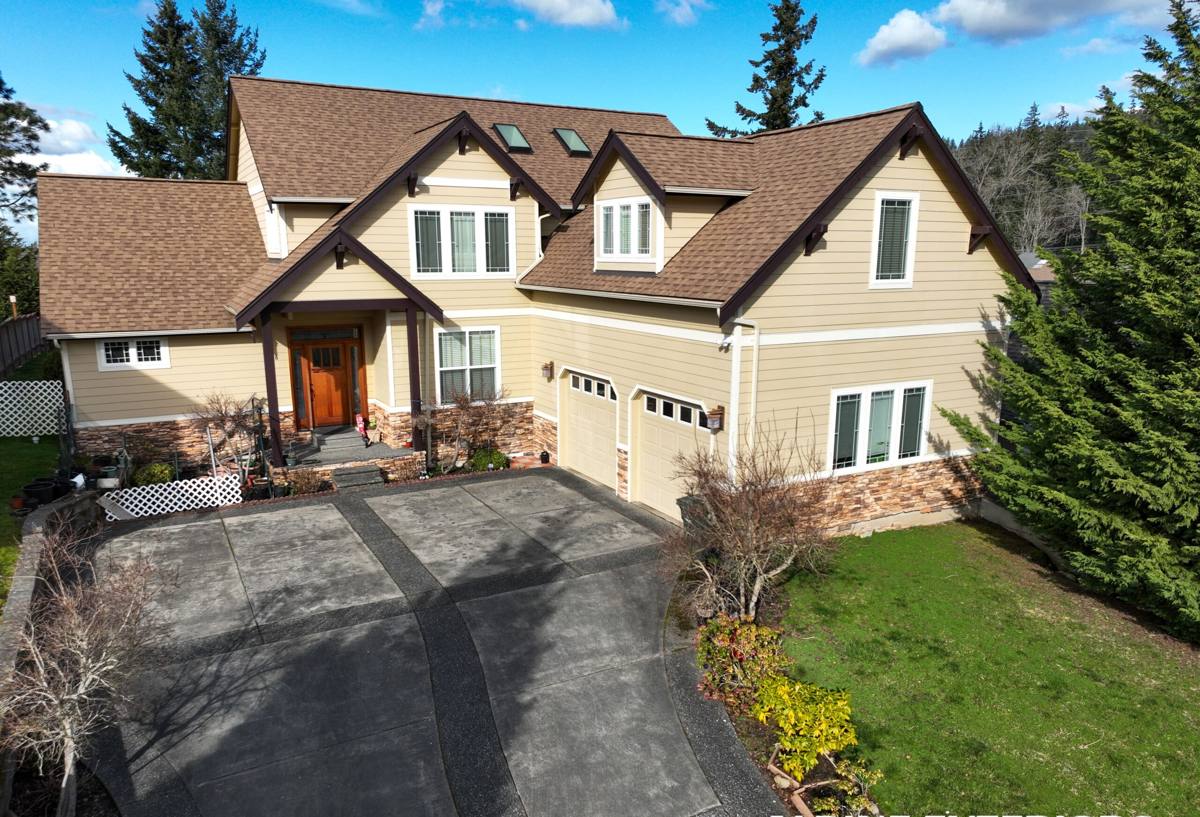
How Salt Air, Rain, and Moss Actually Damage a Deck
Salt Air and Metal Fasteners
Salt in the air accelerates corrosion on nails, screws, joist hangers, and bolts — especially fasteners that weren't rated for coastal or treated-lumber use in the first place. Corroded fasteners lose grip strength gradually, which means a board can look attached while actually being loose underneath. This is one of the most common issues we find on older Blaine decks that were built with standard hardware instead of coastal-grade stainless or hot-dip galvanized fasteners.
Driving Rain and Trapped Moisture
Wind-driven rain doesn't just fall on a deck, it gets pushed sideways and up into ledger connections, under railings, and into any seam that isn't properly flashed or sealed. Once water gets behind a ledger board or into a post base, it can sit there for days without ever being visible from the top. That's how rot starts at the structural core of a deck while the surface boards still look fine.
Moss, Algae, and Surface Breakdown
A long moss season means organic growth has months to establish itself on decking, especially in shaded areas or spots that don't get much airflow. Moss and algae hold moisture against the wood surface constantly, which softens fibers, breaks down protective coatings, and makes boards slicker and more dangerous to walk on. Left untreated, this surface breakdown works its way deeper and turns a cleaning job into a board-replacement job.
Signs a Blaine Deck Needs Repair Now, Not Later
Some deck problems are obvious. Others hide until they've become expensive. Here's what we tell Blaine homeowners to check for, or have us check for them:
- Soft, spongy, or bouncy spots when you walk across the deck
- Fasteners that are visibly rusted, backing out, or stained with rust streaks on the wood
- Gaps or separation where the ledger board meets the house
- Railings or posts that wobble or flex under moderate pressure
- Persistent moss or algae that comes back quickly after cleaning
- Discoloration, graying, or a rough, splintering texture on boards
- Visible daylight or water pooling between boards that didn't used to be there
- Stairs that feel less solid than the rest of the deck
Any one of these on its own might be minor. Several at once, especially involving the ledger, posts, or joists, usually means the structure needs a real inspection, not just a surface fix.
What an Honest Deck Repair Actually Involves
A correct repair starts below the decking, not on top of it. Replacing a few gray boards without checking what's underneath is how homeowners end up paying for the same repair twice. Our process focuses on three layers, in this order:
1. Structural Assessment
We check the ledger connection, posts, footings, and joists first. This is where the deck's actual load-bearing integrity lives, and it's where salt air and trapped moisture do the most damage — often out of sight. If a footing has shifted or a post base has rotted, no amount of new decking will fix the underlying problem.
2. Fastener and Hardware Condition
Given how corrosive the local air can be, we specifically check whether the hardware on an existing deck is rated for coastal exposure. If it isn't, repair work is a chance to upgrade to stainless steel or heavy hot-dip galvanized fasteners and connectors, which cost more upfront but hold up far longer against salt exposure than standard hardware.
3. Decking, Railings, and Surface
Once the structure and hardware are sound, we address the visible layer: rotted or splintering boards, damaged railings, worn stair treads, and any moss-affected areas that need more than a surface clean. We replace what's actually compromised rather than defaulting to a full resurface when it isn't warranted.
Repair Materials: What Holds Up in Blaine's Climate
Material choice matters more here than in drier inland areas, because the repair needs to survive the same salt-and-moisture cycle that damaged the original deck. Here's how the common options compare for repair work specifically:
| Material | Moisture & Salt Behavior | Repair Considerations |
|---|---|---|
| Pressure-treated lumber | Resists rot well when properly sealed; still needs re-sealing periodically in this climate | Cost-effective for structural repairs; requires coastal-rated fasteners |
| Cedar | Naturally moisture-resistant, ages gracefully, but softer surface | Good for visible board replacement where appearance matters; needs regular maintenance |
| Composite decking | Doesn't rot or absorb water like wood, resists moss staining better on the surface | Higher upfront cost; substructure underneath still needs to be sound wood or approved framing |
| Standard (non-coated) hardware | Corrodes faster in salt air | We recommend upgrading during any repair, not just replacing like-for-like |
We don't push one material as a blanket solution. The right call depends on what's being repaired, how much of the deck is affected, and what the homeowner wants long-term — matching materials to the existing deck, or using the repair as an opportunity to upgrade weak points.
Repair vs. Replacement: How We Help You Decide
Not every deck problem calls for a full rebuild, and not every repair is worth doing if the structure underneath is too far gone. We walk homeowners through the real trade-offs rather than defaulting to the bigger job:
| Factor | Favors Repair | Favors Replacement |
|---|---|---|
| Structural framing | Solid, no significant rot at posts/joists | Widespread rot at ledger, posts, or footings |
| Extent of damage | Isolated boards, railings, or stairs | Damage spread across most of the deck surface |
| Age of the deck | Newer deck with a few problem areas | Older deck already near the end of its practical life |
| Fastener condition | Hardware can be selectively upgraded | Hardware failure is widespread throughout |
When a deck is a genuine candidate for repair, we say so plainly. When it isn't, we'll tell you that too, along with why, before any work begins.
Our Deck Repair Process
- On-site inspection — we check the structure first, not just the surface, including ledger, posts, footings, and hardware condition
- Written assessment — a clear explanation of what's damaged, what's causing it, and what's actually needed to fix it
- Repair plan and estimate — options broken down by scope, with material trade-offs explained honestly
- The repair itself — structural work first, then hardware upgrades where needed, then decking and railings
- Final check — we confirm the deck is solid, safe, and the repair addresses the actual cause, not just the symptom
Why a Crew That Already Works in Blaine Matters
Deck repair looks different depending on where a home sits. A crew that mostly works drier, inland jobs may not think twice about hardware grade or ledger flashing, because it isn't usually the deciding factor there. In Blaine, it often is. Working regularly in this part of Whatcom County means we already know which failure patterns show up here — corroded fasteners, moisture trapped behind ledgers, moss-driven surface breakdown — and we build the repair around preventing a repeat, not just fixing what's visible today.
It also means we're realistic about timing. Whatcom County's wet season isn't the ideal window for certain repair work, and we'll tell you if it makes sense to schedule around drier stretches rather than rush a repair that needs proper cure or dry time to hold up.
Keeping a Repaired Deck Solid Afterward
A good repair buys time, but the same conditions that caused the original damage don't go away. A few habits make a real difference in this climate:
- Clean moss and algae buildup before it has months to soften the wood surface
- Keep gutters and downspouts clear so runoff isn't draining directly onto the deck
- Re-seal or re-stain wood decking on a regular schedule, not just when it looks faded
- Check railings and stair connections periodically for looseness, especially after storms
- Trim back vegetation that keeps shaded areas of the deck damp longer than the rest
If you're noticing soft boards, rust stains, wobbly railings, or a deck that just doesn't feel as solid as it used to, it's worth having someone look at it before those signs turn into a structural issue. We offer free, no-pressure estimates for deck repair in Blaine — just fill out the form below and we'll take a look.