 Bellingham Exterior
 Blaine's Roofs Take a Different Kind of Beating
Blaine sits right where Whatcom County meets the water, and that location shapes what happens to a roof here. Homes close to Semiahmoo Bay and Drayton Harbor get wind off the water that regular inland Bellingham roofs don't see as often, along with salt-laden air that speeds up corrosion on fasteners, flashing, and metal roof edges. Add in the long, wet moss season that Northwest Washington is known for, and you've got a combination that wears roofs down faster and hides damage longer than homeowners expect.
A storm doesn't have to be dramatic to cause real damage. A few hours of sideways rain and gusty wind can lift shingle tabs, drive water under flashing, or knock debris loose from a tree that's been leaning over the roofline for years. The problem is that storm damage is often invisible from the ground. That's where a crew that actually works this area — not one that showed up after a headline storm and left before winter — makes the difference between a repair that holds and one that fails again next season.
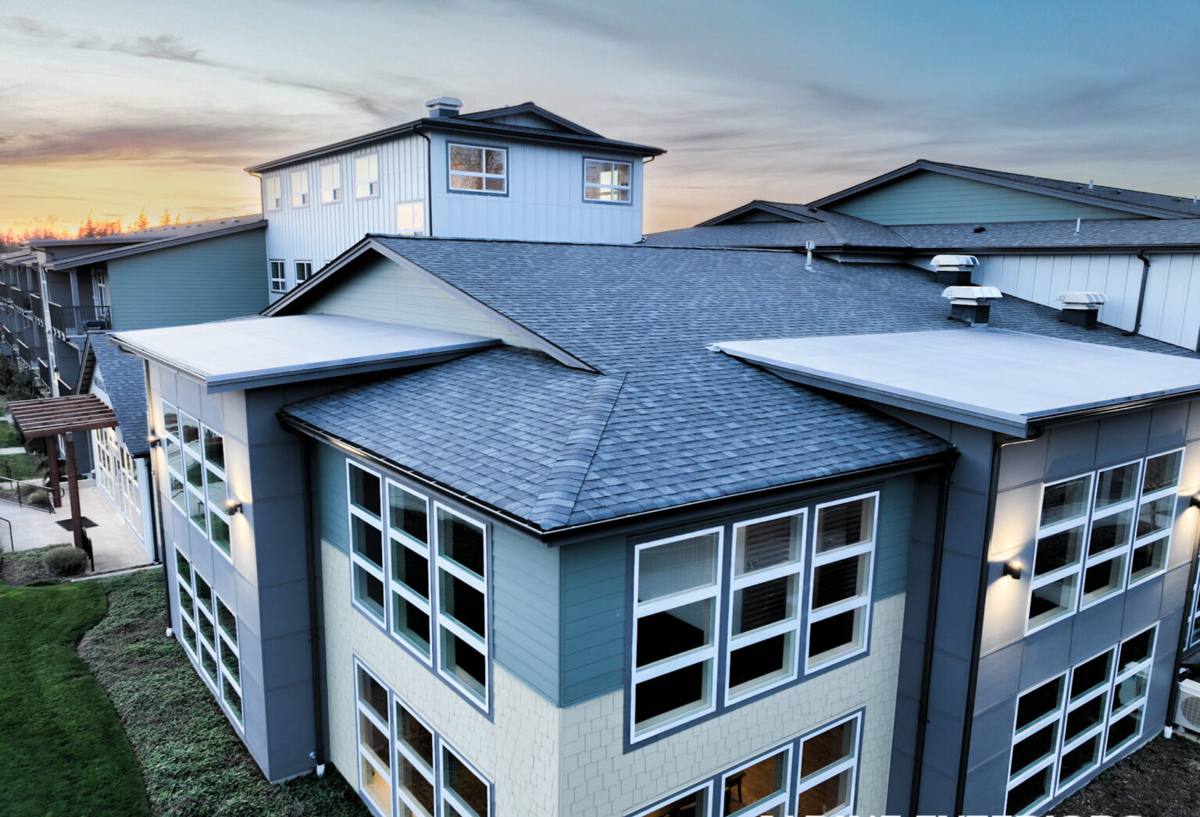
What Actually Counts as Storm Damage
Not every roof problem after a windy week is "storm damage" in the way an insurance adjuster or a roofer means it. It helps to know the categories, because it changes both the repair approach and, often, whether a claim makes sense.
Wind Damage
Wind doesn't just rip shingles off — more often it lifts the sealant bond along the edges of shingles without fully detaching them. That creates a gap that lets wind-driven rain get underneath during the next storm, even though the roof looks intact from the driveway. This is the most common storm damage we find on Blaine roofs, precisely because of the sustained wind exposure homes near the water get.
Impact Damage
Falling branches, wind-thrown debris, or hail (less common here but not unheard of) can bruise or puncture shingles, dent metal flashing and vents, or crack skylights. Impact damage is usually easier to see up close but easy to miss from a ladder-free look.
Flashing and Penetration Failures
Flashing around chimneys, vents, and roof-to-wall transitions is the most common point of leak entry after a storm, especially once salt air has started corroding the metal or the sealant has aged and cracked. A storm doesn't have to damage the flashing itself — it just has to find the weak point that was already forming.
Water Intrusion Without Visible Exterior Damage
Sometimes the roof surface looks fine, but water finds its way in through a compromised underlayment, a nail pop, or ice-and-water shield that was never installed at a vulnerable valley. This is why an inspection needs to include the attic, not just the roof surface.
Our Storm Damage Repair Process
We keep the process straightforward, because after a storm the last thing a homeowner needs is more confusion.
1. Fast, Honest Inspection
We walk the roof (weather permitting) and check the attic from inside, looking for daylight, water staining, or damp insulation. We document everything with photos, whether or not you plan to file an insurance claim.
2. Emergency Mitigation
If there's active leaking or exposed decking, we tarp the affected area the same visit to stop further water intrusion. This matters most during Whatcom County's wet fall and winter stretch, when a delay of even a few days can mean soaked insulation or drywall damage.
3. Clear Scope and Options
We explain what's actually damaged versus what's just aged, and we give you a repair scope in plain language — no pressure to replace a whole roof when a targeted repair will genuinely hold up.
4. The Repair Itself
We match materials as closely as possible, replace underlayment and flashing where it's compromised (not just where it's visibly torn), and re-seal or replace shingle courses as needed. We don't consider a storm repair finished until the repaired section can shed water and wind the same as the rest of the roof.
5. Follow-Up
We check back after the next significant rain event when possible, especially on repairs done during peak storm season, to confirm nothing was missed.
Repair Approach: Matching the Fix to the Damage
Not every storm-damaged roof needs the same level of work. Here's how we think through the options with homeowners.
| Situation | Typical Approach | What Drives the Decision |
|---|---|---|
| Isolated wind-lifted shingles, roof under 10-12 years old | Targeted shingle and sealant repair | Surrounding shingles are still flexible enough to reseal and match |
| Damaged flashing at chimney, vent, or wall transition | Flashing replacement, not just re-caulking | Caulk is a temporary fix; proper flashing lasts far longer in salt air |
| Impact damage scattered across multiple slopes | Section-by-section shingle replacement | Age and condition of the existing roof, plus how many slopes are affected |
| Storm damage on a roof already near end of life (15-20+ years) | Full re-roof discussion | Repeated repairs on an aging roof rarely make financial sense |
| Water intrusion with no clear exterior damage | Underlayment and decking inspection first | Surface repair won't fix a problem originating below the shingles |
We'll always tell you honestly which column your roof falls into — including when a repair is the right call and a full replacement isn't necessary yet.
Insurance Claims: What Homeowners Should Know
Wind and storm damage claims are common in this part of Washington, but the process goes smoother when you have clear documentation from the start.
- Document before you clean up. Photos of debris, damaged shingles on the ground, and visible roof damage help support a claim.
- Get an independent inspection. An adjuster's job is to assess the claim for the insurer; a roofer's job is to tell you what's actually damaged. Both perspectives are useful, but they're not the same thing.
- Understand the difference between "storm damage" and "wear." Insurance covers sudden, storm-caused damage — not roofs that were already failing from age or lack of maintenance. An honest inspection tells you which one you're dealing with before you file.
- Keep records of prior maintenance. A roof with a documented maintenance history is easier to support in a claim than one with unknown upkeep.
We're glad to provide a written scope and photo documentation that you can bring to your insurer, whether or not we end up doing the repair work.
The Moss and Salt Air Factor
Storm damage and long-term moss/salt exposure often show up together, because both take advantage of the same weak points — lifted shingle edges, aging sealant, and compromised flashing. A storm repair that ignores moss buildup or corrosion nearby is only solving part of the problem.
Whatcom County's moss season runs long, and roofs near the water get an added layer of salt residue that keeps surfaces damp longer after rain. When we're repairing storm damage, we also look at:
- Moss growth on north-facing slopes or shaded valleys near the repair area
- Granule loss on aging shingles, which accelerates once moss starts holding moisture against the surface
- Corrosion on nail heads, flashing, and metal roof-to-wall details from salt air exposure
- Gutter and downspout function, since clogged gutters near a storm-damaged section can send water right back under the repair
Addressing these alongside the storm repair costs little extra and meaningfully extends how long the fix lasts.
Signs You Need Storm Damage Repair Now
Some damage is obvious. A lot of it isn't. After any significant wind or rain event, it's worth checking for:
- Shingles that look "lifted" or slightly out of line, even if none are missing
- Granules collecting in gutters or at downspout outlets
- New water stains on ceilings or in the attic, especially near chimneys or vents
- Visible gaps or cracked sealant around flashing
- Dented or bent metal on vents, flashing, or gutter edges
- Debris or branch strikes on the roof surface, even if the roof "looks fine" underneath
If you notice any of these, it's worth getting a look before the next storm rolls through — small gaps get bigger fast once wind-driven rain finds them repeatedly.
Why a Blaine-Familiar Crew Matters
Storm damage repair isn't just about roofing skill — it's about knowing how the local exposure actually behaves. A crew that regularly works Blaine and the surrounding Whatcom County coastline knows which slopes catch the worst of the wind off the water, how fast moss re-establishes itself in the shaded, damp corners common to this area, and how salt air shortens the working life of standard fasteners and flashing compared to homes further inland.
That local familiarity also means faster response after a storm, since we're not driving in from out of the area, and a better sense of realistic timelines around Whatcom County's permitting and weather windows. A roof repaired by a crew that understands these conditions is repaired to actually hold up in them — not just patched to pass a quick look.
Get a Straightforward, No-Pressure Estimate
If a recent storm has you wondering about your roof, or you just want a second opinion before filing an insurance claim, we're happy to take a look. There's no cost and no pressure — just a clear, honest assessment of what's actually going on up there and what it would take to fix it right. Use the form below to request your free estimate.