 Bellingham Exterior
 Decking Built for Barkley's Side of Bellingham
Barkley sits close enough to the water and the wet Pacific Northwest air that it gets the full range of what Whatcom County weather can throw at an outdoor structure — salt-laden air drifting in off Bellingham Bay, long stretches of driving rain through fall and winter, and shaded, damp corners where moss and algae take hold and never really let go. A deck here isn't just a place to put a grill and a couple of chairs. It's a structure that has to shed water, resist corrosion, and stay safe underfoot for most of the year, not just the dry months. Composite decking, installed correctly for this specific climate, is one of the few decking options that holds up to that combination without demanding constant upkeep from the homeowner.
This page is about composite decking specifically for Barkley homes — what the local climate actually does to a deck over time, what a correct installation looks like here, and why the details matter more in this neighborhood than they might somewhere drier.
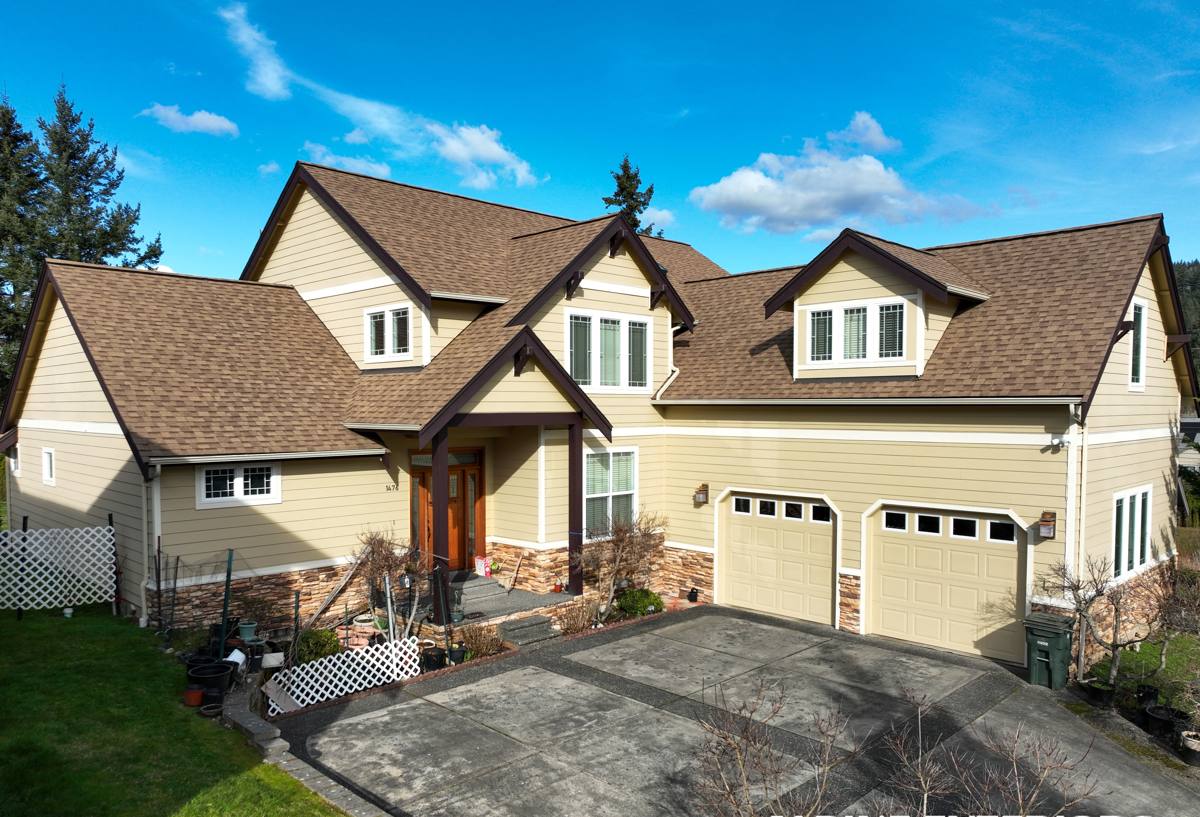
What Whatcom County Weather Does to a Deck Over Time
Every deck in Bellingham deals with rain. What makes Barkley and the surrounding area more demanding is the combination of moisture, salt exposure, and shade that keeps surfaces damp for days at a stretch.
Salt Air and Fasteners
Proximity to the bay means a fine amount of salt in the air, even miles inland. Salt accelerates corrosion in exposed metal — hardware, brackets, and fasteners that aren't rated for coastal exposure will rust and weaken years before they should. This matters just as much for a composite deck as a wood one, because the structure underneath is still wood framing held together with metal connectors.
Driving Rain and Board Movement
Wind-driven rain doesn't just fall straight down — it gets pushed sideways into railings, fascia, and the gaps between boards. Decking material that isn't dimensionally stable will swell, cup, or gap unevenly as it absorbs and releases moisture through the wet season. Composite boards move less than wood, but they still expand and contract with temperature and moisture, and that has to be accounted for in the installation, not ignored.
The Long Moss Season
Bellingham's moss season isn't a few weeks — it's most of the year in shaded or north-facing spots. Any deck surface that stays damp and doesn't get much sun will grow moss and algae given enough time. That growth isn't just cosmetic; it makes the surface slick and, on the wrong material, can work into the surface texture and be difficult to fully remove. Board selection and surface texture matter more here than in drier parts of the state.
Composite vs. Wood vs. PVC: What Actually Holds Up Here
There's no single "best" decking material for every home — but for Barkley's specific mix of salt air, rain, and shade, the trade-offs line up differently than they would in a dry climate.
| Material | Moisture Behavior | Moss/Algae Resistance | Maintenance |
|---|---|---|---|
| Pressure-Treated Wood | Absorbs and releases moisture constantly; prone to swelling, checking, and warping | Low — porous surface holds spores and moisture | Annual staining/sealing required to keep performing |
| Capped Composite | Stable; core is protected by a polymer cap that resists water intrusion | Higher — smoother, less porous surface sheds growth more easily | Periodic washing; no staining or sealing |
| Uncapped Composite | More prone to moisture absorption at the surface over time | Moderate — can hold moss longer if not cleaned regularly | Occasional cleaning; more attention needed in shaded areas |
| PVC/Vinyl | Fully moisture-resistant | Higher — non-porous surface | Low, but appearance and feel differ from wood-grain composites |
We install composite decking as our standard recommendation for Barkley homes because it strikes the right balance: far more stable than raw wood in this rain and salt exposure, and less expensive than full PVC systems, while still giving homeowners a wood-look surface that resists the moss and algae buildup that plagues shaded decks in this area.
What a Correct Composite Deck Installation Involves
Composite boards are only as good as what's underneath them and how they're fastened. A lot of the problems homeowners run into with composite decking — soft spots, uneven gaps, boards that creak or bounce — trace back to shortcuts in the framing and fastening, not the material itself.
Framing and Drainage Come First
The structure below the decking has to be built to shed water, not trap it. That means proper ledger flashing where the deck meets the house, joist spacing rated for the composite product being used (composite often needs tighter joist spacing than wood), and a clear path for water to drain away from the framing rather than pooling against it. In a climate that gets as much rain as this one does, drainage detailing at the ledger and around any posts is one of the most important — and most commonly rushed — parts of the job.
Fastening and Expansion Gaps
Composite boards need consistent gapping between boards and around fixed objects (posts, walls, railings) to allow for expansion and contraction. Too tight, and boards can buckle after a wet stretch; too loose, and the deck looks sloppy and can trap debris. Hidden fastener systems, installed correctly, keep the surface clean and free of the screw-head corrosion that becomes a problem with exposed fasteners in salt air.
Board Selection for Shade and Moss
For decks in shaded parts of a Barkley lot — under trees, on the north side of a house, or tucked behind fencing — we lean toward capped composite boards with a surface texture that sheds moisture and doesn't give moss and algae an easy foothold. Lighter colors show mildew staining faster than mid-tone or textured colors; we walk homeowners through that trade-off before ordering material, not after installation.
Our Process for Barkley Composite Decking Projects
1. On-Site Assessment
We look at sun exposure, drainage patterns, existing structure condition, and how the deck will actually be used before recommending a board type or layout. A deck tucked under tree cover gets a different recommendation than one in full sun facing the bay.
2. Framing and Structural Work
Any existing framing that's compromised — rot, undersized joists, inadequate ledger attachment — gets addressed before a single composite board goes down. We don't install new decking over framing that won't support it long-term.
3. Decking Installation
Boards are laid with manufacturer-specified gapping, hidden fastener systems where the product allows, and attention to drainage at every edge and post penetration.
4. Final Walkthrough
We walk the finished deck with the homeowner, cover basic care expectations for this climate, and point out anything — like a shaded corner that will need more frequent cleaning — worth knowing about going forward.
Keeping a Composite Deck Clean Through Moss Season
Composite decking cuts down on maintenance significantly compared to wood, but "low-maintenance" doesn't mean "no-maintenance" in a climate like this one. A simple seasonal routine keeps a composite deck looking and performing the way it should.
- Sweep debris (leaves, needles, seed pods) off the deck regularly — trapped organic matter holds moisture and feeds moss growth
- Rinse the deck surface a few times a year, more often in shaded areas, using a garden hose or soft-bristle brush
- Avoid pressure washers on composite boards, or use a wide fan tip at low pressure and keep it moving — concentrated pressure can damage the surface cap
- Check railing posts and fastener points once a year for any early signs of corrosion or loosening
- Keep nearby plantings trimmed back so sunlight and airflow can reach shaded sections of the deck
- Address any moss or algae buildup promptly with a composite-safe cleaner rather than letting it establish over a full wet season
What Drives the Cost of a Barkley Composite Deck
Composite decking costs more upfront than pressure-treated wood, but the difference in long-term maintenance and lifespan is part of the real comparison, not just the material price per square foot. A few factors move the price on any given project:
| Factor | Why It Matters |
|---|---|
| Framing condition | Existing rot or undersized framing adds structural repair before any decking is installed |
| Board tier (capped vs. uncapped) | Fully capped boards cost more but resist moisture and moss better in shaded, damp areas |
| Deck size and layout | Multiple levels, curves, or picture-frame borders add labor beyond straight square footage |
| Railing and fastener systems | Hidden fastener systems and coastal-rated hardware cost more than exposed-screw basics |
| Site access | Sloped lots or limited equipment access can add labor time |
We give homeowners a broad, honest range up front based on these factors during the on-site assessment, rather than a number pulled from a generic price list — every Barkley lot is a little different.
Why Hiring a Crew That Already Works in Barkley Matters
A contractor who works this specific area regularly already knows how the rain moves through the neighborhood, which lots hold shade longest, and where salt exposure tends to hit hardware hardest. That's not something you get from a general decking crew that treats every job the same regardless of region. It shows up in small decisions — flashing details, board color and texture choices, where extra drainage attention is worth it — that add up to a deck that actually performs through a full Bellingham winter instead of one that looks good for a season and then starts showing problems.
We've built and repaired decks across Bellingham and Whatcom County long enough to know that the climate here isn't optional context — it's the main design constraint. Every recommendation on this page comes from installing decking in exactly these conditions, not from a national playbook applied without adjustment.
If you're planning a composite deck for your Barkley home, we're happy to take a look at your site, walk through material options suited to your sun exposure and drainage, and put together a free, no-pressure estimate using the form below.