 Bellingham Exterior
 Storm Damage Roof Repair for Puget-Area Homes
Homes in and around the Puget community near Bellingham take a specific kind of beating from the weather. It's rarely one dramatic event that ruins a roof out here — it's the accumulation of southeaster windstorms, months of driving rain off the Sound, and moss that never really goes dormant. When a storm does cause obvious damage, whether that's a section of missing shingles, a cracked ridge cap, or a leak that shows up two days after the wind died down, the repair needs to account for all of that background wear, not just patch the visible hole.
This page covers what storm damage repair actually looks like for a Puget-area roof, what we check for beyond the obvious, and why local experience matters more here than in drier parts of the state.
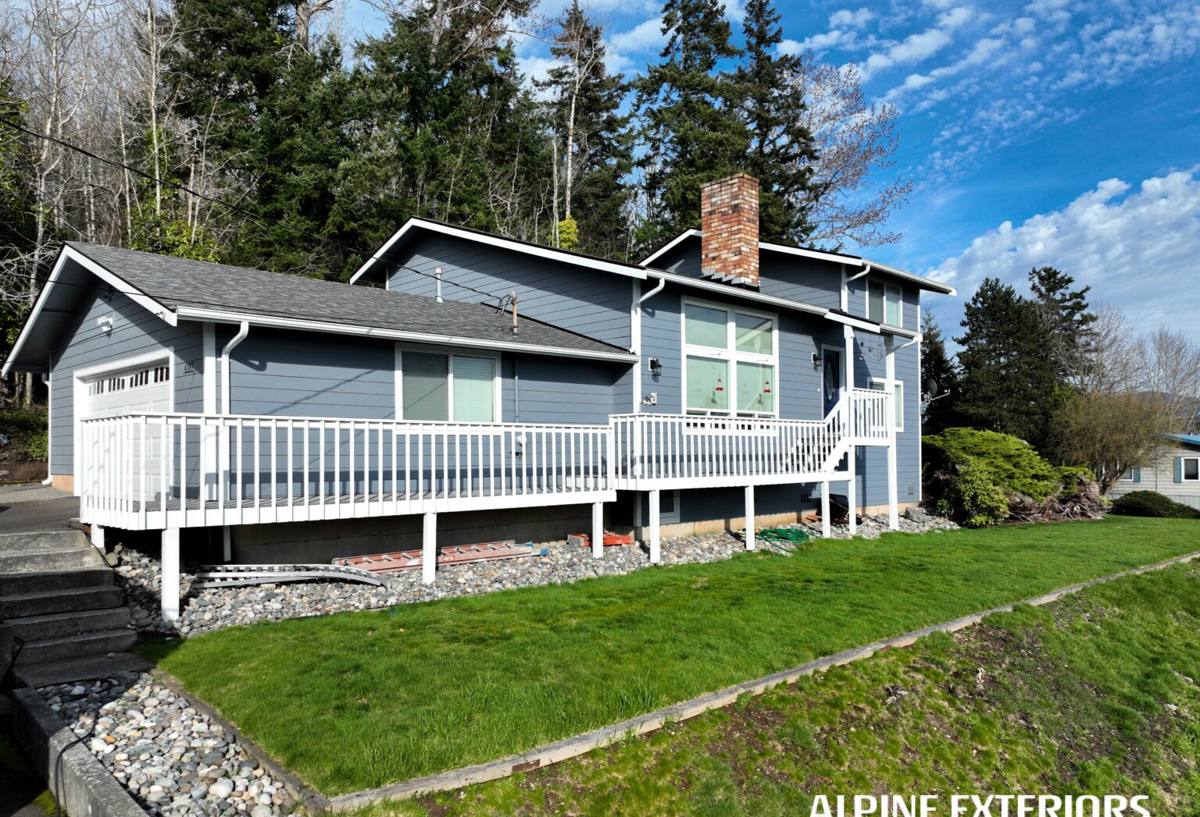
What Bellingham's Climate Does to a Roof Over Time
Whatcom County weather is hard on roofing in three specific ways, and a repair that ignores any of them tends to fail again within a couple of seasons.
Wind and Wind-Driven Rain
Storms moving through the Puget Sound region rarely bring rain straight down. Wind pushes it sideways, up under shingle tabs, along ridge lines, and into any flashing seam that isn't fully sealed. A roof can look intact from the ground after a storm and still be taking on water at a lifted shingle edge or a flashing lap that got pried open by gusts.
Moss and Prolonged Moisture
Bellingham's long, cool, wet stretches — especially on north-facing slopes and shaded sections near trees — give moss a season that runs most of the year. Moss holds moisture against the roofing material, works its way under shingle edges, and lifts tabs from below. A storm that knocks debris onto an already moss-covered section does more damage than it would on a clean roof, because the moss has already weakened the seal.
Salt Air Corrosion
Proximity to Bellingham Bay and the greater Puget Sound means a steady low-level exposure to salt-laden air. It doesn't rot roofing material the way moisture does, but it accelerates corrosion on exposed metal — flashing, fasteners, gutter hardware, and vent caps. A storm that stresses a flashing seam on a corroded fastener will fail faster than the same storm would on a roof further inland.
Signs a Puget-Area Roof Has Storm Damage
Some damage is obvious. A lot of it isn't, especially with the granular shingles common in this area — cracks and lifted edges can be hard to spot from the ground, and the first real sign is often a stain on an interior ceiling weeks later.
- Shingles that are missing, cracked, curling, or visibly lifted at the edges
- Granules collecting in gutters or at downspout outlets after a storm
- Dented or creased metal flashing around chimneys, vents, or skylights
- New or worsening ceiling stains, especially near exterior walls or valleys
- Debris — branches, needles, moss clumps — pushed into valleys or against the ridge
- Gutters pulled loose from fascia or sagging under storm debris weight
- Soft or spongy spots when walking the roof, indicating trapped moisture under the surface
What a Correct Storm Repair Actually Involves
A rushed storm repair replaces what's visibly broken and calls it done. A correct one treats the damaged section as a symptom and checks the surrounding area for the conditions that let the damage happen in the first place.
Full Assessment Before Any Repair
We inspect the storm-affected section and the roof around it — not just the spot with the obvious problem. That means checking adjacent shingle courses for wind lift that hasn't fully failed yet, examining flashing seams for gaps, and looking underneath for moisture that's already gotten past the surface layer.
Matching Materials and Method, Not Just Color
Shingles vary in profile and nailing pattern between manufacturers and even between product lines from the same one. A patch that looks close in color but uses a different exposure or fastening pattern will shed water differently than the surrounding roof, which creates a new weak point right at the repair edge.
Underlayment and Decking Check
If water has been getting in for any length of time before the storm made it obvious, the underlayment and decking underneath may already be compromised. We check for soft decking, delaminated sheathing, or saturated underlayment before closing up a repair — covering damaged decking with new shingles just delays the same leak.
Flashing and Fastener Attention
Given the salt air exposure common near the Sound, we pay particular attention to the condition of flashing and fasteners in a repair area, not just the shingles. Corroded fasteners or flashing that's already thinning get replaced as part of the repair rather than reused, even if they weren't the direct cause of the storm damage.
Our Process for Puget Storm Repairs
| Step | What Happens |
|---|---|
| 1. Inspection | Full roof walk, not just the reported problem area — we document damage, underlying conditions, and moss or debris buildup |
| 2. Honest Assessment | We tell you plainly whether this is a targeted repair, a larger section replacement, or something to monitor |
| 3. Written Scope | Clear description of materials, work involved, and price before anything starts |
| 4. Repair | Matched materials, proper flashing and fastener work, decking replaced where needed |
| 5. Cleanup and Debris Check | Gutters and downspouts cleared of storm debris and granule buildup so water moves off the roof properly |
| 6. Follow-Up | We note any areas worth watching — moss-prone sections, aging flashing nearby — so you know what to expect down the road |
Repair vs. Replace: What Drives the Decision
Not every storm-damaged roof needs a full replacement, and not every roof is a good candidate for another round of patching. The decision usually comes down to a handful of factors.
| Factor | Leans Toward Repair | Leans Toward Replacement |
|---|---|---|
| Extent of damage | Isolated section, single storm event | Widespread, multiple areas, or repeated storm hits |
| Roof age | Well within expected lifespan | Already near end of service life |
| Decking condition | Dry, solid underneath | Soft, delaminated, or repeatedly wet |
| Moss history | Minimal or well-maintained | Heavy, long-term moss with lifted shingles across large areas |
| Prior repairs | First storm repair on this section | Same area has been patched multiple times before |
We'll walk you through where your roof falls on this before recommending either path — a repair is the right call far more often than a full replacement, but it has to be the right kind of repair.
Insurance and Storm Claims
Many storm repairs in this area do get filed through homeowners insurance, particularly after named windstorms or documented severe weather. We provide clear photo documentation and a written scope of damage that you can submit with a claim, and we're glad to answer an adjuster's questions about the scope of work. We don't handle the claim itself or make promises about what will or won't be covered — that's between you and your insurer — but we make sure the documentation on our end is thorough enough to support your case.
Why a Crew That Already Works Puget Matters
A roofer who works this specific area regularly has already seen how the local wind pattern tends to hit roofs, which slopes in this neighborhood collect moss fastest, and how salt air exposure plays out on flashing and fasteners over a few years. That's not something you get from a general repair crew passing through — it shapes where we look first during an inspection and what we flag as a future risk versus what's fine to leave alone. It also means we're not guessing at appropriate materials for this climate; we're using what's already proven to hold up here.
Storm Damage Roof Repair Checklist
After a storm, here's what's worth checking or asking about before deciding on next steps:
- Walk the yard and gutters for granules, shingle pieces, or flashing debris
- Check ceilings and attic spaces for new staining or damp insulation
- Note which direction the storm's wind came from — damage often clusters on that exposure
- Get an inspection before the next rain event if you suspect any damage
- Ask whether the quote covers decking and flashing inspection, not just visible shingles
- Get the scope of work in writing before repairs begin
- Ask what, if anything, the contractor recommends monitoring afterward
If a recent storm has left your roof looking questionable — or you're just not sure whether what you're seeing is worth worrying about — we're happy to take a look. Fill out the form below for a free, no-pressure estimate and honest read on what your roof actually needs.