 Bellingham Exterior
 Board & Batten in Cordata: A Look That Fits the Neighborhood
Cordata is one of the newer residential pockets of north Bellingham, and a lot of the homes here were built or remodeled in styles where board and batten reads naturally — modern farmhouse fronts, Craftsman gables, garage accents, and full-elevation vertical siding on newer builds. It's a clean, architectural look: wide flat boards with narrow battens covering the seams, running vertical instead of the horizontal lap siding most of the region grew up with. Done right, it holds crisp shadow lines for decades. Done wrong, it's one of the least forgiving siding styles on the market, because every seam and every batten is a potential path for water to get behind the wall.
We get calls from Cordata homeowners who want that vertical look on an addition, a garage, or a full re-side, and just as often we get calls to fix a board and batten job that was installed without the right drainage detailing underneath it. Both start from the same place: understanding what this style actually needs to survive in Whatcom County.
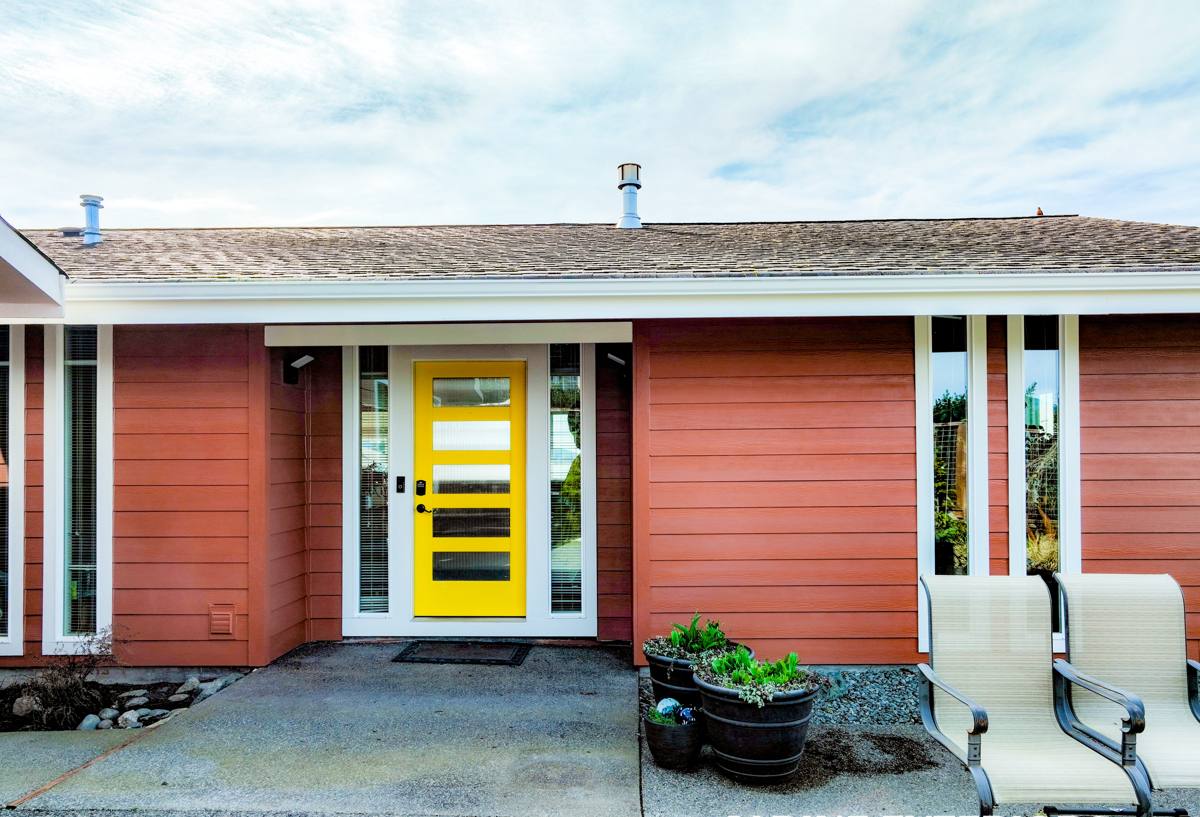
What Bellingham's Climate Does to Vertical Siding
Board and batten siding in this area is up against three things at once. Salt air off Bellingham Bay accelerates corrosion on exposed fasteners and hardware, which matters more on vertical siding because there are simply more fastening points — through the field boards and again through every batten. Driving rain, especially in the fall and winter storm pattern, hits vertical siding straight-on and runs down the face rather than shedding off an overlap the way horizontal lap does. And a long, wet moss season means any wall that stays shaded or doesn't dry out between storms — common on north-facing walls or lots with mature trees, which a lot of Cordata properties have — will grow moss and algae if the material and the gap behind it can't handle sustained moisture.
None of that makes board and batten a bad choice for this area. It just means the siding, the fasteners, and the wall assembly behind it all have to be selected and installed for these exact conditions, not for a drier climate.
Why Vertical Siding Needs Different Detailing Than Lap Siding
Horizontal lap siding sheds water by design — each course overlaps the one below it, so water runs down and off. Board and batten doesn't have that built-in overlap at every seam; instead, the batten covers the joint between two boards and relies on a gap and a drainage plane behind the panel to let any water that does get past the surface find its way back out instead of sitting against the sheathing. That means correct board and batten installation depends on things you won't see once the job is finished:
- A weather-resistive barrier (housewrap) installed and lapped correctly before the first board goes up
- A rainscreen gap or drainable wrap behind the siding so any moisture that gets past the face can drain and the wall can dry
- Flashing at every window, door, and horizontal transition, not just caulk
- Battens fastened independently of the field boards wherever possible, so the two layers can move without splitting a shared fastener path
- Correct, consistent gaps between boards to allow for expansion, sized to the manufacturer's spec rather than eyeballed
Skip any one of these and the siding can still look right for a year or two before problems show up as staining, soft spots, or paint failure at the seams — usually right where it's hardest to spot from the ground.
The James Hardie Board & Batten System We Install
We install James Hardie fiber cement exclusively, and for board and batten that means HardiePanel vertical siding paired with Hardie's own trim battens, or Hardie's reveal panel systems for homeowners who want a more contemporary, tighter-shadow-line look. Every one of these products is engineered in Hardie's HZ5 line for our climate zone — the Pacific Northwest's combination of sustained moisture, moderate freeze-thaw, and a real moss season — rather than a generic national spec.
A few things matter specifically for board and batten:
- The panel and trim are fiber cement, not wood or wood-composite, so the boards themselves don't absorb and swell the way raw lumber does when they take on driving rain
- ColorPlus factory-applied finish is baked on and warranted separately from the substrate, which matters a lot on vertical siding since every batten edge is a place where field-applied paint tends to fail first
- The product is non-combustible, which is a real consideration on gable ends and dormers, common spots for board and batten accents
- Hardie backs the product with a strong transferable warranty, which matters if a Cordata home changes hands — a real consideration in a neighborhood that's seen steady turnover as it's built out
We don't install LP SmartSide, vinyl board and batten, primed spruce, or cedar board and batten. Each has real advantages — cedar looks beautiful when new, vinyl is inexpensive, LP is easy to work with — but each also comes with a maintenance burden or a moisture vulnerability that we're not willing to put our name behind in this climate. Wood needs ongoing refinishing to keep water out at the battens. Vinyl board and batten profiles rely on hidden fastener flanges that can rack or bow the panel with our seasonal moisture cycling. We'd rather explain why we stand behind one system than sell several we have reservations about.
Comparing Your Options for Board & Batten Siding
| Material | Moisture Behavior Here | Maintenance | Typical Lifespan |
|---|---|---|---|
| James Hardie fiber cement | Stable, non-absorbent core; performs well with correct rainscreen detailing | Occasional wash-down; factory finish resists moss staining longer than paint | 30+ years to warranty term |
| Cedar board and batten | Absorbs and releases moisture with weather; prone to cupping and checking | Refinish/reseal every few years, more often on shaded walls | 15-25 years with diligent upkeep |
| Vinyl board and batten | Doesn't absorb water but can trap it behind panels; can warp with heat and cold cycling | Low, but panels are hard to repair invisibly if damaged | 20-30 years, fades over time |
| LP SmartSide / primed spruce | Engineered wood core is more moisture-resistant than raw lumber but still wood-based | Field-applied caulk and paint need regular inspection, especially at seams | 20-30 years with consistent maintenance |
The honest takeaway: several of these products can perform acceptably here if maintained diligently. We chose to specialize in the one that asks the least of the homeowner over the decades ahead.
What a Correct Installation Involves, Start to Finish
A board and batten job is only as good as the wall assembly underneath it, so our process starts before any siding shows up on site.
Assessment and Prep
We check the existing wall for moisture damage, confirm what's behind the current siding, and never install new siding directly over a wall we haven't verified is dry and sound. Any rot, compromised sheathing, or missing flashing gets addressed before the new siding goes on — covering a problem with new siding just hides it for another season.
Installation
Housewrap or drainable wrap goes on with correct lapping and taping, then a rainscreen gap where the wall assembly calls for it, then the field boards, then battens fastened to hit the framing independently of the boards where the design allows it. Fastener spacing and board gaps follow Hardie's published specs for our climate zone, not a generalized standard.
Finish and Walkthrough
Trim, flashing, and caulk joints get a final check, and we walk the job with the homeowner before calling it done. Here's a short list of what we check before we consider a board and batten job finished:
- Correct fastener type and spacing for HZ5-rated Hardie product
- Flashing integrated at every window, door, and roof-to-wall transition
- Consistent board gaps and batten alignment, not just at eye level
- No sealant used as a substitute for flashing at horizontal joints
- Housewrap or rainscreen verified before cladding covered it
- ColorPlus finish free of jobsite damage, touched up to Hardie spec where needed
Why a Crew That Already Works in Cordata Matters
A lot of what makes board and batten succeed or fail here isn't in the product spec sheet — it's knowing how a specific lot sits relative to weather. Homes tucked under mature trees hold moisture longer and need more attention to ventilation and gap sizing. Homes on more exposed elevations catch driving rain straight-on and need flashing details taken seriously at every penetration. A crew that's worked a number of homes in this part of Bellingham has already seen how the neighborhood's mix of newer construction and infill lots behaves through a wet Whatcom County winter, and that shows up in the details — where we add extra flashing, where we push for a rainscreen gap instead of a direct-applied wrap, and where we flag a wall that needs more prep before siding goes on.
Maintenance and Long-Term Care
James Hardie board and batten asks for less than most alternatives, but "low maintenance" isn't "no maintenance," especially with our moss season. A simple annual routine keeps it performing for the long haul: rinse the siding to clear moss, pollen, and salt residue before it builds up; keep gutters and downspouts clear so overflow doesn't run down the face of the siding; and do a quick visual check of caulk joints and trim after the first hard storms each fall. Because the ColorPlus finish is factory-cured rather than field-applied, you're not looking at a repaint cycle the way you would with wood — just the occasional wash-down and a periodic check that nothing has come loose or been damaged by yard work or storm debris.
If you're weighing board and batten for a Cordata home, whether it's a full re-side or an accent on a gable or garage, we're happy to take a look and walk you through what your specific home and site will need. There's a free, no-pressure estimate form below — no obligation, just a straight answer on what the job involves and what it costs.